

The Authority in Global Agricultural Chemistry & Bio-Resources
Wholesale Copper Sulfate: Crystal Form Can Change Handling
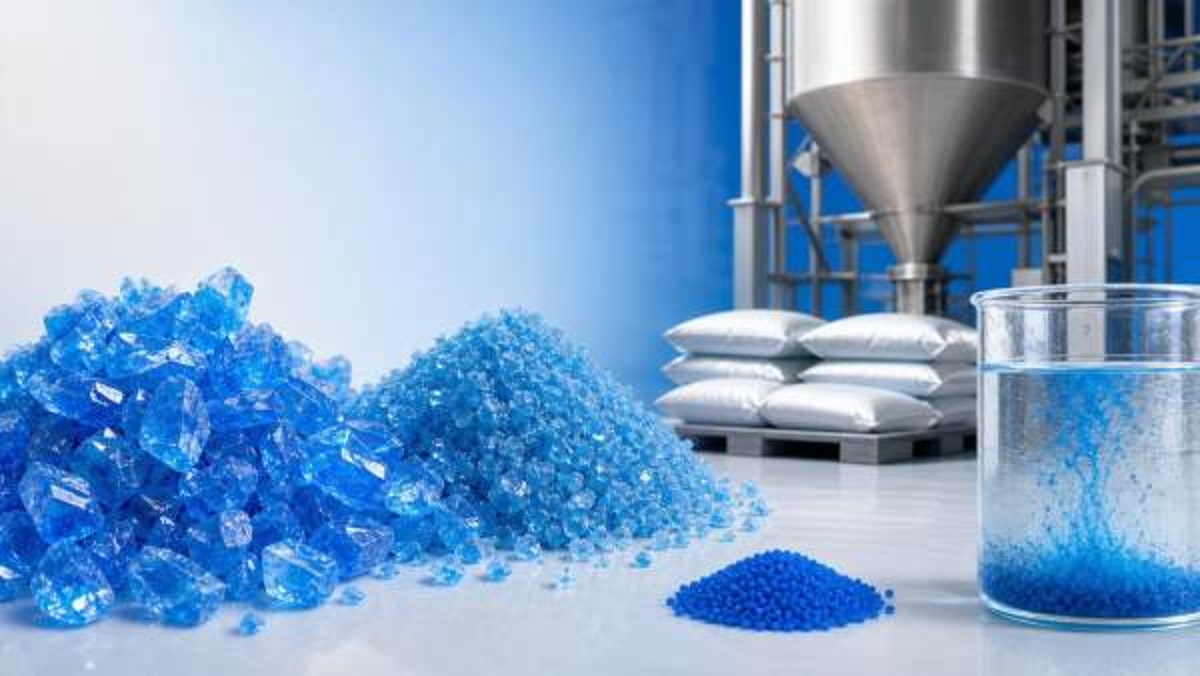
In wholesale copper sulfate operations, crystal form is more than a visual detail—it directly affects flowability, dust generation, dissolution rate, and operator safety. For users and handling personnel, understanding how crystal structure changes storage behavior and application performance is essential to reducing material loss, improving process control, and maintaining consistent results across industrial and agricultural use.
Why does crystal form matter so much in wholesale copper sulfate handling?
For many operators, wholesale copper sulfate may seem like a straightforward bulk chemical: receive it, store it, dose it, and move on. In practice, the crystal form changes how the material behaves at nearly every step. Larger, well-defined crystals often flow more predictably through bins, hoppers, and manual feed systems, while finer or partially broken crystals can bridge, cake, or generate more dust during transfer. That means the same nominal chemical grade may feel very different on the shop floor.
This is especially important in sectors covered by the broader primary industries and fine chemicals landscape, including agriculture, water treatment, feed processing, and technical blending. Operators are not only dealing with chemical composition; they are dealing with particle mechanics. If the crystal structure has changed due to manufacturing method, humidity exposure, repeated handling, or long-distance transport, the result may be slower discharge, more cleanup, uneven dissolution, and increased operator exposure.
In other words, wholesale copper sulfate performance is not defined by purity alone. Particle size distribution, moisture interaction, and crystal integrity directly influence dosing accuracy, equipment efficiency, and safety compliance. For buyers and users, overlooking crystal form can lead to hidden operating costs even when the purchase price looks competitive.
What crystal-related changes should operators watch for when receiving wholesale copper sulfate?
The first checkpoint is visual and physical consistency. When a shipment of wholesale copper sulfate arrives, operators should look beyond color and general appearance. Useful observations include whether the crystals are uniform, whether fines have accumulated at the bottom of bags or bulk containers, and whether the material shows signs of clumping. A bright, even crystalline product with limited breakage usually indicates better handling stability than a lot containing excessive fractured particles.
Another key sign is moisture response. Copper sulfate crystals can absorb or lose moisture depending on storage conditions and packaging integrity. If crystals feel sticky, compacted, or unusually hard, the product may have been exposed to humidity or temperature fluctuations. Such changes can affect both dissolution behavior and feeding consistency. Even before laboratory checks, the operator can learn a great deal from how the material pours during initial unloading.
A practical receiving checklist should include packaging condition, visible dust level, free-flow behavior, and evidence of caking. In large-scale wholesale copper sulfate operations, documenting these observations helps connect product variability with downstream process issues. If one batch dissolves smoothly and another leaves insoluble lumps or dust clouds, the root cause often starts at crystal condition rather than chemistry alone.
How does crystal size affect flowability, dust, and dissolution in daily use?
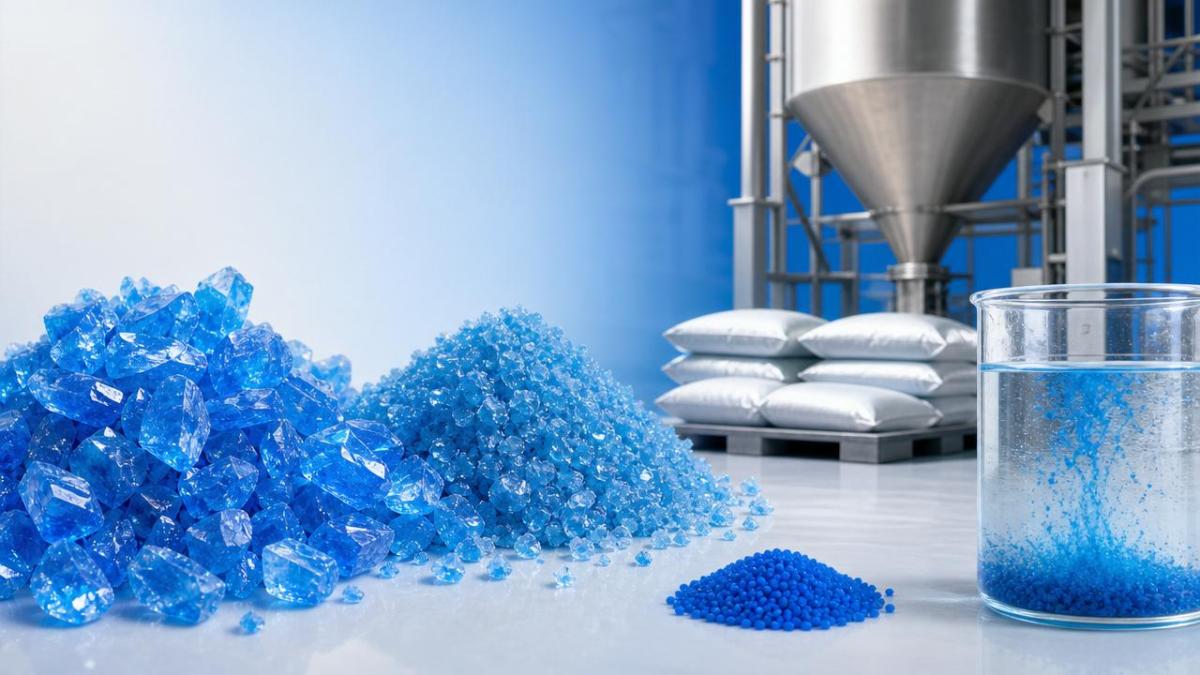
Crystal size shapes three core handling outcomes: how the material moves, how much dust it creates, and how quickly it dissolves. Coarser wholesale copper sulfate crystals usually produce less airborne dust during pouring and transfer. This can improve visibility, reduce product loss, and make the work area easier to clean. It may also help reduce respiratory exposure risks where local ventilation is limited or where handling is still partly manual.
However, coarse crystals do not always dissolve as quickly as finer material. In applications where copper sulfate is added into solution tanks, spray systems, or treatment baths, smaller particles can dissolve faster because they have greater surface area. The trade-off is that very fine material may bridge more easily in feeders, compact more readily under storage pressure, and generate more dust during transfer. Operators must therefore match crystal form to process requirements rather than assume one format is universally better.
This balance matters in wholesale copper sulfate purchasing. If a facility prioritizes fast make-up of solutions, a finer or more uniform crystal cut may be preferred. If the process depends on stable bulk handling and low dust, a coarser crystal may be more practical. The best choice is often the one that minimizes total handling friction, not simply the one that seems easiest to dissolve in a small test.
Quick comparison table for operators
The table below summarizes how common crystal conditions can influence wholesale copper sulfate use in real operating environments.
Which applications are most sensitive to crystal form in wholesale copper sulfate?
Not every use case responds the same way to crystal variation. In agricultural solution preparation, for example, dissolution rate is often a top concern because operators need to mix quickly and maintain uniform concentration. If wholesale copper sulfate is added to tanks without enough agitation, larger crystals may leave residue and delay application schedules. In this setting, consistency of dissolution can matter more than simple bulk flow.
In contrast, bulk blending and feed-related environments may place greater emphasis on stable transfer and accurate dosing. Excessive fines can separate during movement, settle unevenly, or cling to equipment surfaces, all of which can reduce uniformity. For water treatment or industrial process systems, the priority may shift again: operators often need a balance between safe handling, low dust, and predictable solution preparation.
This is why wholesale copper sulfate buyers should not select material only by chemical specification sheet. The intended process path matters. A product that performs well in one facility may create avoidable issues in another if hopper design, mixing time, humidity level, or manual handling practices differ. The more sensitive the application is to dosing precision and operator exposure, the more important crystal-form evaluation becomes.
How can users judge whether a supplier’s wholesale copper sulfate is suitable before large-scale purchase?
A smart evaluation process starts with asking for more than purity and assay data. Buyers should request information on crystal size range, moisture content, packaging type, and batch consistency. If the supplier cannot clearly describe the physical characteristics of wholesale copper sulfate, the buyer may struggle to predict real handling performance. Technical data should support not just compliance, but operational fit.
Sample testing is equally important. A small-scale trial should simulate actual use: unloading, scooping or conveying, tank dissolution, and cleanup. Operators should note whether the product forms dust plumes, leaves undissolved pieces, cakes after opening, or feeds unevenly through existing equipment. These observations are often more useful than a generic sales description because they reveal how the material behaves under local conditions.
It also helps to assess packaging durability and logistics exposure. Wholesale copper sulfate can arrive in good condition but degrade if packaging is weak or if transit routes involve repeated movement, compression, or humid storage. The most reliable sourcing decision combines product quality, packaging integrity, and supply-chain discipline. In regulated or performance-critical industries, this broader view supports better consistency over time.
Questions worth asking before approval
- What is the typical crystal size distribution and how stable is it from batch to batch?
- How much fine material is normally present after packaging and transport?
- What moisture-control measures are used during packing, storage, and shipping?
- Has the wholesale copper sulfate been tested for dissolution under conditions similar to mine?
- Which package formats best protect crystal integrity for my handling method?
What are the most common mistakes when storing and handling wholesale copper sulfate?
A frequent mistake is assuming that dry-looking material is fully stable. Even if wholesale copper sulfate appears visually acceptable, repeated exposure to humid air can start caking and reduce flowability. Bags left open too long, containers stored near washdown zones, or stock rotated poorly may all contribute to hidden deterioration. Once crystal form changes, operators often blame equipment instead of the material condition.
Another mistake is rough handling. Dropping bags, using aggressive mechanical transfer, or over-handling bulk product can fracture crystals and increase fines. This creates a downstream cycle: more dust, more residue, more uneven feeding, and more housekeeping time. In high-volume wholesale copper sulfate environments, these losses are easy to overlook because they occur gradually rather than as one obvious failure.
Operators also sometimes use one standard operating method for all particle conditions. That can be risky. A lot with larger crystals may need longer dissolution time; a finer lot may require gentler transfer and stronger dust control. Adjusting procedures to the physical form of the product is a practical way to improve consistency and protect workers without major capital spending.
What handling practices improve safety and reduce waste in wholesale copper sulfate operations?
Good results usually come from disciplined basics. Store wholesale copper sulfate in dry, covered conditions with intact packaging and clear lot rotation. Minimize unnecessary rehandling, and use transfer methods that reduce drop height and impact. Where dust is a concern, prioritize local extraction, covered charging points, and suitable personal protective equipment in line with site rules and applicable regulations.
For solution preparation, standardize mixing water volume, agitation level, and contact time. This helps operators distinguish between normal process variation and crystal-related issues. If dissolution problems appear, compare batches and inspect whether caking, crystal enlargement, or excess fines are involved. In many cases, a small adjustment in procedure can recover performance, but only if the team recognizes the physical source of the problem.
Waste reduction also depends on training. Teams handling wholesale copper sulfate should know how to identify caking, recognize dust-prone batches, and report packaging damage early. These habits support more stable throughput, cleaner work areas, and more predictable product use across agricultural and industrial applications.
What should users confirm first if they want better purchasing and application results?
The first priority is to define what “good performance” means in your own process. For some users, the best wholesale copper sulfate is the one that dissolves fastest. For others, it is the one that creates the least dust or flows most reliably through a feeder. Once that priority is clear, the buyer can compare suppliers using physical performance criteria rather than chemistry alone.
Next, confirm the relationship between crystal form and your actual operating conditions: humidity, handling equipment, storage duration, and application method. Then verify whether the supplier can provide consistent crystal characteristics, protective packaging, and documentation aligned with your quality and compliance expectations. This is where better sourcing decisions are made—before scale-up problems appear.
If you need to move from general evaluation to a practical supply decision, it is worth discussing several points upfront: expected crystal size range, tolerance for fines, moisture-control measures, packaging options, recommended storage limits, and any trial support for your process conditions. Those questions help users and handling personnel turn wholesale copper sulfate selection into a controlled operational choice rather than a guess based on price alone.
Related Intelligence
- AgrochemicalsChina’s Hazardous Chemicals Safety Law Takes Effect May 2026China’s Hazardous Chemicals Safety Law (2026) mandates GS1 digital labels for agrochemical exports—ensuring traceability, EU CLP compliance & temperature control. Act now to avoid port delays!
- AgrochemicalsWholesale Copper Sulfate: Crystal Form Can Change HandlingWholesale copper sulfate handling depends heavily on crystal form. Learn how size and moisture affect flow, dust, dissolution, safety, and smarter bulk purchasing decisions.
- AgrochemicalsWholesale Potassium Nitrate and the Timing Mistake to AvoidWholesale potassium nitrate buying at the wrong season can raise costs and disrupt supply. Learn the timing mistake to avoid and how smarter planning protects efficiency.
The Morning Broadsheet
Daily chemical briefings, market shifts, and peer-reviewed summaries delivered to your terminal.
