

The Authority in Global Agricultural Chemistry & Bio-Resources
How to Vet Agri & Forestry Machinery Manufacturers
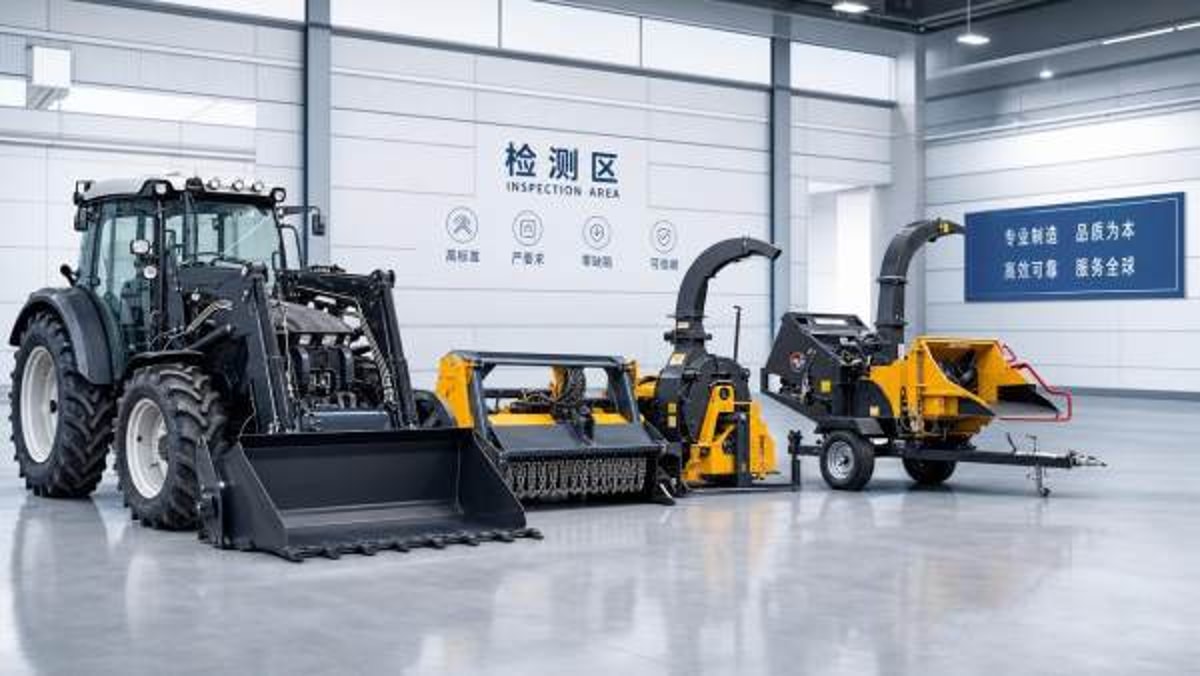
Choosing the right Agri & Forestry machinery manufacturers can determine whether distributors, dealers, and agents achieve stable margins, reliable after-sales support, and long-term market credibility. In a sector shaped by technical standards, parts availability, and global compliance, careful supplier vetting is no longer optional. This guide outlines the key criteria buyers should assess before forming partnerships with machinery producers.
Why vetting Agri & Forestry machinery manufacturers matters more than price alone
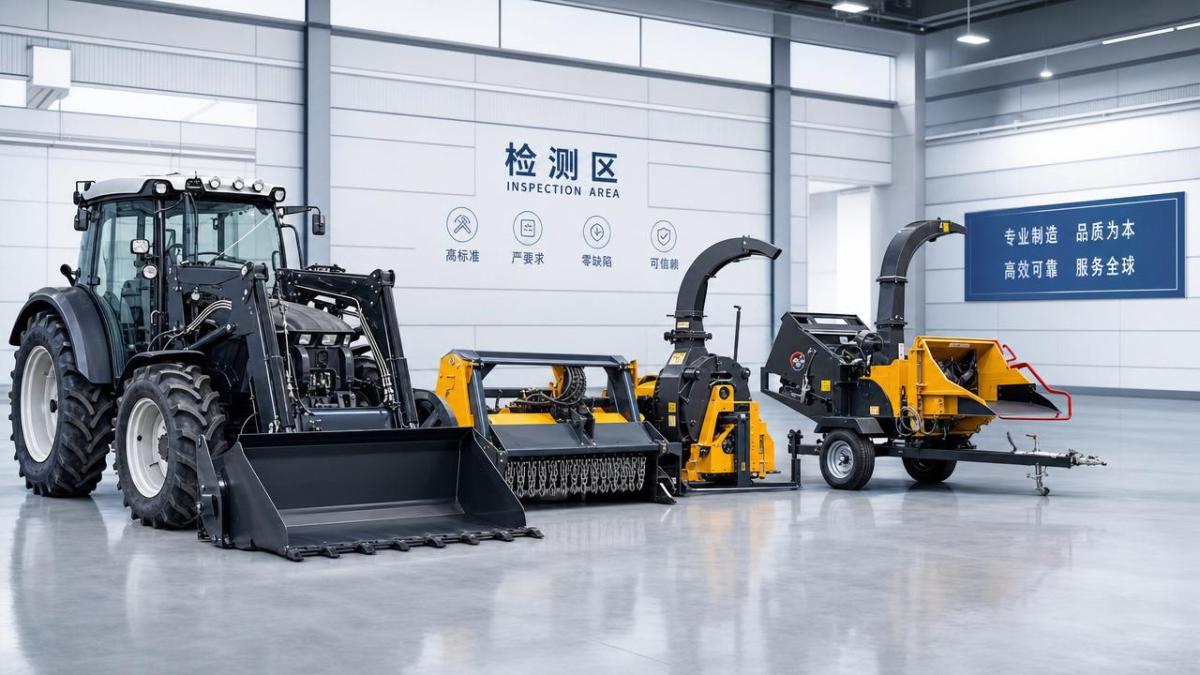
For distributors and commercial agents, the visible factory price is only one part of supplier risk. The real exposure appears later: delayed spare parts, weak technical documentation, inconsistent build quality across batches, and poor handling of warranty claims. These issues damage customer trust far faster than a slightly higher purchase cost.
Agricultural and forestry equipment also sits inside a demanding operating environment. Machines must work in dust, mud, heat, slopes, and long seasonal duty cycles. That means dealers evaluating Agri & Forestry machinery manufacturers must assess production discipline, component traceability, field reliability, and service responsiveness, not only brochure specifications.
For ACC readers, this is especially relevant because procurement decisions increasingly cross sectors. A machinery buyer may also need to understand fuel handling rules, chemical exposure risks, emission constraints, operator safety expectations, and regional import compliance. A strong manufacturer is one that can support this wider operational context.
- Protect channel margins by reducing hidden service and failure costs.
- Improve customer retention through better uptime, training, and spare parts access.
- Lower compliance risk when entering regulated or export-driven markets.
- Support long-term brand credibility in competitive dealer territories.
What should distributors check first when screening manufacturers?
The fastest way to compare Agri & Forestry machinery manufacturers is to use a structured screening framework before discussing exclusivity, annual targets, or discount ladders. Early qualification helps prevent time loss with factories that look capable online but cannot support channel growth in practice.
The table below gives a practical first-pass checklist that dealers and importers can use during manufacturer discovery, video audits, trade show meetings, or formal RFQ stages.
A supplier that performs well in all four areas is usually more valuable than a low-cost option that only looks attractive on paper. Experienced distributors know that support depth and predictability often create the real competitive advantage.
A practical pre-qualification sequence
- Review the product portfolio and identify whether the manufacturer focuses on tractors, implements, loaders, harvest support equipment, chippers, mulchers, or mixed forestry systems.
- Request technical files, inspection routines, and standard warranty terms before discussing volume commitments.
- Confirm export experience for your destination region, especially if local rules differ on safety guards, lighting, braking, or emissions.
- Test responsiveness with detailed questions on spare parts lead times, critical component brands, and dealer training availability.
How to compare manufacturing strength, service depth, and channel fit
Not all Agri & Forestry machinery manufacturers are built for the same distribution model. Some are strong at OEM batch production but weak at dealer support. Others provide excellent technical cooperation yet lack commercial flexibility. A useful comparison should separate factory competence from channel readiness.
The following matrix helps distributors compare different manufacturer profiles based on real operating needs rather than generic sales claims.
This comparison shows why channel fit matters. The best manufacturer is not simply the biggest or cheapest one. It is the one whose production model, support system, and commercial terms match your market structure.
Which technical and quality signals deserve close attention?
Distributors often inherit quality problems long after delivery, so technical vetting must go deeper than rated horsepower or attachment width. Reliable Agri & Forestry machinery manufacturers should be able to explain how they control durability, not just what output the machine claims to achieve.
Key technical questions to ask
- What are the critical wear components, and what is the replacement interval under normal field conditions?
- Which major systems are sourced externally, such as hydraulics, transmissions, bearings, engines, or electronic controls?
- How are finished machines tested before shipment: no-load only, loaded function checks, hydraulic pressure verification, or full operational simulation?
- How does the factory control paint adhesion, corrosion exposure, and weld consistency for outdoor use?
Field performance indicators with commercial impact
For tractors and powered implements, heat management, vibration control, hydraulic hose routing, and service access are more important than many first-time buyers realize. For forestry equipment, guarding, chassis reinforcement, operator visibility, and debris resistance often determine real-world lifespan.
Dealers should also verify whether manuals are detailed enough for technicians. A machine with acceptable hardware but weak diagrams, parts coding, or maintenance schedules can still become expensive to support in the field.
How important are standards, certification, and export compliance?
Compliance is one of the most overlooked areas when evaluating Agri & Forestry machinery manufacturers. Distributors may focus on machinery performance and freight timing, then discover too late that local authorities require additional documentation, safety labeling, or conformity records before the equipment can be sold.
Because ACC tracks heavily regulated supply chains across agriculture, chemicals, and primary processing, one recurring lesson is clear: documentation discipline is often a proxy for operational discipline. Manufacturers that manage compliance well are usually better at traceability, process control, and post-sale accountability.
Common compliance areas to review
- Machine safety features, operator protection, and warning labels appropriate for destination markets.
- Emission or engine-related conformity where the machine includes regulated power systems.
- Technical files, operation manuals, maintenance instructions, and parts books in usable export language.
- Packing, serial number traceability, and customs documentation consistency.
A manufacturer does not need to claim every certification in the market to be credible. What matters is whether the supplier can clearly state which standards apply, what evidence is available, and what gaps remain for your territory. Honest clarity is better than vague promises.
What does strong after-sales support actually look like?
Many distributors underestimate how quickly after-sales performance shapes brand reputation. In practice, Agri & Forestry machinery manufacturers with weak support systems turn dealers into unpaid service centers. A capable supplier should reduce your service burden, not transfer it to you without tools or parts.
Before signing a supply agreement, ask for concrete support processes rather than general claims. The table below helps buyers distinguish structured support from improvised support.
If a manufacturer cannot provide this level of clarity before the first order, it is unlikely to become more organized once machines are in the field. Support maturity should be treated as a core selection criterion, not a secondary detail.
How should dealers evaluate cost, margin, and total risk?
A lower invoice price does not automatically mean a better commercial outcome. Dealers should calculate landed cost, local adaptation cost, training cost, warranty exposure, spare parts inventory needs, and sales cycle friction. These factors often separate profitable partnerships from frustrating ones.
Cost elements that deserve attention
- Freight efficiency and packaging quality, especially for partially assembled units.
- Initial spare parts package requirements and how they affect early cash flow.
- Technical adaptation costs if local safety or user documentation needs upgrades.
- Expected service labor burden during the first operating season.
Smart distributors often accept a slightly higher unit cost from proven Agri & Forestry machinery manufacturers when that choice reduces callbacks, speeds delivery of wear parts, and improves end-user confidence. Margin protection is about cost control across the entire sales lifecycle.
Common mistakes when choosing Agri & Forestry machinery manufacturers
Mistake 1: judging quality from appearance alone
Good paint and a modern brochure do not prove service life. Hidden design details such as bearing protection, hose routing, frame reinforcement, and access for maintenance matter far more after delivery.
Mistake 2: assuming all export experience is equal
A supplier may export regularly yet still lack familiarity with your region’s dealer expectations, spare parts speed, or documentation standards. Ask for destination-specific examples of process, not just general export history.
Mistake 3: underestimating the value of technical communication
If engineering questions take too long to answer during evaluation, support will likely be slower after purchase. Communication quality is an early signal of future service quality.
FAQ for distributors, dealers, and agents
How do I know if Agri & Forestry machinery manufacturers are truly factory-based?
Request production photos tied to current models, process descriptions, quality checkpoints, and video walkthroughs of assembly, testing, and parts storage. Ask detailed technical questions that a pure trading company may struggle to answer consistently. Factory audits, whether remote or on-site, remain the strongest verification method.
What order quantity is reasonable for a first cooperation?
That depends on machine type, shipping method, and your service readiness. For a first order, many dealers benefit from a controlled launch: enough units to test commercial acceptance and support flow, but not so many that early technical issues become expensive. The better approach is to align first-order volume with spare parts planning and technician training.
Which documents should I request before signing?
Ask for product specifications, parts manuals, operation and maintenance guides, warranty terms, packing details, compliance declarations where relevant, and a response procedure for technical failures. For powered equipment, clarify engine-related documentation and local conformity requirements before payment milestones are locked.
How long should spare parts support be available?
There is no single global rule, but dealers should look for a clear commitment on fast-moving wear parts and critical service items throughout the normal commercial life of the model. More important than a vague long-term promise is the manufacturer’s actual system for parts coding, substitution management, and replenishment planning.
Why work with ACC when evaluating manufacturers?
ACC supports industrial buyers and channel partners with a wider lens than a standard product directory. Because our editorial focus spans Agricultural & Forestry Machinery, Fine Chemicals & APIs, Aquaculture & Fishery Tech, Bio-Extracts & Ingredients, and Feed & Grain Processing, we understand that supplier assessment today must include technical performance, compliance logic, and supply chain transparency.
Our strength lies in turning fragmented market claims into structured procurement intelligence. That means helping distributors and agents compare machinery producers with attention to documentation quality, operational discipline, service capability, and export readiness rather than relying only on promotional messaging.
Contact us for targeted procurement support
If you are screening Agri & Forestry machinery manufacturers, ACC can help you organize the decision process around the questions that matter most. You can consult us on parameter confirmation, supplier shortlisting, product line selection, delivery cycle evaluation, documentation review, certification expectations, spare parts planning, and quote comparison.
For distributors entering a new territory or adding a new machinery category, we can also help frame the right due diligence checklist, identify likely risk points in support and compliance, and clarify what to request before committing to samples, trial orders, or annual contracts. That approach saves time, reduces avoidable missteps, and strengthens negotiations with manufacturers from the start.
Related Intelligence
- Heavy Agri Machinery2026 China Bike Show Adds Smart Agri-Two-Wheelers ZoneSmart Agri-Two-Wheelers take center stage at the 2026 China Bike Show — discover new export opportunities, EN15194-compliant e-sprayers & transport bikes.
- Heavy Agri Machinery2026 Foshan Tanzhou Auto Show Hosts Smart Farm Machinery Export ForumSmart farm machinery exporters: Join the 2026 Foshan Tanzhou Auto Show’s Export Forum for ASEAN & Latin America market access, compliance insights, and matchmaking.
- Heavy Agri MachineryHow to Vet Agri & Forestry Machinery ManufacturersAgri & Forestry machinery manufacturers should be vetted for quality, compliance, parts support, and channel fit. Discover a practical guide to choose reliable partners with confidence.
The Morning Broadsheet
Daily chemical briefings, market shifts, and peer-reviewed summaries delivered to your terminal.
