

The Authority in Global Agricultural Chemistry & Bio-Resources
2026 China Bike Show Adds Smart Agri-Two-Wheelers Zone
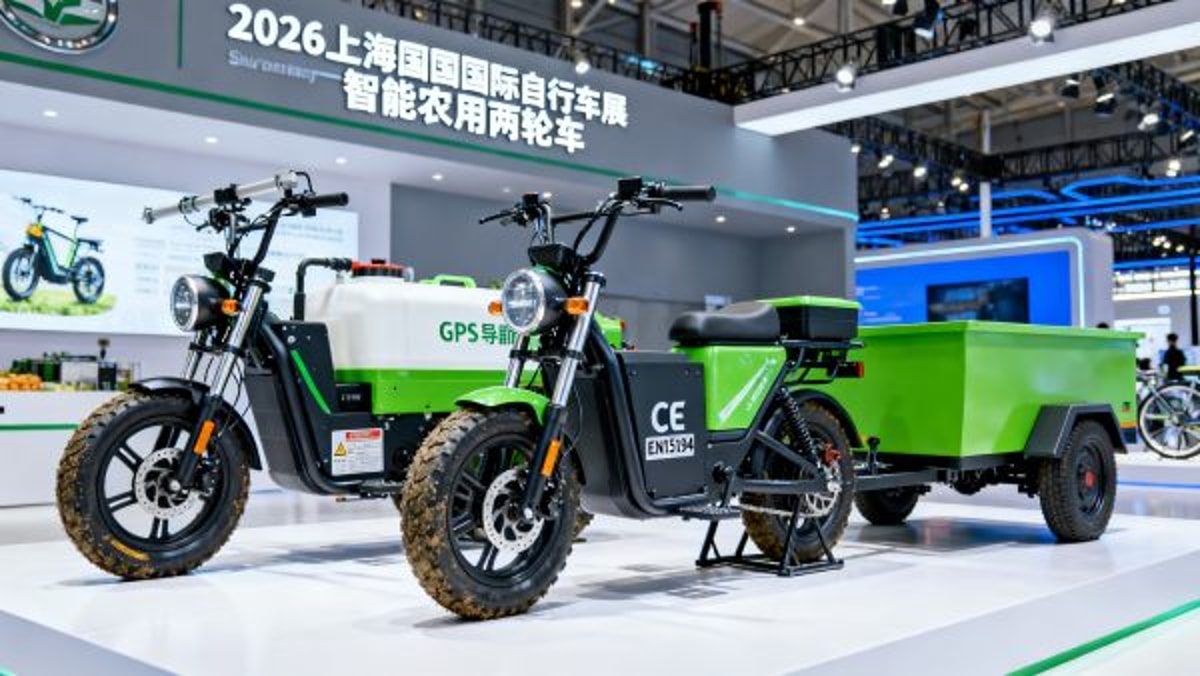
From May 5–8, 2026, the China International Bicycle Exhibition in Shanghai introduced a dedicated ‘Smart Agricultural Two-Wheeled Vehicles’ zone — marking the first time such agricultural mobility solutions were formally integrated into a major international bicycle trade fair. This development signals emerging cross-sector export opportunities for manufacturers and exporters active in commercial fishing equipment, heavy agricultural machinery, and light electric utility vehicles.
Event Overview
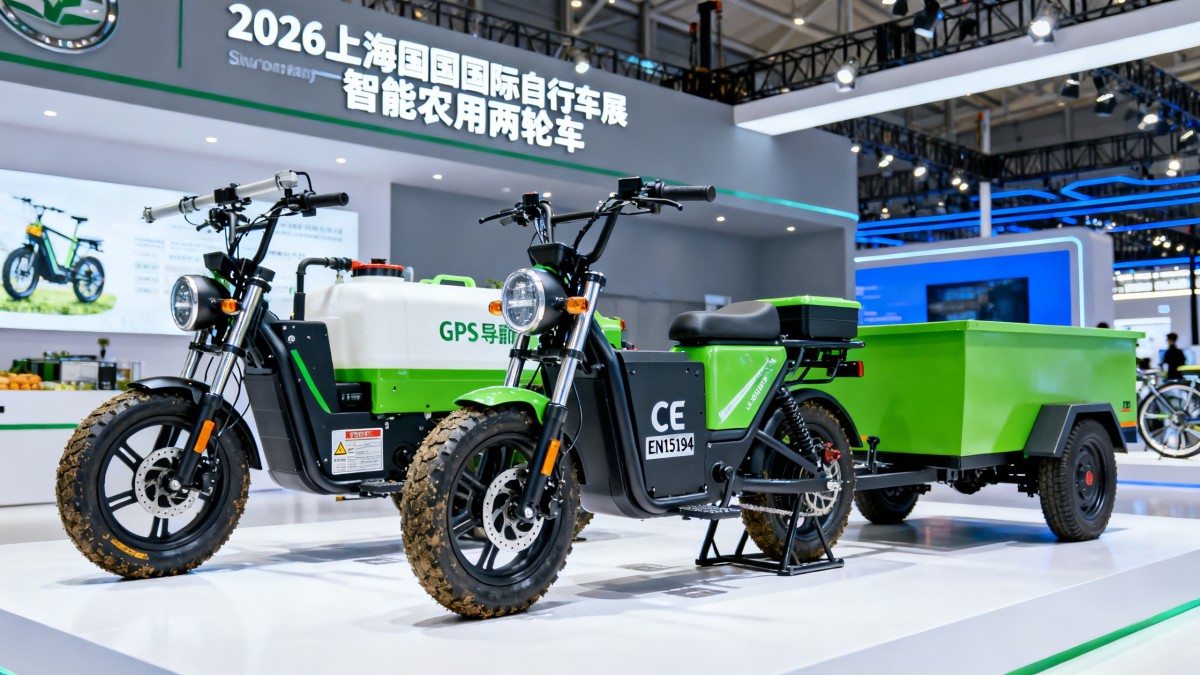
The 2026 China International Bicycle Exhibition, held in Shanghai from May 5 to 8, featured a newly established ‘Smart Agricultural Two-Wheeled Vehicles’ zone. The zone showcased lithium-ion powered sprayer bikes and GPS-enabled fruit-and-vegetable transport bikes compliant with EU CE EN15194 standards. Seven Chinese manufacturers received on-site purchase orders from importers based in the Netherlands and Kenya during the event.
Which Segments Are Affected
Direct Export Trading Firms
These firms face shifting product categorization and regulatory alignment needs: agricultural two-wheelers now sit at the intersection of bicycle, low-speed EV, and agri-input equipment regulations. Their export documentation, certification pathways (e.g., CE EN15194 vs. EN13849), and tariff classification may require re-evaluation for markets beyond the EU.
Electric Powertrain & Component Suppliers
Suppliers of lithium battery packs, motor controllers, and GPS modules are seeing demand diversify beyond consumer e-bikes into duty-specific applications. Product validation must now account for field durability, IP ratings under pesticide exposure, and extended operational cycles — distinct from typical urban commuting use cases.
Light Agricultural Equipment Manufacturers
Manufacturers traditionally serving smallholder farming segments (e.g., hand-pushed sprayers or manual harvest carts) may encounter competitive pressure as two-wheeled electric alternatives gain visibility through a high-profile bicycle trade channel — potentially reshaping buyer expectations around automation, serviceability, and interoperability.
Logistics & Certification Service Providers
Third-party testing labs, freight forwarders specializing in CE-marked goods, and customs brokers handling dual-use classifications (e.g., ‘bicycle’ vs. ‘agricultural vehicle’) are likely to see increased inquiry volume — particularly for shipments targeting East Africa and EU member states where EN15194 compliance is increasingly enforced.
What Relevant Enterprises Should Monitor and Do Now
Track official classification guidance from Chinese export authorities
Current inclusion in a bicycle exhibition does not imply harmonized HS code treatment across markets. Enterprises should monitor updates from China’s Ministry of Commerce and General Administration of Customs regarding whether these products will be assigned new export statistical codes or subject to revised inspection protocols.
Verify target-market regulatory scope for EN15194 adoption
While EN15194 governs pedal-assisted e-bikes in the EU, its application to non-pedal sprayer/transport variants remains jurisdictionally inconsistent. Importers in Kenya or the Netherlands may apply it de facto — but formal national transposition is not yet universal. Confirming local enforcement posture is essential before committing to production scale-up.
Distinguish between exhibition interest and commercial readiness
The seven confirmed orders reflect early-stage procurement intent, not sustained volume contracts. Companies should treat these as pilot engagements requiring post-show technical validation (e.g., field trials, after-sales service setup) rather than immediate capacity expansion triggers.
Prepare for cross-category supply chain coordination
Unlike standard e-bikes, smart agri-two-wheelers integrate agricultural accessories (nozzles, tanks, cargo racks) with mobility systems. Procurement teams should align timelines with both bicycle component suppliers and agri-input vendors — especially where custom mounting interfaces or fluid-resistance materials are involved.
Editorial Observation / Industry Insight
Observably, this zone’s debut is less an outcome and more a signal: it reflects growing institutional recognition that lightweight electric two-wheel platforms are migrating into adjacent utility domains. Analysis shows this is not a standalone trend but part of a broader realignment where bicycle industry infrastructure — certification pathways, trade channels, logistics networks — is being leveraged to serve precision agriculture micro-logistics. From an industry perspective, the significance lies not in immediate sales volume, but in the formalization of a previously fragmented product category within a globally recognized platform. It suggests that regulatory, commercial, and logistical convergence — rather than pure technology innovation — is now accelerating market entry.
Conclusion
This initiative marks an early institutional step toward recognizing electric two-wheel vehicles as multi-domain tools — bridging bicycle manufacturing, agricultural input delivery, and regional export logistics. It does not yet indicate a mature export vertical, but rather a coalescing of market signals, regulatory reference points, and distribution pathways. Currently, it is better understood as a strategic inflection point for cross-sector alignment — not a near-term revenue driver.
Information Source
Main source: Official announcement of the 2026 China International Bicycle Exhibition (Shanghai, May 5–8). Ongoing monitoring is advised for updates on national-level export classification policies and EN15194 interpretation in non-EU markets.
Related Intelligence
- Heavy Agri Machinery2026 China Bike Show Adds Smart Agri-Two-Wheelers ZoneSmart Agri-Two-Wheelers take center stage at the 2026 China Bike Show — discover new export opportunities, EN15194-compliant e-sprayers & transport bikes.
- Heavy Agri Machinery2026 Foshan Tanzhou Auto Show Hosts Smart Farm Machinery Export ForumSmart farm machinery exporters: Join the 2026 Foshan Tanzhou Auto Show’s Export Forum for ASEAN & Latin America market access, compliance insights, and matchmaking.
- Heavy Agri MachineryHow to Vet Agri & Forestry Machinery ManufacturersAgri & Forestry machinery manufacturers should be vetted for quality, compliance, parts support, and channel fit. Discover a practical guide to choose reliable partners with confidence.
The Morning Broadsheet
Daily chemical briefings, market shifts, and peer-reviewed summaries delivered to your terminal.
