

The Authority in Global Agricultural Chemistry & Bio-Resources
China’s Hazardous Chemicals Safety Law Takes Effect May 2026
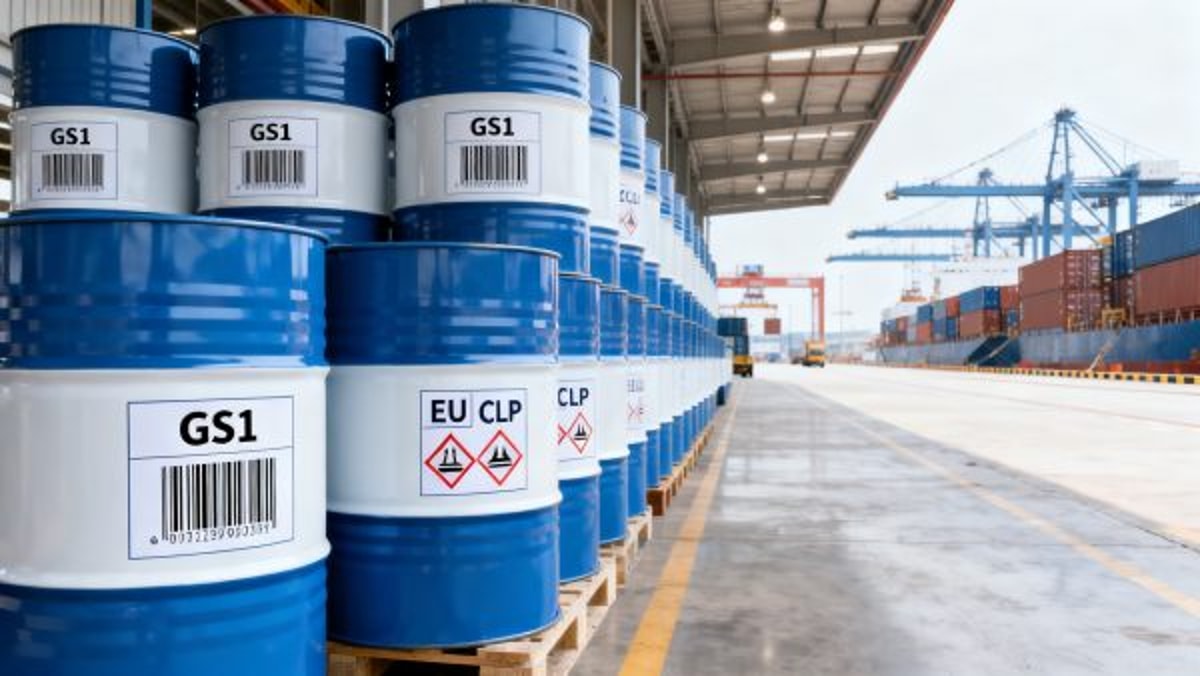
Starting May 1, 2026, China’s newly enacted Hazardous Chemicals Safety Law mandates digital lifecycle labeling for all exported agrochemicals—including technical materials, formulations, and intermediates—requiring GS1-encoded digital tags with traceability, temperature control thresholds, emergency response codes, and EU CLP classification mapping. Exporters, formulation manufacturers, and supply chain operators serving global agricultural markets must now prioritize compliance to avoid customs clearance delays at major Chinese ports.
Event Overview
The Hazardous Chemicals Safety Law enters into force on May 1, 2026. It requires that all agrochemical products intended for export from China carry a unique GS1-encoded digital label covering four mandatory data elements: (1) ingredient-level traceability, (2) transport temperature control thresholds, (3) standardized emergency response codes, and (4) mapped EU CLP hazard classification data. Products without completed ‘full lifecycle digital label’ registration will not be cleared by Chinese customs authorities at principal seaports.
Which Subsectors Are Affected
Export Trading Companies
These entities directly interface with customs declarations and overseas buyers. Under the new law, they bear primary responsibility for label registration and data validation prior to shipment. Impact manifests in extended pre-shipment lead times, added verification steps in order fulfillment, and potential liability for non-compliant consignments rejected at port.
Active Ingredient & Intermediate Suppliers
Suppliers of technical-grade substances and synthesis intermediates must provide verified compositional and stability data to downstream formulators or exporters. Their impact arises from increased documentation demands—notably granular batch-level traceability and thermal stability profiles—to feed into the digital label system.
Formulation Manufacturers
Manufacturers blending active ingredients into end-use products must integrate label generation into their quality management workflows. They face operational impacts including revised batch record requirements, updated QC checklists to confirm label data alignment, and cross-functional coordination with logistics and regulatory affairs teams.
Distribution & Logistics Service Providers
Third-party logistics providers handling storage, cold-chain transport, or consolidation for agrochemical exports must verify label-specified temperature thresholds are monitored and logged throughout transit. Non-conformance may invalidate label validity and trigger customs rejection—even if the product itself meets specifications.
What Relevant Enterprises or Practitioners Should Focus On — And How to Respond Now
Monitor official implementation guidelines from MEE and GACC
The Ministry of Ecology and Environment (MEE) and General Administration of Customs of China (GACC) are expected to release technical specifications for digital label formatting, data submission protocols, and registration platform access. Current more appropriate than assuming readiness is to track these documents—especially definitions of ‘temperature control threshold’ and acceptable CLP mapping methodologies.
Prioritize high-volume and EU-bound export SKUs for early testing
Given the requirement for EU CLP classification mapping, products destined for the European market present the highest immediate compliance complexity. Enterprises should identify top 10–20 export SKUs by volume and destination, then conduct internal dry-runs of label data compilation using draft GS1 structures and existing CLP dossiers.
Distinguish between policy mandate and operational rollout timelines
While the law takes effect May 1, 2026, enforcement ramp-up may follow a phased approach. Observably, initial port inspections may focus on documentation completeness rather than real-time sensor integration or full data lineage verification. Enterprises should treat May 2026 as a hard deadline for process readiness—not necessarily for 100% automated system deployment.
Initiate cross-departmental alignment on data ownership and handoff points
Label data originates across R&D (composition), QA (stability testing), logistics (temperature logs), and regulatory (CLP classification). Companies should map current data flows, assign accountability for each required field, and pilot shared templates before formal platform launch—avoiding last-minute bottlenecks during registration.
Editorial Perspective / Industry Observation
This regulation is better understood as a structural signal than an isolated compliance checkpoint. Analysis shows it reflects China’s broader shift toward digitized, data-driven chemical governance—aligning domestic oversight with international frameworks like the EU’s SCIP database and U.S. EPA’s Safer Choice labeling. It does not yet mandate real-time IoT monitoring or blockchain-based traceability, but the inclusion of ‘full lifecycle’ in the label’s official designation suggests future expansion. From industry perspective, the immediate implication is not just customs clearance risk—but accelerated pressure to harmonize internal data systems across manufacturing, regulatory, and logistics functions.
Conclusion
The Hazardous Chemicals Safety Law marks a material escalation in regulatory expectations for China-based agrochemical exporters—not as a one-off certification hurdle, but as a foundational requirement for data integrity and interoperability across the supply chain. It is more accurately interpreted as the onset of a multi-year digital infrastructure adaptation cycle, rather than a discrete deadline event. Current best practice is to treat it as a systems-readiness milestone, not merely a labeling task.
Information Sources
Main source: Official text of the Hazardous Chemicals Safety Law, promulgated by the Standing Committee of the National People’s Congress; effective date confirmed as May 1, 2026.
Points requiring ongoing observation: Technical implementation rules from MEE and GACC, including digital platform launch timeline, accepted data formats, and transitional arrangements for existing stock.
Related Intelligence
- AgrochemicalsChina’s Hazardous Chemicals Safety Law Takes Effect May 2026China’s Hazardous Chemicals Safety Law (2026) mandates GS1 digital labels for agrochemical exports—ensuring traceability, EU CLP compliance & temperature control. Act now to avoid port delays!
- AgrochemicalsWholesale Copper Sulfate: Crystal Form Can Change HandlingWholesale copper sulfate handling depends heavily on crystal form. Learn how size and moisture affect flow, dust, dissolution, safety, and smarter bulk purchasing decisions.
- AgrochemicalsWholesale Potassium Nitrate and the Timing Mistake to AvoidWholesale potassium nitrate buying at the wrong season can raise costs and disrupt supply. Learn the timing mistake to avoid and how smarter planning protects efficiency.
The Morning Broadsheet
Daily chemical briefings, market shifts, and peer-reviewed summaries delivered to your terminal.
