
The Authority in Global Agricultural Chemistry & Bio-Resources
FAO Updates Global Aquaculture Equipment List, 3 Chinese RAS Integrators Included
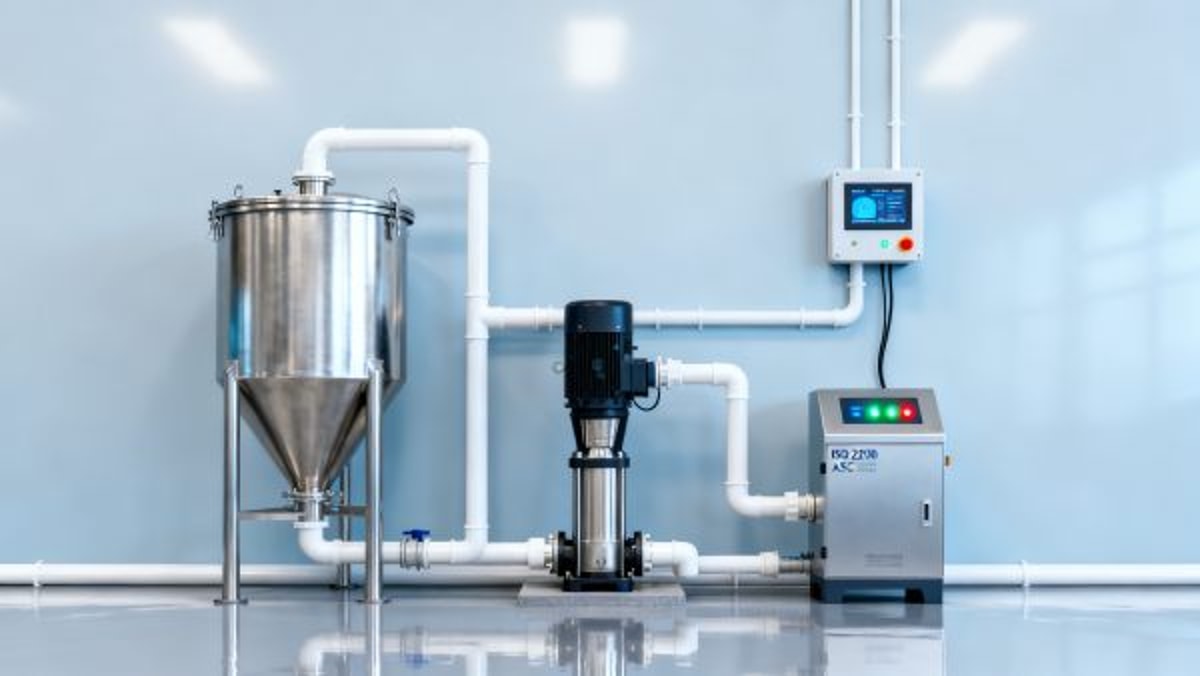
On 4 May 2026, the Food and Agriculture Organization of the United Nations (FAO) released the updated 2026 edition of its Global Aquaculture Equipment Recommended List, adding three Chinese recirculating aquaculture system (RAS) integrators — including two certified to both ISO 22000 and ASC standards. This update directly affects stakeholders in aquaculture technology supply, international equipment procurement, and sustainable seafood certification ecosystems.
Event Overview
The FAO published the revised Global Aquaculture Equipment Recommended List on 4 May 2026. The 2026 edition newly includes three China-based RAS system integrators. These companies provide solutions across three functional modules: recirculating water treatment, intelligent feeding, and remote monitoring. Both of the two ISO 22000- and ASC-certified firms are explicitly named in the list. The FAO states that this list serves as a reference for public procurement decisions by national fisheries departments in multiple countries.
Industries Affected
International Aquaculture Equipment Importers & Distributors
These entities may face shifting tender eligibility criteria in FAO-referenced procurement processes. Inclusion of specific Chinese RAS integrators signals potential preferential treatment in bidding documents issued by governments aligning with FAO guidance — particularly where technical compliance, food safety certification (ISO 22000), and sustainability standards (ASC) are weighted heavily.
Aquaculture Facility Operators (Especially in FAO-Partner Countries)
Operators planning capital expenditure on RAS infrastructure may encounter revised vendor shortlists in national procurement frameworks. The updated list does not mandate adoption but strengthens the evidentiary basis for selecting suppliers meeting internationally recognized food safety and environmental benchmarks — potentially influencing due diligence and risk assessment protocols.
Certification & Compliance Service Providers
Third-party auditors and certification bodies supporting aquaculture projects may see increased demand for verification against both ISO 22000 (food safety management) and ASC (aquaculture stewardship) requirements — especially where clients seek alignment with FAO-endorsed equipment suppliers. Dual-certification status is now highlighted as a distinguishing factor in the list.
What Relevant Enterprises or Practitioners Should Monitor and Do Now
Track official procurement guidelines from key importing countries
Several national fisheries ministries have publicly cited the FAO list as a reference for public tenders. Enterprises should monitor updates from target markets — especially those with active RAS expansion plans (e.g., Norway, Canada, Saudi Arabia, Vietnam) — for explicit incorporation of the 2026 list into tender evaluation criteria.
Verify alignment between current equipment specifications and the three listed modules
The FAO’s inclusion criteria focus narrowly on performance in recirculating water treatment, intelligent feeding, and remote monitoring. Suppliers not yet covering all three areas — or lacking documentation demonstrating interoperability across them — may be disadvantaged in future FAO-aligned procurements, even if technically capable in one module alone.
Distinguish between policy signal and operational requirement
The list remains advisory, not regulatory. Its influence depends on national implementation. Companies should avoid assuming automatic market access; instead, treat inclusion as a validation of baseline compliance — useful for pre-qualification stages, but not a substitute for country-specific registration, import licensing, or local technical approvals.
Prepare technical documentation packages aligned with ISO 22000 + ASC evidence requirements
For firms seeking inclusion in future editions or responding to tenders referencing the list, compiling auditable documentation — including process flow diagrams, calibration records for feeding systems, cybersecurity protocols for remote monitoring platforms, and traceable certification audit reports — will support faster responsiveness to procurement requests.
Editorial Perspective / Industry Observation
Observably, this update functions primarily as a signal — not an immediate market shift. The FAO does not enforce procurement rules; rather, it curates technical references for member states. Its decision to highlight dual-certified Chinese RAS integrators reflects growing recognition of China’s capacity in integrated, standards-aligned aquaculture technology. Analysis shows the move reinforces a broader trend: sustainability and food safety certifications are increasingly treated as interoperable technical prerequisites — not standalone marketing attributes. From an industry perspective, this suggests certification strategy must now consider cross-standard coherence, especially when targeting public-sector aquaculture investment programs.
Conclusion
This FAO update does not alter regulatory obligations, but it does recalibrate technical benchmarking expectations for RAS equipment in internationally funded or policy-supported aquaculture projects. It is best understood not as a market entry certificate, but as a formalized indicator of evolving global minimum thresholds for system integration, certification transparency, and modular interoperability in land-based aquaculture infrastructure.
Information Sources
Main source: Food and Agriculture Organization of the United Nations (FAO), Global Aquaculture Equipment Recommended List (2026 edition), published 4 May 2026.
Note: Ongoing observation is recommended regarding whether individual countries formally adopt the 2026 list into binding procurement regulations — no such adoptions have been confirmed as of publication date.
Related Intelligence
- RAS SystemsFAO Updates Global Aquaculture Equipment List, 3 Chinese RAS Integrators IncludedFAO updates Global Aquaculture Equipment List — 3 Chinese RAS integrators added, including ISO 22000 & ASC certified leaders. Discover implications for procurement, certification & global market access.
- RAS Systems2026 World Intelligent Industry Expo Opens in TianjinDiscover the 2026 World Intelligent Industry Expo in Tianjin — featuring groundbreaking intelligent connected agricultural machinery and smart aquaculture farms (RAS + low-altitude inspection). Key for global agri-tech exporters & integrators.
- RAS SystemsAquaculture & Fishery Systems: Where Water Quality Costs StartAquaculture & Fishery cost drivers start earlier than treatment. Learn how design, monitoring, compliance, and biological performance shape lifetime expenses and smarter investment decisions.
The Morning Broadsheet
Daily chemical briefings, market shifts, and peer-reviewed summaries delivered to your terminal.
