

The Authority in Global Agricultural Chemistry & Bio-Resources
Aquaculture & Fishery Systems: Where Water Quality Costs Start
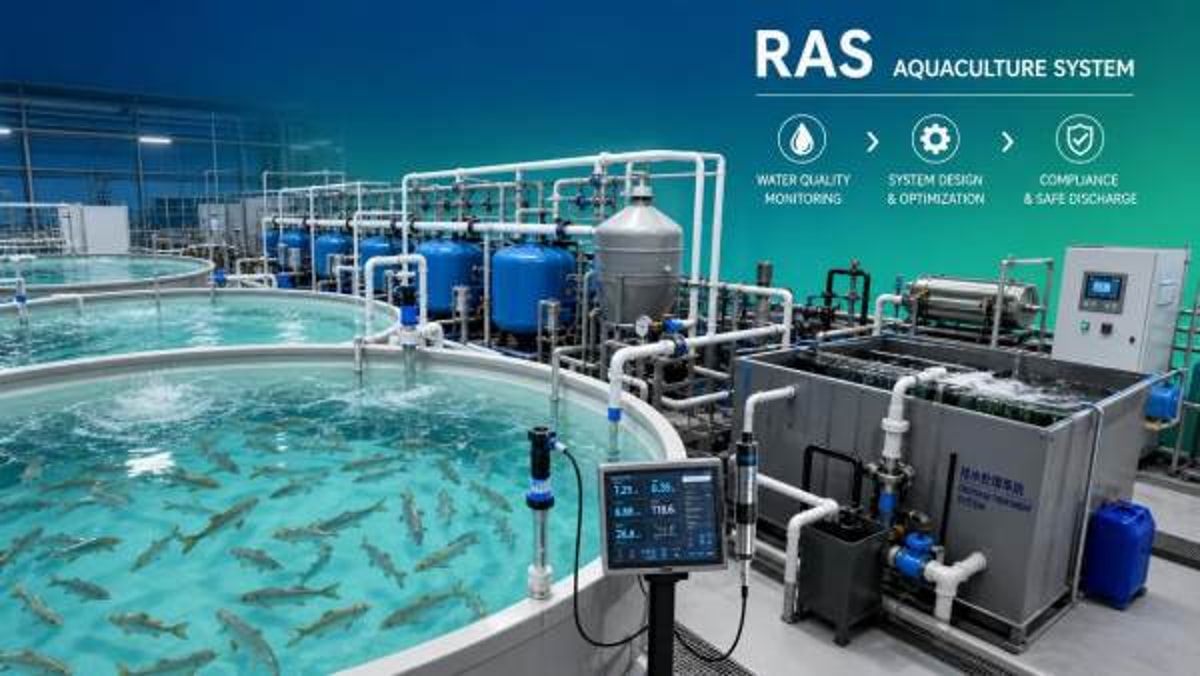
In aquaculture & fishery operations, water quality costs rarely begin with treatment alone—they start with design assumptions, monitoring gaps, compliance exposure, and avoidable production losses. For financial approvers evaluating system investments, understanding where these costs originate is essential to controlling lifetime operating expenses, reducing risk, and improving capital allocation across modern aquaculture infrastructure.
Why cost visibility is changing in aquaculture & fishery systems
A notable shift is taking place across aquaculture & fishery investment decisions. Water quality is no longer treated as a narrow operating issue handled after construction. It has become a board-level cost variable tied to biological performance, regulatory resilience, and asset productivity. For financial decision-makers, this matters because the biggest expenses often appear upstream of chemical dosing, filtration media, or emergency interventions. They emerge when a system is specified with incomplete assumptions about source water, biomass density, recirculation load, sludge handling, labor capability, or discharge requirements.
This change is driven by tighter margins, more volatile input prices, greater environmental scrutiny, and higher expectations for traceability. In practical terms, a pond, raceway, hatchery, RAS facility, or hybrid aquaculture & fishery operation now faces a wider financial penalty for poor water decisions. Mortality events are only the visible part. Hidden losses include slower growth, inconsistent feed conversion, added labor, downtime, excess energy use, compliance fees, and shortened equipment life.
For finance teams, the implication is clear: water quality costs should be assessed as a lifecycle risk category, not a maintenance line item. That changes how budgets are reviewed, how vendors are compared, and how project payback should be modeled.
The earliest cost point is often system design, not treatment
One of the most important trends in aquaculture & fishery development is the movement from reactive treatment spending toward preventive design scrutiny. Many facilities still underestimate how much future water quality cost is locked in during layout, equipment sizing, and process integration. Once tank geometry, aeration strategy, flow rates, solids capture, backup power, and monitoring architecture are fixed, a large share of future operating expense becomes difficult to reverse.
Financial approvers should pay close attention to whether capital requests include realistic assumptions on peak biomass, seasonal temperature variation, source water inconsistency, and cleaning frequency. A low initial quote may hide long-term penalties if pumps are oversized, oxygen transfer is inefficient, sensors are poorly placed, or waste loops are not integrated. In modern aquaculture & fishery systems, underdesigned water infrastructure can be just as expensive as overbuilt capacity, because both distort operating economics.
This is why better aquaculture & fishery proposals increasingly include water balance models, stress scenarios, and operating sensitivity ranges rather than relying on headline equipment lists alone.
Monitoring gaps are becoming more expensive than before
Another major shift is the rising cost of incomplete monitoring. Historically, some aquaculture & fishery facilities could tolerate manual testing intervals and limited data continuity. That tolerance is shrinking. Higher stocking densities, stricter buyer expectations, and tighter environmental controls mean that a delayed reading can now affect survival, quality grades, harvest timing, and customer trust.
For financial approvers, the central question is not whether monitoring devices add cost, but whether missing data creates larger losses. In many systems, the answer is yes. The most expensive water issue is often the one detected too late to correct cheaply. Oxygen drops during overnight periods, unnoticed solids accumulation, or gradual shifts in nitrogen load can trigger a chain reaction: reduced intake, stress, disease susceptibility, and lower conversion efficiency. None of these outcomes may appear immediately in monthly spend, yet all undermine return on installed capital.
This trend also explains why digital monitoring in aquaculture & fishery projects is increasingly evaluated as an insurance function. Reliable sensors, alarm logic, calibration planning, and data review protocols help reduce the size of adverse events, not just their frequency.
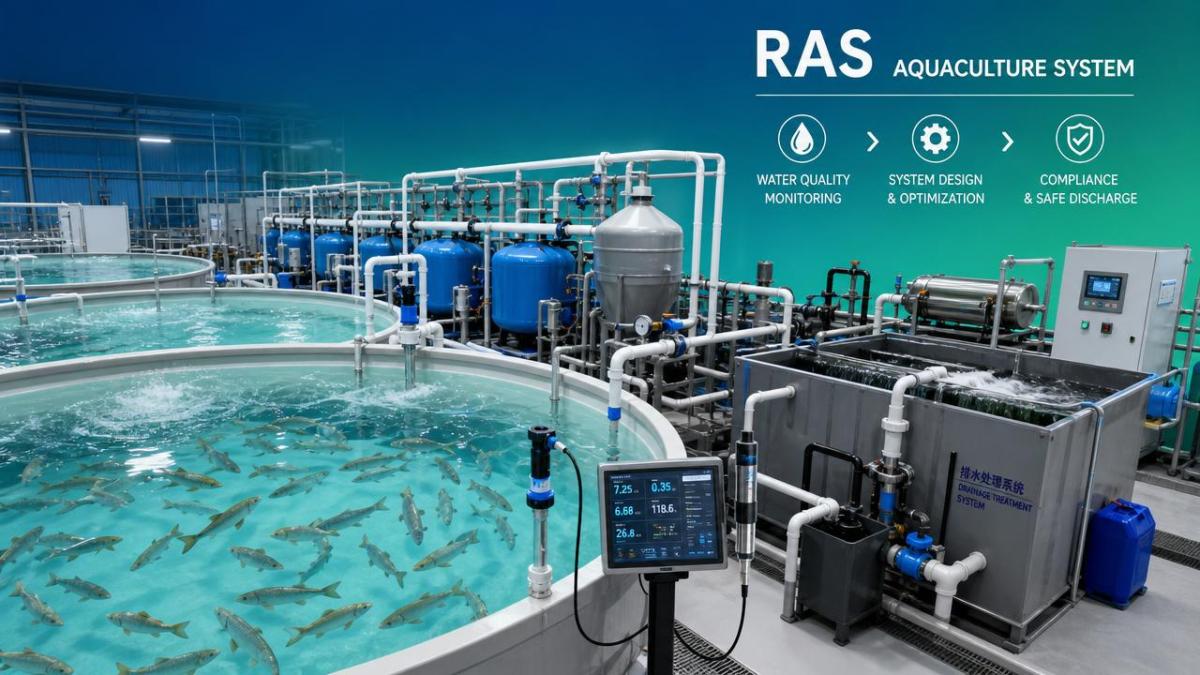
Compliance exposure is moving from external risk to internal cost center
Environmental compliance is another area where cost origin is being redefined. In many regions, water discharge, sludge disposal, chemical handling, and traceability obligations are becoming more structured and easier to audit. For aquaculture & fishery operators, this means compliance is no longer simply a legal concern handled when inspections occur. It directly shapes infrastructure needs, staffing requirements, documentation workload, and vendor selection.
Financial approvers should recognize that compliance failures often originate in system mismatches rather than paperwork errors. If discharge treatment is underspecified, if records cannot connect water events to corrective actions, or if a site lacks consistent process controls, the resulting cost can include permit delays, shipment interruption, retrofit spending, or restricted expansion. These are capital efficiency issues, not just technical inconveniences.
As a result, better-performing aquaculture & fishery businesses are shifting their procurement logic. Instead of asking whether a component meets minimum operating need, they ask whether the total system supports auditability, repeatability, and environmental defensibility over time.
The biggest financial impact may come from biological underperformance
A crucial trend for financial readers is the growing recognition that water quality costs often appear as biological inefficiency rather than treatment expense. In aquaculture & fishery operations, even small deviations in dissolved oxygen, pH stability, ammonia control, salinity balance, or suspended solids can reduce growth rates and feed efficiency long before they trigger an obvious alarm. That means a site may remain “operational” while still losing margin every cycle.
This matters because biological underperformance is easy to misclassify. A lower-than-expected harvest may be blamed on feed, genetics, or seasonal variability, when the deeper issue is chronic water instability. For capital allocators, this reinforces the need to connect technical metrics with financial outputs. Water quality should be reviewed against revenue per unit volume, feed conversion trends, harvest predictability, mortality pattern, and maintenance burden—not in isolation.
In other words, the cost question in aquaculture & fishery is no longer “How much do we spend on treatment?” but “How much value do we lose when water performance is inconsistent?” That is a more strategic and decision-useful framing.
Who feels these changes most across the value chain
The effect of changing water quality economics is not evenly distributed. Some roles face greater exposure because they sit between technical outcomes and financial accountability.
For integrated aquaculture & fishery companies, these impacts often reinforce one another. A technical compromise in water management can flow through labor planning, compliance costs, and sales performance in the same quarter.
Signals worth watching before approving new spend
Several signals now deserve closer attention when reviewing aquaculture & fishery projects or upgrades. First, ask whether projected savings rely too heavily on ideal operating conditions. If the model assumes stable source water, perfect maintenance discipline, and no sensor drift, expected returns may be overstated. Second, examine whether the proposed system separates critical and noncritical functions. A design that lacks redundancy in aeration, oxygenation, or monitoring may look cost-efficient on paper while carrying outsized downside risk.
Third, review whether operating teams were involved early enough. Many water quality costs arise because procurement decisions prioritize equipment price over process compatibility. Fourth, look for evidence that the vendor or project sponsor understands not just the water chemistry, but also the business model: target species, harvest rhythm, staffing constraints, energy price sensitivity, and expected compliance pathway. In aquaculture & fishery investments, technical suitability without operational fit is a common source of future overspend.
A practical decision lens for financial approvers
A more disciplined review framework can improve capital allocation. Rather than approving on CAPEX alone, finance teams should test each aquaculture & fishery proposal against five questions. Does the design reduce avoidable biological loss? Does it improve response time to water events? Does it lower compliance uncertainty? Does it support stable output under non-ideal conditions? Does it remain serviceable without excessive specialist labor?
When these questions are addressed early, water quality spending becomes easier to justify because it is linked to resilience and output quality, not just treatment consumption. This is especially important in an environment where facilities are under pressure to do more with constrained labor and rising utility costs. The best investments in aquaculture & fishery systems are increasingly those that prevent margin erosion quietly and continuously.
What direction the market is moving toward
The direction of travel is clear. Aquaculture & fishery operators are moving toward more integrated water architectures, stronger data discipline, and procurement standards that account for environmental and biological risk together. The market is rewarding systems that can show stable performance, transparent control logic, and credible compliance readiness. At the same time, buyers are becoming more cautious about low-cost solutions that shift complexity onto operations teams after installation.
For ACC readers and other institutional evaluators, the lesson is not that every site needs the most advanced technology. It is that the cost origin of water quality problems has broadened. Design, monitoring, compliance, and biological performance now belong in the same investment discussion. If enterprises want to judge how these trends affect their own aquaculture & fishery strategy, they should start by confirming three things: where hidden water costs currently arise, which of those costs are structural rather than incidental, and whether future spending is being directed toward prevention or repeated correction.
That is the more reliable path to lower lifetime cost, stronger operational confidence, and better financial outcomes across modern aquaculture & fishery infrastructure.
Related Intelligence
- RAS SystemsFAO Updates Global Aquaculture Equipment List, 3 Chinese RAS Integrators IncludedFAO updates Global Aquaculture Equipment List — 3 Chinese RAS integrators added, including ISO 22000 & ASC certified leaders. Discover implications for procurement, certification & global market access.
- RAS Systems2026 World Intelligent Industry Expo Opens in TianjinDiscover the 2026 World Intelligent Industry Expo in Tianjin — featuring groundbreaking intelligent connected agricultural machinery and smart aquaculture farms (RAS + low-altitude inspection). Key for global agri-tech exporters & integrators.
- RAS SystemsAquaculture & Fishery Systems: Where Water Quality Costs StartAquaculture & Fishery cost drivers start earlier than treatment. Learn how design, monitoring, compliance, and biological performance shape lifetime expenses and smarter investment decisions.
The Morning Broadsheet
Daily chemical briefings, market shifts, and peer-reviewed summaries delivered to your terminal.
