

The Authority in Global Agricultural Chemistry & Bio-Resources
Wholesale Iron Oxides: Shade Consistency Is Harder Than It Looks
In wholesale iron oxides procurement, shade consistency is more than a visual benchmark—it directly affects batch approval, regulatory confidence, and downstream product stability. For quality control and safety managers, even minor pigment variation can signal deeper issues in raw material selection, processing control, or supplier compliance. Understanding why color uniformity is difficult to maintain is essential for reducing risk and protecting production standards.
Why is shade consistency in wholesale iron oxides so difficult to control?
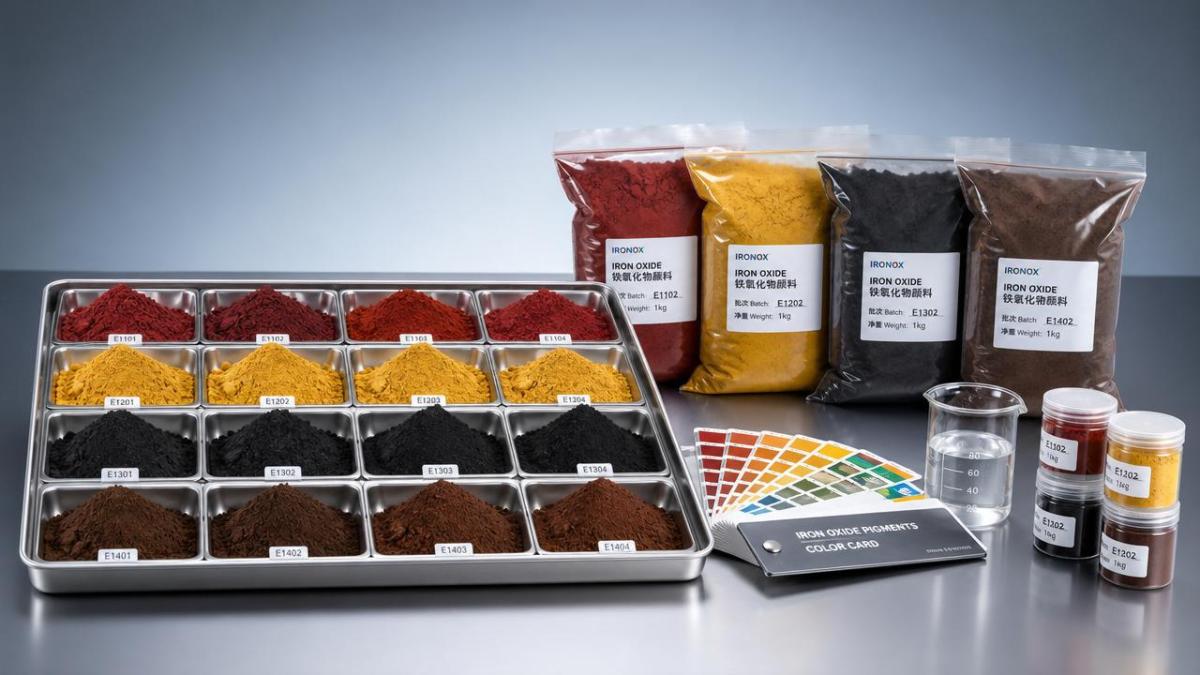
For many buyers, wholesale iron oxides appear simple: red, yellow, black, or brown inorganic pigments supplied against a reference sample. In practice, however, color stability depends on a chain of variables that begins with ore or precursor purity and continues through calcination, milling, blending, packaging, storage, and transport. A small deviation at any stage can shift undertone, tinting strength, or opacity.
This matters across the broader primary industries and fine chemicals landscape. Iron oxide pigments are used in coatings, building materials, plastics, feed-adjacent processing environments, industrial equipment finishes, and specialty formulations where repeatable appearance often correlates with process discipline. For quality control teams, shade drift is rarely just a cosmetic issue. It can indicate inconsistent particle size distribution, unstable moisture content, contamination, or poor batch homogenization.
Safety managers also have a stake in this problem. If a supplier cannot keep color stable, buyers must ask whether the same production line is maintaining traceability, impurity controls, dust management, and conformance with agreed specifications. In regulated or audit-sensitive supply chains, visual inconsistency often triggers wider scrutiny.
- Raw material chemistry varies by source, especially when iron content, trace metals, or mineral impurities are not tightly normalized.
- Thermal processing windows are narrow. Slight changes in temperature profile or residence time can alter crystal phase and final hue.
- Grinding and classification influence light scattering, which changes perceived shade even if chemical composition is nominally similar.
- Storage and shipping conditions, including moisture pickup and bag-to-bag segregation, can weaken color reproducibility at receiving inspection.
AgriChem Chronicle follows these issues from a supply chain intelligence perspective. In markets where compliance, industrial reliability, and procurement transparency intersect, the ability to evaluate pigment consistency is not optional. It is part of modern risk control.
What quality control teams should measure beyond visual matching
A common mistake in wholesale iron oxides purchasing is to accept a shipment because it looks close to an approved retain sample under casual lighting. That approach is too weak for multi-batch production. Shade consistency should be tied to measurable indicators that explain why one lot behaves like another in actual use.
Core variables that influence pigment shade stability
The table below summarizes the evaluation dimensions that quality control and safety managers should align before approving a wholesale iron oxides supplier for regular purchasing.
When these factors are documented, visual assessment becomes more reliable because it is supported by process evidence. Without that evidence, a buyer may unknowingly approve a lot that passes initial appearance checks but fails in final application.
Practical receiving checks
- Inspect under standardized lighting rather than warehouse ambient light.
- Compare multiple bags from the same lot, not just one top sample.
- Verify color after dispersion in the actual formulation medium when possible.
- Cross-check shade against moisture, PSD, and certificate data before release.
How different procurement models affect shade risk in wholesale iron oxides
Not all purchasing arrangements create the same level of control. Spot buying may seem economical, but for wholesale iron oxides it often increases color variability because different lots may come from different lines, plants, or raw material sources. Contract-based sourcing usually offers better predictability, especially when the buyer locks in reference standards and release criteria.
The comparison below helps quality and safety teams decide which model better fits their production tolerance, audit burden, and complaint exposure.
The right answer depends on application criticality. If pigment variation can trigger product rejection, rework, or compliance review, a direct or tightly controlled approved-distributor model usually reduces total risk, even if the unit price is not the lowest.
Which application scenarios make shade drift more dangerous?
Shade inconsistency does not create the same consequences in every use case. For quality control managers, the practical question is not whether variation exists, but where variation becomes expensive or operationally unsafe.
High-sensitivity scenarios
- Architectural and industrial coatings where color matching affects customer acceptance and warranty discussions.
- Concrete, pavers, tiles, and construction materials where one inconsistent lot can produce visible panel-to-panel or batch-to-batch contrast.
- Plastic masterbatch or molded parts where undertone changes become obvious under daylight, retail lighting, or outdoor exposure.
- Equipment finishing for agriculture, forestry, and industrial handling systems where brand color consistency has commercial value.
Moderate-sensitivity scenarios
In some processing contexts, wholesale iron oxides are not the final visible feature, yet consistency still matters. Refractory mixes, rubber components, and certain functional blends may tolerate a wider visual range, but lot variability can still affect dosing accuracy, dispersion, or internal quality records. That means the procurement team should define tolerance by application, not by general assumption.
What standards, documentation, and compliance signals should buyers verify?
Quality and safety managers do not need every supplier to hold the same certifications, because end uses differ. They do need a disciplined document trail. For wholesale iron oxides, the most useful compliance signals are those that connect product identity, lot release, hazard communication, and traceability.
Documents worth reviewing before regular orders
The table below organizes practical checkpoints that support both procurement confidence and internal audit readiness.
Where supply chains touch regulated sectors or multinational operations, ACC’s editorial approach becomes especially useful. Procurement teams benefit from cross-disciplinary interpretation: not only what a document says, but whether it fits the expectations of chemical handling, industrial traceability, and international trade compliance.
How to build a lower-risk approval process for wholesale iron oxides
A stable purchasing outcome is usually the result of a disciplined qualification workflow rather than a single good sample. The strongest programs combine lab review, production trial data, supplier communication rules, and reapproval triggers.
Recommended approval sequence
- Define a written specification that includes shade expectation, test conditions, and measurable supporting parameters.
- Request representative samples from at least two production lots rather than one sales sample.
- Run application-specific trials using normal dosage, actual binder or matrix, and controlled lighting assessment.
- Approve supplier documentation, including SDS, COA format, packaging controls, and change notification process.
- Monitor first commercial deliveries with tightened receiving inspection and retain sample comparison.
This process helps avoid a common failure pattern: a supplier matches one benchmark sample but cannot maintain the same result at commercial scale. For safety managers, the workflow also creates a clearer record in case of incident review, deviation investigation, or customer complaint.
Common misconceptions that cause avoidable pigment deviations
“Same color name means same performance”
Color labels such as red oxide or yellow oxide are too broad for serious procurement. Two products with similar names may differ in undertone, strength, dispersion behavior, and application stability. Buyers should qualify by data and trial performance, not nomenclature alone.
“If the price is competitive, variation can be managed in production”
That assumption often fails when production schedules are tight. Corrective blending, reformulation, or extra quality checks consume labor and can delay shipment. The apparent savings from lower-cost wholesale iron oxides may disappear once rework, scrap, and customer dissatisfaction are included.
“A trader’s document set is enough”
Documents matter, but they are stronger when supported by traceable manufacturing information. If the buyer cannot confirm plant source stability, lot segregation, and technical contact pathways, recurring shade problems become harder to investigate and correct.
FAQ: what do quality and safety managers ask most about wholesale iron oxides?
How should we define acceptable shade tolerance for wholesale iron oxides?
Set tolerance according to final application visibility, not supplier habit. A coating, concrete facing element, or branded equipment finish usually needs tighter control than an internal industrial blend. Combine visual reference approval with supporting limits for moisture, PSD, and formulation trial performance.
What is the biggest warning sign during supplier qualification?
Inconsistent answers about raw material source, lot coding, or process change communication are major warning signs. If a supplier cannot clearly explain how one batch is made comparable to the next, the risk of future shade deviation is high.
Can we dual-source wholesale iron oxides safely?
Yes, but only if both sources are qualified against the same application test and not just against a generic color name. Dual sourcing works best when the buyer keeps separate approved references, defines interchangeability rules, and requires advance notice of process changes.
How often should we requalify a pigment supplier?
Requalification frequency depends on complaint history, application sensitivity, and supply chain complexity. A practical trigger-based model often works better than a fixed calendar alone: requalify after source changes, extended supply gaps, repeated receiving deviations, or unusual application performance.
Why work with AgriChem Chronicle when evaluating wholesale iron oxides supply risk?
Wholesale iron oxides sit at the intersection of materials science, industrial procurement, and compliance discipline. That is precisely where AgriChem Chronicle adds value. ACC serves readers in primary industries and fine chemicals who need more than promotional claims. They need market intelligence, technical context, and practical screening logic for suppliers operating in increasingly regulated global supply chains.
Our editorial framework is built around verified technical interpretation from biochemical engineers, agricultural scientists, and trade compliance specialists. For procurement leaders, QC teams, and safety managers, this means clearer evaluation of specification control, documentation quality, traceability expectations, and supply-side credibility across industrial sectors where raw material consistency matters.
What you can contact us about
- Parameter confirmation for wholesale iron oxides, including shade-related data points worth requesting before approval.
- Supplier screening logic for applications with strict batch acceptance, audit exposure, or complaint sensitivity.
- Procurement model selection, including spot buying versus approved-source agreements and dual-source planning.
- Documentation review priorities covering COA expectations, SDS completeness, packaging controls, and traceability checkpoints.
- Discussion on delivery timing, sample support, qualification workflow, and risk reduction steps for application-specific trials.
If your team is facing recurring shade variation, uncertain supplier comparability, or rising compliance pressure in wholesale iron oxides purchasing, contact AgriChem Chronicle for a more structured evaluation path. The right conversation should begin with your use case, acceptance criteria, delivery window, documentation needs, and sample plan—not just price per metric ton.
Related Intelligence
- APIs & IntermediatesWholesale Zinc Oxide Prices Vary for Reasons Beyond PurityWholesale zinc oxide prices vary by more than purity alone. Explore how process, specs, compliance, and freight impact cost to source smarter and reduce supply risk.
- APIs & IntermediatesWholesale Iron Oxides: Shade Consistency Is Harder Than It LooksWholesale iron oxides shade consistency is harder than it looks. Learn the hidden causes of batch variation, key QC checks, and smarter sourcing steps to reduce risk and protect product quality.
- APIs & IntermediatesBulk Phosphoric Acid Buying Mistakes That Delay ProductionBulk phosphoric acid buying mistakes can trigger delays, rejects, and higher costs. Learn how to compare specs, suppliers, and documents to protect production.
The Morning Broadsheet
Daily chemical briefings, market shifts, and peer-reviewed summaries delivered to your terminal.
