

The Authority in Global Agricultural Chemistry & Bio-Resources
New Drone Standard GB/T 44712-2026 Takes Effect May 2026
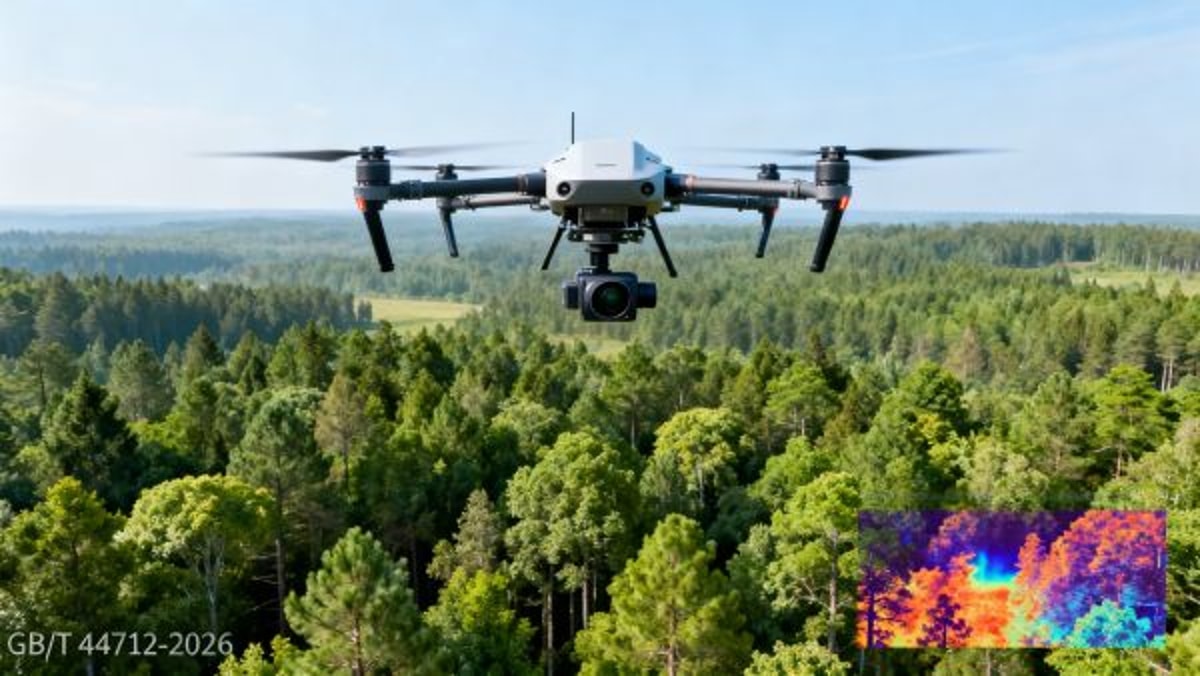
Starting 1 May 2026, China’s new national standard GB/T 44712-2026 mandates RTCA DO-178C Level A certification for flight control and image recognition software in integrated drone systems used for forestry monitoring and wildfire patrol—including OEM pre-installed Forestry Equipment models. This requirement directly affects manufacturers, integrators, and procurement entities active in forest management technology markets in China, Canada, and Australia.
Event Overview
GB/T 44712-2026, titled “Unmanned Aircraft Systems for Forestry Applications — Technical Requirements and Testing Methods”, comes into force on 1 May 2026. The standard explicitly requires that flight control and AI-based image recognition software embedded in forestry-integrated drones—particularly those supplied by Forestry Equipment OEMs—must comply with RTCA DO-178C Level A certification. This certification is confirmed as a mandatory qualification for forestry equipment tenders in Canada and Australia.
Industries Affected by the Regulation
OEM Drone System Integrators
Integrators supplying pre-configured drone systems to forestry agencies or equipment manufacturers must now validate their software development lifecycle against DO-178C A-level rigor. Impact includes extended certification timelines, increased verification overhead, and potential redesign of legacy flight or analytics modules not originally developed under certifiable processes.
Forestry Equipment Manufacturers (OEMs)
Manufacturers embedding drones into turnkey forest monitoring solutions—e.g., tower-mounted patrol units or vehicle-integrated platforms—face revised compliance obligations for bundled software. Non-compliant systems may be excluded from public procurement bids in China and disqualified from export tenders in Canada and Australia.
Software Development Providers for UAVs
Vendors supplying perception, navigation, or mission-planning software for forestry drones must now align documentation, traceability, and test coverage with DO-178C A-level objectives. This affects both commercial off-the-shelf (COTS) software providers and in-house R&D teams lacking aviation-grade certification experience.
Government Procurement & Forestry Service Contractors
Contractors bidding on national or provincial forest surveillance projects in China—and cross-border tenders in Canada and Australia—must verify supplier certification status prior to submission. Absence of valid DO-178C A documentation may result in automatic bid rejection, regardless of hardware performance.
What Enterprises and Practitioners Should Monitor and Act On
Track official interpretation documents from SAC/TC 435
The Standardization Administration of China (SAC) and its Technical Committee TC 435 on Unmanned Aircraft Systems are expected to issue implementation guidelines and conformity assessment procedures ahead of May 2026. Enterprises should monitor these releases for clarification on scope boundaries—e.g., whether retrofitting existing fleets qualifies, or whether third-party certification bodies are authorized.
Identify software components subject to certification
Not all onboard software falls under the mandate. Analysis shows only flight control logic and real-time image recognition modules used for fire detection or canopy anomaly classification are explicitly covered. Enterprises should map their software architecture to isolate certifiable components and avoid over-scoping compliance efforts.
Distinguish between regulatory signal and operational enforcement
Observably, DO-178C A-level certification has historically applied to civil aviation-critical systems—not commercial forestry tools. Its inclusion here signals tightening safety expectations but does not yet indicate immediate field audits or retroactive penalties. Current enforcement focus is likely limited to new tender submissions and type certification for new models.
Prepare supply chain documentation and vendor alignment
Forestry OEMs should initiate technical dialogues with software suppliers now to confirm DO-178C readiness—or identify gaps requiring external support. Concurrently, procurement teams should update vendor questionnaires to include formal evidence of certification planning (e.g., plan approval, tool qualification records), not just final certificates.
Editorial Perspective / Industry Observation
This regulation is better understood as a forward-looking signal than an immediate operational constraint. From an industry perspective, it reflects a broader shift toward harmonizing unmanned system safety assurance across environmental monitoring domains—aligning forestry use cases with aviation-grade software discipline. While DO-178C A remains rare outside avionics, its adoption here suggests growing regulatory convergence between unmanned aerial systems and safety-critical infrastructure applications. Continued observation is warranted on how certification bodies scale capacity and whether modular certification pathways emerge for common forestry AI functions.
Conclusion
GB/T 44712-2026 marks a formal step toward standardized software safety governance for forestry drones—but its practical impact depends less on the regulation itself and more on how certification infrastructure, procurement enforcement, and international reciprocity evolve over the next 12–18 months. For now, it is more appropriately interpreted as a strategic alignment milestone than a near-term compliance deadline.
Source Attribution
Main source: GB/T 44712-2026 “Unmanned Aircraft Systems for Forestry Applications — Technical Requirements and Testing Methods”, published by Standardization Administration of China (SAC), effective 1 May 2026.
Note: Implementation guidance, authorized certification bodies, and applicability to legacy deployments remain pending official clarification and are subject to ongoing observation.
Related Intelligence
- Forestry EquipmentNew Drone Standard GB/T 44712-2026 Takes Effect May 2026New Drone Standard GB/T 44712-2026 mandates RTCA DO-178C Level A certification for forestry drones—key for China, Canada & Australia tenders. Act now!
- Forestry EquipmentWhat to Check Before Buying Used Forestry EquipmentForestry equipment buyers: learn what to check before buying used units, from engine hours and hydraulics to safety, parts support, and Supply Chain Transparency.
- Forestry EquipmentBand sawmills in bulk: where downtime costs really add upBand sawmills bulk buying reveals how downtime drives real costs. Compare portable sawmill manufacturer support, log splitters wholesale, and wood chipper machines wholesale for better uptime.
The Morning Broadsheet
Daily chemical briefings, market shifts, and peer-reviewed summaries delivered to your terminal.
