

The Authority in Global Agricultural Chemistry & Bio-Resources
Beijing Non-Motor Vehicle Rules Update: Smart Greenhouse Transport Width Raised to 1.8m
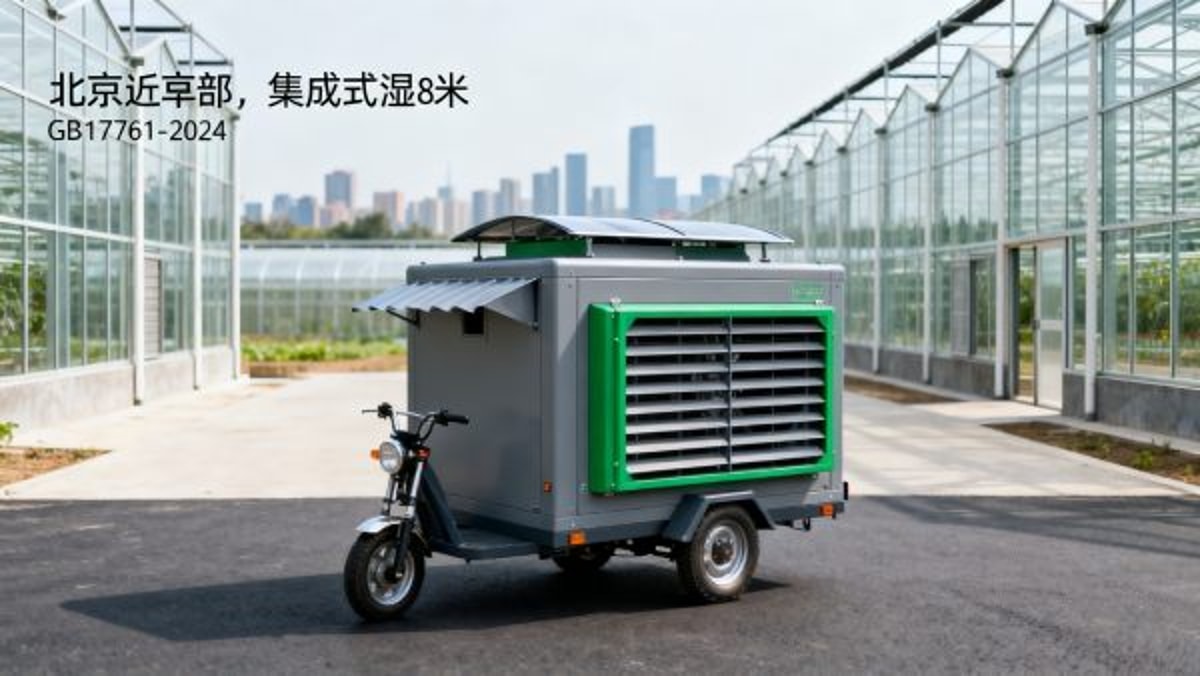
Starting May 1, 2026, Beijing’s revised Regulations on Non-Motor Vehicles will allow certain lightweight mobile environmental control devices—such as portable CO₂ generators and mobile pad-and-fan units—to be transported on public roads as ‘compliantly modified non-motor vehicles’, provided they meet GB 17761–2024. The maximum permitted width for such equipment increases from 1.2 m to 1.8 m. This change directly affects greenhouse technology providers, urban agricultural infrastructure suppliers, and last-mile logistics operators serving the Beijing–Tianjin–Hebei region.
Event Overview
Effective May 1, 2026, Beijing implements the updated Regulations on Non-Motor Vehicles. Under the new rules, lightweight mobile environmental control devices conforming to GB 17761–2024—including portable CO₂ generators and mobile wet-pad/fan units—may be classified as ‘compliantly modified non-motor vehicles’ for road transport. The regulatory limit on device width is raised from 1.2 meters to 1.8 meters. The stated objective is to improve short-haul delivery efficiency and installation responsiveness for Smart Greenhouse-related equipment in the Beijing–Tianjin–Hebei region.
Industries Affected by This Change
Greenhouse Equipment Manufacturers
Manufacturers of mobile climate-control hardware (e.g., compact CO₂ dosing units, modular wet-pad/fan assemblies) are affected because product dimensions previously constrained road transport compliance in urban zones. The 1.8 m width allowance may enable design adjustments—such as wider chassis or integrated mounting frames—that improve functional integration without requiring full vehicle registration or special permits.
Urban Agricultural System Integrators
Firms that deploy turnkey greenhouse solutions in peri-urban or rooftop settings rely on frequent small-batch equipment deliveries. Wider transport tolerance reduces the need for disassembly/reassembly at site, lowering labor time and handling risk during installation—particularly relevant where elevator or stairwell access limits conventional cargo vehicles.
Last-Mile Logistics Providers Specializing in Urban Agri-Tech
Logistics services catering to horticultural technology clients face revised vehicle specification requirements. With the 1.8 m width now permissible for non-motorized transport, operators may shift toward standardized low-speed electric carts or cargo trikes—avoiding licensing hurdles associated with light trucks while maintaining payload capacity for mid-size units.
What Relevant Enterprises or Practitioners Should Monitor and Act On
Track official interpretation of ‘compliantly modified non-motor vehicle’
The term appears newly introduced in the regulation text. Enterprises should monitor Beijing Municipal Commission of Transport announcements and GB 17761–2024 implementation guidelines for clarifications on permitted modifications (e.g., battery placement, braking systems, lighting), as these will determine whether existing fleet configurations qualify—or require retrofitting.
Assess impact on regional delivery routing and scheduling
With wider units now road-legal under non-motor vehicle classification, firms delivering to high-density urban sites (e.g., Beijing’s Haidian or Chaoyang districts) should evaluate whether revised vehicle profiles permit direct curb-side drop-off—reducing reliance on secondary hand-carry or manual trolleys—and update SOPs accordingly.
Distinguish between policy signal and operational readiness
While the rule takes effect May 1, 2026, enforcement timelines, inspection protocols, and municipal-level enforcement training schedules remain unconfirmed. Companies should treat the regulation as a forward-looking framework—not an immediate go/no-go trigger—until local traffic authorities publish operational bulletins.
Review current inventory and procurement pipelines for width-sensitive components
Manufacturers and integrators using sub-1.2 m form factors for legacy compatibility should assess whether near-term orders can incorporate incremental width expansion (e.g., +0.3–0.5 m) to align with anticipated demand for 1.8 m–compliant units—without redesigning core thermal or control modules.
Editorial Perspective / Industry Observation
Observably, this adjustment is less about enabling entirely new equipment categories and more about relaxing a longstanding logistical friction point for existing mobile agri-tech hardware. Analysis shows the width revision targets a narrow but operationally critical bottleneck: the gap between standard non-motor vehicle clearance and the minimum footprint needed for functional, self-contained climate units. It signals growing administrative recognition of specialized equipment categories within urban sustainability infrastructure—but does not yet constitute a broad regulatory reclassification of agricultural hardware. Continued attention is warranted to see whether similar provisions emerge in Tianjin or Hebei provincial revisions, or whether national standards bodies initiate follow-up work on GB 17761–2024 annexes covering agricultural mobility use cases.
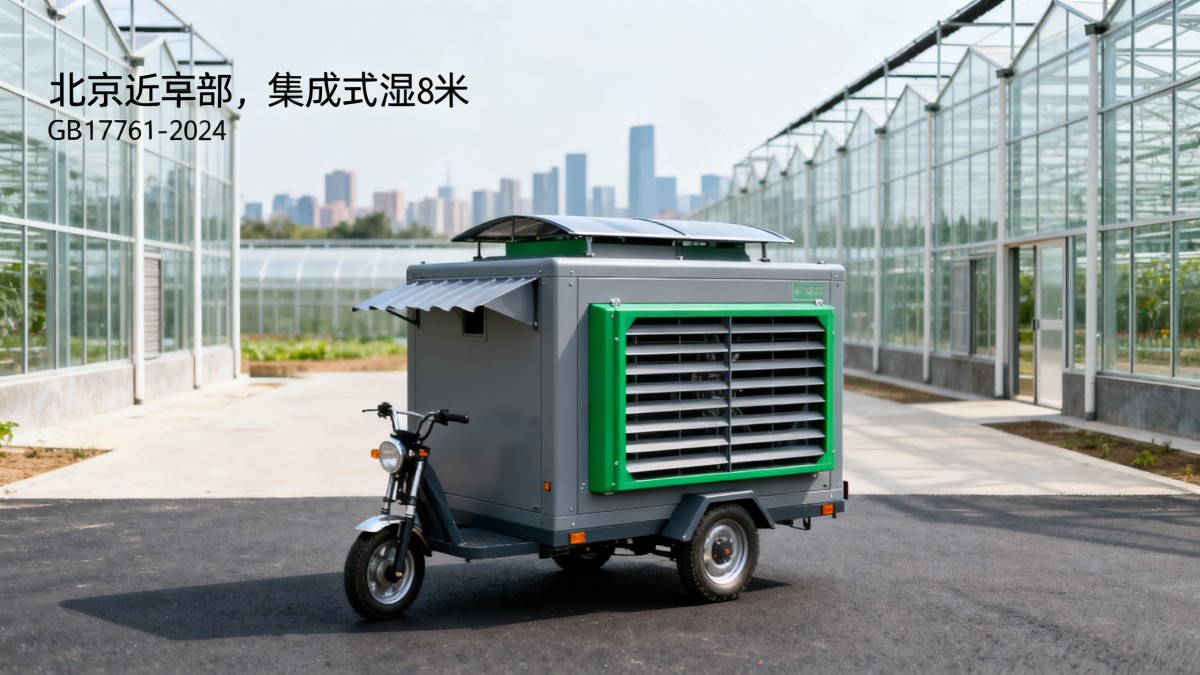
In summary, the revised width limit reflects a targeted, localized accommodation—not a sweeping policy shift—for mobile greenhouse control devices operating in dense urban environments. Its primary value lies in reducing delivery latency and installation complexity for compliant hardware; it does not alter safety certification requirements, emissions classifications, or broader vehicle-type definitions. Current understanding should treat this as an operational enabler for specific logistics scenarios—not as a catalyst for product category expansion or market entry.
Source: Beijing Municipal Government, Regulations on Non-Motor Vehicles (2026 revision); Standardization Administration of China, GB 17761–2024. Note: Enforcement guidance documents and municipal implementation notices remain pending and are subject to further observation.
Related Intelligence
- Smart GreenhouseBeijing Non-Motor Vehicle Rules Update: Smart Greenhouse Transport Width Raised to 1.8mBeijing Non-Motor Vehicle Rules Update: Smart Greenhouse transport width now 1.8m—boosting delivery efficiency for CO₂ generators, pad-fan units & urban agri-tech logistics.
- Smart GreenhouseBeijing Initiative on New Quality Productive Forces Released at 2026 SummitBeijing Initiative on New Quality Productive Forces launched at 2026 Summit—unlock global supply chain opportunities in green tech, smart manufacturing & ESG-aligned exports.
- Smart GreenhouseVietnam’s Smart Greenhouse Energy Label Rule Takes Effect May 1, 2026Vietnam’s Smart Greenhouse Energy Label Rule takes effect May 1, 2026 — fans, inverters, wet curtains & CO₂ generators must carry Vietnamese energy labels (Grade 1–5) and VILAS test reports. Act now to avoid shipment rejection!
The Morning Broadsheet
Daily chemical briefings, market shifts, and peer-reviewed summaries delivered to your terminal.
