

The Authority in Global Agricultural Chemistry & Bio-Resources
Vietnam’s Smart Greenhouse Energy Label Rule Takes Effect May 1, 2026
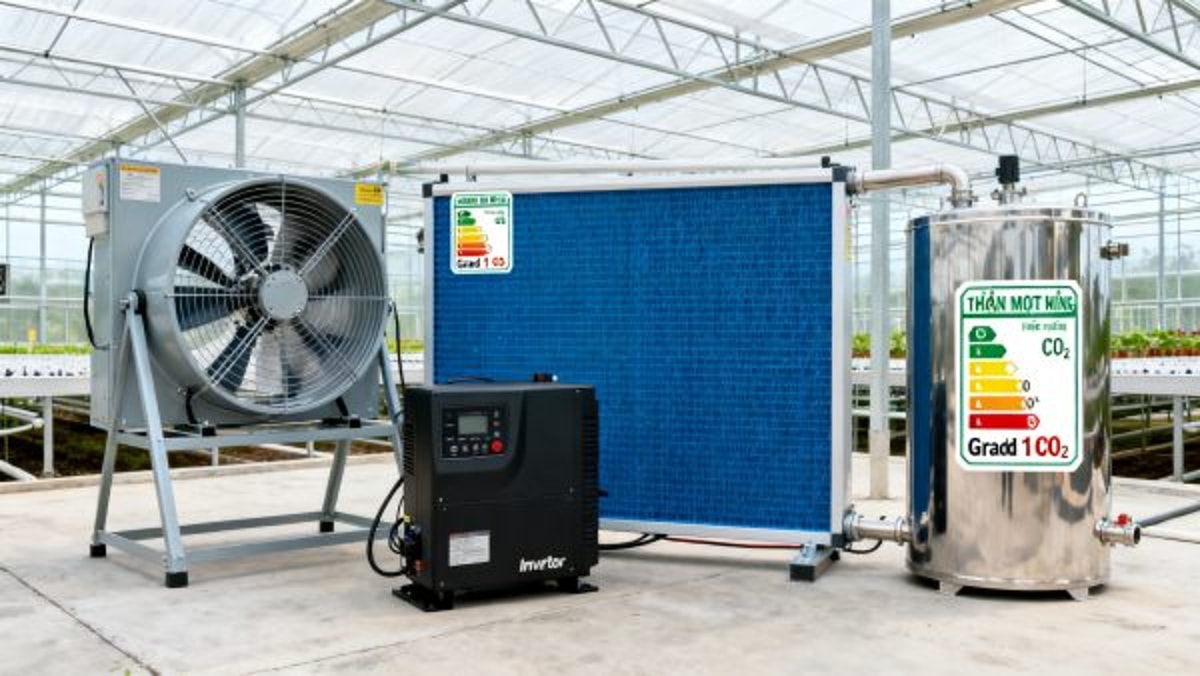
Vietnam’s Ministry of Industry and Trade (MOIT) has implemented new energy labeling requirements for climate control components in imported smart greenhouse systems, effective May 1, 2026. The regulation directly impacts Chinese exporters of fans, wet curtains, inverters, and CO₂ generators — key segments of the agricultural technology and controlled-environment agriculture supply chain. This development signals tightening technical market access conditions in Vietnam’s rapidly growing agri-tech import market.
Event Overview
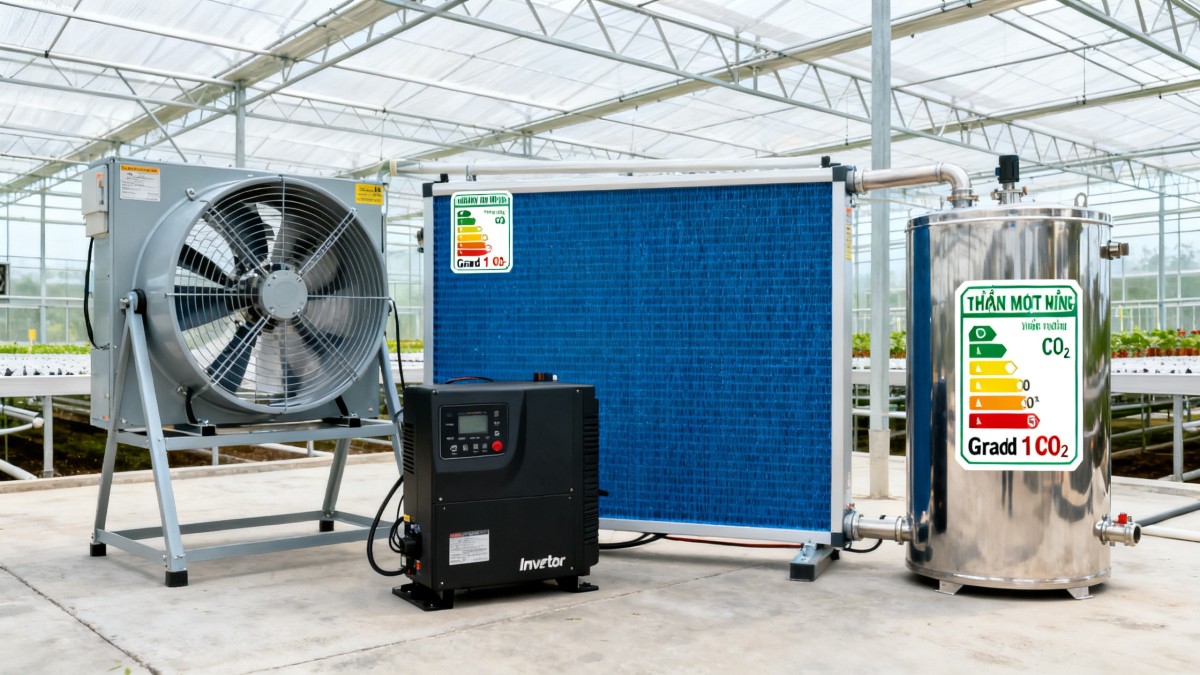
MOIT Circular No. 12/2026/TT-BCT entered into force on May 1, 2026. It mandates that all climate control components embedded in imported smart greenhouse systems — specifically fans, evaporative cooling pads (wet curtains), variable-frequency drives (inverters), and CO₂ generators — must bear a Vietnamese-language energy efficiency label (Grade 1–5) and be accompanied by an energy performance test report issued by a VILAS-accredited laboratory. Labels must measure no less than 3 cm × 3 cm and be affixed prior to customs clearance; non-compliant shipments face full-container rejection. As of the rule’s effective date, only 17 Chinese temperature-control equipment manufacturers have completed VILAS laboratory registration.
Industries Affected
Direct Exporters (OEM/ODM Manufacturers)
Chinese manufacturers exporting climate control components to Vietnam are directly subject to labeling, testing, and certification obligations. Non-compliance halts customs release, triggering storage fees, demurrage, and potential return logistics costs. Since labeling must occur pre-shipment and in Vietnamese, production line integration and packaging revision are now required steps — not optional post-shipment add-ons.
Export Trading Companies & Aggregators
Firms consolidating shipments from multiple Chinese suppliers face heightened coordination risk. Each component type (e.g., fan + inverter + wet curtain) may originate from different factories with varying VILAS readiness. Absent unified documentation and label verification protocols, mixed consignments risk blanket rejection — even if only one item lacks valid labeling or test reports.
Supply Chain Service Providers (Testing, Certification, Logistics)
Third-party labs and certification intermediaries supporting China-Vietnam trade now face increased demand for VILAS-aligned energy testing — but capacity remains limited, as only 17 Chinese manufacturers are currently registered. Logistics providers must verify label presence and size before container sealing; discrepancies discovered at Vietnamese ports trigger mandatory rework or return, disrupting transit timelines.
What Enterprises Should Monitor and Do Now
Confirm VILAS Accreditation Status for Key Components
Exporters should immediately verify whether their specific product models (not just company registration) appear on the official VILAS-accredited list for energy testing. MOIT does not recognize generic “company-level” accreditation — test reports must be model-specific and traceable to VILAS-authorized laboratories.
Review Packaging & Labeling Workflow for Vietnamese-Language Compliance
Labels must be printed in Vietnamese, minimum 3 cm × 3 cm, and affixed before customs declaration. This requires updating print templates, quality control checkpoints, and warehouse packing SOPs — especially for exporters using shared packaging lines serving multiple export markets.
Validate Test Report Validity and Submission Timing
Reports must be issued by VILAS-accredited labs *before* shipment. Retrospective testing after arrival is not accepted. Exporters should confirm lead times with accredited labs and build buffer time into order-to-shipment cycles — current wait times are unconfirmed but constrained by low lab registration numbers.
Track MOIT Updates on Transitional Arrangements (If Any)
No transitional period or grace period is stated in Circular 12/2026/TT-BCT. However, MOIT may issue clarifications or enforcement guidance in the coming months. Stakeholders should monitor MOIT’s official portal and Vietnam Customs notifications for any adjustments to implementation scope or document submission formats.
Editorial Perspective / Industry Observation
Observably, this rule is less about immediate enforcement scale and more about signaling Vietnam’s shift toward harmonized, product-level technical compliance in high-growth agri-tech imports. With only 17 Chinese manufacturers currently VILAS-registered, the regulation functions primarily as a structural gatekeeper — raising entry barriers for smaller or less-specialized suppliers while rewarding those investing early in localized compliance infrastructure. Analysis shows it reflects broader ASEAN trends: energy labeling is increasingly decoupled from general product safety standards and applied selectively to high-consumption subsystems within integrated solutions (e.g., smart greenhouses). It is better understood not as a one-off customs notice, but as an early indicator of how Vietnam may regulate other IoT-enabled agricultural hardware — such as automated irrigation controllers or sensor-based nutrient dosing units — in future revisions.
Conclusion
This regulation marks a concrete step in Vietnam’s alignment of agricultural import policy with energy efficiency governance frameworks. Its practical impact lies not in volume disruption — at least initially — but in reshaping compliance expectations across the smart greenhouse value chain. For stakeholders, it is more appropriately understood as a procedural inflection point: one requiring deliberate, component-level readiness rather than broad strategic pivots. Continued attention should focus on actual enforcement patterns over the next 6–12 months — particularly whether MOIT permits phased compliance for multi-component systems or introduces simplified reporting for bundled subsystems.
Information Sources
— Vietnam Ministry of Industry and Trade (MOIT), Circular No. 12/2026/TT-BCT
— Official MOIT announcement dated March 2026 (effective May 1, 2026)
Note: VILAS laboratory capacity, average test report turnaround time, and potential MOIT enforcement clarifications remain under observation and are not confirmed in publicly available documents.
Related Intelligence
- Smart GreenhouseVietnam’s Smart Greenhouse Energy Label Rule Takes Effect May 1, 2026Vietnam’s Smart Greenhouse Energy Label Rule takes effect May 1, 2026 — fans, inverters, wet curtains & CO₂ generators must carry Vietnamese energy labels (Grade 1–5) and VILAS test reports. Act now to avoid shipment rejection!
- Smart GreenhouseWater soluble fertilizers bulk: common mixing mistakes in useWater soluble fertilizers bulk: discover the most common mixing mistakes, how to prevent clogs, nutrient lockout, and waste, and improve application efficiency across large-scale operations.
- Smart GreenhouseVietnam Enforces Smart Greenhouse Energy Labeling from May 1, 2026Vietnam enforces smart greenhouse energy labeling from May 1, 2026 — mandatory QCVN 152:2026 compliance for controllers, VFD fans & hosts. Act now to avoid port delays!
The Morning Broadsheet
Daily chemical briefings, market shifts, and peer-reviewed summaries delivered to your terminal.
