
The Authority in Global Agricultural Chemistry & Bio-Resources
ANVISA Mandates Two-Tier Traceability for Botanical Extracts Imports to Brazil
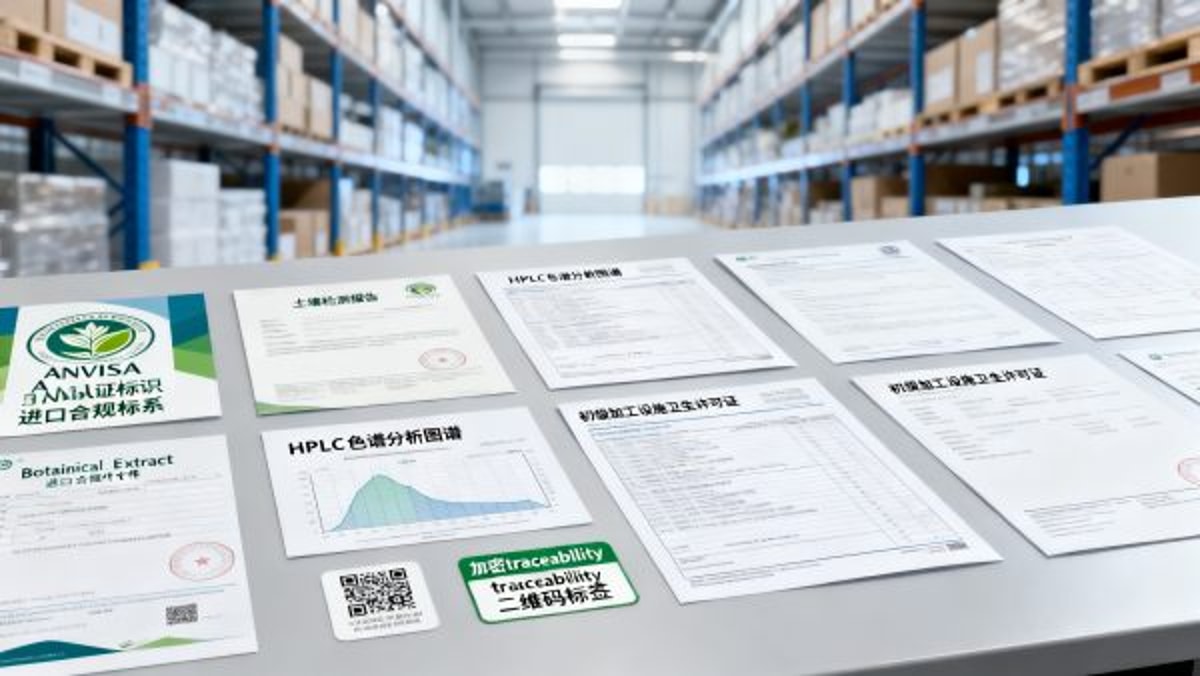
Effective 1 May 2026, Brazil’s National Health Surveillance Agency (ANVISA) has enforced new traceability requirements for imported botanical extracts under updated RDC No. 288/2026. The regulation mandates full documentation tracing raw botanical materials back to secondary suppliers — including growers, soil testing reports, primary processing facility hygiene licenses, and intermediate extract purity chromatograms. This development directly affects exporters, importers, and supply chain stakeholders in the natural ingredients, dietary supplement, cosmetics, and herbal medicine sectors.
Event Overview
On 1 May 2026, ANVISA published the revised implementation guidelines for RDC No. 288/2026. Under the update, importers of botanical extracts into Brazil must submit complete two-tier origin documentation prior to customs clearance at Brazilian ports. Required documents include: grower identification, certified soil analysis reports, valid sanitary permits for initial processing facilities, and analytical chromatographic profiles (e.g., HPLC or GC-MS) for intermediate extracts. As a result, average clearance time for botanical extracts at the Port of São Paulo has increased by 14 days. Chinese exporters are now required to upload an encrypted traceability code to the ANVISA Portal before shipment; Brazilian importers must scan this code to verify compliance.
Industries Affected
Direct Exporters (e.g., Chinese manufacturers and trading companies)
Exporters supplying botanical extracts to Brazil face immediate operational impact: they must now collect, validate, and digitize documentation from upstream farms and processors — a layer beyond typical export compliance. Failure to upload the encrypted traceability code pre-shipment blocks ANVISA verification and delays port release.
Raw Material Sourcing Firms
Firms sourcing botanicals from multiple farms or cooperatives must now ensure each secondary supplier (e.g., contract growers or regional aggregators) provides standardized, auditable records — particularly soil test reports and facility hygiene certifications. Inconsistent or incomplete data from these tiers creates bottlenecks in the export workflow.
Contract Manufacturers & Extractors
Facilities performing extraction or standardization must retain and share instrument-generated purity spectra (e.g., HPLC chromatograms) for intermediate products — not just final batches. This extends quality recordkeeping obligations and requires alignment with analytical protocols acceptable to ANVISA.
Importers & Distributors in Brazil
Brazilian importers bear responsibility for validating uploaded traceability codes and ensuring all linked documents meet ANVISA’s format and content criteria. Their customs brokers report extended lead times due to manual verification steps where QR-scanned data lacks consistency or completeness.
What Relevant Enterprises Should Monitor and Do Now
Monitor official ANVISA Portal updates on accepted file formats and encryption standards
The technical specifications for the encrypted traceability code — including hashing algorithms, metadata fields, and document naming conventions — remain subject to clarification. Enterprises should track announcements via the ANVISA Portal and registered notifications, as non-compliant uploads trigger automatic rejection.
Map and audit current supply chains for Tier-2 visibility
Companies should identify all secondary suppliers (e.g., cultivation partners, primary dryers, or local processors) involved in their botanical extract supply chain and assess whether existing contracts and SOPs support collection of soil reports, facility permits, and analytical spectra. Gaps require procedural adjustments — not just documentation requests.
Distinguish between regulatory signal and enforceable requirement
This rule is active as of 1 May 2026 and already causing measurable clearance delays. It is not a pilot or proposal; it is an operational requirement. However, enforcement rigor (e.g., frequency of random audits, penalties for partial compliance) remains under observation and may evolve in the coming months.
Prepare cross-functional coordination between QA, logistics, and procurement teams
Uploading the traceability code requires synchronized input: QA supplies analytical spectra, procurement secures grower/facility documents, and logistics manages portal submission timing relative to vessel departure. Establishing internal checkpoints — especially 10–15 days pre-ETD — mitigates last-minute holdups.
Editorial Perspective / Industry Observation
Observably, this regulation reflects ANVISA’s broader shift toward upstream accountability in natural product regulation — moving beyond finished-product testing to preventive control across cultivation and early processing stages. Analysis shows it functions less as an isolated customs measure and more as a structural signal: Brazil is aligning botanical ingredient oversight with frameworks used for pharmaceutical APIs, emphasizing verifiable provenance over self-declared claims. From an industry perspective, this is not merely a documentation upgrade but a recalibration of supply chain transparency expectations — one that prioritizes traceability depth over speed. Continued attention is warranted, particularly regarding how ANVISA interprets ‘secondary supplier’ in multi-tiered arrangements (e.g., farmer → cooperative → aggregator → extractor), which remains operationally ambiguous.
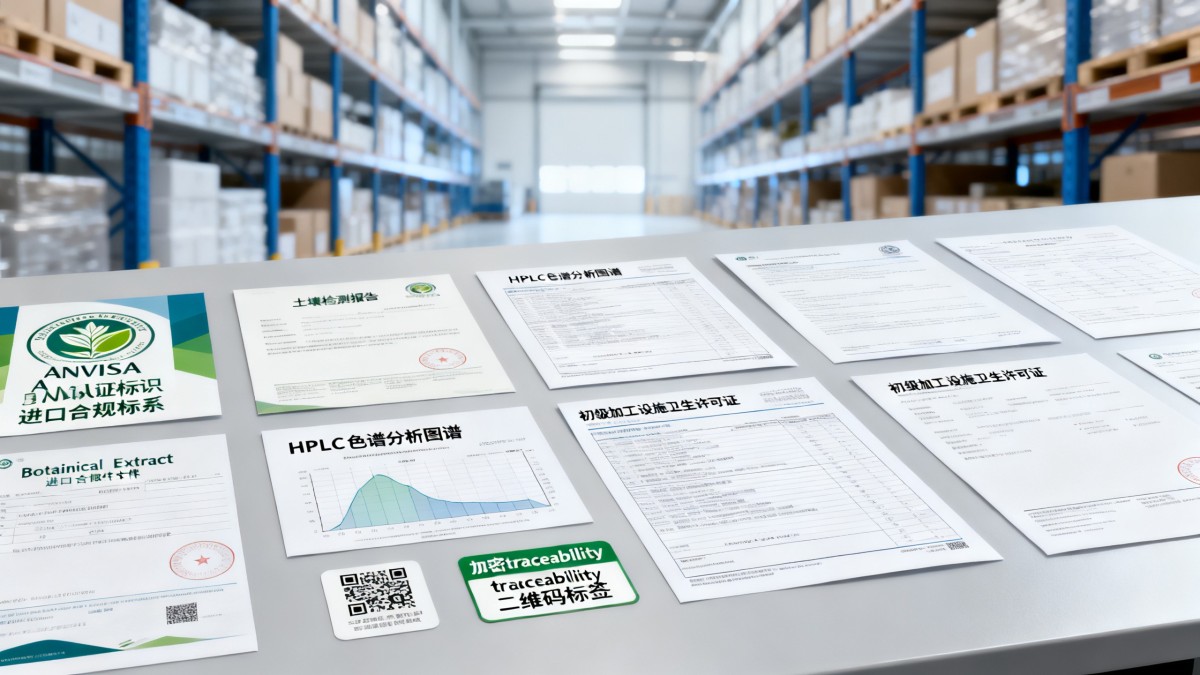
In summary, ANVISA’s two-tier traceability mandate for botanical extracts marks a concrete escalation in regulatory oversight — with tangible effects on lead times, documentation workflows, and supplier engagement models. It is best understood not as a temporary compliance hurdle, but as an enduring baseline for market access in Brazil’s regulated natural products sector.
Source: Official ANVISA RDC No. 288/2026 implementation notice, effective 1 May 2026; public clearance delay data reported by São Paulo Port Authority and Brazilian customs brokerage associations. Note: Enforcement interpretation — especially regarding scope of ‘secondary supplier’ in complex agricultural value chains — remains under observation.
Related Intelligence
- Botanical ExtractsANVISA Mandates Two-Tier Traceability for Botanical Extracts Imports to BrazilANVISA's two-tier traceability mandate for botanical extracts takes effect May 2026—ensure compliance, avoid port delays, and secure Brazil market access.
- Botanical ExtractsFDA Tightens Botanical Extracts Oversight for US ImportsFDA tightens botanical extracts oversight for US imports—critical for Chinese exporters. Discover new traceability, testing & compliance requirements now.
- Botanical ExtractsFDA Updates Import Alert for Botanical Extracts from ChinaFDA updates Import Alert 54-12: Botanical extracts from China now face DWPE over heavy metals & pesticide residues—act now to ensure GAP compliance and 12-analyte testing.
The Morning Broadsheet
Daily chemical briefings, market shifts, and peer-reviewed summaries delivered to your terminal.
