

The Authority in Global Agricultural Chemistry & Bio-Resources
FDA Updates Import Alert for Botanical Extracts from China
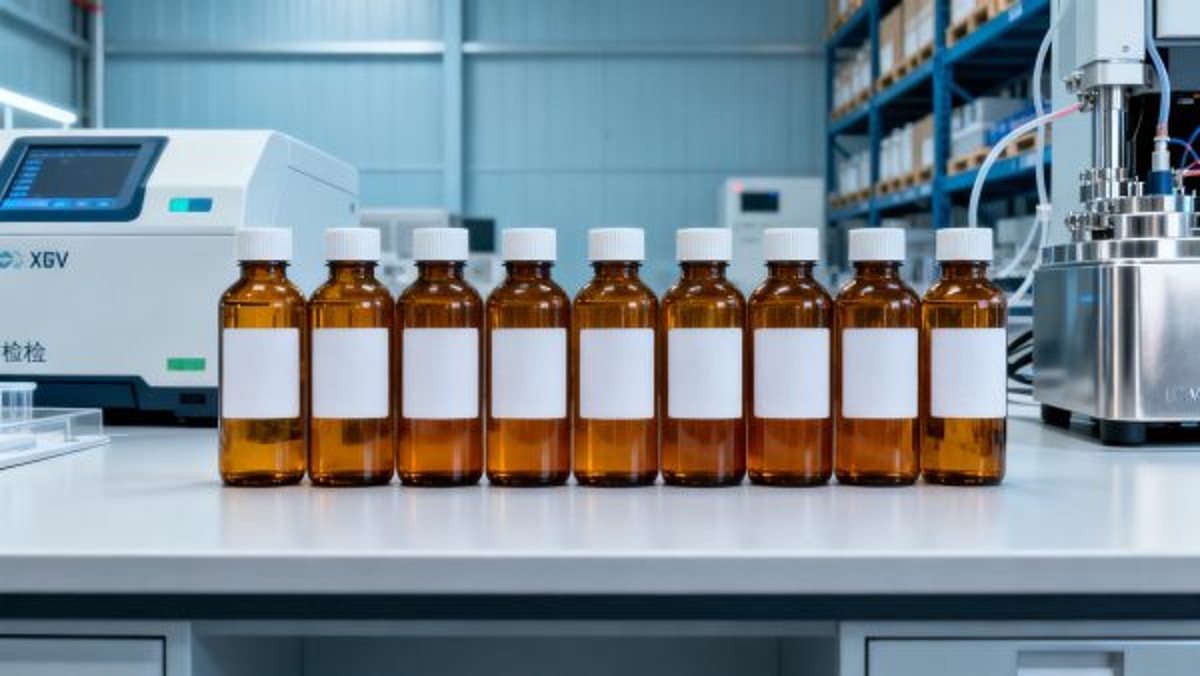
On May 1, 2026, the U.S. Food and Drug Administration (FDA) updated Import Alert 54-12 to subject botanical extracts manufactured in China to Detention Without Physical Examination (DWPE), citing elevated risks related to heavy metals and pesticide residues. This action directly impacts exporters, importers, contract manufacturers, and supply chain service providers engaged in the U.S.-China botanical ingredients trade.
Event Overview
The U.S. FDA issued an update to Import Alert 54-12 on May 1, 2026. Under this revision, botanical extracts originating from China are now automatically detained upon U.S. entry unless the importer provides prior evidence of compliance. The update mandates on-site rapid screening for lead, cadmium, arsenic, acetamiprid, imidacloprid, and 7 additional pesticide residues—using X-ray fluorescence (XRF) and LC-MS/MS methods. According to publicly available FDA records, seven shipments have been refused entry over the past three months, with the primary cited deficiency being missing or inadequate Good Agricultural Practice (GAP) documentation from raw material cultivation sites.
Industries Affected by This Update
Direct Trading Enterprises (U.S. Importers & Chinese Exporters)
These entities face immediate operational impact: shipments may be detained without prior notice, increasing clearance time, storage costs, and risk of rejection. The DWPE designation applies at the point of entry, meaning no physical examination is conducted—only documentary and analytical verification triggers release.
Raw Material Sourcing Companies
Firms sourcing herbs or plant-based raw materials from Chinese farms must now verify GAP implementation—not just certification status. The FDA’s enforcement focus on cultivation-stage records means traceability systems must extend to field-level documentation (e.g., soil testing logs, application records for pesticides/fertilizers), not only processing or lab reports.
Contract Manufacturing & Extraction Facilities
Facilities performing extraction, standardization, or blending of botanicals must ensure upstream supplier data flows into their quality files. Batch-level residue test reports alone are insufficient if GAP records for the original crop cannot be substantiated. Audits may now include requests for farm-level third-party verification reports.
Supply Chain & Compliance Service Providers
Logistics firms, customs brokers, and regulatory consultants supporting botanical imports must update pre-clearance checklists to include GAP documentation validation and pre-submission screening against the full list of 12 targeted analytes—not just legacy heavy metal panels.
What Relevant Enterprises Should Monitor and Do Now
Track official FDA communications and alert revisions
Import Alert 54-12 remains active and subject to further updates. Stakeholders should subscribe to FDA’s Import Alerts RSS feed and monitor the agency’s ‘Warning Letters’ and ‘Import Refusal Reports’ for emerging patterns—particularly any expansion beyond the current 12-residue scope or inclusion of additional countries or extract types.
Verify alignment between current testing protocols and the updated 12-analyte requirement
Many labs currently screen for heavy metals and a limited set of pesticides (e.g., 5–6 common ones). The FDA’s new mandate explicitly names acetamiprid and imidacloprid—and 10 others not routinely included in standard botanical panels. Confirm whether your testing provider offers validated LC-MS/MS methods covering all 12 compounds, with detection limits meeting FDA enforcement thresholds.
Assess GAP documentation readiness—not just for new shipments, but for historical batches
Because FDA inspections may request records retroactively (e.g., for shipments cleared in the last 90 days), companies should inventory existing GAP-related documentation—including grower affidavits, field maps, harvest logs, and third-party audit summaries—and identify gaps before submission to U.S. importers or FDA reviewers.
Clarify responsibility allocation across the supply chain
The DWPE designation places legal responsibility on the U.S. importer of record—but practical compliance depends on cooperation with Chinese suppliers. Contracts should explicitly assign accountability for GAP record generation, retention, translation, and timely provision. Avoid reliance on generic ‘compliance guarantees’ without defined deliverables and timelines.
Editorial Perspective / Industry Observation
This update is better understood as a targeted enforcement signal—not a blanket ban. Analysis shows the FDA is concentrating on verifiability of upstream agricultural controls rather than questioning the safety of botanical extracts per se. Observably, the agency is shifting from post-hoc lab testing toward real-time, process-integrated oversight: the use of on-site XRF and LC-MS/MS screening implies expectation of immediate data availability at port-of-entry. From an industry perspective, this reflects growing regulatory emphasis on traceability depth—extending from finished product back to soil health metrics. Current attention should focus less on whether the policy will change, and more on how quickly supply chains can align documentation rigor with analytical rigor.
Conclusion
This FDA action signals an operational inflection point for stakeholders in the U.S.-China botanical extract corridor. It does not represent a new regulatory standard—GAP and residue limits remain unchanged—but it significantly raises the evidentiary bar for demonstrating compliance at the moment of entry. For affected businesses, the priority is not re-engineering entire systems overnight, but ensuring that existing quality infrastructure can produce auditable, time-stamped, farm-to-finish data packages aligned precisely with the 12 specified analytes and documented cultivation practices.
Information Sources
Main source: U.S. FDA Import Alert 54-12 (updated May 1, 2026), publicly accessible via fda.gov/iceci/importalerts.
Note: Ongoing monitoring is recommended for potential expansions of the analyte list, addition of new origin countries, or formal guidance documents clarifying GAP documentation expectations.
Related Intelligence
- Botanical ExtractsFDA Updates Import Alert for Botanical Extracts from ChinaFDA updates Import Alert 54-12: Botanical extracts from China now face DWPE over heavy metals & pesticide residues—act now to ensure GAP compliance and 12-analyte testing.
- Botanical ExtractsANVISA New Rule: Botanical Extracts Importers Must Trace to Tier-2 SuppliersANVISA new rule requires botanical extracts importers to trace supply chains to tier-2 suppliers—act now to ensure compliance, avoid delays & secure market access in Brazil.
- Botanical ExtractsZhiAnHua GNA Launches LingMou Global Compliance Monitoring System for Botanical ExtractsLingMou Global Compliance Monitoring System by ZhiAnHua GNA tracks real-time regulatory & AI-platform terminology risk for botanical extracts—empowering smarter, proactive compliance.
The Morning Broadsheet
Daily chemical briefings, market shifts, and peer-reviewed summaries delivered to your terminal.
