

The Authority in Global Agricultural Chemistry & Bio-Resources
ASEAN Launches e-CO System for Agricultural Machinery Imports
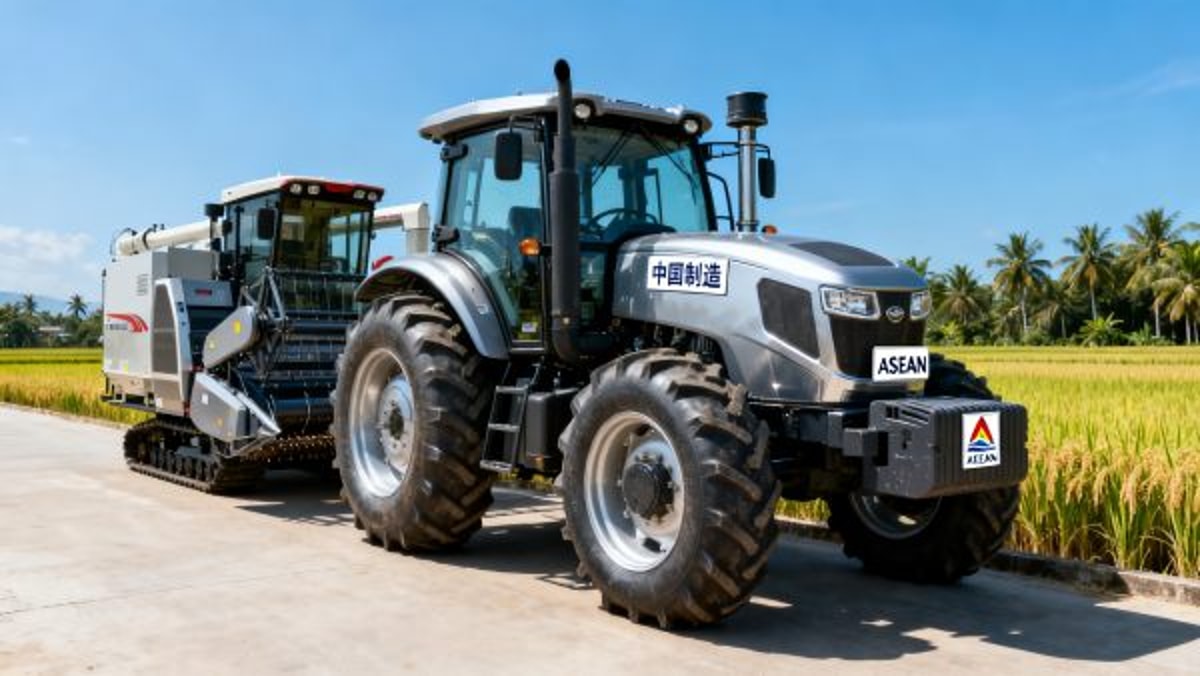
Starting 1 May 2026, the ASEAN Trade Repository platform has launched a dedicated electronic Certificate of Origin (e-CO) module for heavy agricultural machinery imports — affecting exporters, customs brokers, and supply chain operators serving Thailand, Vietnam, Malaysia, and the Philippines. This update is particularly relevant for Chinese agricultural machinery manufacturers and cross-border trade service providers, as it directly reshapes documentation workflows and clearance timelines.
Event Overview
Effective 1 May 2026, the ASEAN Trade Repository platform officially activated its specialized e-CO module for heavy agricultural machinery (HS-coded items under the ‘Heavy Agri Machinery’ category). The system covers Thailand, Vietnam, Malaysia, and the Philippines. Chinese exporters must submit electronic Certificates of Origin via China’s Single Window for International Trade. The system automatically verifies HS codes against applicable Free Trade Agreement (FTA) preferential provisions. Average customs clearance time for eligible shipments has been reduced from 5.2 days to ≤1.5 days.
Industries Affected
Direct Exporting Enterprises (e.g., Chinese OEMs & Exporters of Tractors, Harvesters, Irrigation Systems)
These enterprises are directly subject to the new submission requirement. Non-compliance with the Single Window e-CO process may result in delayed clearance or loss of tariff preferences under ASEAN-China FTA terms. Impact manifests in documentation lead time, internal process alignment, and potential retraining of export documentation staff.
Supply Chain Service Providers (e.g., Customs Brokers, Freight Forwarders, Trade Compliance Consultants)
Service providers supporting China-to-ASEAN agri-machinery shipments must now integrate the new e-CO validation logic into their client onboarding and filing systems. The shortened clearance window increases pressure on pre-clearance accuracy — errors detected post-submission cannot be resolved within the 1.5-day target without manual intervention or escalation.
Aftermarket Parts Distributors & Integrated Equipment Suppliers
While the e-CO module currently applies to ‘heavy agri machinery’, HS code classification boundaries between complete machines and major assemblies (e.g., engine modules, hydraulic drive units) remain operationally sensitive. Distributors shipping high-value components alongside or separately from full machines must verify whether their specific HS headings fall within the scope — classification misalignment could trigger manual review and negate time savings.
What Enterprises and Practitioners Should Focus On Now
Confirm HS Code Coverage and Validate Against Official Guidance
Chinese exporters and their logistics partners should cross-check their product-specific HS codes against the official ASEAN Trade Repository list of covered ‘Heavy Agri Machinery’ headings — not assume coverage based on general category names. Discrepancies may require advance consultation with local customs authorities in destination ASEAN markets.
Test e-CO Submission Workflow via China’s Single Window Before First Shipment
Pre-submission testing is recommended to identify integration issues (e.g., data mapping errors, missing fields, certificate template mismatches) before commercial dispatch. Real-time validation feedback from the Single Window system does not guarantee downstream acceptance by ASEAN national customs systems — pilot submissions help surface interoperability gaps early.
Update Internal Documentation Protocols and Staff Training Materials
Export departments must revise SOPs to reflect mandatory e-CO submission, revised cut-off timelines for document preparation, and new audit trails required for FTA preference claims. Training should emphasize HS code verification discipline — automated e-CO issuance depends entirely on correct initial classification.
Editorial Perspective / Industry Observation
Observably, this rollout represents an operational milestone rather than a policy shift: the underlying ASEAN-China FTA rules have not changed, but digital enforcement infrastructure has matured to enable faster, rule-based clearance. Analysis shows the initiative prioritizes predictability and compliance automation over tariff liberalization — the benefit lies in consistency, not new concessions. From an industry perspective, it signals growing technical readiness among ASEAN customs administrations to scale interoperable digital trade systems, though broader regional harmonization (e.g., across all ASEAN members, or with other FTAs like RCEP) remains pending. Current adoption is limited to four countries and one product category; wider applicability will depend on further phased rollouts and system stability monitoring.
Conclusion
This e-CO implementation marks a concrete step toward digitized, rules-based trade facilitation for agricultural machinery in key ASEAN markets. It does not alter tariff rates or eligibility criteria, but significantly tightens procedural expectations for documentation accuracy and timeliness. More realistically, it should be understood as an efficiency upgrade with compliance prerequisites — not a standalone market access development.
Source Attribution
Main source: ASEAN Trade Repository official announcement (effective 1 May 2026); supplementary confirmation from China’s General Administration of Customs regarding Single Window e-CO submission requirements. Ongoing observation is needed for potential expansion to additional ASEAN member states or machinery subcategories beyond ‘heavy’ equipment.
Related Intelligence
- Heavy Agri MachineryASEAN Launches e-CO System for Agricultural Machinery ImportsASEAN e-CO system now live for agricultural machinery imports—boost customs clearance to ≤1.5 days. Chinese exporters & logistics providers: optimize HS code compliance now.
- Heavy Agri Machinery2026 Foshan Tanzhou Auto Expo: Smart Driving & Green Manufacturing Focus2026 Foshan Tanzhou Auto Expo highlights smart driving & green manufacturing—featuring electric agri-vehicles, steer-by-wire, and low-carbon coating tech. Discover next-gen solutions for OEMs and Tier 1 suppliers.
- Heavy Agri MachineryAgri and Forestry machinery manufacturers with realistic lead timesAgri & Forestry machinery manufacturers with realistic lead times help buyers reduce delays, verify capacity, and improve sourcing confidence. Learn how to choose reliable suppliers.
The Morning Broadsheet
Daily chemical briefings, market shifts, and peer-reviewed summaries delivered to your terminal.
