

The Authority in Global Agricultural Chemistry & Bio-Resources
Agri and Forestry machinery manufacturers with realistic lead times
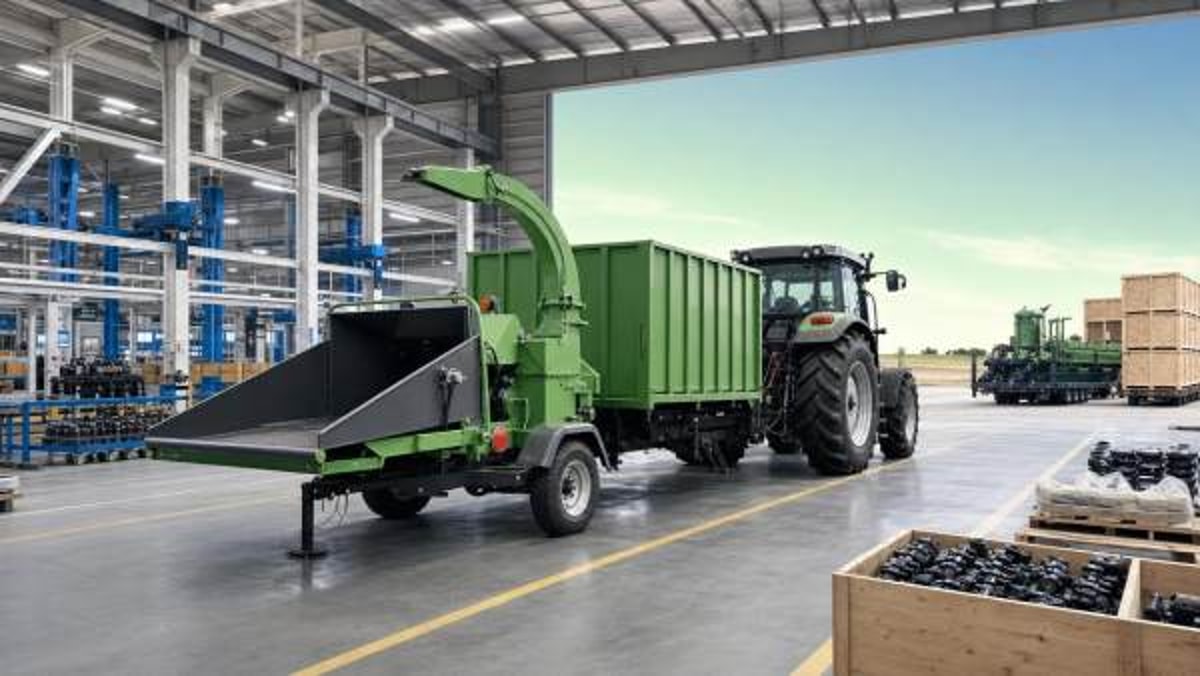
For procurement teams navigating volatile supply chains, identifying Agri & Forestry machinery manufacturers with realistic lead times is critical to avoiding costly delays and operational risk. This analysis explores how qualified buyers can assess production capacity, delivery reliability, compliance readiness, and supplier transparency to secure dependable machinery partners in a highly competitive global market.
Understanding what realistic lead times mean in agricultural and forestry equipment sourcing
In industrial procurement, lead time is more than the number of weeks printed on a quotation. For buyers working with Agri & Forestry machinery manufacturers, realistic lead times refer to delivery commitments that match actual factory capacity, component availability, engineering complexity, testing requirements, export preparation, and inland logistics. A promise may look attractive on paper, but if it ignores gearbox bottlenecks, hydraulic system sourcing, or certification inspections, it creates hidden risk instead of procurement value.
This matters especially in agricultural and forestry operations, where machine delivery often aligns with planting windows, harvest cycles, land clearing schedules, reforestation projects, or contract service deadlines. A delayed harvester, sprayer, mulcher, loader, chipper, or forestry trailer can disrupt labor planning, fuel budgets, crop quality, and downstream processing. That is why experienced buyers increasingly prioritize Agri & Forestry machinery manufacturers that can provide transparent and evidence-based scheduling rather than optimistic but fragile timelines.
Why the market is paying closer attention to supplier timing credibility
The global market for primary industry equipment has changed significantly. Steel pricing, engine emissions rules, electronics shortages, freight volatility, and regional labor constraints have made machinery delivery less predictable than it was a decade ago. At the same time, buyers are under pressure to justify capital expenditure more rigorously. Procurement directors no longer evaluate suppliers only on machine price, specification, and after-sales support. They also examine whether quoted production schedules are likely to hold under stress.
For AgriChem Chronicle readers, this timing issue sits inside a broader industrial intelligence framework. Whether sourcing fine chemicals, feed processing systems, or agricultural equipment OEM output, institutional buyers need confidence that the supplier understands compliance, quality control, and supply continuity. In the case of Agri & Forestry machinery manufacturers, timing credibility is often a visible indicator of deeper operational maturity. A manufacturer that explains fabrication queues, subcontractor dependencies, and pre-shipment inspection stages is usually more trustworthy than one that offers a short lead time without documentation.
Core indicators procurement teams should evaluate
A realistic lead time assessment should combine commercial, technical, and operational review. Buyers should not rely on one metric alone. The most dependable Agri & Forestry machinery manufacturers typically perform well across several dimensions at once.
Using a framework like this helps procurement teams move beyond headline promises and compare Agri & Forestry machinery manufacturers on operational substance.
Common categories of manufacturers and how lead times differ
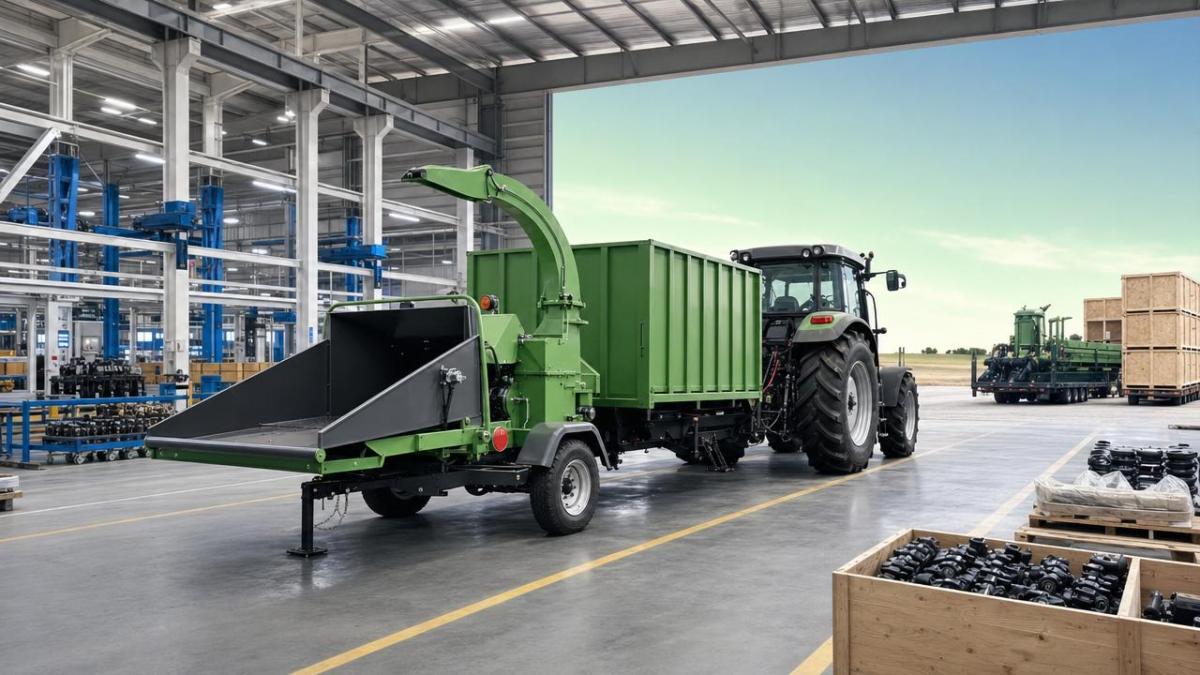
Not all Agri & Forestry machinery manufacturers operate with the same production model. Lead time realism depends heavily on the type of manufacturer, product mix, and sales channel.
This classification is useful because buyers often compare suppliers that appear similar in brochures but differ greatly in manufacturing control. A direct factory with integrated welding, machining, and final testing can usually defend its lead time more clearly than a trading company coordinating multiple third parties.
The business value of working with dependable Agri & Forestry machinery manufacturers
The value of realistic timing goes beyond avoiding late delivery. It improves planning accuracy across the entire operation. Procurement teams can coordinate site preparation, operator training, spare parts ordering, insurance activation, and commissioning support with fewer costly revisions. Finance departments benefit from clearer cash-flow timing. Technical teams gain confidence that machine specifications and inspection stages will be completed in sequence rather than rushed at the end of the project.
Reliable Agri & Forestry machinery manufacturers also reduce reputational risk. In contract farming, timber extraction, land rehabilitation, and public-sector rural infrastructure projects, the buyer is often accountable to a client, regulator, or investment committee. A late machine delivery can trigger penalties or damage future bidding credibility. Suppliers that communicate honestly about manufacturing windows help protect not only operations, but also institutional trust.
How procurement teams can test whether quoted lead times are credible
A practical review process should start before negotiation reaches final pricing. Procurement professionals should request a production breakdown instead of a single shipping date. For example, ask when frame fabrication begins, when imported components are expected to arrive, when painting is scheduled, when final assembly starts, and when pre-shipment inspection will occur. Manufacturers that can map these stages usually have stronger internal planning.
It is also useful to compare the quoted lead time against the machine’s design characteristics. A standard rotary mower with common PTO parts should not carry the same delivery uncertainty as a forestry processor with reinforced hydraulics, telematics integration, and jurisdiction-specific safety adaptations. Skilled buyers evaluate whether the timeline matches the technical reality of the order.
Another important step is checking historical consistency. Ask Agri & Forestry machinery manufacturers for recent export references, average on-time shipment performance, and examples of how they handled disruptions. The answer matters less as a marketing claim and more as evidence of process discipline. A supplier that admits occasional delays but explains root causes and corrective actions is often more credible than one that reports perfect performance without verifiable detail.
Compliance, documentation, and supply chain transparency as timing factors
Lead time risk is frequently hidden in documentation rather than metalwork. Depending on destination market and machine type, export files may include conformity declarations, emissions data, operator manuals, parts books, test certificates, fumigation records for packaging, and customs classification support. If these elements are prepared late, shipment can be delayed even after the unit is assembled.
This is why advanced buyers prefer Agri & Forestry machinery manufacturers with traceable document control. In regulated sectors, transparency is not optional. It supports compliance audits, warranty claims, insurance reviews, and long-term fleet management. Within the broader ACC editorial perspective, transparency functions as a core trust signal that connects manufacturing capability with institutional procurement standards.
Typical risk signals that deserve closer review
Some warning signs appear repeatedly when buyers encounter unrealistic supply promises. One is a lead time that is dramatically shorter than the market average without any explanation of how capacity is reserved. Another is vague language such as “ready soon” or “fast delivery” in place of dated milestones. A third is inconsistency between sales claims and factory evidence, especially when the supplier cannot confirm component inventories or testing procedures.
Buyers should also watch for overdependence on a single imported subsystem. If a machine cannot ship without one specific engine model, hydraulic valve block, or electronic control unit, the procurement team needs visibility on that item’s sourcing status. Even reputable Agri & Forestry machinery manufacturers can face schedule pressure if critical subsystems are not secured early in the order cycle.
Practical sourcing recommendations for buyers in a competitive market
First, segment machinery purchases by urgency and complexity. Standard equipment can often be sourced from manufacturers with flexible stock or repeat production runs, while customized systems require earlier planning and deeper technical review. Second, include lead time validation in supplier qualification rather than treating it as a final commercial detail. Third, align contract terms with operational milestones, including documentation readiness, factory acceptance stages, and shipment release conditions.
It is also wise to build communication discipline into the purchasing process. Monthly progress updates, photo records, inspection checkpoints, and component arrival confirmations improve visibility without becoming intrusive. For multinational buyers, this is especially helpful when working across time zones, languages, and multiple compliance jurisdictions. Strong Agri & Forestry machinery manufacturers usually welcome structured communication because it reduces misunderstanding later.
Finally, avoid selecting suppliers on speed claims alone. A slightly longer but well-supported production schedule may produce better total value than a shorter quotation that lacks engineering stability, service readiness, or regulatory clarity. In capital equipment sourcing, dependable execution often outweighs nominal speed.
A more resilient path forward
For modern procurement teams, evaluating Agri & Forestry machinery manufacturers with realistic lead times is no longer a narrow logistics task. It is a strategic assessment of production integrity, documentation discipline, compliance readiness, and supplier transparency. The most effective buyers treat delivery credibility as a measurable indicator of broader operational reliability.
As supply chains remain dynamic, organizations that build relationships with well-qualified Agri & Forestry machinery manufacturers will be better positioned to protect project schedules, stabilize equipment investment, and support field performance with fewer surprises. A disciplined review process, informed by technical evidence and market intelligence, gives procurement professionals the foundation they need to choose partners that can deliver both machinery and confidence.
Related Intelligence
- Heavy Agri Machinery2026 Foshan Tanzhou Auto Expo: Smart Driving & Green Manufacturing Focus2026 Foshan Tanzhou Auto Expo highlights smart driving & green manufacturing—featuring electric agri-vehicles, steer-by-wire, and low-carbon coating tech. Discover next-gen solutions for OEMs and Tier 1 suppliers.
- Heavy Agri MachineryAgri and Forestry machinery manufacturers with realistic lead timesAgri & Forestry machinery manufacturers with realistic lead times help buyers reduce delays, verify capacity, and improve sourcing confidence. Learn how to choose reliable suppliers.
- Heavy Agri MachineryWhich Agri and Forestry machinery specifications get overlookedAgri & Forestry machinery specifications often hide the biggest risks. Discover the overlooked specs that impact uptime, safety, compliance, and long-term operating cost.
The Morning Broadsheet
Daily chemical briefings, market shifts, and peer-reviewed summaries delivered to your terminal.
