

The Authority in Global Agricultural Chemistry & Bio-Resources
Beijing Initiative on New Quality Productive Forces Released at 2026 Summit
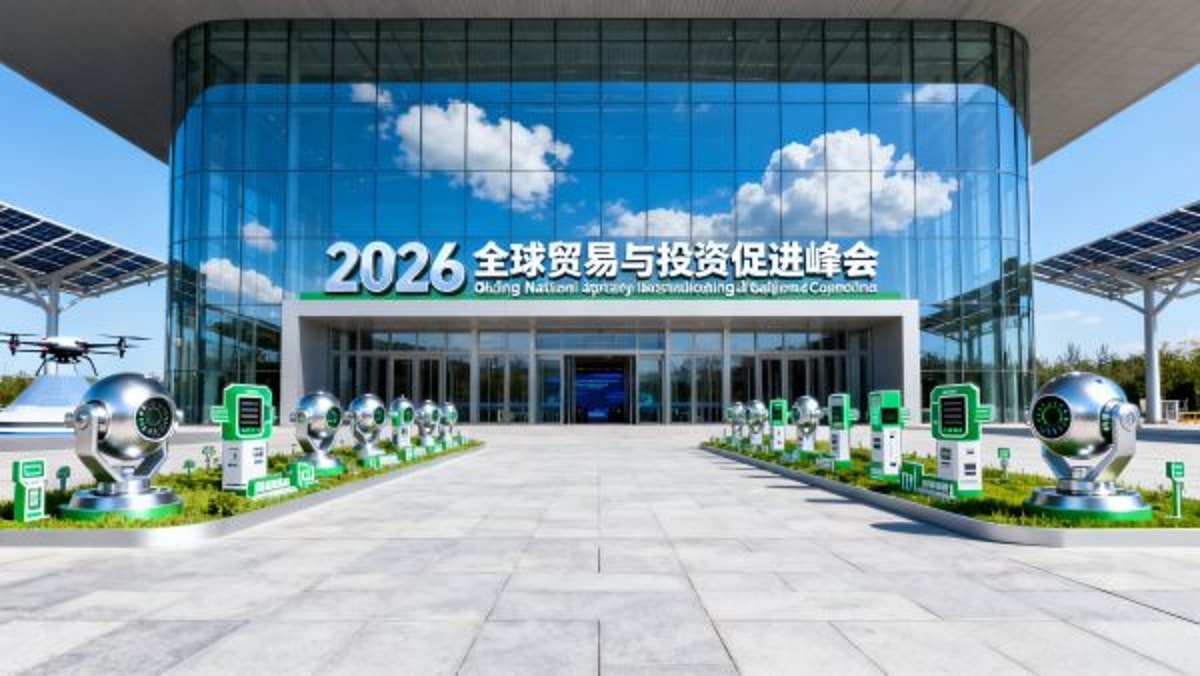
On May 18, 2026, the 2026 Global Trade and Investment Promotion Summit in Beijing will release the Beijing Initiative, calling for international collaboration to build supply chain cooperation mechanisms centered on new quality productive forces. The initiative directly addresses concerns of overseas buyers—especially regarding long-term partnership capacity, technical responsiveness, and sustainable delivery assurance of Chinese suppliers—making it highly relevant for export-oriented manufacturing, industrial services, green technology, and cross-border supply chain operators.
Event Overview
The 2026 Global Trade and Investment Promotion Summit, scheduled for May 18, 2026 in Beijing, will officially launch the Beijing Initiative. The document focuses on international cooperation around ‘new quality productive forces’ and explicitly advocates for jointly building green, intelligent, and resilient supply chains. It highlights the critical role of manufacturing–services integration in ensuring export delivery stability, technical adaptability, and coordinated ESG compliance.
Industries Affected by Segment
Export-Oriented Manufacturing Enterprises
These enterprises are directly referenced in the initiative’s emphasis on delivery stability and technical adaptability. Impact arises from heightened expectations around responsiveness to overseas buyer specifications—including real-time technical upgrades and verifiable sustainability performance across production cycles.
Industrial Service Providers (e.g., engineering, after-sales support, digital platform operators)
The initiative identifies manufacturing–services fusion as a structural enabler of supply chain resilience. Service providers supporting hardware exports—such as remote diagnostics, lifecycle maintenance, or compliance certification platforms—face increased demand for interoperable, auditable, and ESG-integrated service modules.
Raw Material & Component Sourcing Firms
As the initiative prioritizes green and intelligent supply chains, upstream sourcing firms may face intensified scrutiny on traceability, carbon footprint documentation, and smart logistics integration—not only for finished goods but also for sub-tier inputs used in export-bound assemblies.
Third-Party Supply Chain & Compliance Verification Agencies
The call for ‘coordinated ESG compliance’ signals potential standardization efforts across jurisdictions. Verification agencies may see growing demand for multi-framework assessments (e.g., aligning ISO 14001, EU CSRD, and China’s Green Manufacturing Standards) tied to supplier qualification for global procurement programs.
What Relevant Enterprises or Practitioners Should Focus On
Monitor official follow-up guidance from summit co-organizers
The Beijing Initiative is a consensus statement—not a binding framework. Current more relevant than immediate implementation is tracking whether participating multilateral institutions (e.g., ICC, WEF-affiliated bodies) or national trade promotion councils issue operational guidelines, pilot programs, or benchmarking tools aligned with its principles.
Assess exposure in high-priority export categories
The initiative emphasizes technical responsiveness and ESG-aligned delivery—factors especially material for sectors such as electric vehicles, renewable energy equipment, industrial automation systems, and medical devices. Firms active in these categories should prioritize internal alignment between R&D, production scheduling, and sustainability reporting functions.
Distinguish policy signal from operational readiness
This initiative reflects strategic intent rather than regulatory enforcement. Enterprises should avoid premature infrastructure over-investment. Instead, focus on modular improvements—e.g., upgrading ERP modules for carbon data capture, piloting digital twin-based delivery simulation, or mapping current service integration touchpoints with OEM partners.
Prepare for buyer-facing communication shifts
Overseas procurement teams are likely to reference the Beijing Initiative when evaluating supplier renewal or tier-2 qualification. Suppliers should proactively clarify—without overstating—how existing capabilities (e.g., certified green factories, API-enabled service portals, third-party ESG audit history) map to the initiative’s stated goals.
Editorial Perspective / Industry Observation
Observably, the Beijing Initiative functions primarily as a coordination signal—not an operational mandate. Its value lies not in prescriptive rules, but in consolidating shared priorities among governments, multilateral bodies, and global business federations around three interlinked dimensions: green transition, intelligent enablement, and functional resilience. Analysis shows that its influence will unfold gradually, via procurement criteria updates, bilateral trade facilitation dialogues, and voluntary industry coalitions—not through top-down regulation. From an industry perspective, this is less about compliance deadlines and more about recalibrating long-term capability roadmaps against converging global expectations on how advanced manufacturing ecosystems operate across borders.
Conclusion
The Beijing Initiative marks a formal articulation of evolving global supply chain expectations—not a new regulatory regime. Its significance lies in spotlighting manufacturing–services integration, technical agility, and verifiable sustainability as interdependent pillars of supplier competitiveness. For practitioners, it is better understood as a directional marker than an action trigger: useful for horizon scanning, stakeholder alignment, and incremental capability refinement—but not yet a basis for sweeping operational change.
Information Sources
Main source: Official announcement of the 2026 Global Trade and Investment Promotion Summit (confirmed date: May 18, 2026; confirmed document title: Beijing Initiative). Areas requiring ongoing observation include subsequent implementation frameworks, multilateral adoption pathways, and sector-specific interpretation by trade promotion agencies.
Related Intelligence
- Smart GreenhouseBeijing Non-Motor Vehicle Rules Update: Smart Greenhouse Transport Width Raised to 1.8mBeijing Non-Motor Vehicle Rules Update: Smart Greenhouse transport width now 1.8m—boosting delivery efficiency for CO₂ generators, pad-fan units & urban agri-tech logistics.
- Smart GreenhouseBeijing Initiative on New Quality Productive Forces Released at 2026 SummitBeijing Initiative on New Quality Productive Forces launched at 2026 Summit—unlock global supply chain opportunities in green tech, smart manufacturing & ESG-aligned exports.
- Smart GreenhouseVietnam’s Smart Greenhouse Energy Label Rule Takes Effect May 1, 2026Vietnam’s Smart Greenhouse Energy Label Rule takes effect May 1, 2026 — fans, inverters, wet curtains & CO₂ generators must carry Vietnamese energy labels (Grade 1–5) and VILAS test reports. Act now to avoid shipment rejection!
The Morning Broadsheet
Daily chemical briefings, market shifts, and peer-reviewed summaries delivered to your terminal.
