
Band sawmills in bulk: where downtime costs really add up
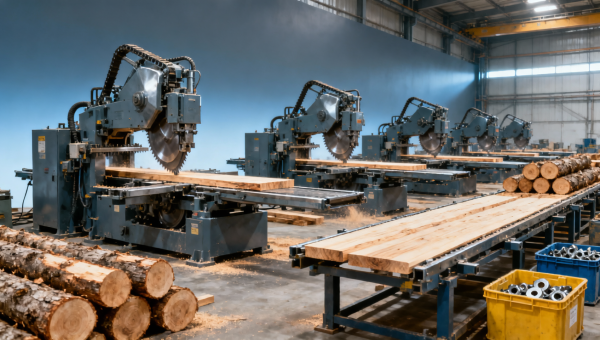
For buyers comparing band sawmills bulk options, downtime is rarely a minor issue—it compounds across labor, fuel, output, and service schedules. Whether sourcing from a portable sawmill manufacturer or evaluating related equipment such as log splitters wholesale, stump grinders commercial, and wood chipper machines wholesale, understanding the true cost of interruptions is essential. This analysis helps operators, technical reviewers, and procurement teams identify where reliability, parts support, and lifecycle value matter most.
In forestry, agricultural processing, land clearing, and primary wood conversion, a stalled machine affects more than one shift. A band sawmill that stops for 4 hours can delay log staging, rescheduling of forklift support, moisture-sensitive sorting, and outbound deliveries. When orders are placed in bulk, even small weaknesses in design consistency, spare parts availability, or training can multiply across 5, 10, or 20 installed units.
For B2B buyers, the core question is no longer just purchase price. It is how quickly a saw line returns to production, how predictable service intervals are, and whether the supplier can support uptime across multiple sites. That same logic also applies when assessing companion machinery such as splitters, chippers, and commercial stump removal systems within one procurement program.
Why downtime in bulk sawmill procurement becomes a financial issue
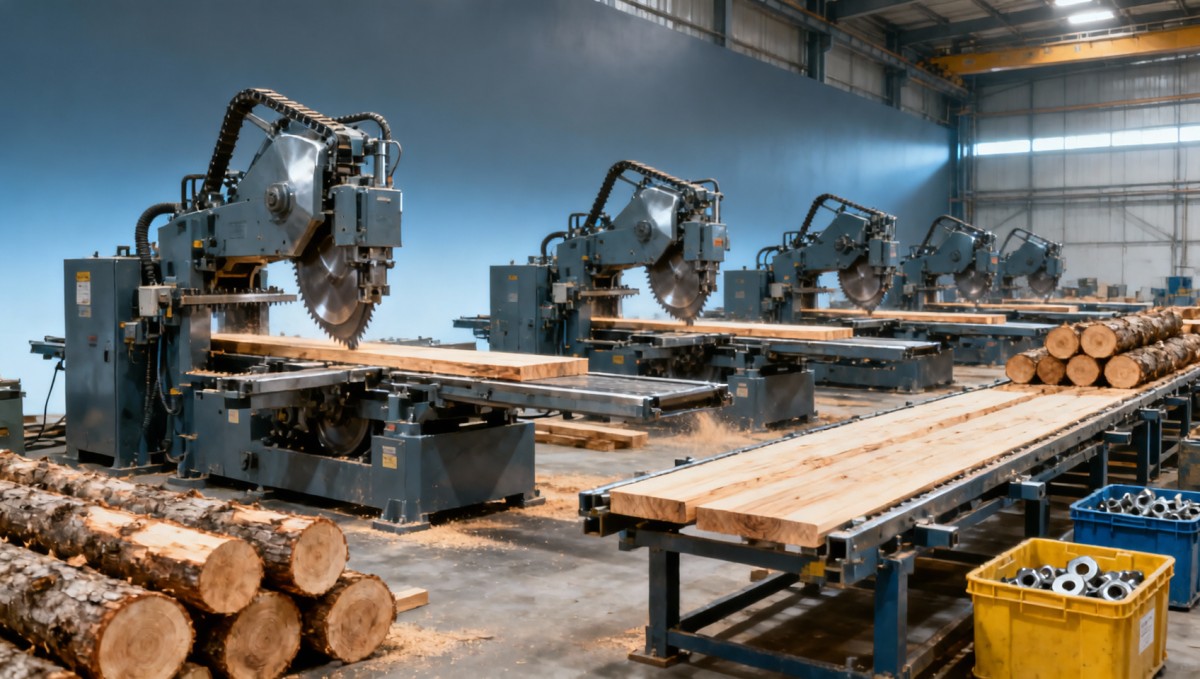
A single band sawmill outage may look manageable on paper, but fleet-level ownership changes the economics. If one unit loses 6 production hours in a week, the effect may be absorbed by overtime or rescheduling. If 12 units lose the same 6 hours, the buyer is suddenly managing 72 lost machine-hours, delayed throughput, and higher cost per cubic meter of processed timber.
The real cost usually combines four layers: direct labor, idle support assets, wasted fuel or power, and missed output. In portable and semi-mobile sawmill operations, labor is often synchronized across sawyers, log handling staff, and transport operators. Once the primary cutting asset stops, associated labor may remain on payroll while productivity drops sharply for the rest of the shift.
Bulk buyers also face hidden coordination losses. Maintenance teams may need to travel between regional sites, spare blades may need emergency shipment, and project managers may reassign logs intended for one mill to another. These secondary adjustments increase cost even when the mechanical fault itself is modest, such as a guide issue, belt problem, alignment drift, or hydraulic feed interruption.
For operations serving agricultural estates, forestry contractors, or biomass processors, downtime can create a chain reaction. Wet logs waiting too long may complicate cutting quality, truck appointments can be missed, and downstream chipping or splitting schedules become compressed. If the same supplier also provides wood chipper machines wholesale or log splitters wholesale, system compatibility and synchronized support become even more important.
Where the cost typically accumulates
Procurement teams often underestimate how quickly indirect cost overtakes repair cost. A replacement bearing or guide assembly may represent less than 2% of the annual machine budget, yet the interruption can affect 15% to 25% of weekly planned output if the site runs on a tight delivery calendar. For large-volume timber or biomass programs, that gap matters more than isolated component pricing.
- Labor retention during stoppage, especially where 3 to 8 staff support one operating line.
- Transport and loader idle time when logs are already staged for cutting.
- Fuel or electricity inefficiency during restart, recalibration, and test cuts.
- Blade loss from poor tracking, rushed replacement, or incorrect tension after repair.
- Penalty risk when project timelines are tied to fixed delivery windows of 7 to 14 days.
The strongest buying strategy, therefore, is not to seek the cheapest bulk quote. It is to model downtime exposure by line, site, and season, then compare suppliers on service depth, component standardization, and recovery speed.
A practical cost map for decision-makers
The table below helps technical evaluators and finance approvers frame how downtime expands from a maintenance event into a wider operating issue.
The key takeaway is that downtime should be measured as a system cost, not a repair invoice. Buyers evaluating band sawmills in bulk should request expected service intervals, critical spare parts lists, and typical restoration times before approving capital budgets.
What technical teams should inspect before placing a bulk order
Technical due diligence is the most effective way to reduce future interruption risk. For band sawmills, core review points typically include frame rigidity, blade guide stability, feed consistency, drive system simplicity, and alignment retention after transport. In field use, especially on uneven terrain or temporary forestry sites, these details determine whether a machine keeps tolerance over weeks of operation or drifts after repeated movement.
A common error in bulk procurement is to compare only nominal cutting capacity. Buyers may focus on maximum log diameter, engine power, or advertised feed speed, but overlook reliability variables such as bearing accessibility, blade change time, or the number of wear items requiring weekly inspection. A machine that handles a 700 mm log is not automatically the better investment if it takes 90 minutes to correct a recurring alignment issue.
For multi-equipment procurement packages, consistency matters. If the same vendor supplies a portable sawmill manufacturer program alongside log splitters wholesale and wood chipper machines wholesale, parts commonality, hydraulic architecture, and service documentation should be reviewed together. Standardized hoses, belts, filters, and safety procedures reduce training time and simplify stocking for remote or decentralized operations.
Quality and safety managers should also verify guarding, emergency stop placement, lockout points, and operating manuals. In cross-border procurement, documentation quality often predicts after-sales performance. Clear maintenance schedules, torque guidance, and blade setup instructions can reduce operator error during the first 30 to 60 days, which is when many preventable stoppages occur.
Critical checks before technical approval
- Confirm blade tensioning method and retension cycle. A stable system reduces premature blade wear and cut deviation.
- Ask how long common service actions take, such as belt replacement, guide adjustment, or wheel cleaning. Targets under 30 to 45 minutes are often easier to support in field conditions.
- Review spare parts lead times for top 10 wear items. Bulk procurement without a spare strategy increases fleet exposure.
- Check whether calibration procedures can be completed by trained site staff or require specialist intervention.
- Verify whether service manuals include inspection frequency by operating hours, not only generic calendar intervals.
These checks are especially relevant for project managers handling seasonal harvesting peaks. When cutting windows narrow to 8 to 12 weeks, even a small design weakness can create backlog that cannot be recovered later in the season.
Typical evaluation matrix for bulk buyers
The matrix below provides a practical review framework that procurement, engineering, and finance teams can use during supplier comparison.
When the matrix is used consistently, buyers can rank offers on lifecycle resilience rather than brochure claims. That is typically where the largest long-term savings appear.
How service logistics and spare parts strategy determine uptime
Even well-built equipment will stop at some point. What separates a productive fleet from a costly one is the speed and predictability of recovery. In bulk band sawmill procurement, service logistics should be reviewed with the same rigor as machine specifications. A supplier offering 10 units without a documented spare parts plan may create more risk than a higher-priced vendor with local stock and clear escalation procedures.
For regional operators, parts lead time can vary from 24 hours to 21 days depending on distance, customs handling, and whether components are standard or proprietary. That gap is commercially significant. A bearing set, belt, hydraulic seal kit, or sensor that arrives in 2 days instead of 2 weeks can protect an entire production schedule, especially when multiple job sites depend on the same inventory chain.
The same principle applies to supporting equipment. If a bulk package includes stump grinders commercial units or wood chipper machines wholesale, service harmonization becomes more valuable. Shared maintenance intervals every 250 or 500 operating hours, common consumables, and unified troubleshooting documents allow field teams to work faster and with fewer errors.
Finance approvers should ask a simple question: what is cheaper over 36 months, holding a planned spare kit on site or accepting repeated emergency ordering? In many industrial settings, preventive stock for critical wear parts is the lower-cost option once labor idle time and freight premiums are included.
Minimum support package worth requesting
- A critical spare list covering the first 6 to 12 months of operation for each sawmill unit.
- Documented response times for technical questions, such as 4-hour acknowledgment and 24 to 48-hour troubleshooting guidance.
- Video or remote support for setup, alignment, blade tracking, and hydraulic checks.
- Service diagrams and part codes matching the delivered configuration, not a generic catalog version.
- Operator and maintenance training at commissioning, ideally split into startup and 30-day follow-up sessions.
These conditions do not eliminate breakdowns, but they materially shorten restoration time. For fleet buyers, that is often the difference between a manageable incident and a quarter-wide performance problem.
Three common service mistakes in bulk purchasing
First, buyers assume one spare kit can cover every machine, even when units have different engines or upgrades. Second, they accept unclear responsibilities between dealer and factory support. Third, they postpone training to save time at installation. Each of these decisions increases downtime probability during the first 90 days of operation.
A stronger approach is to align purchasing, operations, and maintenance before final approval. The machine, the spare kit, the training scope, and the service response plan should be negotiated as one package, not as separate afterthoughts.
Lifecycle value: how to compare bulk offers beyond unit price
Lowest bid analysis rarely captures the full economics of band sawmills in bulk. A lower upfront figure can be offset by shorter blade life, longer service stops, more frequent alignment checks, or weak dealer coverage. For procurement committees, the better metric is total operating value across 24 to 60 months, including utilization, maintenance, operator productivity, and parts availability.
This matters especially for buyers serving mixed-use environments: forestry estates, farm timber programs, pallet wood suppliers, biomass processors, and rural infrastructure projects. In these settings, a sawmill may need to process different log diameters, move between locations, and work alongside splitters or chippers under changing labor conditions. Flexibility without excessive service complexity is a real commercial advantage.
Technical reviewers should translate equipment attributes into cost behavior. A simpler blade path, easier wheel cleaning access, or faster guide adjustment may not look dramatic in a brochure, but across 1,500 to 2,000 operating hours per year, those design choices often determine whether the fleet stays productive. Decision-makers should therefore connect engineering details to labor and scheduling outcomes.
Distributors and agents also benefit from this approach. Selling on lifecycle value rather than entry price improves customer retention, reduces warranty disputes, and creates a more predictable aftermarket parts business. It also helps channel partners position bundled equipment, from band sawmills to stump grinders commercial models, as a managed operating solution rather than a one-time hardware sale.
Questions to ask before final approval
- What is the expected maintenance routine by 50, 250, and 500 operating hours?
- Which 5 to 10 components account for the highest field replacement frequency?
- How long does commissioning take per unit: 1 day, 3 days, or longer with training included?
- Can one maintenance technician support several identical units efficiently, or are configurations too varied?
- What documentation is provided for safety, inspection, and parts traceability?
When these questions are answered early, buyers gain a clearer picture of total cost risk. The result is a procurement decision built on uptime, recoverability, and operational fit rather than headline pricing alone.
FAQ for procurement and operations teams
How many spare parts should be stocked for a bulk sawmill purchase?
A practical starting point is to stock the critical wear and failure items needed for the first 6 to 12 months, adjusted by site remoteness and operating intensity. For fleets above 5 units, central and local stock should usually be split to avoid a single point of failure.
Is a portable sawmill manufacturer suitable for industrial-scale programs?
Yes, if the units are matched to workload, supported by standardized parts, and backed by clear service procedures. Portability is valuable for remote forestry and farm-use operations, but only when transport does not compromise alignment stability and service access.
What is a realistic commissioning timeline for bulk equipment?
Depending on assembly level and site readiness, commissioning often ranges from 1 to 3 days per unit, plus operator training. Where sawmills, chippers, and splitters are installed together, project teams should allow additional time for workflow testing and safety validation.
Which buyers should prioritize uptime metrics the most?
High-priority users include contract forestry operators, agricultural estates with seasonal timber processing, distributors managing after-sales commitments, and project managers whose delivery schedules depend on coordinated machine output across multiple sites.
For bulk band sawmill procurement, downtime is not an isolated maintenance issue; it is a multiplier affecting labor efficiency, production flow, service cost, and delivery reliability. The strongest buying decisions balance machine capability with spare parts planning, maintainability, documentation quality, and supplier responsiveness across the full operating cycle.
If you are comparing a portable sawmill manufacturer, reviewing log splitters wholesale, or assessing stump grinders commercial and wood chipper machines wholesale as part of a broader equipment program, a structured lifecycle analysis will reveal the real value of each offer. To evaluate specifications, support planning, or procurement options in more detail, contact us to discuss your application, request a tailored comparison, or explore a more resilient equipment sourcing strategy.
Related Intelligence
- Forestry EquipmentWhat to Check Before Buying Used Forestry EquipmentForestry equipment buyers: learn what to check before buying used units, from engine hours and hydraulics to safety, parts support, and Supply Chain Transparency.
- Forestry EquipmentBand sawmills in bulk: where downtime costs really add upBand sawmills bulk buying reveals how downtime drives real costs. Compare portable sawmill manufacturer support, log splitters wholesale, and wood chipper machines wholesale for better uptime.
- Forestry EquipmentPortable sawmill manufacturer claims that deserve a closer lookPortable sawmill manufacturer insights for buyers comparing band sawmills bulk, log splitters wholesale, stump grinders commercial, and wood chipper machines wholesale.
The Morning Broadsheet
Daily chemical briefings, market shifts, and peer-reviewed summaries delivered to your terminal.
