
Portable sawmill manufacturer claims that deserve a closer look
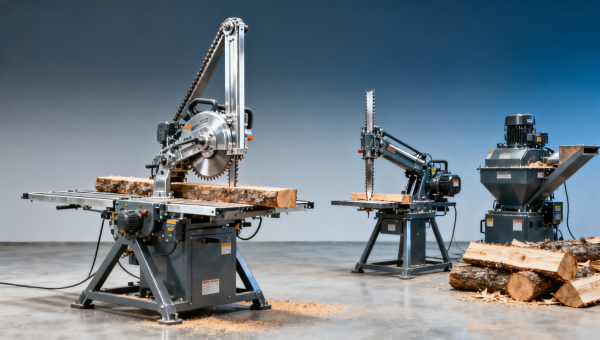
Choosing a portable sawmill manufacturer is not just about headline claims or price points. For buyers comparing band sawmills bulk options alongside log splitters wholesale, stump grinders commercial models, and wood chipper machines wholesale, a closer review of build quality, compliance, after-sales support, and production credibility is essential. This guide helps researchers, operators, technical evaluators, and procurement decision-makers identify which manufacturer promises truly stand up to industrial use.
In the forestry machinery market, supplier claims often sound similar: higher output, lower downtime, stronger frames, faster delivery, easier maintenance. Yet for institutional buyers, contractors, equipment distributors, and industrial wood processors, the real differentiators usually emerge in specification detail, traceable manufacturing practice, response speed, and total lifecycle support over 3–7 years of operation.
A portable sawmill manufacturer should therefore be assessed as a production and service partner, not only as a machine seller. This matters even more when procurement includes linked equipment such as hydraulic log splitters, commercial stump grinders, and wood chippers, because consistency in parts quality, training, and service coverage can affect field productivity by 10%–25% over a normal operating season.
What manufacturer claims deserve verification first
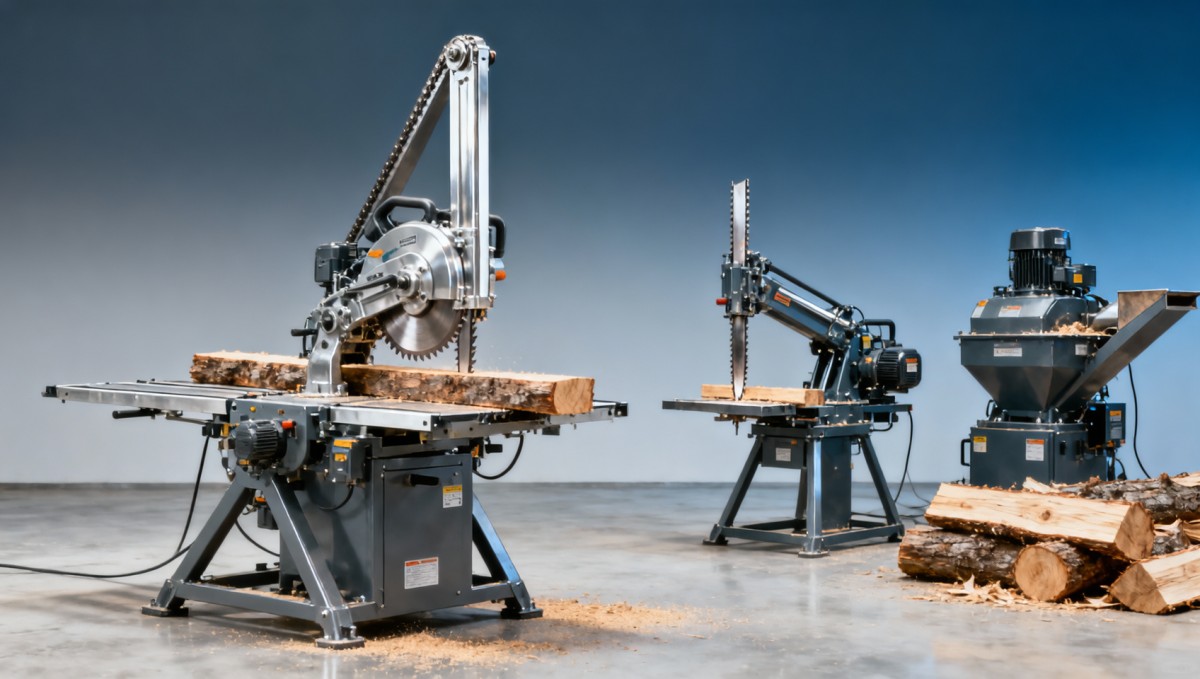
When a portable sawmill manufacturer advertises heavy-duty construction, buyers should ask what that means in measurable terms. Frame steel thickness, bed alignment tolerance, wheel balance, band tension system stability, and corrosion protection all indicate whether the machine is prepared for repeated processing of hardwood logs, frozen timber, or high-moisture feedstock. A claim without numbers is rarely enough for technical approval.
For portable sawmills, common industrial checkpoints include cutting capacity, throat width, maximum log diameter, engine power range, feed mechanism type, and blade guide durability. In many commercial applications, a practical band sawmill may fall within a 15HP–38HP power range for mobile use, while larger hydraulic units can exceed 50HP. If a manufacturer cannot explain how these ratings translate into daily throughput, the promise may be more promotional than operational.
The same discipline should apply across adjacent product lines. Buyers evaluating log splitters wholesale packages should look for cycle time, tonnage, hydraulic hose quality, and seal sourcing. For stump grinders commercial models, cutter wheel construction, tooth replacement intervals, and drive train protection matter. For wood chipper machines wholesale offers, feed opening dimensions, chip size consistency, and emergency stop arrangement should be confirmed before any bulk order discussion moves forward.
Claims that sound strong but need evidence
Some of the most repeated claims in forestry equipment procurement are also the least useful unless verified against documentation, inspection photos, or sample-machine tests. A procurement team should ask for records that can be reviewed within 24–72 hours, especially when evaluating overseas manufacturers or multi-product orders.
- “Heavy-duty frame” should be backed by material grade, weld method, and anti-rust treatment process.
- “High productivity” should be linked to log size range, blade type, operator count, and average shift duration.
- “Easy maintenance” should show actual service intervals such as every 50, 250, or 500 operating hours.
- “Fast delivery” should specify production lead time, spare parts readiness, and export packing cycle.
A manufacturer with mature internal controls will usually provide a technical data sheet, pre-shipment checklist, and parts support list without delay. That responsiveness itself is a signal of factory organization and export readiness.
The comparison below helps separate broad marketing language from useful procurement evidence across portable sawmills and related wood processing equipment categories.
The key takeaway is simple: strong claims should map to specific build data, service evidence, and operating conditions. If a manufacturer only repeats performance language without engineering detail, buyers should slow the approval process.
Build quality, manufacturing discipline, and compliance signals
A portable sawmill manufacturer may offer an attractive quotation, but procurement teams should also examine how the machine is made. In practical terms, this means looking at weld consistency, machining precision, paint or powder-coating preparation, hydraulic line routing, wiring protection, and final assembly checks. These details often predict whether downtime will remain manageable after the first 6–12 months of use.
For distributors and project managers, production discipline is especially important when the factory supplies multiple categories such as band sawmills bulk orders, log splitters wholesale lots, stump grinders commercial units, and wood chipper machines wholesale shipments. Multi-line capability only creates value if the manufacturer can maintain repeatable quality across different platforms rather than sacrificing consistency to expand catalog size.
Compliance should also be approached broadly. Forestry equipment is not regulated in exactly the same way as pharmaceutical machinery, yet industrial buyers still need documentation for electrical components, engine emissions in target markets, guarding practices, packing standards, and safe operating instructions. Even basic records such as serial traceability and inspection logs can simplify customs clearance, warranty handling, and insurance review.
Practical quality indicators during supplier evaluation
A sound technical review should combine visual checks, document checks, and process checks. If possible, ask for a live factory video review or third-party pre-shipment inspection, especially for orders above 5 units or mixed equipment programs with higher spare-parts exposure.
- Check whether bed rails, carriage movement, and blade guide assemblies are assembled square and aligned.
- Review if hydraulic cylinders, pumps, and valves come from traceable suppliers with serviceable replacement paths.
- Confirm whether engines or motors have support channels in your destination market within 48–96 hours.
- Request packaging details for sea freight, including rust prevention, crate reinforcement, and moisture barriers.
Manufacturers that welcome these questions usually understand industrial procurement expectations. Those that avoid process visibility may still be suitable for small retail orders, but they present higher risk in distribution, fleet, or contractor-scale purchasing.
Common documents worth requesting
The minimum documentation package should include a machine specification sheet, parts list, operating manual, inspection record, and warranty terms. For export-oriented programs, buyers may also request packing photos, engine documentation, and a standard spare parts quotation valid for 6–12 months. These materials are not optional extras; they are part of responsible supplier validation.
The table below shows how procurement teams can map manufacturing signals to practical risk areas before issuing a purchase order.
This framework is useful not only for technical evaluators but also for finance approvers, because it converts “quality” into measurable risk reduction. Machines with better production discipline may carry a higher initial price, yet they often reduce hidden cost exposure across freight claims, spare parts, labor downtime, and operator retraining.
How to assess service, spare parts, and lifecycle cost
After-sales support is one of the most underestimated factors in choosing a portable sawmill manufacturer. A machine that performs well during the first 100 hours can still become a costly asset if blade guidance parts, belts, bearings, seals, hydraulic fittings, or engine service items require long sourcing times. In seasonal forestry and land-clearing work, 5–10 lost working days can change the economics of an entire contract.
For buyers managing mixed fleets, the service question is broader than warranty duration. They should ask how quickly technical support responds, whether exploded parts drawings are available, how spare parts are identified, and which consumables can be sourced locally. This is relevant for band sawmills bulk purchases, but equally important for stump grinders commercial units and wood chipper machines wholesale programs that run under heavy wear conditions.
A practical benchmark is response capability within 24–48 hours for documentation and troubleshooting, and a realistic spare parts dispatch window of 3–7 business days for common items. If the manufacturer relies on non-standard components without clear cross-reference, buyers should budget more inventory or reconsider the sourcing structure.
Lifecycle cost questions that finance teams should ask
Total cost should include more than the purchase price. Forestry machinery buyers should estimate maintenance labor, blade or tooth consumption, hydraulic service intervals, freight on replacement parts, and operator training time. Even a 7% lower initial quote may be less favorable if maintenance downtime rises by 15% across the first 12 months.
- What are the routine maintenance intervals: every shift, every 50 hours, or every 250 hours?
- Which wear parts must be stocked locally for 30, 60, or 90 days of operation?
- How much of the machine can be serviced with standard workshop tools versus proprietary parts?
- Is remote commissioning support available for dealers and project teams in different time zones?
The strongest suppliers usually provide a recommended spare parts package at quotation stage. That package should be tied to expected operating intensity, not just offered as a generic add-on.
Support model by buyer type
A contractor running two sawmills will need a different support model from a distributor importing 20 mixed machines. Researchers and technical evaluators may focus on machine performance, but project managers and financial approvers often need clarity on service structure before approving capital expenditure. Alignment between these internal stakeholders can shorten supplier selection by 1–2 review cycles.
A manufacturer that understands B2B procurement will usually differentiate support for end users, dealers, and fleet operators. That flexibility is often a stronger trust signal than broad promises of “full support.”
Selection criteria for different operating scenarios
Not every portable sawmill manufacturer is equally suitable for every operating profile. A rural timber operator processing mixed logs on-site, a land management contractor adding a wood chipper and stump grinder package, and a distributor building a regional dealer network will prioritize different features. Matching manufacturer strengths to use case is therefore more important than chasing the broadest product list.
For mobile cutting operations, portability, setup time, trailer durability, and field service access may matter more than maximum production speed. For fixed-site or semi-fixed installations, bed extension options, hydraulic log handling, and continuous-duty power systems can justify higher capital cost. In many cases, a setup time under 30 minutes and repeatable cutting accuracy across 6–8 hour work periods are more valuable than theoretical peak output numbers.
Distributors and resellers should evaluate standardization across the product family. If a supplier offers portable sawmills, log splitters wholesale, stump grinders commercial units, and wood chipper machines wholesale, shared service logic, manuals, and parts coding can reduce onboarding friction. That is especially useful when training multiple dealers or field technicians across different territories.
Scenario-based buying priorities
The matrix below helps procurement teams map machine type and supplier capability to actual business need rather than headline marketing.
This type of scenario mapping prevents a common procurement mistake: selecting the most aggressively marketed supplier instead of the most operationally aligned one. The best manufacturer is often the one whose service, documentation, and machine configuration fit the workload with the fewest hidden compromises.
Red flags that should slow approval
- Specifications are inconsistent across quotation, brochure, and manual.
- There is no clear answer on spare parts lead time or consumable interchangeability.
- Factory photos show different machine versions than the quoted configuration.
- Support commitments remain verbal after 2–3 rounds of technical questioning.
Any of these signals may not automatically disqualify a supplier, but they justify tighter due diligence, a smaller trial order, or stronger contract terms before broader rollout.
Implementation checklist, FAQ, and next steps for buyers
A disciplined sourcing process can reduce avoidable risk without slowing procurement unnecessarily. For most B2B buyers, the review can be organized into 4 stages: technical screening, factory and documentation validation, commercial review, and service readiness confirmation. Even when timelines are tight, this structure can often be completed within 2–4 weeks for standard export programs.
The most effective approach is to align all stakeholders early. Operators should comment on maintainability, technical evaluators on mechanical integrity, finance teams on lifecycle cost, and quality or safety personnel on documentation and guarding. When these viewpoints are integrated before final negotiation, supplier selection becomes faster and more defensible.
For buyers sourcing a package that includes a portable sawmill manufacturer plus log splitters wholesale, stump grinders commercial equipment, or wood chipper machines wholesale, one additional step is useful: verify which support elements are centralized and which vary by product line. A mixed order only works well when service obligations are equally clear across all machines.
A practical 6-point procurement checklist
- Confirm measurable performance data, not only brochure language.
- Review build details through photos, videos, sample tests, or inspection reports.
- Check documentation completeness, including manuals, parts lists, and serial traceability.
- Evaluate spare parts response windows and local service practicality.
- Compare total lifecycle cost over at least 12–36 months of expected use.
- Match the supplier’s strengths to your actual operating scenario and approval requirements.
This checklist is especially valuable for distributors, project leaders, and procurement committees that need a structured basis for comparing multiple suppliers without reducing the decision to price alone.
How long is a typical delivery cycle?
For standard portable sawmills or related forestry machines, production lead time commonly falls within 15–45 days depending on configuration, engine selection, and order volume. Export packing, inland transport, and sea freight add further time. Buyers should request a breakdown by production, inspection, packing, and shipment stage rather than accepting one combined estimate.
What should technical evaluators prioritize first?
Start with structural integrity, cutting or processing system stability, service access, and documentation quality. These four areas usually reveal whether the manufacturer is set up for durable industrial supply or only for short-cycle sales. Supporting photos and component lists often answer more than promotional videos do.
Is a lower-priced manufacturer always a higher-risk option?
Not always, but lower pricing should trigger more detailed review of component sourcing, inspection controls, and support depth. The issue is not price by itself; it is whether the supplier can still sustain parts availability, consistent build quality, and service response after shipment.
For serious buyers, the central lesson is clear: a portable sawmill manufacturer should be judged by evidence, consistency, and service structure as much as by machine specification. The same standard applies when evaluating band sawmills bulk options, log splitters wholesale programs, stump grinders commercial units, and wood chipper machines wholesale packages.
If you are comparing suppliers, planning a dealer program, or building a multi-machine procurement shortlist, now is the right time to request a technical review package, clarify support terms, and validate manufacturing credibility. Contact us to discuss your application, get a tailored sourcing framework, or explore more equipment evaluation solutions for forestry and primary processing operations.
Related Intelligence
- Forestry EquipmentWhat to Check Before Buying Used Forestry EquipmentForestry equipment buyers: learn what to check before buying used units, from engine hours and hydraulics to safety, parts support, and Supply Chain Transparency.
- Forestry EquipmentBand sawmills in bulk: where downtime costs really add upBand sawmills bulk buying reveals how downtime drives real costs. Compare portable sawmill manufacturer support, log splitters wholesale, and wood chipper machines wholesale for better uptime.
- Forestry EquipmentPortable sawmill manufacturer claims that deserve a closer lookPortable sawmill manufacturer insights for buyers comparing band sawmills bulk, log splitters wholesale, stump grinders commercial, and wood chipper machines wholesale.
The Morning Broadsheet
Daily chemical briefings, market shifts, and peer-reviewed summaries delivered to your terminal.
