
What to Check Before Buying Used Forestry Equipment
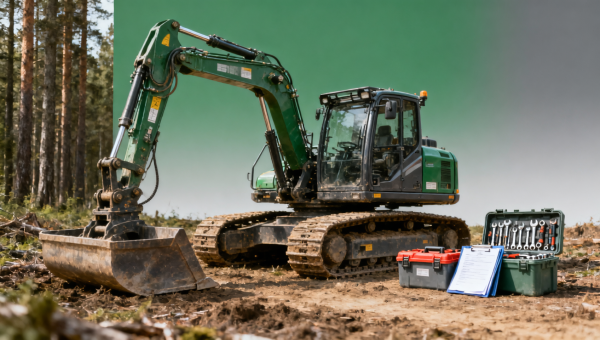
Before investing in used forestry equipment, buyers should look beyond price and inspect maintenance history, engine hours, safety systems, and parts availability. For Industrial Farming and Agricultural Processing operations, reliable machinery supports productivity, compliance, and Supply Chain Transparency. This guide outlines the practical checks that help operators, technical evaluators, and decision-makers reduce risk and secure long-term value.
Why used forestry equipment demands a stricter buying process
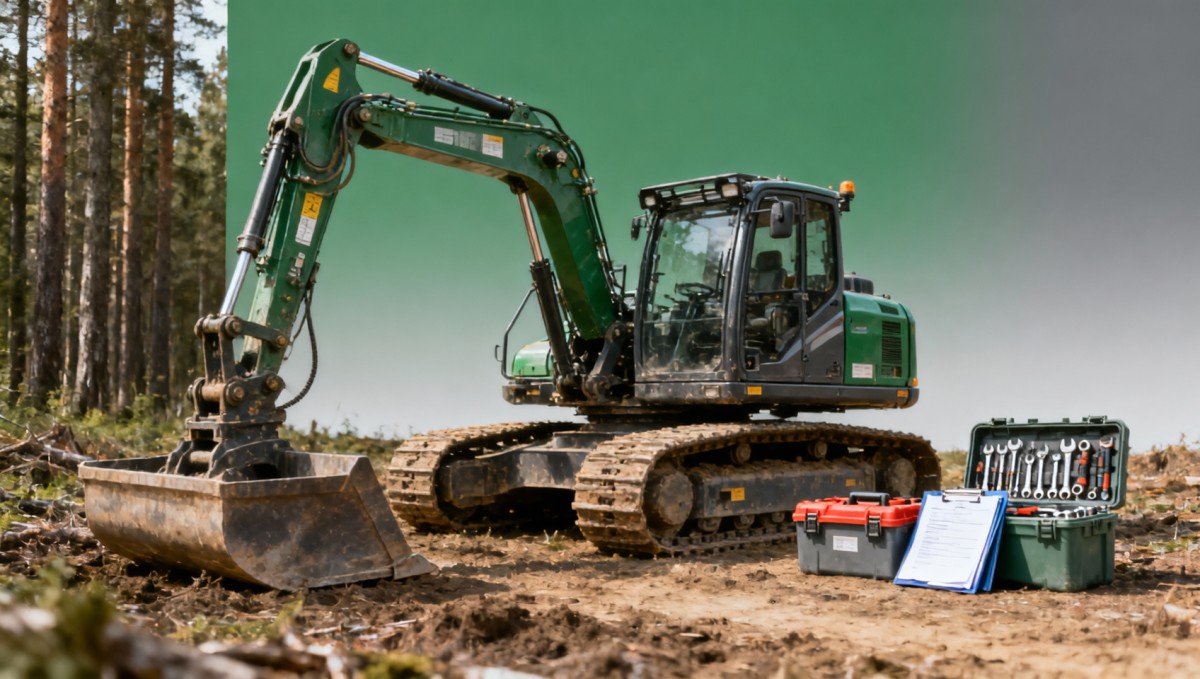
Used forestry equipment can look cost-effective on paper, yet the real purchase risk often sits below the surface. A harvester, forwarder, skidder, mulcher, or log loader may still be operational after 8,000-15,000 engine hours, but condition varies sharply depending on terrain, maintenance discipline, operator behavior, and storage conditions. For buyers in mixed industrial and agricultural environments, the question is not only whether the machine runs, but whether it can run safely, legally, and predictably over the next 12-36 months.
This matters to more than operators. Technical evaluation teams need evidence of structural integrity and serviceability. Finance approvers need a realistic total cost forecast. Quality and safety managers need assurance that guarding, braking, hydraulic containment, and emergency stop systems still perform as intended. Project managers need confidence that the unit will not disrupt harvest schedules, land clearing programs, biomass handling, or remote-site production plans.
In the ACC editorial framework, machinery procurement is linked directly to operational continuity and supply chain transparency. A low upfront price may be attractive, but if the machine requires 2-4 weeks of unplanned repair after delivery, the savings can disappear through downtime, contractor rescheduling, freight for urgent parts, and productivity loss. This is why disciplined pre-purchase inspection is more valuable than aggressive price negotiation.
A practical buying process should review five core dimensions before any commitment: mechanical condition, documentation quality, compliance and safety status, supportability of spare parts, and application fit. Missing just one of these can turn a seemingly acceptable used forestry machine into a high-cost asset with limited residual value.
Who should be involved in the inspection?
- Operators should assess visibility, controls, start-up behavior, vibration, and real working comfort during a short field test of at least 30-60 minutes.
- Technical evaluators should review frame condition, hydraulics, undercarriage, pins and bushings, drivetrain wear, and diagnostic fault history where available.
- Safety or quality personnel should verify guarding, seat belts, fire suppression readiness if fitted, warning labels, lighting, and leak management.
- Commercial and finance teams should compare projected repair exposure over the first 6-12 months against expected utilization and replacement alternatives.
When these functions review the same machine from different angles, procurement decisions become more resilient. That multidisciplinary approach is especially relevant where forestry equipment supports broader primary processing operations and cannot be treated as a simple standalone purchase.
What to check before buying used forestry equipment: the core inspection framework
A structured inspection reduces subjectivity. Instead of relying on seller claims such as “well maintained” or “ready for work,” buyers should verify physical condition against a clear checklist. The table below summarizes the most important evaluation points for used forestry equipment across procurement, operation, and compliance perspectives.
This framework helps buyers focus on evidence rather than assumptions. It also creates a record for internal review, which is useful when procurement teams must justify a used forestry equipment purchase to management, auditors, or risk committees.
Mechanical checks that should never be skipped
Start with a cold inspection, not a warmed-up demonstration. A machine that starts cleanly after sitting overnight reveals more than one that has already been run for 20 minutes before you arrive. Listen for uneven combustion, inspect the battery area, and check whether warning lights clear normally after start-up. If the seller cannot demonstrate a cold start, note that as a procurement risk.
Hydraulics deserve extra scrutiny because forestry equipment often works in dirty, wet, shock-loaded environments. Look for hose abrasion, rod scoring, delayed boom response, and excessive heat buildup after repeated cycles. On a test unit, run at least 10-15 full boom or attachment cycles and check whether motion remains smooth and consistent.
Inspect articulation points, swing bearings, and attachment couplings for wear. Excessive play may indicate long-term stress or deferred maintenance. In machines used for logging or land clearing, undercarriage and tire condition can change total cost quickly. Uneven wear patterns often point to alignment issues, overloaded use, or poor operating practice rather than normal aging alone.
Finally, test the machine under realistic load if possible. Travel on uneven ground, engage the working head or attachment, and evaluate braking, steering, and recovery after repeated operation. A used forestry machine that performs well only in an unloaded yard test may not hold up in field conditions.
Documentation checks for supply chain transparency
Maintenance records are often the dividing line between a manageable used asset and a speculative purchase. Ideally, buyers should request service logs covering at least the last 12-24 months, including oil changes, filter intervals, hydraulic work, major component replacement, and fault code history if electronically stored. A complete file supports valuation and helps forecast near-term maintenance needs.
Serial numbers should match ownership documents, parts manuals, and any available inspection reports. This is especially important where equipment is imported or transferred across borders. In complex supply chains, incomplete documentation can delay registration, insurance, customs processing, or resale. ACC routinely highlights this issue because paperwork gaps often create hidden cost long after delivery.
Ask directly whether any major assemblies have been rebuilt. Engines, pumps, transmissions, and harvesting heads can be legitimate replacements, but buyers need dates, hours at replacement, and evidence of who performed the work. Without that traceability, a “rebuilt” claim has limited procurement value.
When records are incomplete, the right response is not always to reject the machine immediately. Instead, use the gap to adjust inspection depth, negotiate price, shorten acceptance windows, or require pre-delivery service actions. Risk can be managed, but only if it is first made visible.
How to compare used equipment against your operating scenario
The best used forestry equipment is not simply the newest or cheapest unit available. It is the one that matches your workload, terrain, staffing level, and service capacity. A machine suited for 6-8 hour daily thinning work may underperform in 10-12 hour biomass extraction shifts. Likewise, a unit that works well in plantation forestry may be inefficient in steep, mixed-terrain land clearing or roadside processing work.
For procurement teams, scenario matching prevents both underbuying and overbuying. Underbuying leads to downtime, overheating, and frequent repairs. Overbuying locks capital into capacity that may never be fully used. The comparison table below helps align used forestry equipment selection with real operating conditions.
Matching the machine to the workload is often where the largest long-term savings are found. A unit with moderate cosmetic wear but excellent documentation and strong parts support may deliver better value than a cleaner-looking machine with uncertain service history.
Three scenario questions every buyer should answer
- Will the machine run seasonally or continuously? Equipment expected to work across peak windows should be held to a higher standard on cooling, hydraulics, and wear life.
- Do local service teams stock common parts within 24-72 hours, or will key components require cross-border shipment? This directly affects downtime risk.
- Is the machine intended as a primary production asset or a backup unit? Backup units can tolerate different cosmetic and age profiles, but safety systems still cannot be compromised.
These questions help align equipment condition with business exposure. They also create a stronger internal case when project managers and finance teams need to approve a purchase under time pressure.
Cost, compliance, and hidden risks buyers often miss
The purchase price of used forestry equipment is only the first layer of cost. Buyers should estimate three cost bands before approval: immediate commissioning expense in the first 30 days, expected repair and service cost in the first 6 months, and major component exposure over the first 12-24 months. This approach is more reliable than asking whether the machine is “cheap” or “expensive” in isolation.
Immediate costs may include fluid changes, filters, hoses, tires, wear parts, transport, field setup, and operator familiarization. Mid-term costs may include hydraulic resealing, sensor replacement, brake work, undercarriage correction, or attachment refurbishment. Long-term exposure may involve pumps, transmission assemblies, engine work, or electronic control repairs. If these categories are ignored, budget approval can become inaccurate from the start.
Compliance deserves equal attention. Buyers should verify whether guarding, rollover or falling-object protection arrangements where applicable, lighting, alarms, and fire risk controls are suitable for the intended worksite and local operating rules. In cross-sector environments such as agricultural processing zones, safety expectations may be stricter than in isolated forestry use. Equipment that passes a basic function test may still require upgrades before safe deployment.
ACC’s cross-disciplinary perspective is especially relevant here. In regulated supply chains, machinery decisions are no longer isolated maintenance issues. They affect operational resilience, incident exposure, contractor management, and documentation quality. A used equipment purchase should therefore be reviewed as part of a broader risk management process, not just an isolated asset deal.
Common hidden risks in used forestry equipment procurement
- Hour meter interpretation without context. A machine showing 7,000 hours with disciplined service can be safer than one showing 4,500 hours with poor maintenance and repeated overheating.
- Fresh paint masking repairs. New paint around boom joints, undercarriage areas, or cab guards may be cosmetic, or it may hide cracking, corrosion, or impact damage.
- Weak spare parts planning. Even small hose kits, sensors, and seals can delay a machine if supply lead times extend to 7-21 days.
- Unverified attachment compatibility. Flow rate, pressure range, coupler condition, and control calibration all affect whether the machine can actually perform the intended task.
A practical approval rule for finance and project teams
Before purchase order release, require a one-page decision summary covering at least six items: machine hours, maintenance evidence, current defects, estimated 90-day repair budget, expected parts lead time, and intended utilization profile. This compact review often prevents rushed approvals based only on seller urgency or headline price.
Where uncertainty remains high, buyers can reduce exposure through staged commitments. Examples include conditional acceptance after inspection, price retention until defined defects are corrected, or a pre-agreed list of service actions before dispatch. These are practical procurement controls, not signs of mistrust.
FAQ: practical questions buyers ask before committing
How many engine hours are too many for used forestry equipment?
There is no universal cutoff. For many machine types, 5,000-8,000 hours may still be commercially attractive if service records are strong and wear points are controlled. Beyond 8,000-15,000 hours, inspection should become more detailed because major component risk rises. The better question is whether the machine’s condition, documentation, and application fit justify its remaining service life.
Should buyers prefer auction units or dealer-listed machines?
Auction units may offer lower entry price, but inspection windows can be limited and post-sale recourse may be minimal. Dealer-listed used forestry equipment often comes with better access to records, preparation details, or post-sale support, although not always. Buyers operating in critical production environments usually benefit from greater transparency rather than the lowest initial bid.
What are the top five checks before final payment?
Confirm serial documentation, perform a cold start, verify hydraulic function under load, inspect structure and guarding, and review parts support availability for the next 6-12 months. If possible, also document visible defects with photos at handover. These steps create a more controlled transition from seller claims to operational reality.
How long should a pre-purchase evaluation take?
For a straightforward machine with records available, a focused on-site review may take 2-4 hours. For complex units with attachments, electronic controls, or uncertain history, evaluation can extend to a full day plus follow-up review of documents and parts support. Rushed inspections usually shift cost to the post-purchase phase.
Why work with ACC when evaluating used machinery options
For buyers navigating used forestry equipment, the challenge is rarely a lack of listings. The challenge is filtering claims, interpreting technical risk, and connecting machine condition to broader operational consequences. AgriChem Chronicle supports that decision process through industry-focused analysis shaped by agricultural scientists, engineering perspectives, and trade compliance awareness across primary industries.
This matters when procurement decisions affect more than a single worksite. Industrial farming groups, agricultural processing operators, forestry contractors, and cross-border sourcing teams all need credible guidance on serviceability, documentation quality, support risk, and deployment fit. ACC is positioned to connect equipment assessment with wider concerns such as supply chain transparency, regulatory expectations, and long-term operating efficiency.
If your team is comparing used forestry equipment options, ACC can help you frame the right questions before commitment. That includes parameter confirmation, machine selection criteria, inspection priorities, parts support considerations, delivery timing, compliance concerns, and risk-based procurement comparisons. These are the issues that determine whether a used asset becomes productive equipment or an avoidable cost center.
Contact ACC if you need support evaluating procurement checkpoints, building an internal review checklist, comparing shortlisted machines, clarifying documentation expectations, or preparing for supplier discussions on price, condition, lead time, and service obligations. Well-structured decisions reduce downtime, strengthen approval confidence, and improve long-term value from every machinery investment.
Related Intelligence
- Forestry EquipmentWhat to Check Before Buying Used Forestry EquipmentForestry equipment buyers: learn what to check before buying used units, from engine hours and hydraulics to safety, parts support, and Supply Chain Transparency.
- Forestry EquipmentChainsaw manufacturer warranty terms — what ‘commercial use’ actually excludes in practiceChainsaw manufacturer warranty terms often exclude skid steer brush cutter, stump grinders commercial, and forestry mulchers wholesale use — discover what 'commercial use' really means.
- Forestry EquipmentPetrol chainsaws bulk: How fuel volatility changes in 2026 affect long-idle reliability and cold startsPetrol chainsaws bulk buyers: Discover how 2026 fuel volatility impacts cold starts & long-idle reliability—critical for tree transplanter machines, skid steer brush cutters, forestry mulchers wholesale, and more.
The Morning Broadsheet
Daily chemical briefings, market shifts, and peer-reviewed summaries delivered to your terminal.
