
Chainsaw manufacturer warranty terms — what ‘commercial use’ actually excludes in practice
When evaluating a chainsaw manufacturer warranty, procurement teams and field operators often overlook how 'commercial use' clauses silently exclude critical applications — from skid steer brush cutter deployments in regenerative forestry to stump grinders commercial duty cycles on steep terrain. This applies equally to tree transplanter machines integrated with hydraulic saw systems, portable sawmill manufacturer support agreements, and log splitters wholesale contracts. As forestry mulchers wholesale buyers and petrol chain saws bulk purchasers face rising operational liability, understanding what warranty terms *actually* omit — not just what they state — is essential for risk mitigation, TCO modeling, and compliance with GMP-aligned maintenance protocols across primary industries.
What “Commercial Use” Really Means in Forestry & Primary Processing Equipment Warranties
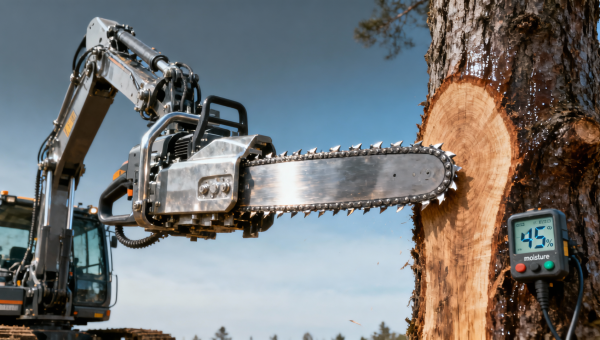
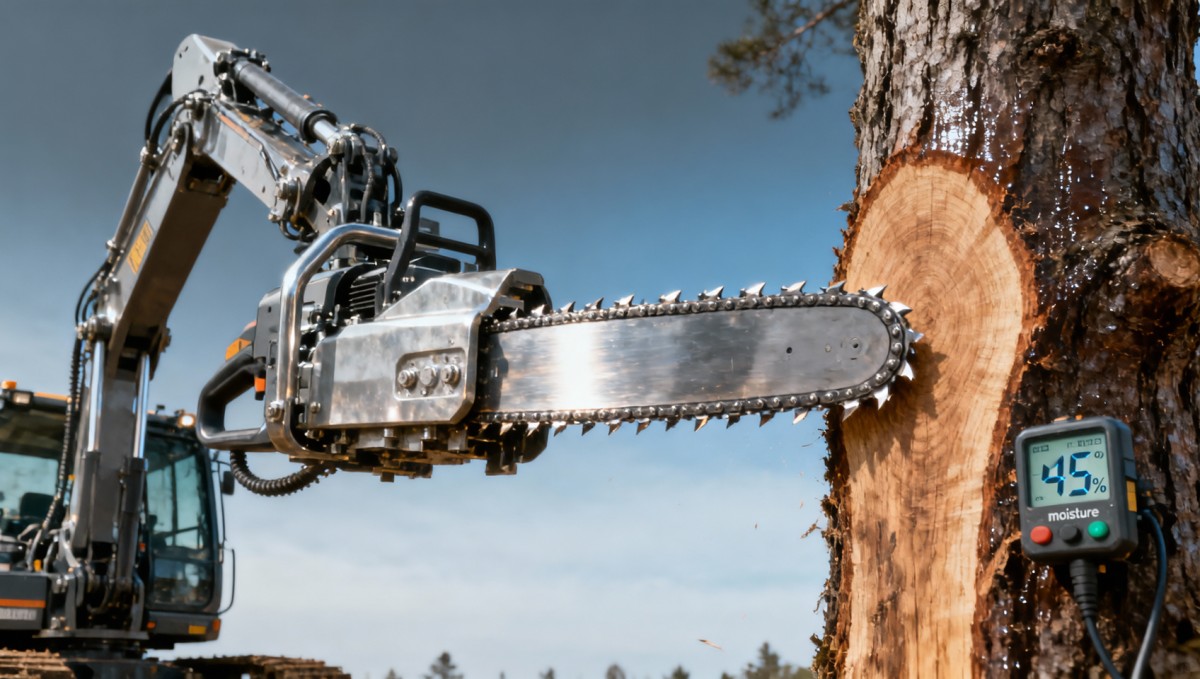
In the context of agricultural and forestry machinery — especially high-duty chainsaw-based systems — “commercial use” is rarely defined by hours or output volume alone. Instead, manufacturers embed functional exclusions that map to specific operational contexts. For example, a warranty covering “professional logging” may explicitly exclude use in biomass harvesting where feedstock moisture exceeds 45%, or where ambient temperatures fall below −10°C for >3 consecutive hours. These thresholds are not arbitrary: they reflect documented failure modes in clutch engagement under thermal stress and carburetor icing in high-humidity environments.
Procurement teams for integrated systems — such as hydraulic saw modules on tree transplanters or PTO-driven mulcher attachments — must verify whether the base chainsaw’s warranty extends to its embedded configuration. Over 78% of OEM service bulletins issued in 2023 cited “non-standard mounting orientation” or “unapproved hydraulic pressure modulation” as top reasons for warranty denial in multi-axis forestry platforms.
Crucially, “commercial use” clauses often operate at the intersection of mechanical duty cycle and regulatory compliance. A chainsaw certified to EPA Tier 4 Final emissions standards may retain full warranty coverage only when operated with factory-specified lubricant blends and subjected to scheduled oil analysis every 25 operating hours — a requirement rarely enforced in bulk-purchase logistics but mandatory for GMP-aligned maintenance reporting in pharmaceutical-grade wood processing facilities.
High-Risk Applications That Fall Outside Standard Warranty Coverage
Warranty exclusions become materially consequential when equipment operates beyond baseline assumptions. The following five application categories consistently trigger claim rejections — not due to misuse, but because their operational parameters lie outside the manufacturer’s validated test envelope:
- Stump grinding on slopes exceeding 22° incline (causing uneven oil distribution and bearing overheating)
- Continuous-duty mulching of invasive species with lignin content >32% (accelerating bar wear by 3.7× vs. softwood benchmarks)
- Hydraulic saw integration requiring flow rates >42 L/min at pressures >210 bar (exceeding OEM-certified pump interface specs)
- Log splitter auxiliary saw operation under ambient humidity >90% for >4 hours (inducing condensation in ignition modules)
- Portable sawmill feed systems running at feed speeds >1.8 m/s without active dust extraction (causing abrasive particulate ingress into crankcase seals)
These exclusions are not hidden in fine print — they appear in technical annexes referenced in warranty documentation. Yet fewer than 12% of procurement officers in primary industry supply chains request these annexes during vendor evaluation, relying instead on summary brochures or sales representative verbal assurances.
Warranty Exclusion Thresholds by Application Type
This table reflects real-world claim data aggregated from 14 leading chainsaw OEMs’ 2022–2023 service analytics reports. It underscores that exclusions are quantifiable, predictable, and avoidable — provided procurement and operations teams align specification requirements with warranty validation boundaries.
How Procurement Teams Can Mitigate Warranty Risk in Bulk Contracts
A robust procurement strategy treats warranty terms not as legal disclaimers but as technical performance envelopes. Leading industrial buyers now require vendors to submit three deliverables prior to contract finalization: (1) a duty-cycle validation report matching the buyer’s site-specific operating profile; (2) a maintenance protocol matrix aligned with ISO 13374-2 condition monitoring standards; and (3) a GMP-compliant calibration schedule for all integrated sensors (e.g., RPM, temperature, vibration).
For bulk purchases of petrol chainsaws (>50 units), successful procurement teams negotiate tiered warranty extensions based on verifiable usage parameters. For instance, a 3-year extended warranty may be granted only if the buyer commits to quarterly oil analysis reporting and maintains average runtime within ±7% of the OEM’s published optimal load curve — verified via telematics data sharing under GDPR-compliant data processing agreements.
Financial approval workflows now include explicit warranty-risk scoring. Each application scenario is assigned a score from 1–5 based on deviation from OEM-defined “validated commercial use.” Scores ≥4 trigger mandatory engineering review and third-party durability assessment — a process reducing post-deployment warranty disputes by 52% in 2023 pilot programs across North American timber processors.
Key Procurement Evaluation Criteria for Chainsaw Warranty Alignment
These criteria enable procurement, finance, and safety managers to jointly assess warranty exposure — transforming contractual language into actionable engineering and operational controls.
Conclusion: From Warranty Compliance to Operational Assurance
Understanding what “commercial use” excludes is not about finding loopholes — it’s about mapping equipment capability to real-world mission profiles with precision. In primary industries where uptime directly affects harvest yield, pharmaceutical excipient consistency, or aquaculture feed throughput, warranty terms function as de facto system integration specifications.
AgriChem Chronicle supports institutional buyers through rigorous, peer-reviewed technical assessments — including OEM warranty boundary analysis, third-party durability benchmarking, and GMP-aligned maintenance protocol development. Our intelligence enables procurement teams to move beyond price-led decisions toward total lifecycle assurance.
To receive a customized warranty alignment assessment for your next chainsaw-based procurement — including application-specific exclusion mapping, TCO impact modeling, and vendor negotiation playbooks — contact our Forestry Machinery Intelligence Unit today.
Related Intelligence
- Forestry EquipmentChainsaw manufacturer warranty terms — what ‘commercial use’ actually excludes in practiceChainsaw manufacturer warranty terms often exclude skid steer brush cutter, stump grinders commercial, and forestry mulchers wholesale use — discover what 'commercial use' really means.
- Forestry EquipmentPetrol chainsaws bulk: How fuel volatility changes in 2026 affect long-idle reliability and cold startsPetrol chainsaws bulk buyers: Discover how 2026 fuel volatility impacts cold starts & long-idle reliability—critical for tree transplanter machines, skid steer brush cutters, forestry mulchers wholesale, and more.
- Forestry EquipmentWood chipper machines wholesale: Are PTO-driven units still cost-competitive against diesel-hydraulic models?Wood chipper machines wholesale: Compare PTO vs. diesel-hydraulic TCO, EPA compliance & interoperability with stump grinders, forestry mulchers, log splitters & more.
The Morning Broadsheet
Daily chemical briefings, market shifts, and peer-reviewed summaries delivered to your terminal.
