
The Authority in Global Agricultural Chemistry & Bio-Resources
Feed & Grain Processing Equipment Bottlenecks to Check Early
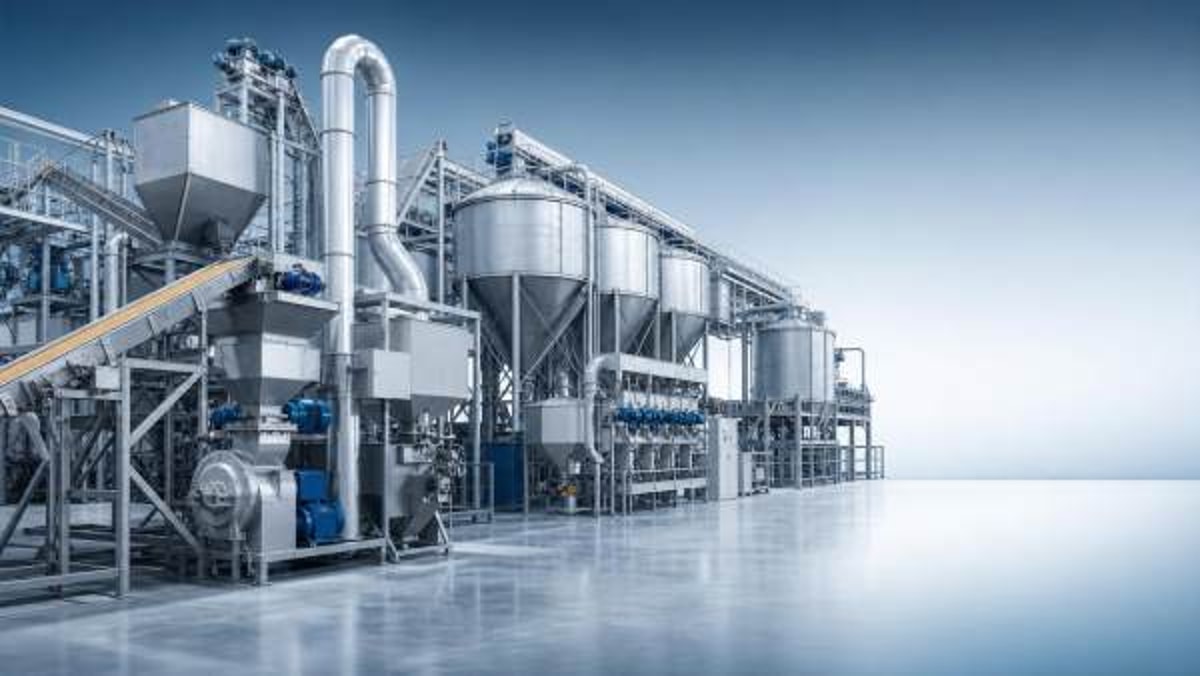
In feed mill upgrades or greenfield projects, small oversights in Feed & Grain processing equipment can trigger costly delays, safety risks, and underperformance later. For project managers and engineering leads, identifying bottlenecks early—from material flow and dust control to automation compatibility and maintenance access—is essential to protecting schedules, budgets, and long-term throughput. This guide outlines the critical checkpoints that deserve attention before problems scale.
For industrial buyers, EPC teams, and plant managers, the challenge is rarely a single machine. The real issue is how receiving, storage, grinding, batching, pelleting, cooling, screening, and loadout perform as one connected system. A project can look technically complete on paper, yet still fail at startup because one conveyor is undersized, one aspiration point is missed, or one control interface cannot exchange data with adjacent equipment.
In practice, early-stage review of Feed & Grain processing equipment should focus on system constraints, not only rated capacity. A line designed for 20 tons per hour may operate at 14–16 tons per hour if ingredient variability, poor bin geometry, or maintenance access were not addressed during engineering. For project managers, this makes bottleneck identification a schedule, cost, compliance, and uptime decision—not just an equipment decision.
Where Feed & Grain Processing Equipment Bottlenecks Usually Begin
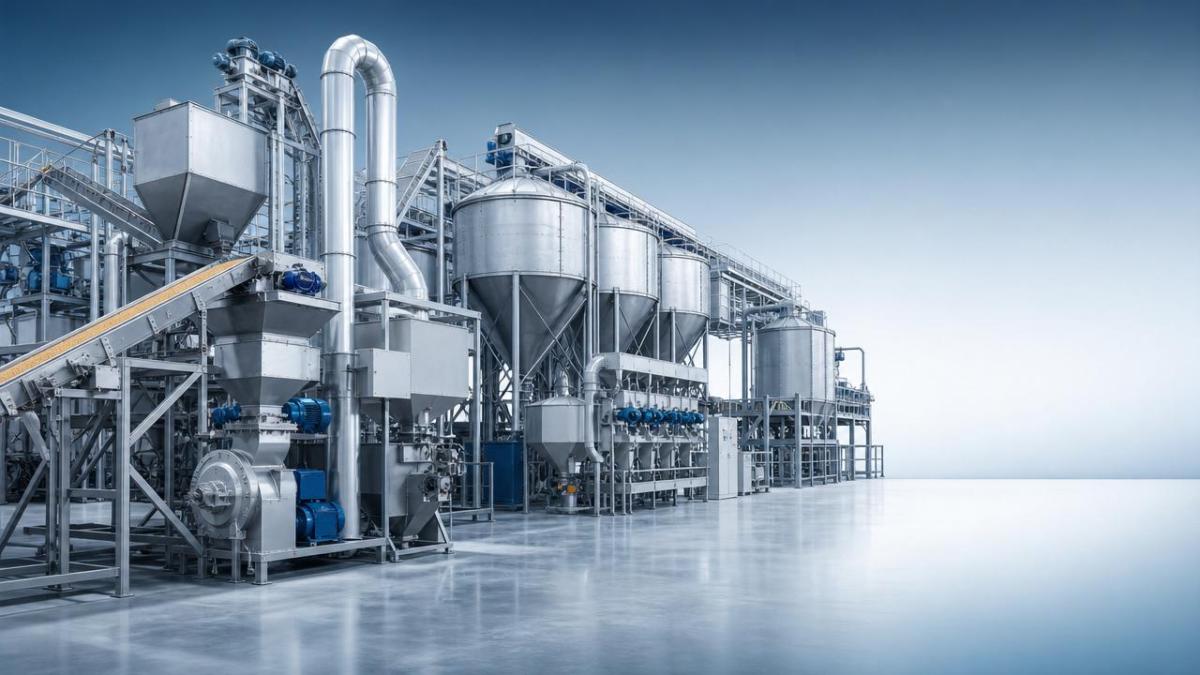
Most throughput problems appear long before commissioning. They start during layout definition, utility planning, and interface mapping between process sections. In a typical feed mill, 4 to 7 transfer points can determine whether material flows consistently or bridges, segregates, and creates dust accumulation. If those points are not reviewed in detail, the entire line can inherit avoidable instability.
Material flow is often the first hidden constraint
Feed & Grain processing equipment must handle ingredients with very different bulk densities, moisture levels, and flow behaviors. Corn, soybean meal, premixes, DDGS, and mineral additives do not move through bins and screws the same way. A system sized for free-flowing grain may struggle when sticky or fine ingredients exceed 15%–20% of the formula, especially around surge bins, screw feeders, and dosing hoppers.
Engineers should verify hopper angles, outlet sizes, liner selection, and feeder control logic before fabrication. Even a 10% mismatch between expected and real ingredient flow can distort batching accuracy, pellet mill feed stability, and downstream cooling performance. When line balance is tight, these small errors quickly become daily production losses.
Early material flow checks
- Confirm design capacity by ingredient family, not by a single average bulk material.
- Review minimum and peak flow conditions, such as 40% load and 110% surge periods.
- Check bin discharge geometry for bridging risk with fine meals and high-fat materials.
- Validate transfer equipment speed, fill rate, and wear allowance for 12–18 months of operation.
Dust control and housekeeping are productivity issues, not only safety issues
Dust is one of the most underestimated bottlenecks in Feed & Grain processing equipment projects. Insufficient aspiration can reduce equipment life, increase cleanup labor, and create unstable weighing conditions. In grinding and pelleting sections, poor air balance can also affect product temperature and moisture, resulting in reduced pellet durability or inconsistent fines return.
As a planning rule, project teams should identify every major dust generation node, including receiving pits, bucket elevator heads, hammer mills, mixers, pellet mills, coolers, and screens. A system with 8 to 12 collection points may still underperform if duct routing is too long, if elbows are poorly placed, or if filter maintenance access is blocked by mezzanines or cable trays.
The table below helps project managers prioritize the most common early bottlenecks in Feed & Grain processing equipment and the likely operational effect if they are overlooked.
The key conclusion is that bottlenecks are usually measurable before startup. Truck cycle time, scale settling time, motor load variation, and cooling performance are not minor details. They are early indicators of whether Feed & Grain processing equipment will meet commercial output targets in real production conditions.
Automation compatibility can delay commissioning more than mechanical installation
Many mills complete mechanical erection on time but lose 2–6 weeks during controls integration. This usually happens when the project team assumes all OEM packages will communicate smoothly. In reality, batching systems, VFDs, level sensors, pellet mill controls, and SCADA layers often come from different vendors with different signal standards, alarm philosophies, and data structures.
Project leaders should request I/O lists, network architecture, and control narratives early—preferably before final equipment release. For Feed & Grain processing equipment, automation bottlenecks affect more than visibility. They influence formula traceability, alarm response, energy tracking, and maintenance diagnostics. In regulated or export-oriented operations, incomplete records can become a compliance issue as well as an operational issue.
Critical Engineering Checkpoints Before Purchase Orders Are Locked
Once procurement starts, correcting design omissions becomes slower and more expensive. For this reason, project managers should establish a structured pre-PO review for Feed & Grain processing equipment. A disciplined review can reduce change orders, improve startup predictability, and shorten the gap between mechanical completion and stable commercial production.
Review the system as a capacity chain, not as isolated machines
A common mistake is buying each machine based on nominal capacity while ignoring line synchronization. If intake runs at 30 TPH, grinding at 22 TPH, mixing at 20 TPH, and pelleting at 18 TPH, the actual plant capacity is defined by the lowest stable section, not the largest machine. This seems obvious, yet many projects still approve equipment with incompatible duty points.
A useful engineering method is to map three numbers for each section: nameplate capacity, expected continuous capacity, and worst-case capacity under difficult formulas. The gap between those three figures often reveals where Feed & Grain processing equipment will underperform during real shifts, especially when moisture changes, formulas change, or operators switch product grades several times per day.
Five pre-PO questions to ask
- What is the confirmed throughput for each process step under standard and difficult recipes?
- Which transfer points are sensitive to segregation, buildup, or plugging?
- How many hours of surge storage are available before key machines starve?
- What maintenance tasks require shutdown, and how long does each task typically take?
- Which OEM packages require interface testing before shipment?
Maintenance access should be designed before steel and piping block the work area
Maintenance bottlenecks often emerge after layout approval, when teams realize a screen cannot be removed safely, a pellet die cannot be changed efficiently, or an elevator boot cannot be cleaned without partial dismantling. In plants running 16–24 hours per day, maintenance access directly affects uptime. Saving 30 minutes on a die change or 20 minutes on a filter inspection compounds over hundreds of interventions per year.
For Feed & Grain processing equipment, maintenance review should include service clearances, lifting points, platform access, lockout/tagout space, and spare-parts handling routes. A machine may meet process requirements but still be a poor asset if routine service requires scaffolding, awkward manual handling, or repeated line stoppages.
The matrix below can be used during design review meetings to compare practical checkpoints before orders are finalized.
This comparison shows that procurement discipline is not only about price negotiation. The strongest projects evaluate how Feed & Grain processing equipment will be installed, controlled, serviced, and sustained during the first year of operation.
Utilities and environmental controls must match the process load
Steam, compressed air, electrical distribution, ventilation, and wastewater handling are frequent secondary bottlenecks. For example, a pelleting line can be mechanically capable of higher output, but insufficient steam pressure or poor condensate management may cap real production. Similarly, inadequate ventilation in enclosed process rooms can raise temperature, reduce operator comfort, and accelerate electrical faults.
Project teams should verify utility loads with at least three conditions: startup, normal operation, and peak simultaneous demand. A 15% design margin is often more practical than a zero-margin system that performs only under ideal conditions. In Feed & Grain processing equipment projects, utility balance is especially important where ambient humidity and temperature fluctuate across seasons.
Execution Risks During Installation, Commissioning, and Ramp-Up
Even well-specified Feed & Grain processing equipment can run into avoidable delays if execution planning is weak. Installation logic, commissioning sequence, operator training, and acceptance criteria should be defined months before startup, not in the final week. In many projects, a 3-stage ramp-up plan is the difference between smooth handover and prolonged instability.
Factory acceptance and site acceptance should test real operating conditions
A factory acceptance test is valuable, but it does not replace field validation. FAT may confirm motor rotation, panel function, and basic interlocks, yet site acceptance must verify actual process behavior with real ingredients, expected recipes, and realistic throughput levels. For batching and pelleting lines, teams should test at least low-load, target-load, and high-load scenarios.
Project managers should also define what “ready” means. Is it 8 consecutive hours at target output, 24 hours without a trip, or recipe accuracy within a specified tolerance? Clear acceptance criteria reduce disputes and keep vendors, contractors, and plant teams aligned.
Recommended ramp-up sequence
- Stage 1: Dry mechanical and controls verification for all major drives and interlocks.
- Stage 2: Section-by-section material trials, beginning with receiving, conveying, and grinding.
- Stage 3: Integrated production runs for 8–24 hours with representative formulations.
Training gaps create operational bottlenecks after handover
A modern Feed & Grain processing equipment line can fail to reach design performance if operators and maintenance staff are trained only on basic start-stop functions. They need to understand alarm priorities, changeover procedures, contamination control, wear indicators, lubrication intervals, and emergency response. Without this knowledge, minor issues escalate into stoppages or product quality deviations.
A practical training plan usually includes 3 groups: operators, maintenance technicians, and supervisors. Each group needs different depth. Operators need process discipline and troubleshooting steps. Maintenance teams need wear limits, replacement intervals, and fault diagnostics. Supervisors need production monitoring, reporting logic, and escalation rules.
Do not overlook spare parts and service response planning
The first 6 months after startup are when hidden weaknesses usually surface. If critical parts such as screens, hammers, bearings, seals, sensors, or gearbox components are not available, small failures can halt production for days. For imported Feed & Grain processing equipment, replacement lead times can range from 2 to 10 weeks depending on customs, sourcing, and OEM stock position.
This is why service planning belongs in the original project scope. Buyers should request critical spares lists, preventive maintenance schedules, recommended wear thresholds, and response expectations for remote or on-site support. A cheaper package with weak service structure can become the more expensive option within the first year.
How Project Managers Can Build a Stronger Decision Framework
Selecting Feed & Grain processing equipment for long-term performance requires more than checking brochures and layout drawings. Decision-makers should evaluate vendors and line concepts against operational fit, integration readiness, maintainability, utility demand, and support capability. In B2B procurement, the best technical choice is often the one that reduces execution uncertainty, not simply the one with the highest nominal rating.
Use a weighted review structure during vendor evaluation
A practical approach is to score each proposal across 5 key dimensions: process fit, controls compatibility, maintenance access, delivery reliability, and life-cycle support. Teams often assign 20%–30% weight to process fit, 15%–20% to controls, 15% to maintenance, 15%–25% to delivery confidence, and the remainder to service and spare parts readiness. This avoids overemphasis on purchase price alone.
For complex feed mill projects, this method also improves internal alignment. Engineering, operations, procurement, and EHS can review the same decision matrix instead of working from separate priorities. That reduces late objections and accelerates final approvals.
Common procurement mistakes to avoid
- Accepting nameplate capacity without difficult-formula verification.
- Approving controls architecture after mechanical procurement is complete.
- Ignoring maintenance access until platforms and ducting are already installed.
- Underestimating spare-parts lead times for imported components.
- Assuming commissioning success without clear site acceptance metrics.
Early review of Feed & Grain processing equipment bottlenecks protects more than startup dates. It protects throughput, safety performance, recipe accuracy, maintenance efficiency, and expansion flexibility. For project managers and engineering leads, the highest-value questions are usually asked before steel is cut, before panels are wired, and before purchase orders become change orders.
AgriChem Chronicle supports industrial decision-makers with technically grounded analysis across feed, grain, machinery, and primary processing systems. If you are assessing a mill upgrade, comparing OEM options, or preparing a greenfield equipment scope, now is the right time to validate bottlenecks before they become operational constraints. Contact us to discuss your project priorities, request a tailored content collaboration, or explore more solutions relevant to Feed & Grain processing equipment.
Related Intelligence
- Milling MachineryFeed & Grain Processing Technology Trends Worth WatchingFeed & Grain processing technology trends shaping 2025: explore automation, traceability, energy efficiency, and compliance strategies that help plants cut costs, reduce risk, and stay competitive.
- Milling MachineryFeed & Grain Processing Equipment Bottlenecks to Check EarlyFeed & Grain processing equipment bottlenecks can derail throughput, safety, and startup. Learn the early checks that help project teams avoid delays, cut risk, and improve plant performance.
- Milling MachineryFeed & Grain Processing Technology Trends Worth Watching in 2026Feed & Grain processing technology trends for 2026: discover smarter automation, energy-saving systems, and traceability upgrades that help buyers improve efficiency and reduce risk.
The Morning Broadsheet
Daily chemical briefings, market shifts, and peer-reviewed summaries delivered to your terminal.
