
The Authority in Global Agricultural Chemistry & Bio-Resources
Feed & Grain Processing Technology Trends Worth Watching in 2026
As global supply chains tighten and sustainability targets reshape industrial priorities, Feed & Grain processing technology is entering a decisive new phase. In 2026, buyers, operators, and technical decision-makers must track the innovations that are improving efficiency, compliance, traceability, and product quality across the value chain. This overview highlights the technology trends worth watching and why they matter for informed market research.
For research-oriented buyers in the primary industries ecosystem, the challenge is no longer simply finding a mill, dryer, or handling system with acceptable output. The real question is whether a processing line can deliver stable throughput, lower energy intensity, support audit-ready documentation, and adapt to changing formulations over a 5- to 10-year investment horizon. That is where Feed & Grain processing technology becomes strategically important.
Across feed mills, grain terminals, ingredient processors, and integrated farming operations, 2026 will reward companies that evaluate technology through four filters: operational efficiency, traceability, compliance readiness, and lifecycle serviceability. The trends below matter because they affect procurement risk, maintenance planning, product consistency, and total cost of ownership.
Digitalization Is Moving from Monitoring to Process Control
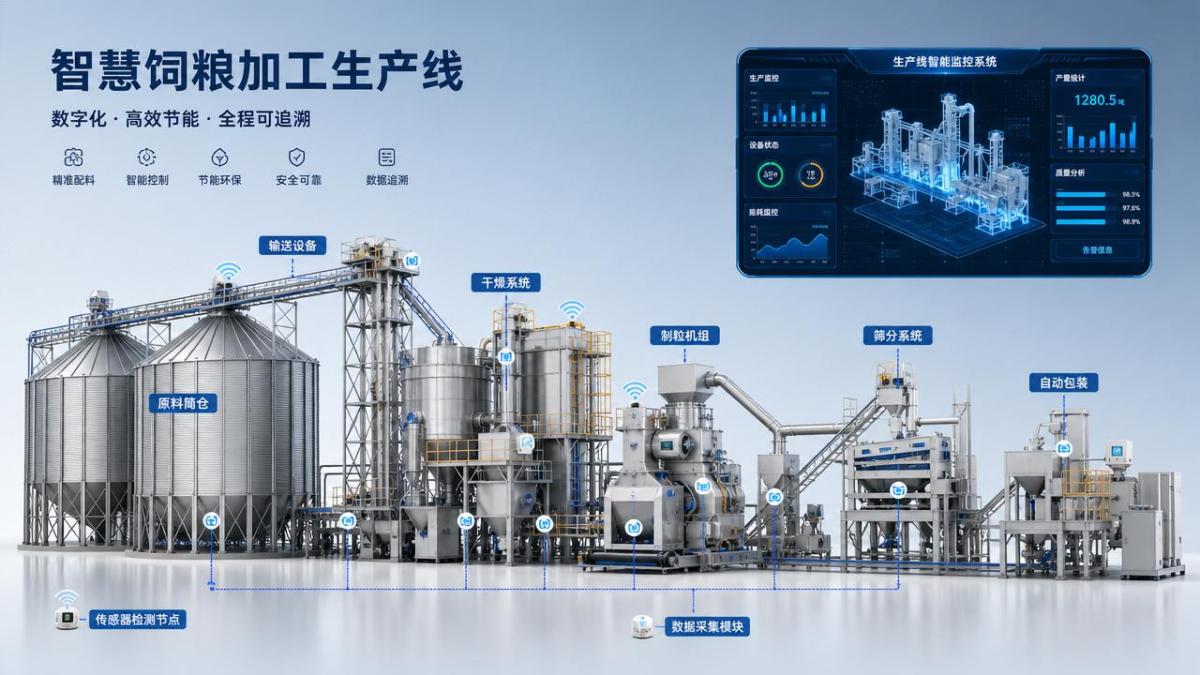
One of the most important shifts in Feed & Grain processing technology is the move from basic equipment monitoring to closed-loop process control. In practical terms, processors are no longer satisfied with dashboards that only show temperature, amperage, or motor status. They increasingly want systems that can adjust moisture, grinding fineness, pellet durability settings, and material flow in near real time.
For information researchers comparing plant upgrades, this trend matters because it changes the evaluation criteria. A machine rated at 20 tons per hour may look competitive on paper, but if it lacks sensor integration, recipe traceability, and alarm history logging, it may create bottlenecks during audits or formulation changes. In many facilities, a 2% to 5% gain in yield consistency can be more valuable than nominal nameplate capacity.
Why data capture alone is no longer enough
Older automation platforms often collect data at 15-minute or 30-minute intervals. Newer control systems can sample key variables every 1 to 5 seconds, depending on the process stage. That difference is significant in hammer milling, tempering, drying, and pelleting, where moisture swings of even 0.5% to 1.0% can affect downstream stability, bulk density, and shelf life.
More advanced Feed & Grain processing technology also supports exception-based alerts. Instead of forcing operators to interpret hundreds of raw values, the system flags events such as abnormal vibration, die temperature drift, or out-of-range retention times. This reduces manual intervention and improves response speed during peak production windows.
Core functions buyers should check
- Batch and lot traceability down to ingredient intake, mixing, and dispatch records
- Historical trend storage for at least 12 to 24 months
- Remote diagnostics for controls, drives, and critical sensors
- Recipe management with user permissions and change logs
- Integration with ERP, MES, or warehouse systems through standard protocols
The table below outlines how digital maturity is changing the procurement conversation in feed and grain operations.
The key takeaway is that digital tools should be evaluated as productivity infrastructure, not optional software. For buyers comparing quotations, the presence of a responsive control architecture can materially change labor requirements, shutdown frequency, and quality complaint exposure over 3 to 7 years.
Predictive maintenance is becoming commercially relevant
Another area to watch is predictive maintenance. In a feed or grain plant, unplanned downtime often starts with routine wear: screens, bearings, rolls, chain conveyors, bucket elevator components, and pellet mill dies. Modern systems increasingly combine vibration analysis, thermal sensing, and power draw patterns to predict service intervals before a failure stops production.
For mid-sized plants running 8 to 20 hours per day, even one avoided shutdown per quarter can justify part of the investment. Buyers should ask vendors whether maintenance alerts are fixed-hour based or condition-based, whether spare parts are regionally stocked, and whether response windows are 24 hours, 72 hours, or longer.
Energy, Water, and Emissions Performance Are Now Core Buying Criteria
A second trend shaping Feed & Grain processing technology in 2026 is the direct integration of sustainability metrics into plant design and equipment selection. This is not just about corporate image. Energy pricing volatility, local emissions permits, and customer reporting requirements are forcing processors to quantify consumption per ton, not simply total utility bills.
In many grain handling and feed production environments, the largest resource burdens come from drying, aspiration, pelleting, and pneumatic conveying. Incremental efficiency improvements of 8% to 15% in these sections can have a stronger financial effect than upgrading lower-load support equipment. That is why procurement teams are increasingly requesting specific performance ranges rather than generic efficiency claims.
Where processors are targeting measurable gains
Drying remains a priority because moisture reduction is both energy intensive and quality sensitive. Systems with staged heat recovery, better airflow balancing, and moisture-endpoint control can reduce over-drying risk. Even a 1% reduction in unnecessary moisture loss can preserve sellable mass while lowering fuel usage across harvest-scale volumes.
Dust control is another growing focus. In addition to worker safety, dust extraction affects housekeeping, fire risk, and emissions management. Advanced aspiration layouts with variable-speed fans can better match airflow to line load, reducing wasted power during partial-load operation. In facilities with seasonal peaks, this flexibility is increasingly valuable.
The following comparison highlights the sustainability-related performance factors that buyers should review when benchmarking Feed & Grain processing technology suppliers.
For market researchers, the most useful suppliers will be those that can explain performance by process section and operating condition, not only with broad annualized claims. A credible quote should separate design throughput, peak throughput, and normal operating throughput, ideally with utility assumptions stated clearly.
Compliance pressure is widening the scope of equipment evaluation
Environmental and food chain compliance now influence equipment choices earlier in the buying cycle. Facilities supplying export markets or regulated feed segments are paying closer attention to cleanability, contamination control, and documented process records. That means equipment with easier access panels, smoother internal surfaces, and better segregation logic can become commercially preferable even if initial capex is moderately higher.
In practical terms, buyers should review at least 4 compliance-related dimensions: cleaning access, material segregation, dust hazard controls, and record retention. A system that saves 6% on purchase price but adds 4 extra manual cleaning hours per week may not be cost-effective over the first 24 months of operation.
Traceability, Ingredient Flexibility, and Quality Assurance Are Converging
A third major trend in Feed & Grain processing technology is the convergence of traceability and formulation flexibility. Feed producers are handling a wider range of inputs, including alternative proteins, specialty additives, bio-based ingredients, and region-specific grains. As formulations diversify, plants need to switch recipes quickly without creating documentation gaps or cross-contamination concerns.
This matters especially for buyers serving aquaculture, livestock, premix, or specialty nutrition markets, where ingredient tolerance and process repeatability can be tighter than in bulk commodity operations. A line designed for only high-volume standard recipes may struggle when changeovers increase from 1 or 2 per day to 6 or more per shift.
The operational impact of more complex formulations
More diverse ingredient baskets create complexity at several points: intake verification, dosing precision, mixing homogeneity, thermal treatment, and final packaging or bulk loadout. As a result, technology that supports automatic identification, controlled sequencing, and clean transition between lots is gaining value. The goal is not just speed, but dependable quality with less rework.
For example, inline weighing and micro-dosing systems are increasingly expected to maintain tighter addition control for high-value ingredients. Even when exact tolerances depend on formulation, the buying discussion often centers on repeatability, calibration intervals, and audit trails rather than simple hopper count.
Questions that improve supplier screening
- How many ingredient streams can be handled without major redesign?
- What is the recommended cleanout procedure between sensitive recipes?
- Can the system isolate rework streams and document their reintroduction?
- What data are retained for batch verification and customer claims support?
- How long does a typical recipe changeover take under standard operating conditions?
The broader lesson is that traceability is no longer a standalone software feature. In 2026, it is increasingly embedded in physical plant design, controls architecture, and quality management workflows. Buyers researching Feed & Grain processing technology should therefore compare not only machines, but also how materials, operators, and digital records move together through the plant.
Quality assurance is becoming more in-line and less retrospective
Traditional quality control relies heavily on sample-based checks after processing. Newer systems aim to detect deviations during production by linking inline sensors, automated records, and process alarms. This reduces the delay between a developing issue and a corrective response. In high-throughput operations, cutting the response window from 30 minutes to 5 minutes can prevent significant off-spec volumes.
For information researchers, this means supplier proposals should be reviewed for quality visibility at every major stage: raw material intake, size reduction, conditioning, forming, cooling, and dispatch. The strongest vendors will define what can be measured inline, what still requires laboratory confirmation, and where human verification remains necessary.
How Buyers Should Evaluate Feed & Grain Processing Technology in 2026
Technology trends only create value when they are translated into disciplined procurement criteria. For research-driven buyers, the best approach is to compare options through a structured framework that includes process fit, data capability, service support, and expansion potential. This reduces the risk of selecting equipment that performs well in a demonstration but poorly in a real operating environment.
A practical 5-point evaluation framework
- Process compatibility: Can the line handle current and near-term formulations, moisture levels, and throughput targets?
- Control depth: Does the automation support traceability, alarms, recipe versioning, and condition-based maintenance?
- Utility profile: Are energy, steam, air, and water assumptions clearly stated per ton or per operating mode?
- Service readiness: What are the spare parts lead times, commissioning timelines, and remote support capabilities?
- Scalability: Can capacity be increased in 2 to 3 phases without replacing the entire control backbone?
The table below can help buyers turn broad market research into more precise vendor conversations.
A structured comparison often reveals that the lowest initial quote is not the lowest-risk option. For plants operating in volatile raw material markets, flexibility, service depth, and control transparency can outweigh a modest capex difference within the first 12 to 18 months.
Common mistakes in early-stage market research
One common mistake is comparing equipment on isolated specifications without reviewing line integration. A grinder, dryer, pellet mill, or conveyor may each look acceptable individually, yet still create mismatch across the overall flow. Another mistake is assuming traceability can be added later at low cost. In many cases, retrofitting data architecture after startup is more disruptive than designing it upfront.
A third issue is underestimating the importance of commissioning and training. Even well-designed Feed & Grain processing technology requires process tuning, operator familiarization, and maintenance handover. Buyers should confirm whether startup support lasts 3 days, 2 weeks, or longer, and whether refresher training is available after the first production cycle.
What informed buyers should do next
In 2026, the most competitive feed and grain operations will be those that combine efficient plant hardware with auditable data, adaptable process control, and realistic service planning. That combination supports not only current output targets, but also changing ingredient strategies, tighter compliance expectations, and more demanding customer specifications.
AgriChem Chronicle tracks these developments with an editorial focus designed for technical researchers, procurement teams, and industrial operators who need more than surface-level trend lists. If you are assessing Feed & Grain processing technology for expansion, replacement, or market entry planning, now is the right time to compare system architectures, utility assumptions, and support models in detail.
To refine your shortlist, request a tailored technology assessment, review application-specific processing scenarios, and map supplier claims against your operating requirements. Contact us to get a customized research brief, explore solution pathways, or learn more about the processing technologies best aligned with your 2026 investment priorities.
Related Intelligence
- Milling MachineryFeed & Grain Processing Technology Trends Worth Watching in 2026Feed & Grain processing technology trends for 2026: discover smarter automation, energy-saving systems, and traceability upgrades that help buyers improve efficiency and reduce risk.
- Milling MachineryFeed & Grain Processing Equipment: Where Downtime Starts FirstFeed & Grain processing equipment downtime often starts with small wear points, sensor drift, or calibration errors. Learn the first failure triggers and smarter maintenance actions to protect uptime.
- Milling MachineryFeed and Grain equipment upgrades that shorten cleaning downtimeFeed & Grain equipment upgrades that cut cleaning downtime: discover practical retrofits for conveyors, access points, dust control, and washdown design to boost uptime.
The Morning Broadsheet
Daily chemical briefings, market shifts, and peer-reviewed summaries delivered to your terminal.
