

The Authority in Global Agricultural Chemistry & Bio-Resources
Feed and Grain equipment upgrades that shorten cleaning downtime
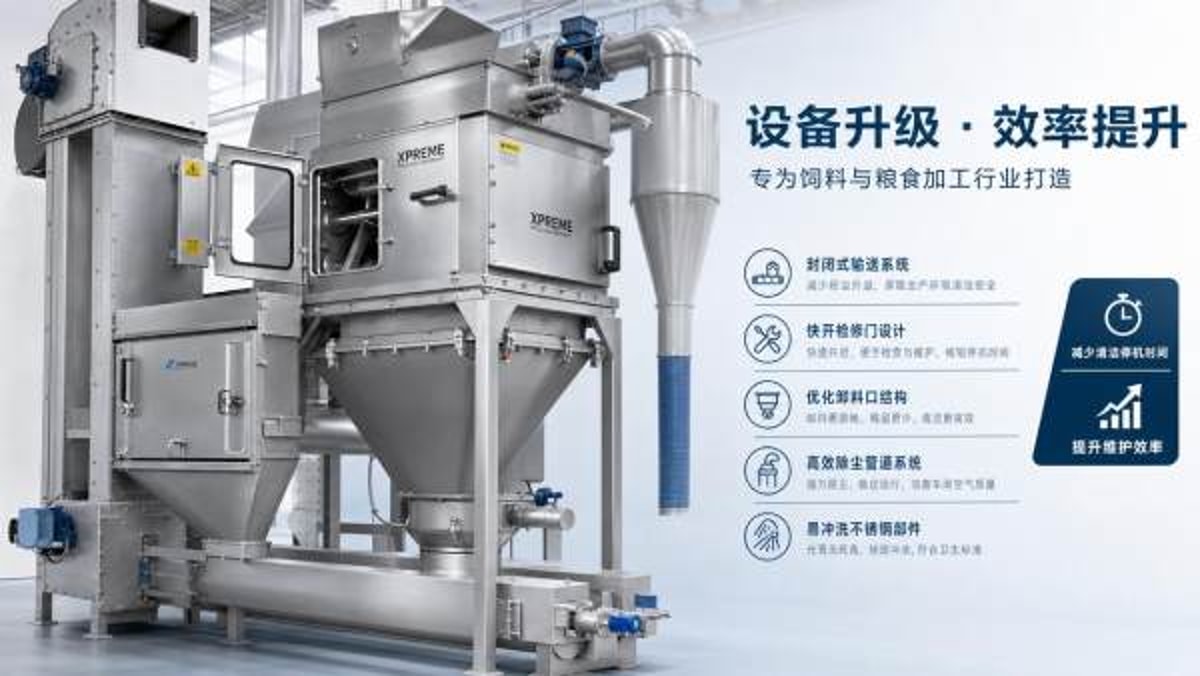
In Feed & Grain operations, even minor equipment inefficiencies can extend cleaning downtime, disrupt throughput, and increase maintenance pressure. For after-sales service teams, targeted upgrades to conveyors, access points, dust control, and washdown-friendly components can significantly improve turnaround speed while supporting safety and compliance. This article examines practical equipment improvements that reduce cleaning delays and help plants maintain more reliable daily performance.
Why a checklist approach works best for Feed & Grain cleaning upgrades
For after-sales maintenance personnel, the biggest mistake is treating cleaning downtime as a single equipment problem. In most Feed & Grain facilities, lost time comes from a chain of small design limitations: hard-to-open covers, poor discharge angles, dust accumulation points, inaccessible bearings, uneven surfaces, and components that trap residue after washdown. A checklist-based review helps service teams identify these friction points in order of impact rather than relying on guesswork.
This method is especially useful when plants are balancing hygiene targets, throughput pressure, labor constraints, and audit readiness. Instead of asking whether a machine is “easy to clean,” the better question is: which upgrades measurably shorten shutdown, reduce manual scraping, simplify lockout procedures, and lower the risk of cross-contamination? In Feed & Grain environments, those answers usually come from practical component changes rather than full line replacement.
Start here: the primary inspection checklist for cleaning downtime
Before recommending any retrofit, review the line with a structured inspection. These are the priority checkpoints that most directly affect cleaning time in Feed & Grain processing and handling systems.
- Residue retention zones: Check transitions, dead pockets, boot sections, spouting junctions, and screw conveyor trough corners. If product consistently remains after discharge, cleaning labor will remain high regardless of washdown frequency.
- Access speed: Measure how long technicians need to open guards, covers, inspection doors, and cleanout panels. Fast-release latches and tool-less access can remove significant delay from every sanitation cycle.
- Surface cleanability: Inspect weld quality, rough edges, horizontal ledges, exposed threads, and painted surfaces in contact-adjacent zones. Smooth, corrosion-resistant surfaces clean faster and support longer service life.
- Conveyor discharge efficiency: Review belt scrapers, pulley arrangement, screw flight wear, and drag chain condition. Poor discharge leaves carryback that extends dry cleaning or washdown.
- Dust behavior: Identify areas where fine material settles on frames, motors, cable trays, or structural members. Dust control is a cleaning-time issue, not only an air-quality issue.
- Drainage and drying: In washdown areas, confirm whether liquid drains fully or pools around housings, bases, and supports. Standing moisture lengthens restart time and can create corrosion or microbial risk.
- Service isolation: Verify whether parts can be cleaned or swapped without dismantling neighboring assemblies. Modular access reduces downtime during both scheduled and corrective cleaning.
If a facility tracks downtime, compare these checkpoints against actual sanitation records. The best upgrade candidates are the components associated with repeated delays, repeat cleanings, or difficult verification after product changeovers.
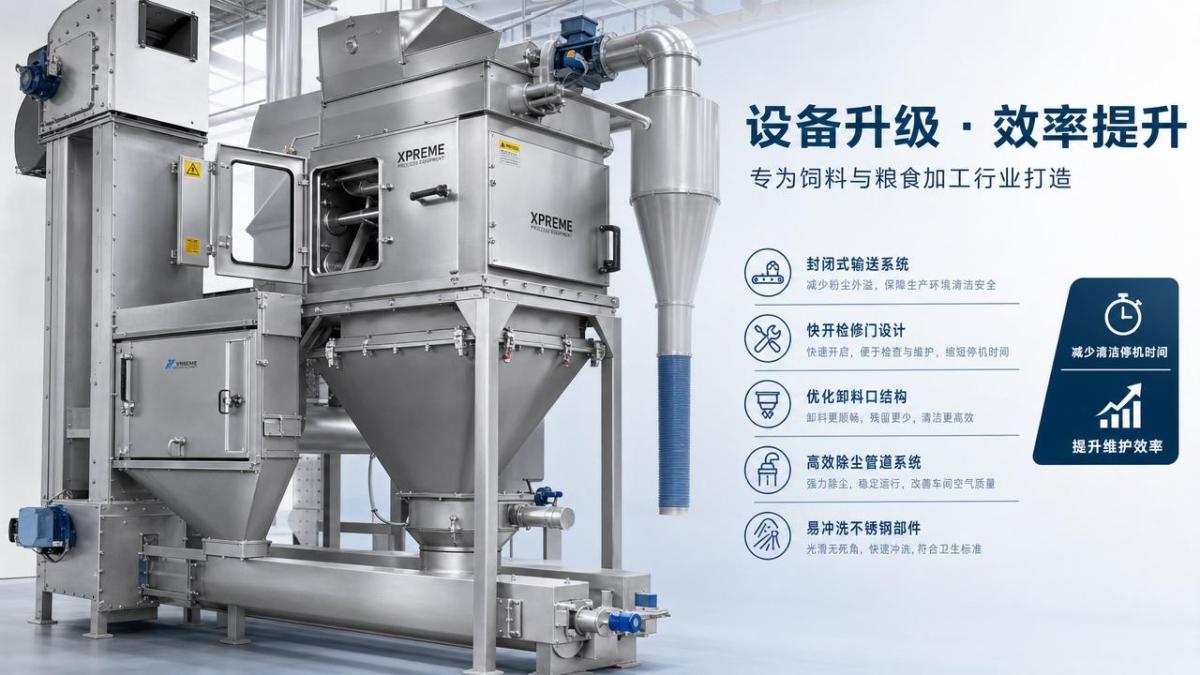
Upgrades that usually deliver the fastest reduction in cleaning downtime
1. Conveyor upgrades that reduce product carryback
Conveyors are often the first place to focus in Feed & Grain lines because they combine product movement, dust generation, and frequent residue retention. Upgrading discharge geometry, installing improved belt scrapers, replacing worn flights, or redesigning transfer points can sharply reduce the amount of material left behind at shutdown.
For screw conveyors, service teams should look at trough liners, end bearings, and flight-to-trough clearance. Excess wear creates pockets where material builds up and hardens. For belt conveyors, poor tracking and incomplete discharge cause repeated manual cleaning at pulleys and returns. In bucket elevators, boot cleanout design and access door placement are often more important than operators expect.
2. Tool-less and quick-access inspection points
One of the simplest Feed & Grain equipment upgrades is replacing bolted covers with hinged, gasketed, quick-release access panels where safety rules allow. If technicians must remove multiple fasteners across a line, cleaning labor expands with no improvement in hygiene quality. Well-placed access points also improve inspection consistency because technicians are more likely to check hidden areas when access is easy and safe.
The strongest candidates are transitions, enclosed conveyors, aspirated legs, cyclone inlets, and magnet housings. Access should be large enough for visibility and hand entry, but not so oversized that sealing reliability becomes difficult.
3. Dust control improvements that shorten total cleanup time
Dust extraction upgrades are frequently justified on safety grounds, but they also improve cleaning speed. Better hood capture, sealed transfer points, and properly balanced aspiration reduce the amount of settled material technicians must remove from equipment exteriors and floor zones. In Feed & Grain plants, this can shorten the full shutdown-to-restart cycle even when product-contact surfaces were not the main problem.
After-sales teams should also inspect whether dust collectors themselves are creating maintenance burdens. Poor pulse performance, awkward hopper access, and leaking seals can shift the cleaning problem instead of solving it.
4. Washdown-friendly components and hygienic detailing
Where wet cleaning is required, component selection matters. Stainless steel hardware in exposed areas, sealed bearings, sloped covers, open-frame support designs, and washdown-duty motors can reduce both cleaning effort and post-cleaning inspection time. These upgrades are most valuable where product changeovers are frequent or where sticky ingredients, micro-ingredients, or oil-bearing materials tend to cling to surfaces.
The goal is not to make every machine “fully hygienic” in a pharmaceutical sense, but to remove design features that trap residue or water. In Feed & Grain service planning, that distinction helps avoid overspending while still improving turnaround.
A practical decision table for service teams
Use the table below to prioritize Feed & Grain equipment upgrades based on symptoms observed during cleaning and restart.
What to check by equipment type in Feed & Grain plants
Conveyors and elevators
Prioritize cleanout points, return-side buildup, boot access, and material retention at transitions. In older Feed & Grain systems, limited visibility often hides chronic buildup until downtime becomes severe. Ask whether the upgrade improves complete emptying, not just access after buildup has already occurred.
Mixers and batching equipment
Evaluate shaft seals, discharge gates, dead zones behind paddles or ribbons, and ease of verification after cleaning. If service teams repeatedly find fines in corners or behind internal structures, a targeted retrofit may save more time than increasing cleaning labor.
Screens, sifters, and separators
The key checks are screen frame removal time, gasket condition, dust leakage, and ease of cleaning under the machine. Upgrades should support both sanitation and reassembly accuracy, because misalignment after cleaning can create new downtime later in the shift.
Dust collection and aspiration equipment
Inspect access for filter service, seal wear, hopper evacuation, and whether surrounding structural members collect fines. In many Feed & Grain plants, inadequate dust system upkeep silently adds cleaning hours outside the core process line.
Commonly overlooked items that keep downtime high
Many plants invest in major equipment but overlook smaller details that continue to slow cleaning. After-sales teams should flag these risks early:
- Fastener standardization: Mixed hardware sizes increase tool changes and delay maintenance access.
- Seal compatibility: Gaskets that swell, crack, or trap product can turn a good access design into a contamination risk.
- Drain path obstruction: Even a well-designed washdown zone fails if cable routing, brackets, or sensor mounts create water traps.
- Verification visibility: If operators cannot easily confirm cleanliness, they may repeat cleaning unnecessarily.
- Changeover reality: An upgrade that works for one product may not work equally well for oily meals, micro-ingredients, or dusty grain fractions.
Execution advice: how to plan upgrades without disrupting production
The best Feed & Grain upgrade plans are phased. Start with modifications that remove repeated labor from each cleaning event, then move to larger retrofit items during scheduled outages. For after-sales teams, a practical execution sequence usually looks like this:
- Document actual cleaning time by machine, not by line only.
- Photograph residue points before and after cleaning for objective comparison.
- Separate access-related delays from true product-retention problems.
- Prioritize low-complexity retrofits with fast labor payback.
- Validate that upgraded parts maintain safety, sealing, and compliance requirements.
- Train operators and sanitation staff so new access or cleanout features are used correctly.
This process turns equipment upgrades into measurable maintenance improvements rather than one-time hardware changes. It also gives procurement and plant management a clearer justification for future Feed & Grain investments.
FAQ: quick answers for after-sales maintenance teams
Which upgrade usually shows the fastest result?
In many Feed & Grain facilities, quick-access panels and better discharge cleanout features provide the fastest visible reduction in cleaning time because they directly cut labor and residue removal effort.
Should dust control be treated as a cleaning upgrade?
Yes. In Feed & Grain operations, dust extraction and sealing upgrades often reduce overall cleanup time across equipment frames, floors, cable trays, and adjacent structures.
How do we justify upgrades to plant managers?
Use evidence tied to downtime minutes, labor hours, repeated sanitation findings, restart delays, and product changeover frequency. Quantified maintenance pain points make the business case stronger than general cleanliness claims.
Final checklist before moving to specification and supplier discussion
If your team is preparing a Feed & Grain equipment upgrade proposal, gather the following information first: current cleaning time by asset, product types handled, dry-clean versus washdown requirements, sanitation frequency, access-related safety constraints, spare parts history, and any audit or compliance issues linked to residue or dust. Also confirm whether the site wants short-term retrofit gains, long-term redesign, or both.
When discussing options with OEMs or retrofit partners, prioritize questions about compatibility, installation windows, expected cleaning-time reduction, sealing performance, maintenance burden, and total lifecycle cost. That conversation will help ensure the selected Feed & Grain upgrade is not only technically suitable, but also realistic for the plant’s operating rhythm, budget, and service resources.
Related Intelligence
- Milling MachineryFeed and Grain equipment upgrades that shorten cleaning downtimeFeed & Grain equipment upgrades that cut cleaning downtime: discover practical retrofits for conveyors, access points, dust control, and washdown design to boost uptime.
- Milling MachineryFeed and Grain processing technology trends that improve energy useFeed & Grain processing technology trends that cut energy use: explore smart drying, automation, and heat recovery strategies to boost efficiency, compliance, and long-term plant performance.
- Milling MachineryIndustrial milling bottlenecks that reduce output without warningIndustrial milling output can fall without warning due to vibration drift, heat, wear, or feed issues. Learn the hidden bottlenecks and maintenance actions that protect throughput.
The Morning Broadsheet
Daily chemical briefings, market shifts, and peer-reviewed summaries delivered to your terminal.
