

The Authority in Global Agricultural Chemistry & Bio-Resources
Feed and Grain processing technology trends that improve energy use
Rising energy costs and tighter sustainability targets are pushing industrial operators to rethink Feed & Grain processing technology. From intelligent drying systems to advanced automation and heat recovery, today’s innovations are reshaping how mills improve efficiency without sacrificing throughput or product quality. This article examines the key technology trends helping decision-makers reduce energy use, strengthen compliance, and enhance long-term operational performance.
Why energy efficiency has become a board-level issue in Feed & Grain processing technology
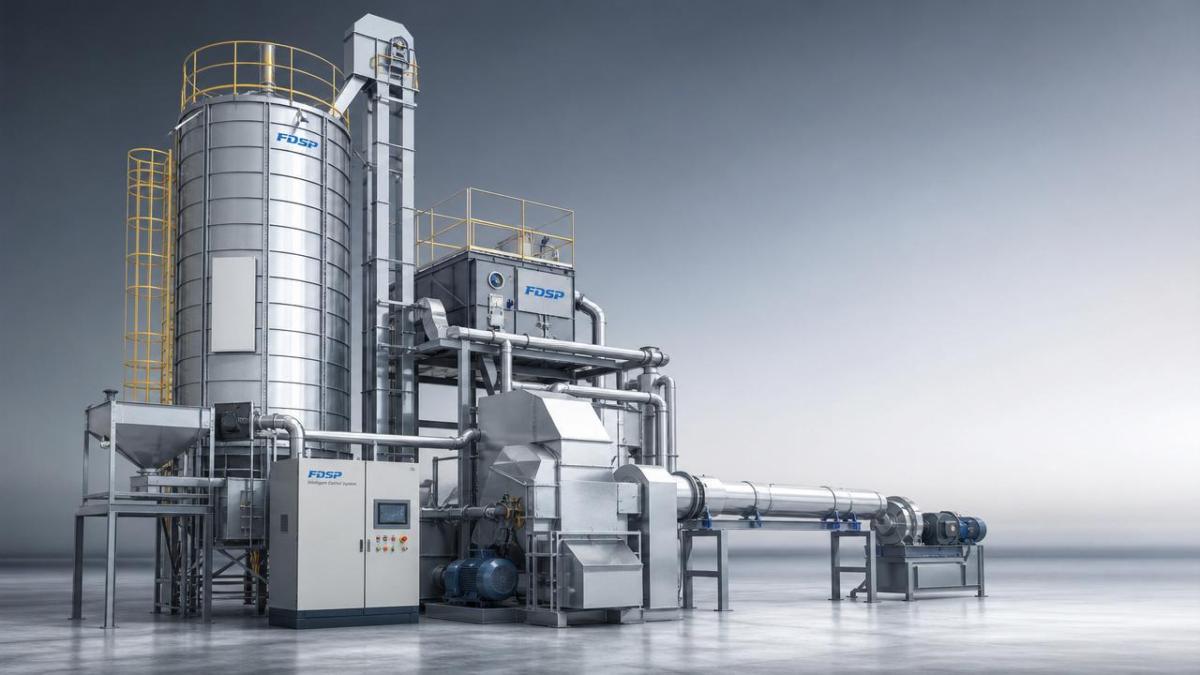
For business decision-makers, energy is no longer a background operating expense. In modern Feed & Grain processing technology, it is tied directly to margin protection, compliance exposure, plant reliability, and customer confidence. Drying, grinding, pelleting, conveying, cooling, and dust control all consume power or thermal energy, and inefficiencies often remain hidden until utility prices rise or production targets tighten.
This matters across the broader industrial landscape that AgriChem Chronicle follows. Feed and grain processors do not operate in isolation; they sit inside interconnected supply chains involving crop handling, biochemical inputs, machinery, environmental controls, and regulated export markets. A poor technology decision in one plant can affect traceability, product consistency, and procurement planning across multiple downstream operations.
The most effective response is not a single equipment upgrade. It is a structured reassessment of how Feed & Grain processing technology is specified, integrated, monitored, and financed. Decision-makers who treat energy performance as a system issue usually capture better long-term returns than those who focus only on replacing one high-consumption machine.
- Energy costs are increasingly volatile, making payback forecasting more important during capital planning.
- Large processors face growing pressure to document emissions intensity and utility consumption for investors, customers, and regulators.
- Operational downtime caused by outdated motors, burners, or controls can erase the savings expected from low purchase-price equipment.
- Procurement teams now need suppliers that can provide clearer technical documentation, integration support, and performance assumptions.
Which technology trends are delivering measurable reductions in energy use?
Several trends are shaping the next generation of Feed & Grain processing technology. They do not all deliver the same value in every plant, but they consistently appear in projects where operators are trying to cut energy intensity without compromising output. The most relevant trends are summarized below for plants evaluating retrofit or greenfield investment.
The common pattern is clear: the strongest savings often come from better control, not simply larger equipment replacement. In Feed & Grain processing technology, over-drying by even a small margin, oversized fan operation, or unstable pellet mill loads can create cumulative energy losses that materially affect annual operating cost.
Intelligent drying is moving from optional upgrade to strategic priority
Drying is frequently the largest thermal energy user in grain operations. Traditional fixed-setpoint systems can perform adequately in stable conditions, but they often waste fuel when ambient humidity, inlet moisture, or throughput changes during the day. Intelligent drying systems use better sensing, staged control logic, and more responsive burner management to match energy input to actual grain condition.
For procurement teams, the central question is not whether the dryer has digital controls. It is whether the controls can maintain target moisture consistently under changing feedstock conditions, whether data can be logged for auditing, and whether maintenance staff can calibrate sensors without prolonged downtime.
Automation is reducing hidden losses across multiple unit operations
Automation in Feed & Grain processing technology now extends beyond start-stop sequencing. Plants are deploying control platforms that coordinate grinder load, steam addition, pellet quality, cooler residence time, and fan speed. Better coordination reduces rework, keeps motors closer to efficient operating ranges, and limits product variability that would otherwise force conservative energy settings.
This is especially relevant for enterprises managing multiple sites. Standardized automation architecture can support benchmarking across plants, making it easier to identify which line, recipe, or operator shift is consuming more energy than expected.
Where do plants usually lose energy in practice?
Many operators invest in new machinery yet fail to address the practical points where energy is lost every day. A useful review of Feed & Grain processing technology should map losses by process stage, because thermal and electrical waste rarely come from a single source.
Common loss points by processing stage
- At receiving and pre-cleaning, poorly configured aspiration systems may run continuously at higher air volume than needed.
- During drying, uneven grain flow, poor insulation, and delayed moisture feedback can drive unnecessary fuel use.
- In grinding, worn screens and hammers increase power draw while lowering capacity consistency.
- In pelleting, unstable steam quality and incorrect die condition can raise specific energy consumption and increase fines.
- In cooling and conveying, oversized fans and underloaded conveyors often consume electricity with limited productivity benefit.
This is why plant managers should resist isolated purchasing. The strongest business case typically comes from a line audit that compares actual energy use, throughput, moisture loss, and maintenance intervals across the full process. AgriChem Chronicle’s sector coverage is particularly valuable here because equipment decisions in feed and grain often intersect with broader raw material, environmental, and processing constraints.
How should decision-makers compare retrofit options?
A retrofit decision in Feed & Grain processing technology should not be based only on quoted energy savings. Leadership teams should compare the operational burden, integration risk, downtime required, and sensitivity to product mix. The table below helps frame those trade-offs.
A lower-cost retrofit can outperform a major project if it addresses the real bottleneck. For example, if a plant’s energy waste comes mainly from unstable drying and over-ventilation, replacing conveyors will have limited value. Good comparison analysis in Feed & Grain processing technology therefore starts with process data, not vendor preference.
A practical procurement checklist
- Define the baseline: measure current specific energy use per ton, moisture removal efficiency, downtime frequency, and maintenance cost.
- Segment by process stage: do not combine drying, grinding, pelleting, and cooling losses into one vague target.
- Ask suppliers for assumptions: incoming moisture range, ambient conditions, throughput profile, and product mix all affect claimed savings.
- Review control integration: confirm compatibility with existing PLC, SCADA, sensors, and electrical infrastructure.
- Plan operator adoption: energy-efficient equipment underperforms when staff cannot tune or troubleshoot it confidently.
What technical and compliance factors should not be overlooked?
Energy projects in Feed & Grain processing technology are often approved for financial reasons, but implementation success depends equally on safety, environmental performance, hygiene, and documentation. This is especially important for enterprises serving regulated food, feed, biochemical, or export channels, where poor process control can create compliance risk beyond utility cost.
Key technical points for evaluation
- Dust management must be reviewed when airflow, fan speed, or dryer exhaust patterns change.
- Sensor drift can undermine performance claims, so calibration routines should be documented before acceptance.
- Heat recovery systems should be evaluated for cleanability, condensate management, and corrosion exposure.
- Motor and drive upgrades should consider electrical harmonics, enclosure requirements, and spare parts availability.
From a standards perspective, operators may need to align projects with local environmental permitting, occupational safety requirements, and sector-specific expectations for process documentation. In operations linked to feed safety or adjacent regulated sectors, it is also wise to confirm how technology changes affect traceability records, maintenance logs, and audit preparedness.
This is one reason ACC’s cross-sector editorial model matters. Feed and grain plants increasingly interact with broader compliance cultures influenced by GMP-adjacent thinking, EPA expectations, FDA-facing supply documentation, and international customer audits. Even when a specific regulation does not directly apply, the discipline of documenting process controls can strengthen procurement confidence and customer acceptance.
Which investment path fits your plant: quick wins, phased upgrade, or full modernization?
Not every operator should pursue the same investment path in Feed & Grain processing technology. The right route depends on capital availability, uptime tolerance, plant age, and the strategic role of the site. A phased strategy often produces better decision quality than a rushed all-at-once modernization.
Decision framework by business situation
This comparison helps leadership teams avoid a common error: buying for the next tender rather than the next decade. If the site is strategic, fragmented upgrades may increase complexity. If the site is mature and budget constrained, a carefully chosen retrofit sequence may preserve cash while still improving energy performance.
FAQ: what do buyers ask before upgrading Feed & Grain processing technology?
How do we identify the best starting point for energy reduction?
Start with process measurement rather than vendor brochures. Review energy per ton, thermal fuel use, moisture removal, motor load profiles, and rework rates by stage. In many plants, drying and air movement offer the fastest visibility, but grinding and pelleting can also hide significant electrical waste. The best starting point is where high energy use overlaps with controllable process variation.
Is advanced automation only relevant for large multi-site operators?
No. Large groups gain benchmarking advantages, but smaller sites can still benefit from stable setpoints, reduced manual adjustment, and better alarm handling. The real question is whether automation complexity matches plant capability. A right-sized control upgrade with clear operator training can deliver more value than an oversized digital platform that the site cannot maintain effectively.
What are the most common mistakes in Feed & Grain processing technology procurement?
Common mistakes include accepting generic savings claims, ignoring maintenance access, failing to verify sensor quality, underestimating commissioning time, and treating compliance documentation as secondary. Another frequent error is evaluating capital cost without considering product variability, utility volatility, and the cost of unstable operation. Cheap equipment can become expensive when it increases downtime or requires constant manual correction.
How long does implementation usually take?
The timeline depends on scope. A motor drive retrofit may be scheduled during short maintenance windows, while dryer control upgrades, heat recovery integration, or plant-wide automation usually require longer planning, testing, and training. Decision-makers should ask not only for equipment lead time, but also for engineering review, installation sequencing, commissioning support, and post-startup optimization.
Why informed market intelligence matters before you commit capital
The strongest capital decisions in Feed & Grain processing technology are grounded in more than technical brochures. They require market context, understanding of regulatory direction, comparison of supplier positioning, and realistic assessment of how one upgrade affects adjacent operations. That is where specialized industrial intelligence becomes commercially valuable.
AgriChem Chronicle supports enterprise decision-makers by connecting machinery trends with raw material realities, compliance expectations, and procurement strategy across primary industries and fine chemicals. For operators navigating complex supply chains, this broader view helps reduce the risk of selecting equipment that performs well on paper but poorly within the realities of plant integration, customer specification, or international trade requirements.
Why choose us for Feed & Grain processing technology insight and next-step planning?
If your team is evaluating Feed & Grain processing technology to improve energy use, ACC can help you move beyond generic claims and narrow the decision to practical, defensible options. Our editorial and industry analysis framework is designed for institutional buyers, technical managers, OEM stakeholders, and operators who need credible guidance before budget approval or supplier engagement.
You can consult with us on specific decision points such as parameter confirmation for drying and airflow systems, retrofit versus replacement comparisons, control architecture considerations, expected delivery and commissioning constraints, documentation needs for regulated markets, and supplier communication priorities for quotation review. We also help organizations frame questions around customization scope, service support expectations, and technical content positioning for global industrial audiences.
- Need help comparing energy-saving options across dryers, pellet lines, fans, and automation systems? We can help structure the evaluation criteria.
- Need to clarify what suppliers should provide before quotation approval? We can outline the technical and compliance questions worth asking first.
- Need support aligning your market message with verified operational capabilities? ACC offers a specialized publishing environment for authoritative industrial visibility.
For enterprises preparing capital upgrades, supplier selection, or market-facing technical communication, the next useful step is a focused discussion around your process conditions, target performance, delivery window, and documentation needs. That makes every later procurement conversation faster, clearer, and more commercially grounded.
Related Intelligence
- Milling MachineryFeed and Grain equipment upgrades that shorten cleaning downtimeFeed & Grain equipment upgrades that cut cleaning downtime: discover practical retrofits for conveyors, access points, dust control, and washdown design to boost uptime.
- Milling MachineryFeed and Grain processing technology trends that improve energy useFeed & Grain processing technology trends that cut energy use: explore smart drying, automation, and heat recovery strategies to boost efficiency, compliance, and long-term plant performance.
- Milling MachineryIndustrial milling bottlenecks that reduce output without warningIndustrial milling output can fall without warning due to vibration drift, heat, wear, or feed issues. Learn the hidden bottlenecks and maintenance actions that protect throughput.
The Morning Broadsheet
Daily chemical briefings, market shifts, and peer-reviewed summaries delivered to your terminal.
