

The Authority in Global Agricultural Chemistry & Bio-Resources
Bulk defoamers: silicone or non-silicone for harder process lines
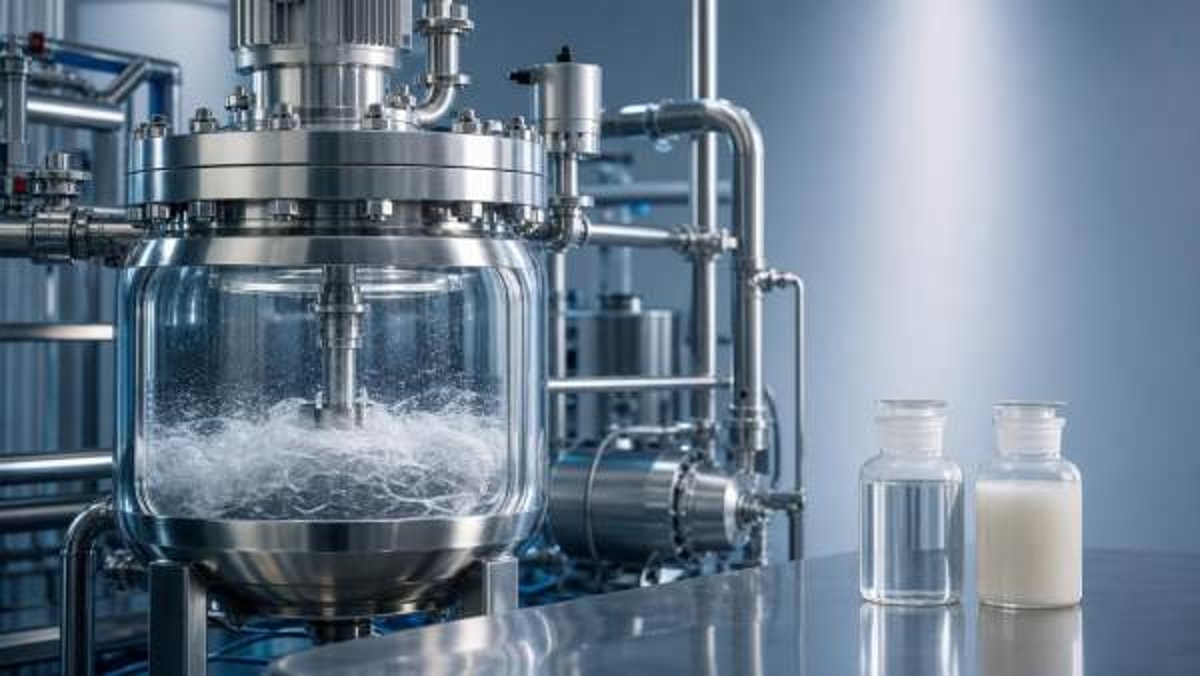
In harder process lines, selecting the right bulk defoamers can directly affect throughput, compliance, and product consistency. For technical evaluators, the key question is whether silicone or non-silicone systems deliver better foam control under demanding chemical, agricultural, and primary processing conditions. This analysis outlines the trade-offs, compatibility factors, and performance criteria that matter most in industrial decision-making.
Why scenario differences matter when evaluating bulk defoamers
For technical assessment teams, the most common mistake is treating foam control as a single-variable purchasing issue. In reality, bulk defoamers behave very differently depending on fluid chemistry, shear intensity, residence time, air entrainment, temperature cycles, cleaning protocols, and downstream quality demands. A formulation that performs well in a fertilizer blending line may fail in fermentation, starch processing, wastewater treatment, or API intermediate manufacture.
This is why the silicone versus non-silicone question should be framed by operating scenario rather than product category alone. Silicone-based bulk defoamers are often favored for strong knockdown, rapid spread, and persistence under severe agitation. Non-silicone bulk defoamers are often selected where surface defects, residue sensitivity, filterability, coating compatibility, or regulatory positioning matter more than maximum suppression power. The better choice depends on what the line is trying to protect: throughput, appearance, purity, recovery, compliance, or all of them at once.
A practical scenario map for silicone and non-silicone choices
Before comparing products, evaluators should map the process into real-use conditions. The table below summarizes where bulk defoamers usually diverge in performance and risk profile.
For most buyers in complex industrial settings, bulk defoamers are not judged by one laboratory result. They are judged by whether they remain effective across normal shifts, startup conditions, product changes, and cleaning cycles. That is where scenario-based testing becomes more valuable than generic supplier claims.
Scenario 1: Harder chemical process lines with high shear and recirculation
In resin intermediates, specialty chemical blending, dispersions, and additive production, foam often comes from strong agitation, surfactant packages, and recirculation loops. Here, technical evaluators usually prioritize fast foam collapse, low dosage, and sustained control under repeat mechanical stress. Silicone bulk defoamers frequently perform well in these conditions because they spread quickly at the gas-liquid interface and remain active even when the line becomes thermally or mechanically unstable.
However, stronger suppression does not automatically mean better total process performance. If the line includes sensitive coating, printing, adhesion, or downstream surface-finishing steps, silicone residues may create defects such as craters or fisheyes. In those scenarios, non-silicone bulk defoamers may be the safer option, even when they require more precise dosing or a blended chemistry approach. The right technical question is not “Which is stronger?” but “What downstream operation becomes vulnerable if foam control chemistry remains in the system?”
What to check in this scenario
- Foam knockdown speed during the first minutes of agitation
- Persistence after recirculation or repeated pumping
- Effect on filters, membranes, and separator performance
- Surface quality risk in downstream formulated products
- Cleaning behavior and residue detection after CIP
Scenario 2: Agricultural formulations where throughput and package appearance both matter
In crop protection concentrates, liquid fertilizers, adjuvants, and suspension systems, foam is more than a nuisance. It slows tank charging, reduces fill accuracy, causes package headspace inconsistency, and can interfere with active distribution. In these lines, bulk defoamers are often used not only for processing but also for helping maintain stable filling operations.
Silicone systems can be especially effective in surfactant-heavy agrochemical blends where immediate knockdown is critical. Yet non-silicone options may be preferred when visual homogeneity, emulsion stability, or market-specific formulation requirements are more important. Some technical teams also prefer non-silicone bulk defoamers when they need better balance between in-process foam control and final product appearance over storage time.
This is a classic application where plant trials should include both the mixer and the filling line. A product that controls foam in the vessel but causes package defects, ring formation, or destabilization over shelf-life is not the right answer for a commercial agrochemical operation.
Scenario 3: Fermentation, bio-extracts, and ingredient recovery lines
Fermentation, enzyme production, plant extract concentration, and nutrient recovery involve a more delicate set of trade-offs. Foam can reduce usable reactor volume, compromise sensor readings, and increase contamination risk. At the same time, the antifoam chemistry can alter oxygen transfer, affect cell growth, complicate filtration, or create downstream purification burdens.
In these environments, non-silicone bulk defoamers often gain attention because they may align better with specific process compatibility or residue expectations. That said, some silicone-based systems are still used successfully when their performance in severe foaming conditions outweighs the associated risks. The deciding factor is usually not chemistry family alone, but whether the selected bulk defoamers have been validated against biological response, separation efficiency, and final specification requirements.
Technical evaluators should insist on process-relevant metrics: foam suppression, dissolved oxygen behavior, centrifuge recovery, membrane fouling tendency, and analytical impact on the target product. In this scenario, laboratory beaker screening is rarely enough.
Scenario 4: Feed, grain, and primary processing operations with variable loads
In grain washing, starch extraction, protein concentration, feed additive production, and other primary processing lines, foam behavior changes quickly with solids loading, temperature, and raw material variability. Technical teams in these sectors usually care about bulk defoamers that stay reliable under seasonal shifts and inconsistent incoming streams.
Silicone bulk defoamers can offer the durability needed for upset conditions and long operating runs. Non-silicone products can be advantageous where final contact profile, filtration friendliness, or downstream handling requires a narrower additive footprint. The practical choice often comes down to whether the plant is trying to minimize emergency foaming events or optimize cleaner downstream separations.
Common decision split in primary industries
If a site suffers from overflow, slow tank turnover, and unstable throughput, silicone-based bulk defoamers may provide the strongest operational benefit. If the line is stable but facing quality investigations related to residues, filters, or final handling behavior, non-silicone bulk defoamers often deserve closer review.
How to compare bulk defoamers beyond price per kilogram
For procurement and technical review teams, price per unit is a weak standalone metric. A lower-cost defoamer can become expensive if it increases dosage, extends cycle time, complicates cleaning, or reduces batch yield. The better method is to calculate cost against process performance.
Frequent misjudgments when choosing silicone or non-silicone systems
Several recurring errors lead to poor selection outcomes. One is overvaluing immediate defoaming while ignoring re-foam control over a full shift. Another is approving bulk defoamers on bench tests that do not reflect real temperature, solids content, or pump shear. A third is ignoring the difference between process aid performance and finished-product compatibility.
Technical evaluators should also be cautious about assuming non-silicone always means safer or silicone always means stronger in every matrix. Formulation architecture matters. Carrier system, active level, dispersibility, and application point can change performance substantially. In many facilities, the winning solution is not the theoretically best chemistry family, but the one that remains stable across actual operating variation.
FAQ for technical evaluators reviewing bulk defoamers
Are silicone bulk defoamers always better for hard process lines?
No. They are often excellent in aggressive, high-shear, high-foam environments, but they may introduce downstream compatibility concerns in sensitive applications. Harder lines favor silicone only when knockdown and persistence outweigh residue-related risks.
When do non-silicone bulk defoamers deserve priority review?
They should be prioritized when filtration, surface quality, biological compatibility, coating behavior, or product-contact positioning are central to the process. They are also valuable when technical teams need tighter control over downstream interaction.
What is the best trial method?
Run staged trials: bench screening, pilot confirmation, and line validation. Measure not only foam height but also dosage efficiency, process stability, separation impact, cleaning behavior, and any effect on final product specifications.
Final selection guidance by scenario
For technical evaluators in chemicals, agriculture, bio-processing, and primary industries, the choice between silicone and non-silicone bulk defoamers should be made by scenario fit rather than category preference. If your process line is dominated by severe agitation, fast recirculation, and recurring foam surges, silicone systems often offer the strongest operational protection. If your line is judged heavily by downstream purity, appearance, filtration, biological response, or residue sensitivity, non-silicone systems may offer the better strategic fit.
The most reliable path is to define your real process priorities, map failure risks by stage, and test bulk defoamers against the exact conditions that limit throughput or quality today. In harder process lines, the right decision is rarely about choosing the more familiar chemistry. It is about selecting the foam-control system that protects the entire process, from mixing efficiency to final compliance.
Related Intelligence
- AgrochemicalsBulk defoamers: silicone or non-silicone for harder process linesBulk defoamers for harder process lines: compare silicone and non-silicone options for faster foam control, better compliance, and more stable industrial output.
- AgrochemicalsIndustrial grade urea: why moisture control changes usable yieldIndustrial grade urea performs best when moisture is controlled. Learn how humidity affects caking, flowability, dosing accuracy, and usable yield—and how to prevent costly loss.
- AgrochemicalsHPMC wholesale: viscosity ranges that change mortar performanceHydroxypropyl methylcellulose HPMC wholesale guide: compare viscosity ranges that affect mortar workability, water retention, open time, and bond strength for smarter sourcing.
The Morning Broadsheet
Daily chemical briefings, market shifts, and peer-reviewed summaries delivered to your terminal.
