

The Authority in Global Agricultural Chemistry & Bio-Resources
Industrial grade urea: why moisture control changes usable yield
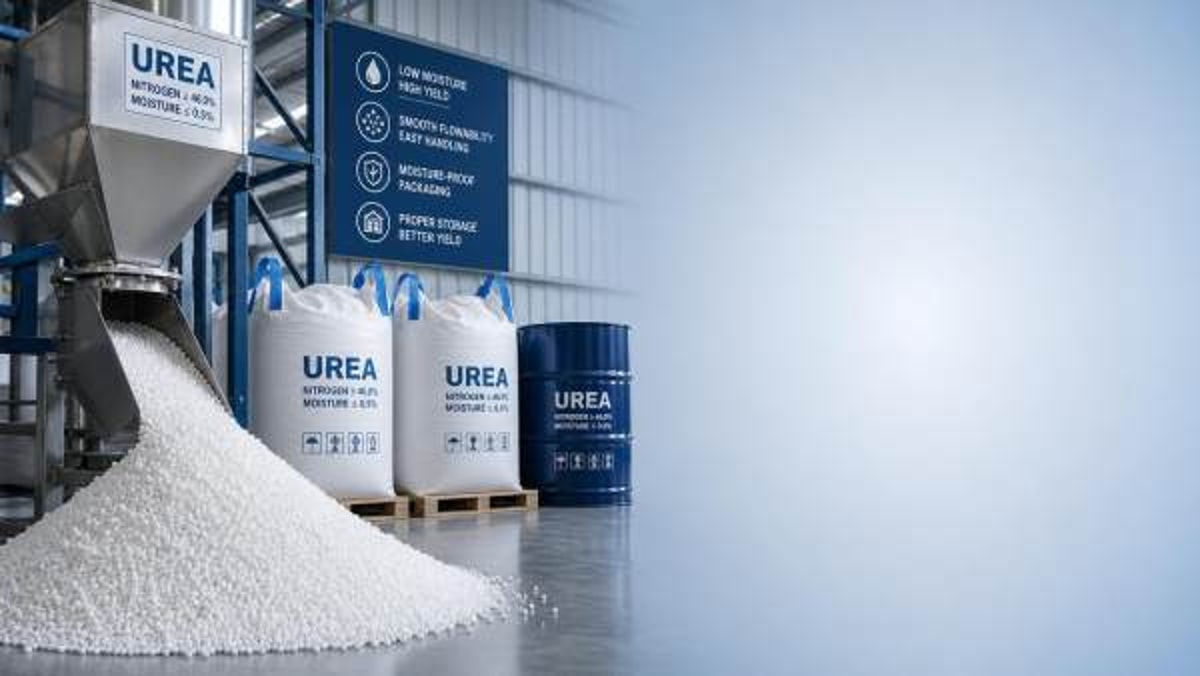
In bulk handling and field application, industrial grade urea delivers value only when moisture is tightly controlled. Even small increases in humidity can trigger caking, decomposition, and flow problems that reduce usable yield and raise operating costs. For operators and plant teams, understanding how storage conditions, packaging, and transfer practices affect product integrity is essential to maintaining performance and minimizing avoidable loss.
For most users searching “industrial grade urea,” the real question is not what urea is. It is why a product that leaves the supplier on-spec can behave poorly by the time it reaches the spreader, blender, reactor, or dosing point. In practical terms, moisture control is the difference between buying 100 tons and actually using close to 100 tons efficiently.
The core judgment is simple: if industrial grade urea is exposed to uncontrolled humidity during storage, transport, or use, usable yield falls long before the material is visibly ruined. Operators do not just lose product weight. They lose flowability, dosing accuracy, application consistency, labor time, and sometimes downstream process stability.
That is why moisture management should be treated as an operating discipline rather than a warehouse housekeeping issue. For field teams, plant operators, and bulk handling crews, the highest-value actions are usually not complicated. They involve better storage segregation, tighter packaging control, faster turnover, dry transfer conditions, and routine inspection of early warning signs.
Why moisture control matters more than many operators expect
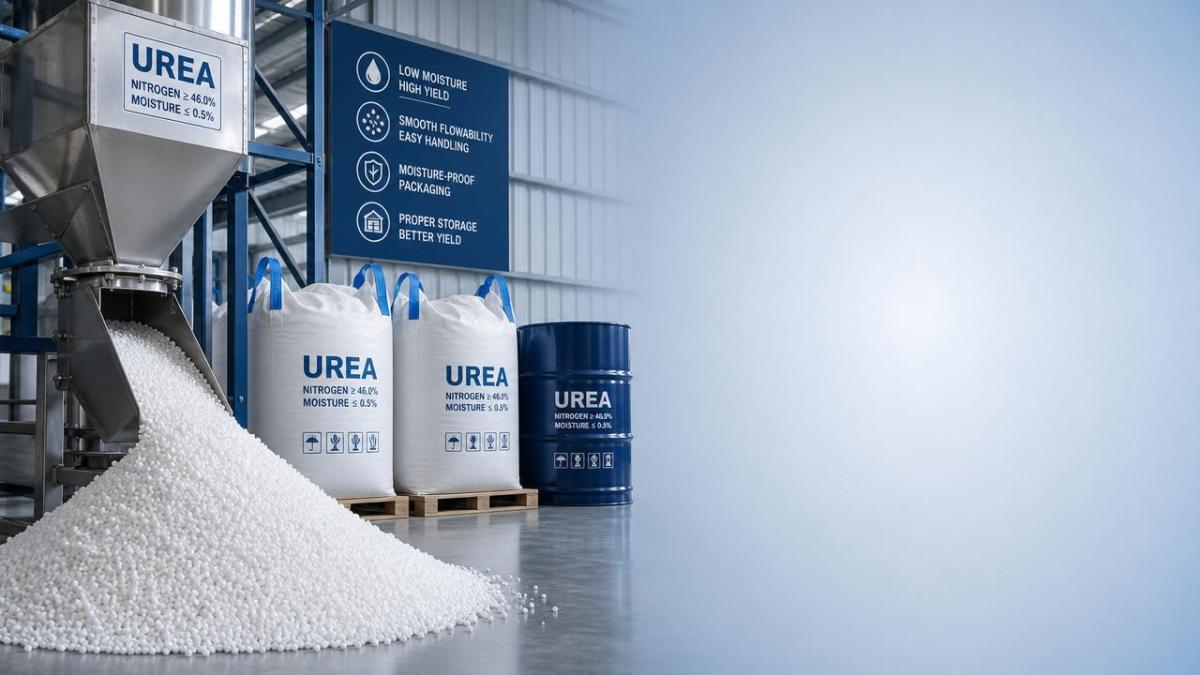
Industrial grade urea is hygroscopic, which means it can absorb moisture from surrounding air under the right conditions. That property alone explains why product condition can deteriorate even when no obvious water leak is present. High relative humidity, temperature swings, condensation, and long storage duration all increase the risk.
Operators often assume the main loss comes from visibly wet or contaminated material. In reality, the first losses are usually functional. Granules begin to soften, surfaces become tacky, and particles start binding together. Once caking develops, the product no longer handles like free-flowing material, and that affects every step after unloading.
In bulk systems, this leads to bridging in hoppers, inconsistent discharge rates, blocked chutes, and uneven feed into blending or application equipment. In field use, it may produce irregular spread patterns or under-application in some zones and over-application in others. In industrial settings, it can affect dissolution time, metering stability, and process repeatability.
Moisture can also contribute to chemical degradation under unfavorable storage conditions. While urea is widely used because it is stable and economical, that stability is not unlimited. Heat, humidity, and contamination together can accelerate decomposition pathways and increase losses through dusting, lump rejection, or off-spec performance.
Usable yield therefore means more than the final net mass left in storage. It refers to the share of purchased industrial grade urea that can still be transferred, metered, applied, or processed at the intended performance level without rework, delay, or waste.
Where usable yield is actually lost in day-to-day operations
Most losses happen in ordinary handling points rather than dramatic incidents. A pallet stored too close to a wet wall, a bulk bag opened too early, a silo vent exposed to humid air, or a loading area left open overnight can all degrade material condition. These are small failures, but their cumulative cost is large.
The first loss point is receiving. If bags, liners, or seals arrive damaged, moisture uptake may already have started during transit. Product can look acceptable on the outside while internal layers have begun compacting. If receiving teams do not inspect packaging condition carefully, compromised lots may enter normal storage and become harder to manage later.
The second loss point is storage. Urea stored in poorly ventilated areas, near doors with humid air exchange, or on floors prone to temperature-driven condensation is much more likely to cake. Long dwell time multiplies this risk. Even well-packed product degrades if it sits too long in unstable conditions.
The third loss point is transfer. Every time industrial grade urea is moved, opened, conveyed, or staged, it is exposed to ambient moisture. Pneumatic systems, open hoppers, conveyors near washdown zones, and long loading queues all increase contact with humid air. The more handling steps involved, the more chances product has to absorb moisture.
The fourth loss point is application or process feeding. Operators under time pressure may break lumps manually, force material through feeders, or continue using partially caked product. That may keep production moving for a shift, but it often causes inaccurate dosing, equipment wear, and quality variation downstream.
How moisture changes flowability, metering, and field performance
For users and operators, the biggest operational issue is usually not chemistry but movement. Dry industrial grade urea should flow predictably. When moisture rises, granules lose free-flow characteristics. The result is inconsistent discharge that compromises both productivity and accuracy.
In hoppers and bins, moisture-related caking causes arching and rat-holing. Material may stop flowing altogether or surge unpredictably after a blockage collapses. That creates unstable feed rates into mixers, dissolvers, coating lines, or spreaders. Operators then spend more time clearing obstructions instead of maintaining throughput.
Metering systems are also affected. Screw feeders, weigh belts, and volumetric dosing units assume relatively stable bulk density and flow behavior. Once moisture uptake changes particle condition, the system may no longer deliver the intended quantity. This is especially costly where dosing precision matters for blending, chemical formulation, or nutrient application.
Field application suffers in a different but equally expensive way. Caked or partially degraded urea does not spread uniformly. Larger agglomerates may travel differently from intact granules, creating an uneven distribution pattern. Even if total tonnage is applied, the crop does not receive uniform coverage, which reduces agronomic efficiency and can distort performance assessments.
Dust can increase as operators break apart hardened material during recovery. That not only reduces net usable mass but can create safety, housekeeping, and equipment contamination issues. In enclosed industrial areas, dust management becomes an additional operating burden that would have been avoided with better moisture control upstream.
What operators should check at receiving and storage stage
If the goal is to protect usable yield, the most valuable inspections happen before the product enters routine use. Start with packaging integrity. Check for punctures, torn seams, loose closures, stretched liners, water staining, and signs that bags have been rehandled roughly. Any sign of compromised packaging should trigger segregation and closer inspection.
Next, assess the condition of the load itself. Look for clumps near bag corners, hardened zones in bulk bags, or unusual resistance when sampling. If the material is already compacting, it should not be stacked and forgotten. It needs accelerated use, improved isolation, or, in serious cases, quality review before release to operations.
Storage location matters as much as package quality. Keep industrial grade urea in a dry, covered, well-managed area away from exterior walls, open doors, steam sources, washdown overspray, and wet floors. Elevating pallets off the ground is a basic but critical measure because floor-level condensation is a frequent hidden moisture source.
Temperature stability also matters. When warm air and cooler surfaces meet, condensation can form even in facilities that appear dry overall. Operators should pay attention to roof leaks, night-day temperature swings, and seasonal humidity patterns. A storage area that performs well in one month may not be suitable year-round.
Lot rotation is another high-value control. First-in, first-out handling reduces dwell time and lowers the chance that inventory sits long enough to absorb moisture. If multiple lots are open, use the most vulnerable or partially opened stock first. Opened product should never be treated like sealed product in storage planning.
Best handling practices that preserve industrial grade urea in use
Once product is opened or transferred into active handling, speed and exposure control become the priority. Keep exposure to ambient air as short as practical. Do not open bags or hatches long before material is needed. Stage only the quantity required for the immediate task when humidity is high.
During transfer, use enclosed systems where possible. If open handling is unavoidable, limit residence time in open hoppers and avoid staging material in areas near rain entry, wash stations, or humid process zones. Even a short period in a wet environment can start the surface tackiness that later turns into caking.
Clean equipment before loading dry product. Residual moisture from washdown, weather exposure, or incomplete drying in bins and conveyors is a common cause of avoidable loss. A system that is mechanically ready but not dry is not ready for industrial grade urea.
For bulk bags and sacks, reseal partially used units tightly and return them to a protected area immediately. Temporary covering is better than leaving product exposed, but proper resealing is better still. If liner systems are used, ensure closures are fully restored, not loosely folded.
Train crews to recognize early symptoms instead of waiting for severe caking. Slight hardness, reduced flow, sticky surfaces, or irregular discharge should be treated as warning signals. At that stage, corrective action is still possible. Once material has formed dense lumps or major bridges, both labor cost and yield loss increase sharply.
How to decide whether affected material is still usable
Not every moisture-affected lot is a total loss, but not every lot should be forced back into use. The right decision depends on application requirements, degree of caking, contamination risk, and the tolerance of downstream equipment. Operators need a practical screening approach rather than guesswork.
Begin with flowability. Can the product discharge consistently without excessive manual intervention? If operators must repeatedly hammer hoppers, break lumps by force, or overrun feeders to maintain output, the hidden cost may exceed the value of recovering the material. Flow problems usually spread to labor, safety, and equipment reliability.
Next, consider dosing accuracy. If the material is intended for a process requiring controlled feed rates, even moderate caking may make it unsuitable. In some lower-precision uses, lightly compacted material may still be workable after screening, but this should be validated operationally rather than assumed.
Check for contamination and odor changes if decomposition or environmental exposure is suspected. Moisture problems are often accompanied by packaging breakdown, dirt ingress, or contact with incompatible substances. Product that appears mechanically recoverable may still be unacceptable from a quality or compliance perspective.
Finally, compare recovery effort against replacement cost and downtime risk. A small amount of off-condition industrial grade urea may be worth reclaiming. A large volume causing feeder instability, spread inconsistency, or repeated line stoppages often costs more in operating disruption than it saves in recovered mass.
Simple controls that usually deliver the fastest return
For most operations, the best improvements are not expensive technology upgrades. They are consistent execution of basic controls. The first is environmental discipline: store dry, keep covered, isolate from moisture sources, and minimize time in open air. These actions directly protect usable yield.
The second is packaging discipline. Inspect inbound loads, reject or segregate damaged units, and reseal opened containers immediately. Packaging is not just a transport feature. It is part of the moisture barrier strategy, and once that barrier fails, product value begins to erode.
The third is inventory discipline. Buy and stage volumes that match realistic turnover. Excess stock held too long in variable conditions is often where avoidable losses start. Shorter storage cycles generally reduce caking, simplify inspection, and improve consistency at point of use.
The fourth is operator awareness. Teams should know that moisture damage does not always look dramatic at first. Early intervention prevents bigger losses. A culture of reporting minor package damage, slight flow changes, or damp storage conditions is much more effective than emergency recovery after a blockage occurs.
The fifth is equipment readiness. Dry bins, dry transfer lines, covered staging areas, and well-maintained seals can preserve industrial grade urea far more effectively than reactive cleanup. If moisture is controlled before contact occurs, the product retains its designed handling and application behavior.
Conclusion: moisture control is really yield control
For users and operators, the link between moisture and usable yield is direct. When industrial grade urea absorbs moisture, the loss is not limited to visible spoilage. It shows up as caking, poor flow, unstable metering, uneven application, extra labor, and preventable downtime. Those are operational losses, not just storage defects.
The practical lesson is clear: protect the product at receiving, keep storage dry and stable, reduce open-air exposure, and respond early to changes in flow behavior. These measures are straightforward, but they determine whether purchased material remains fully usable when operations need it.
In other words, moisture control is not a secondary warehouse concern. It is a primary yield management tool. Teams that treat it that way usually see better handling performance, fewer interruptions, and more value from every ton of industrial grade urea brought on site.
Related Intelligence
- AgrochemicalsBulk defoamers: silicone or non-silicone for harder process linesBulk defoamers for harder process lines: compare silicone and non-silicone options for faster foam control, better compliance, and more stable industrial output.
- AgrochemicalsIndustrial grade urea: why moisture control changes usable yieldIndustrial grade urea performs best when moisture is controlled. Learn how humidity affects caking, flowability, dosing accuracy, and usable yield—and how to prevent costly loss.
- AgrochemicalsHPMC wholesale: viscosity ranges that change mortar performanceHydroxypropyl methylcellulose HPMC wholesale guide: compare viscosity ranges that affect mortar workability, water retention, open time, and bond strength for smarter sourcing.
The Morning Broadsheet
Daily chemical briefings, market shifts, and peer-reviewed summaries delivered to your terminal.
