

The Authority in Global Agricultural Chemistry & Bio-Resources
Five-Dept Joint Enforcement on EV Battery Recycling Affects RAS & Aeration Exports
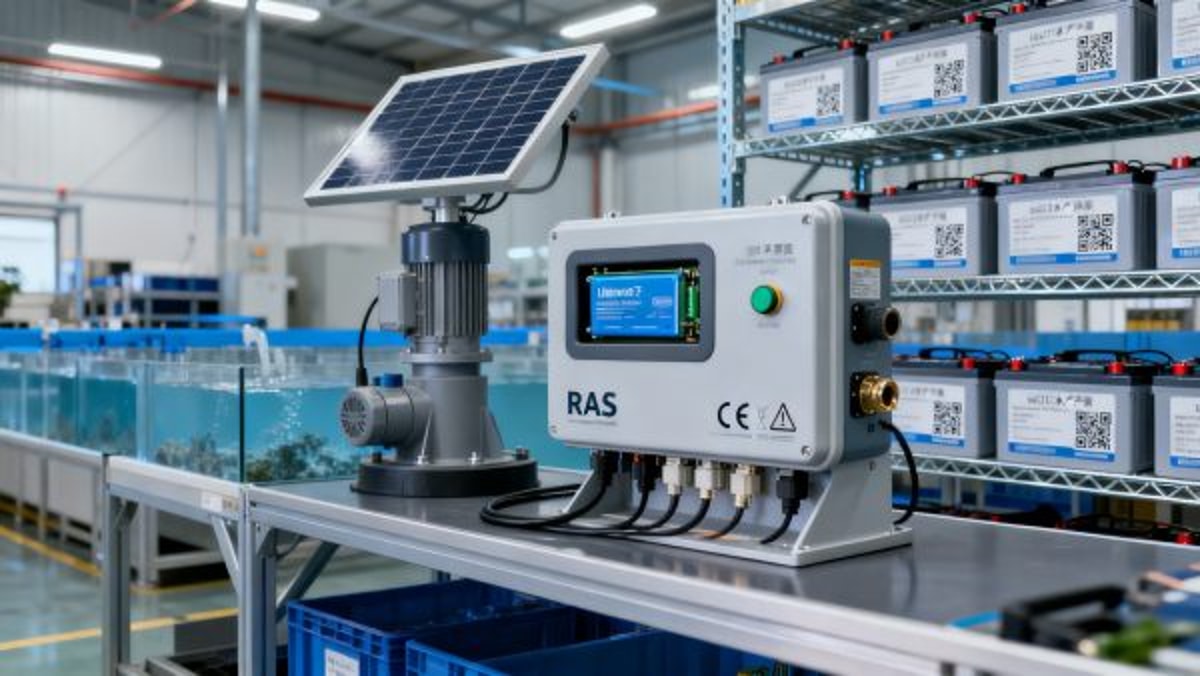
On April 27, 2026, China’s Ministry of Industry and Information Technology (MIIT) and four other departments jointly issued a notice launching a nationwide enforcement campaign targeting the recycling and traceability of spent lithium-ion batteries from new energy applications — directly impacting export compliance for Recirculating Aquaculture Systems (RAS) and mechanical aeration equipment containing such batteries. Exporters in aquaculture technology, smart pond management, and battery-integrated marine hardware must now reassess customs declarations, Extended Producer Responsibility (EPR) attribution, and alignment with EU Battery Regulation (EU 2023/1542).
Event Overview
On April 27, 2026, MIIT, the Ministry of Ecology and Environment, the Ministry of Commerce, the General Administration of Customs, and the State Administration for Market Regulation jointly issued the Notice on Launching a Special Joint Law Enforcement Campaign to Standardize the Recycling and Utilization of Spent Power Batteries. The notice mandates full lifecycle traceability and compliant handover of power batteries used in new energy–related equipment — including RAS systems and aquatic aeration devices — effective upon issuance.
Industries Affected by Segment
Direct Exporters of Battery-Integrated Aquaculture Equipment
These enterprises supply RAS control units, solar-powered aerators, or intelligent oxygenation systems incorporating lithium-ion batteries to overseas markets. They are affected because customs clearance now requires documented battery origin, usage history, and end-of-life transfer records — not just product conformity certificates. Impact manifests in delayed shipments, increased documentation burden, and potential non-compliance penalties under EU 2023/1542 if upstream battery data is missing.
Manufacturers Integrating Batteries into Aquaculture Hardware
Firms embedding batteries into submersible pumps, wireless monitoring buoys, or automated feed-aeration hybrids face new sourcing and labeling obligations. The policy requires battery integration to align with China’s national battery traceability platform (i.e., the ‘Big Data Platform for Power Battery Recycling’). Impact includes revised BOM management, updated technical files, and revalidation of CE or UKCA declarations where battery compliance affects overall product safety assessment.
Supply Chain Service Providers (Logistics, Certification, Customs Brokers)
Third-party service providers supporting battery-equipped aquaculture exports must now verify and retain battery-specific documentation (e.g., battery passport elements, transfer receipts, recycling agreements) as part of standard customs filing packages. Impact appears in expanded due diligence scope, added verification steps per shipment, and heightened liability exposure if battery chain-of-custody records are incomplete or inconsistent.
Key Focus Areas and Practical Responses for Enterprises
Monitor official implementation guidance and regional pilot updates
The notice initiates a joint enforcement campaign but does not yet publish detailed operational rules (e.g., acceptable traceability formats, minimum data fields, or transitional timelines). Enterprises should track announcements from MIIT’s Battery Recycling Management Center and provincial industrial authorities — especially those piloting digital battery passports for export-bound equipment.
Prioritize battery traceability for EU-bound shipments
EU 2023/1542 requires battery passports by February 2027 for industrial batteries >2 kWh. Since RAS and aeration systems often exceed this threshold, exporters should treat battery-level documentation as a prerequisite — not an add-on — for EU market access. This includes verifying supplier-provided battery identification numbers (BINs), state-of-health logs, and recycling commitment statements.
Distinguish between regulatory signal and enforceable requirement
Analysis shows the notice functions primarily as a cross-departmental coordination framework — not an immediate amendment to export licensing regulations. Its immediate effect lies in intensified scrutiny during customs audits and EPR-related investigations, rather than automatic rejection of non-compliant consignments. Enterprises should therefore focus on evidence readiness over procedural overhaul at this stage.
Initiate internal inventory and supplier mapping for integrated batteries
Current practice more appropriately involves identifying all product lines containing rechargeable lithium-ion cells (regardless of capacity), mapping their battery suppliers, and collecting existing traceability data (e.g., manufacturer batch IDs, entry into China’s national platform). This prepares firms for future mandatory reporting and reduces reactive compliance costs.
Editorial Perspective / Industry Observation
Observably, this joint enforcement notice signals a structural shift — from voluntary battery stewardship toward enforceable, cross-sector accountability for embedded batteries in industrial equipment. It is not yet a finalized technical regulation, but rather a coordinated administrative trigger indicating that battery traceability will be treated as integral to product compliance, not merely an environmental footnote. From an industry perspective, the move reflects growing alignment between China’s domestic circular economy goals and extraterritorial regulatory expectations — particularly EU battery governance. Continuous monitoring is warranted, as subsequent technical guidelines and provincial enforcement protocols will determine real-world operational impact.
Conclusion
This notice does not introduce new export bans or product standards, but it redefines compliance boundaries for battery-integrated aquaculture equipment. It underscores that battery provenance and end-of-life accountability are now inseparable from product integrity in global trade. Enterprises are advised to interpret it not as an isolated policy event, but as an early indicator of tightening convergence between circular economy mandates and international market access requirements.
Information Sources
Main source: Official notice issued jointly by MIIT, MEE, MOFCOM, GACC, and SAMR on April 27, 2026.
Note: Implementation details, enforcement thresholds, and phased timelines remain under development and require ongoing observation.
Related Intelligence
- RAS SystemsFAO Updates Global RAS Equipment List: 3 Chinese Integrators IncludedFAO updates Global RAS Equipment List—3 Chinese integrators added. Key for exporters, procurement teams & project developers in Indonesia, Vietnam, Saudi Arabia.
- RAS SystemsFive-Dept Joint Enforcement on EV Battery Recycling Affects RAS & Aeration ExportsEV battery recycling enforcement impacts RAS & aeration exports—learn how new China joint regulations affect EU compliance, traceability, and customs clearance.
- RAS SystemsFAO Updates Global Aquaculture Equipment List, 3 Chinese RAS Integrators IncludedFAO updates Global Aquaculture Equipment List — 3 Chinese RAS integrators added, including ISO 22000 & ASC certified leaders. Discover implications for procurement, certification & global market access.
The Morning Broadsheet
Daily chemical briefings, market shifts, and peer-reviewed summaries delivered to your terminal.
