
The Authority in Global Agricultural Chemistry & Bio-Resources
FAO Updates Global RAS Equipment List: 3 Chinese Integrators Included
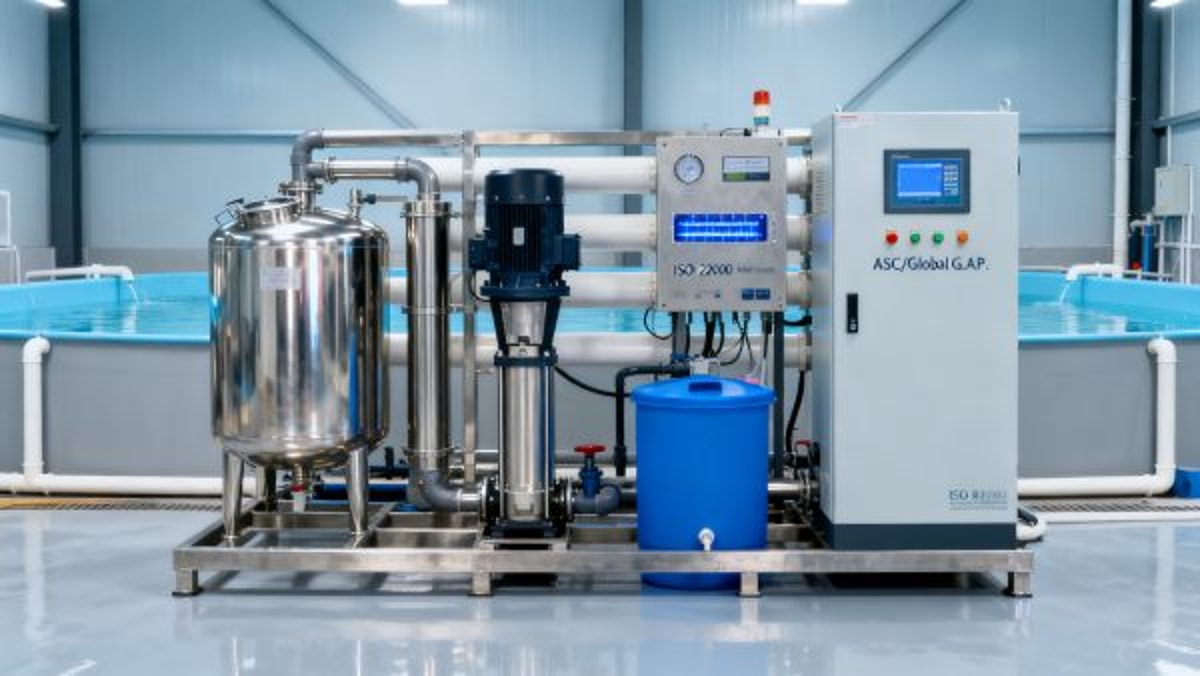
On 4 May 2026, the Food and Agriculture Organization of the United Nations (FAO) released its updated Global Aquaculture Equipment Recommendation List, adding six newly certified suppliers—including three Chinese recirculating aquaculture system (RAS) integrators. This update is relevant to exporters, equipment procurement teams, aquaculture project developers, and government procurement agencies in aquaculture-dependent markets such as Indonesia, Vietnam, and Saudi Arabia.
Event Overview
On 4 May 2026, the FAO officially published the revised Global Aquaculture Equipment Recommendation List. The list now includes six newly added suppliers, three of which are Chinese RAS system integrators. All three Chinese firms meet ISO 22000 certification requirements and maintain compatibility with ASC and GlobalG.A.P. standards. The updated list has been formally adopted by the Ministries of Agriculture of Indonesia, Vietnam, and Saudi Arabia as a priority reference for public-sector aquaculture equipment procurement.
Which Subsectors Are Affected
Direct Exporters of Aquaculture Equipment
Exporters supplying RAS components or turnkey systems to FAO-recognized procurement markets may experience streamlined market access. Since the list serves as a prequalification benchmark in Indonesia, Vietnam, and Saudi Arabia, inclusion—or absence—of a supplier directly affects tender eligibility and evaluation weighting in government-led projects.
Procurement & Project Development Firms
Firms responsible for sourcing equipment for land-based aquaculture developments (e.g., commercial RAS farms, hatchery upgrades) may face tighter alignment requirements with FAO-endorsed vendors. Procurement documentation in target countries increasingly references the list as a de facto technical compliance filter—especially where ASC or GlobalG.A.P. traceability is mandated.
Supply Chain Service Providers
Logistics, certification support, and customs advisory services supporting RAS equipment exports may observe increased demand for documentation verification related to ISO 22000, ASC alignment, and GlobalG.A.P. compatibility—particularly for shipments destined to Indonesia, Vietnam, or Saudi Arabia.
What Relevant Enterprises or Practitioners Should Monitor and Do Now
Track official adoption updates in target jurisdictions
While Indonesia, Vietnam, and Saudi Arabia have publicly cited the list as a procurement reference, implementation mechanisms (e.g., mandatory tender clauses, grandfathering provisions, or transition timelines) remain jurisdiction-specific. Enterprises should monitor national agricultural ministry circulars and public procurement portals for formal integration into bidding rules.
Verify alignment with ISO 22000 + ASC/GlobalG.A.P. compatibility criteria
The listing explicitly requires both ISO 22000 certification and demonstrable ASC or GlobalG.A.P. compatibility—not just certification in isolation. Suppliers and buyers should confirm whether internal documentation, process mapping, and third-party audit reports substantiate this dual alignment before engaging in tenders referencing the FAO list.
Distinguish between policy signal and operational requirement
Current use of the list is advisory and procurement-prioritization oriented—not yet a binding regulatory standard. Enterprises should avoid assuming automatic eligibility; instead, treat inclusion as a competitive advantage that must still be validated against individual tender specifications and local regulatory interpretations.
Prepare technical dossiers for cross-border procurement workflows
Given the list’s role in public procurement gatekeeping, exporters and integrators should consolidate and localize supporting evidence—including scope-of-certification documents, ASC/GlobalG.A.P. gap assessment summaries, and system architecture diagrams showing food safety control points—to expedite bid submissions in listed markets.
Editorial Observation / Industry Perspective
Observably, this update signals growing institutional recognition of standardized, food-safety-integrated RAS infrastructure—particularly in emerging aquaculture economies seeking scalable, climate-resilient production models. Analysis shows the inclusion of three Chinese integrators reflects progress in technical harmonization rather than geopolitical preference; all three meet identical multi-standard thresholds. From an industry perspective, the FAO list functions less as a final certification and more as a convergence point—where food safety, environmental stewardship, and system engineering expectations begin aligning across borders. Continued attention is warranted not only to future list revisions but also to how national procurement agencies translate this reference into enforceable contract terms.
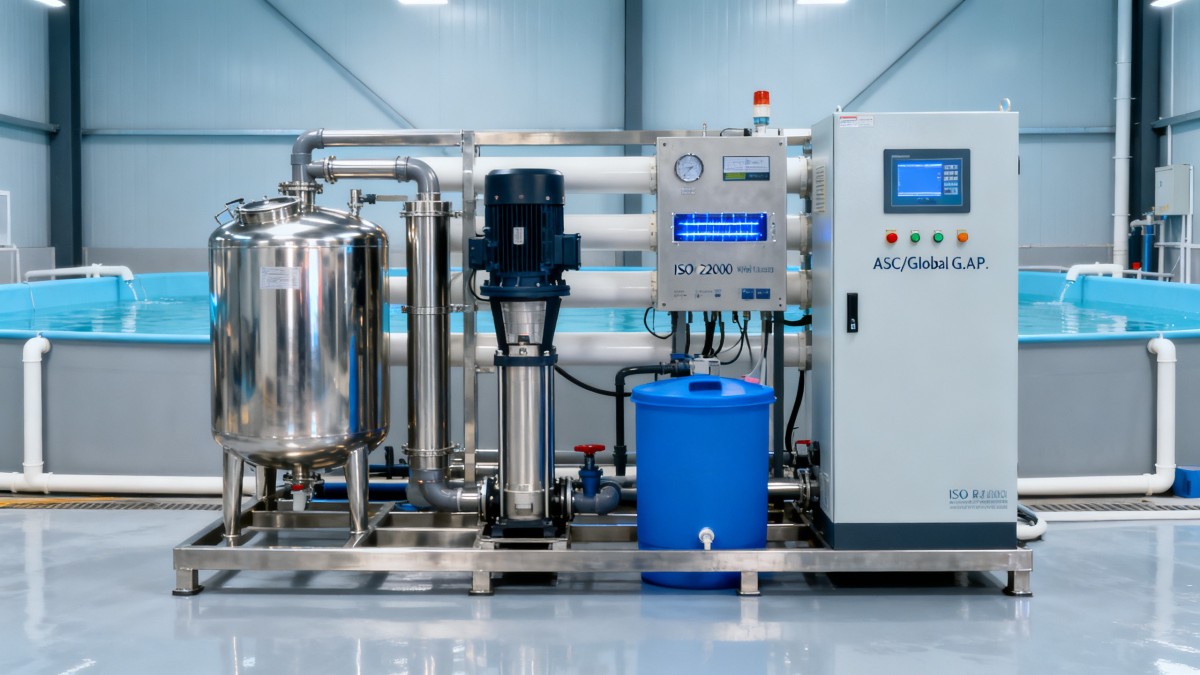
Concluding, this FAO update does not alter global RAS equipment regulations—but it does recalibrate procurement expectations in key growth markets. It is best understood not as a new compliance mandate, but as an early indicator of tightening technical alignment requirements across international public aquaculture investment. Stakeholders should treat it as a forward-looking benchmark—not a static rulebook.
Source: Food and Agriculture Organization of the United Nations (FAO), official release dated 4 May 2026, Global Aquaculture Equipment Recommendation List (v.2026.1). Note: Implementation details in Indonesia, Vietnam, and Saudi Arabia remain subject to national procurement regulation updates and are under ongoing observation.
Related Intelligence
- RAS SystemsFAO Updates Global RAS Equipment List: 3 Chinese Integrators IncludedFAO updates Global RAS Equipment List—3 Chinese integrators added. Key for exporters, procurement teams & project developers in Indonesia, Vietnam, Saudi Arabia.
- RAS SystemsFive-Dept Joint Enforcement on EV Battery Recycling Affects RAS & Aeration ExportsEV battery recycling enforcement impacts RAS & aeration exports—learn how new China joint regulations affect EU compliance, traceability, and customs clearance.
- RAS SystemsFAO Updates Global Aquaculture Equipment List, 3 Chinese RAS Integrators IncludedFAO updates Global Aquaculture Equipment List — 3 Chinese RAS integrators added, including ISO 22000 & ASC certified leaders. Discover implications for procurement, certification & global market access.
The Morning Broadsheet
Daily chemical briefings, market shifts, and peer-reviewed summaries delivered to your terminal.
