

The Authority in Global Agricultural Chemistry & Bio-Resources
Climate control systems for greenhouse: sizing mistakes to avoid
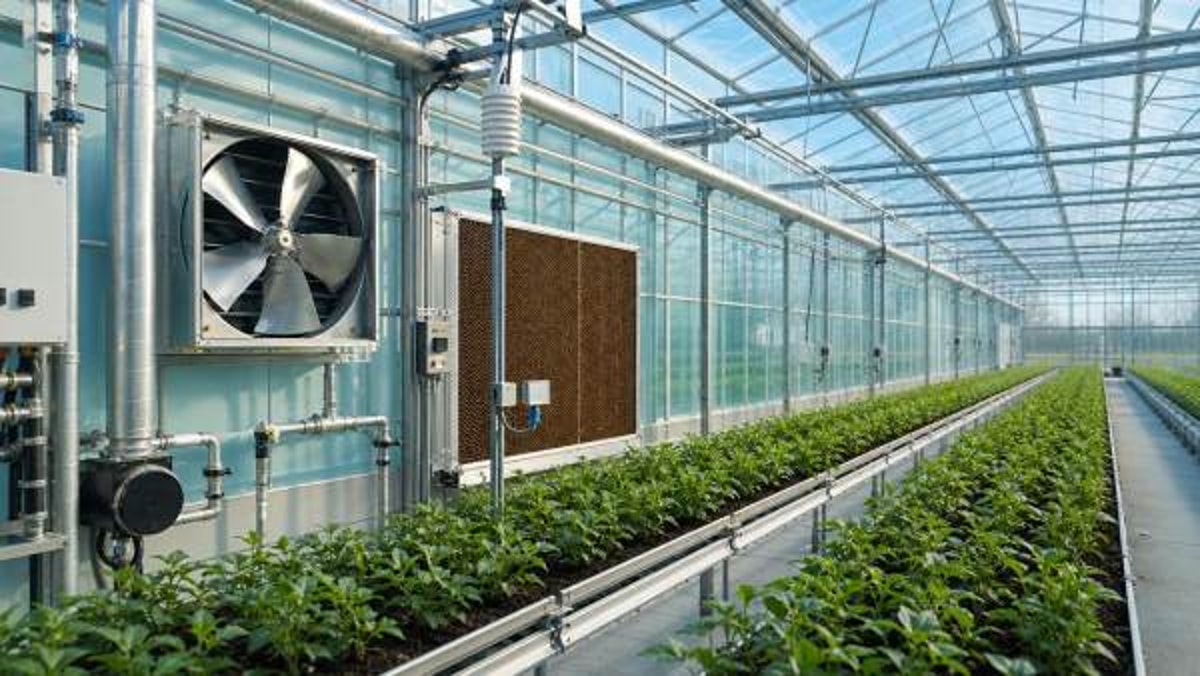
Choosing climate control systems for greenhouse projects without precise load calculations can trigger costly overruns, uneven crop performance, and long-term energy inefficiency. For project managers and engineering leads, avoiding common sizing mistakes is essential to balancing capital investment, environmental stability, and regulatory expectations. This article outlines the most frequent specification errors and highlights how to build a greenhouse climate strategy that performs reliably at commercial scale.
Why do climate control systems for greenhouse projects get sized incorrectly?
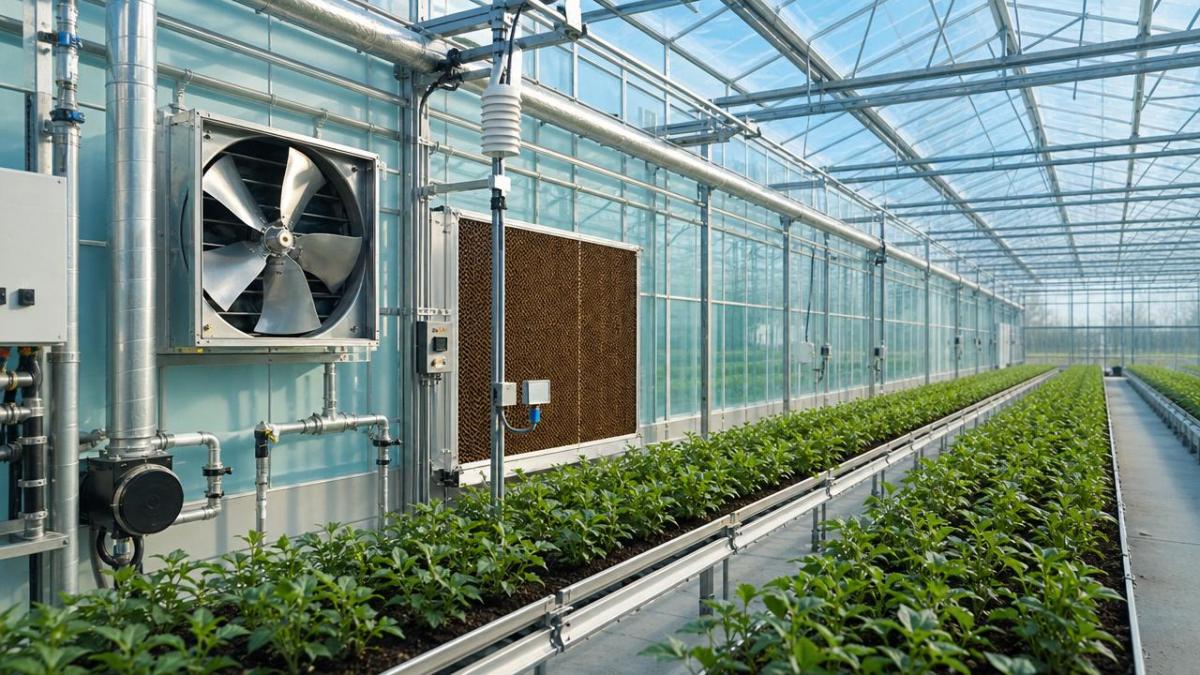
In commercial horticulture, greenhouse climate design sits at the intersection of agriculture, mechanical engineering, energy management, and compliance. Yet many projects still rely on generic assumptions: outside weather averages, nominal crop heat loads, or supplier rules of thumb copied from unrelated facilities. That is where climate control systems for greenhouse operations begin to drift away from actual operating requirements.
For project managers, the problem is not only technical. It affects procurement sequencing, utility sizing, CAPEX approval, commissioning time, and long-term operating margin. An undersized dehumidification system may force higher ventilation rates, which then increases heating demand. An oversized cooling package may satisfy peak summer design conditions but cycle inefficiently for most of the year. Both outcomes raise cost and lower biological consistency.
AgriChem Chronicle follows these issues closely because controlled-environment agriculture increasingly overlaps with industrial disciplines familiar to ACC readers: process airflow control, raw material preservation, regulated water use, and equipment lifecycle accountability. In greenhouse projects, sizing accuracy is not a detail. It is the foundation of crop protection, energy planning, and asset performance.
- Design teams often use peak temperature data but ignore vapor pressure deficit targets, resulting in acceptable temperature control but unstable plant transpiration.
- Procurement teams compare equipment by nameplate capacity only, without checking whether ratings were measured under similar indoor and outdoor conditions.
- Expansion plans are added late, after boilers, chillers, ducts, or pumps have been specified too tightly for future zone growth.
What loads should be calculated before selecting climate control systems for greenhouse facilities?
A robust sizing process starts by separating the greenhouse into interacting loads rather than treating it as one heating-and-cooling number. Sensible heat, latent moisture, solar gain, infiltration, crop transpiration, lighting contribution, and thermal storage behavior all matter. This is especially true for large-scale food, seedling, botanical extract, or R&D greenhouse facilities where production value per square meter is high.
The table below summarizes the minimum design inputs that should be confirmed before specifying climate control systems for greenhouse projects. This is useful during early engineering reviews and supplier comparison rounds.
The main lesson is simple: greenhouse performance depends on dynamic loads. If the design team does not model both temperature and moisture at hourly or scenario level, system capacity can look correct on paper but fail in operation.
The four data gaps that create most sizing errors
- Using regional weather station averages instead of site-specific design extremes, elevation, and prevailing wind behavior.
- Ignoring crop-stage differences. Young plants, fruiting crops, and high-density propagation zones have very different humidity and airflow needs.
- Overlooking heat from supplemental lighting, pumps, dosing skids, and adjacent process rooms.
- Assuming the envelope performs exactly to specification even when vents, doors, and service penetrations increase leakage.
Which sizing mistakes are most common in commercial greenhouse climate strategy?
Most mistakes fall into a few repeatable patterns. They usually happen when schedules are compressed, disciplines work in isolation, or the buyer prioritizes upfront equipment price over total project fit. For climate control systems for greenhouse environments, these errors can remain hidden until the first seasonal transition.
1. Oversizing cooling to “be safe”
Oversizing can reduce runtime stability, increase short cycling, and make humidity control worse. Mechanical cooling and dehumidification are not interchangeable. If the system reaches temperature too quickly but does not manage latent load correctly, crop surfaces may still remain wet or disease-prone.
2. Undersizing dehumidification at night
Nighttime moisture accumulation is one of the most expensive blind spots. Teams often size for daytime temperature peaks but underestimate nighttime transpiration and condensation risk. This leads to emergency venting in cold weather, which wastes heat and destabilizes root-zone and canopy conditions.
3. Treating air movement as secondary
A greenhouse can have enough installed thermal capacity and still perform poorly because air is not delivered evenly. Dead zones around gutters, end walls, or tall crop lines create microclimates. In project terms, this means repeated complaints from operations even though supplier submittals show “capacity met.”
4. Ignoring phased expansion
Many greenhouse campuses are expanded in modules. If central heating plants, control networks, or water loops are designed with no margin for future bays, the next phase becomes disproportionately expensive. Early system architecture should identify which utilities should be modular and which should be centralized.
5. Comparing unlike technologies by installed tonnage alone
Evaporative cooling, ventilation-driven systems, hydronic heating, heat pumps, and dedicated dehumidifiers each respond differently to local climate and crop targets. Nameplate capacity without psychrometric context creates false equivalence.
How should project managers compare greenhouse climate system options?
When procurement enters bid review, decision-makers need a comparison framework that goes beyond unit price. Climate control systems for greenhouse applications must be assessed by operating profile, maintainability, utility dependency, and biological fit. The matrix below supports early-stage screening.
This comparison makes one point clear: the right option depends on climate zone, crop profile, utility pricing, and operating philosophy. A lower-cost system may become the higher-cost choice once water use, disease risk, and labor intervention are considered.
What procurement and engineering checks reduce sizing risk before purchase?
Project managers can reduce rework by treating climate control systems for greenhouse projects as a cross-functional procurement package, not just an equipment order. Mechanical, controls, irrigation, electrical, and operations teams should validate assumptions together before final release.
Pre-award checklist for supplier review
- Ask each bidder to state the exact outdoor design conditions, indoor targets, and crop assumptions behind the proposed capacity.
- Require separate reporting for sensible cooling, latent removal, airflow rate, static pressure, heating turn-down, and control response logic.
- Confirm whether ratings reflect full greenhouse operation or laboratory conditions that may not match the site.
- Review maintenance access, spare parts lead times, and local service competence before equipment approval.
- Check whether the control platform can integrate vents, screens, irrigation timing, alarms, and environmental sensors into one operating logic.
ACC’s audience often deals with regulated supply chains and technical procurement. That same discipline applies here. Documentation quality matters. A vendor that cannot explain design assumptions clearly is unlikely to support predictable commissioning and long-term optimization.
Implementation sequence that protects schedule
- Freeze crop strategy, zoning plan, and production calendar before final HVAC sizing.
- Validate utility availability, including gas, electricity, water quality, and drainage.
- Coordinate envelope, shading, and screening details with climate equipment capacity.
- Plan sensor placement during construction drawings, not after installation.
- Set measurable commissioning targets for temperature uniformity, humidity recovery time, and alarm response.
How do cost, compliance, and lifecycle performance change the sizing decision?
The least expensive climate control systems for greenhouse projects are not always the lowest-risk investment. Energy cost volatility, water constraints, labor availability, and environmental reporting requirements can quickly change total cost of ownership. In primary industries and fine-chemical-adjacent sectors, operational reliability usually matters more than lowest initial bid.
The table below shows how project teams can frame cost and compliance discussions without relying on oversimplified payback claims.
Compliance should also be discussed early. Depending on geography and crop purpose, greenhouse facilities may need to align with environmental discharge rules, electrical safety codes, refrigerant regulations, worker ventilation requirements, and traceability expectations for sensitive agricultural inputs. These do not replace load calculations, but they influence equipment choice and layout.
FAQ: what do teams ask most often about climate control systems for greenhouse projects?
How much safety margin should be added when sizing greenhouse climate equipment?
A modest engineering margin can be sensible, but arbitrary oversizing is risky. The better approach is to define uncertainty by load category. If weather variability is the concern, use robust design conditions. If future expansion is likely, build modularity or header capacity rather than simply inflating equipment size across the board.
Are climate control systems for greenhouse propagation zones different from finishing zones?
Yes. Propagation often needs tighter humidity, gentler airflow, and more stable nighttime control. Finishing zones may tolerate wider swings but usually require stronger air distribution because canopy density and solar exposure are different. One central design assumption should not be applied to all bays.
What documents should buyers request from vendors before approval?
Request design basis notes, psychrometric assumptions, equipment schedules, control narratives, utility consumption estimates, maintenance schedules, and parts support terms. If a bidder provides only catalog pages and summary capacities, the proposal is not detailed enough for serious commercial evaluation.
How long does it usually take to optimize greenhouse climate performance after installation?
Commissioning may be completed quickly, but optimization usually continues across multiple weather conditions and crop cycles. Teams should plan for tuning sensor placement, vent logic, irrigation interaction, and humidity control strategy during early operation. A project is not truly complete on mechanical startup day.
Why work with AgriChem Chronicle when evaluating greenhouse climate strategy?
AgriChem Chronicle supports institutional buyers, engineering leaders, and industrial operators who need more than product marketing. ACC’s editorial focus across agricultural machinery, biochemical operations, bio-extract processing, and compliance-sensitive supply chains creates a practical advantage: climate discussions are placed in the wider context of process reliability, regulated procurement, and capital discipline.
If your team is assessing climate control systems for greenhouse expansion, retrofit, or new-build planning, ACC can help frame the right technical questions before costly commitments are made. That includes parameter confirmation, load assumption review, technology comparison, supplier documentation checks, utility impact discussion, certification and compliance considerations, delivery timeline assessment, and custom solution evaluation for phased projects.
Contact us if you need support turning fragmented vendor claims into a clear decision path. Whether the immediate issue is sizing verification, dehumidification strategy, bid comparison, control integration, or budget-risk alignment, ACC provides an informed platform for better project decisions and stronger technical communication with stakeholders.
Related Intelligence
- Climate Control & VentilationClimate control systems for greenhouse in humid zones: key tradeoffsClimate control systems for greenhouse operations in humid zones require smart tradeoffs. Explore energy, dehumidification, airflow, and automation factors to choose a more reliable, cost-effective solution.
- Climate Control & VentilationClimate control systems for greenhouse: sizing mistakes to avoidClimate control systems for greenhouse projects fail when loads are guessed. Learn the top sizing mistakes, compare options, and protect crop performance, energy efficiency, and budget.
- Climate Control & VentilationVietnam Enforces Smart Greenhouse Energy Labeling from May 2026Vietnam's new Smart Greenhouse Energy Labeling rule (effective May 2026) mandates VEL Level II+ for climate control equipment — act now to avoid port delays and secure market access.
The Morning Broadsheet
Daily chemical briefings, market shifts, and peer-reviewed summaries delivered to your terminal.
