

The Authority in Global Agricultural Chemistry & Bio-Resources
How to compare a glass greenhouse manufacturer beyond price
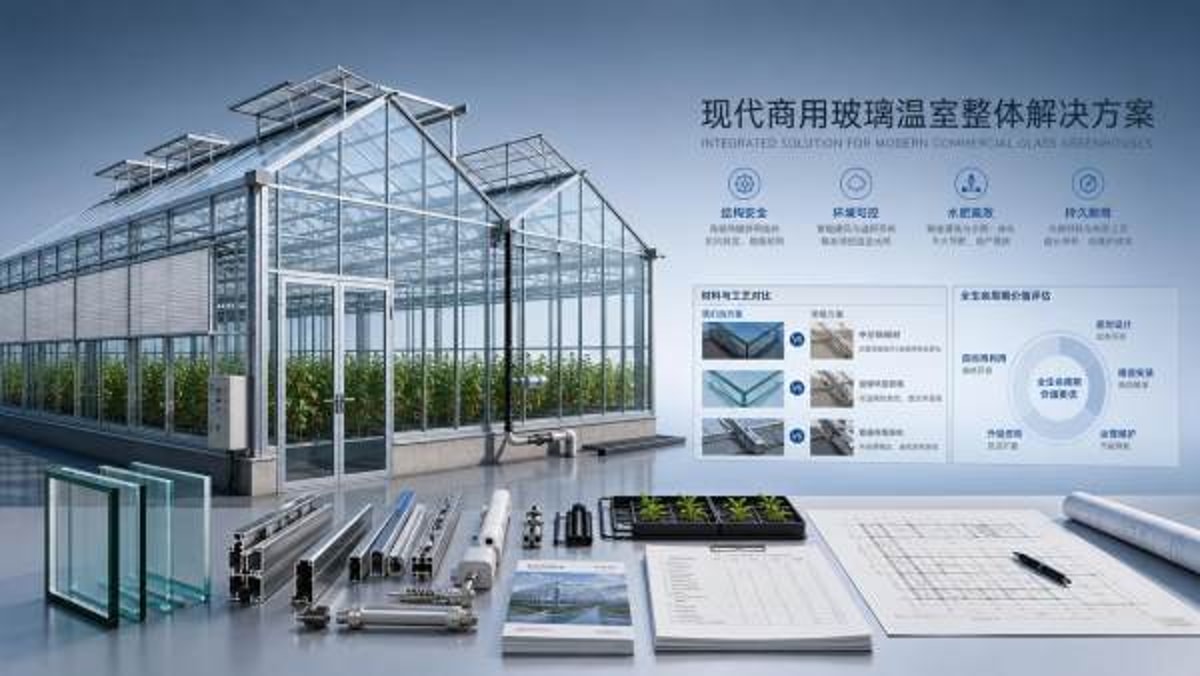
Choosing a glass greenhouse manufacturer on price alone can expose buyers to costly risks in compliance, durability, energy performance, and long-term service support. For commercial evaluators, the real comparison starts with engineering standards, material traceability, project delivery capability, and after-sales responsiveness. This guide outlines how to assess manufacturers more strategically, so procurement decisions align with operational goals, regulatory expectations, and lifecycle value.
Why a checklist-based comparison works better than a price-first approach
For business evaluators, the challenge is not simply finding a lower quotation. It is identifying which glass greenhouse manufacturer can support a stable, efficient, and compliant operating environment over many years. A low upfront price may hide weaker structural calculations, limited corrosion protection, poor ventilation design, or inadequate spare-parts support. Those weaknesses usually appear after installation, when correction costs are far higher.
A checklist approach creates discipline in vendor comparison. It allows procurement teams to score each manufacturer against the same criteria, reduce subjective bias, and document why one proposal offers stronger lifecycle value. This is especially important when projects involve commercial horticulture, research cultivation, seed production, or climate-controlled agriculture where uptime, crop consistency, and energy efficiency directly affect returns.
Start with these non-negotiable checks before reviewing quotations
Before comparing line-item pricing, confirm whether each glass greenhouse manufacturer meets the core requirements below. If a supplier cannot clearly answer these points, the commercial risk increases regardless of price advantage.
- Structural engineering basis: Ask which wind load, snow load, seismic assumptions, and local code references are used. A credible manufacturer should provide calculation logic, not just a generic statement of strength.
- Material traceability: Verify the grade of steel, aluminum, glazing, seals, and fasteners. Traceable materials reduce quality disputes and support warranty enforcement.
- Corrosion protection system: Confirm galvanization standard, coating thickness, and expected service life under local humidity or coastal exposure conditions.
- Glass specification: Check tempered versus float glass, thickness, light transmission, anti-condensation performance, and breakage replacement policy.
- Environmental control integration: Determine whether the greenhouse structure is engineered to work with shading, cooling, heating, irrigation, fertigation, and automation systems.
- Installation responsibility: Clarify whether the manufacturer provides supervision, full installation, or only component supply. This affects project risk and schedule reliability.
- After-sales commitment: Ask about spare parts lead time, technical response windows, remote support, and on-site troubleshooting capability.
This first-stage screen helps eliminate unsuitable vendors early, saving time in deeper technical and commercial review.
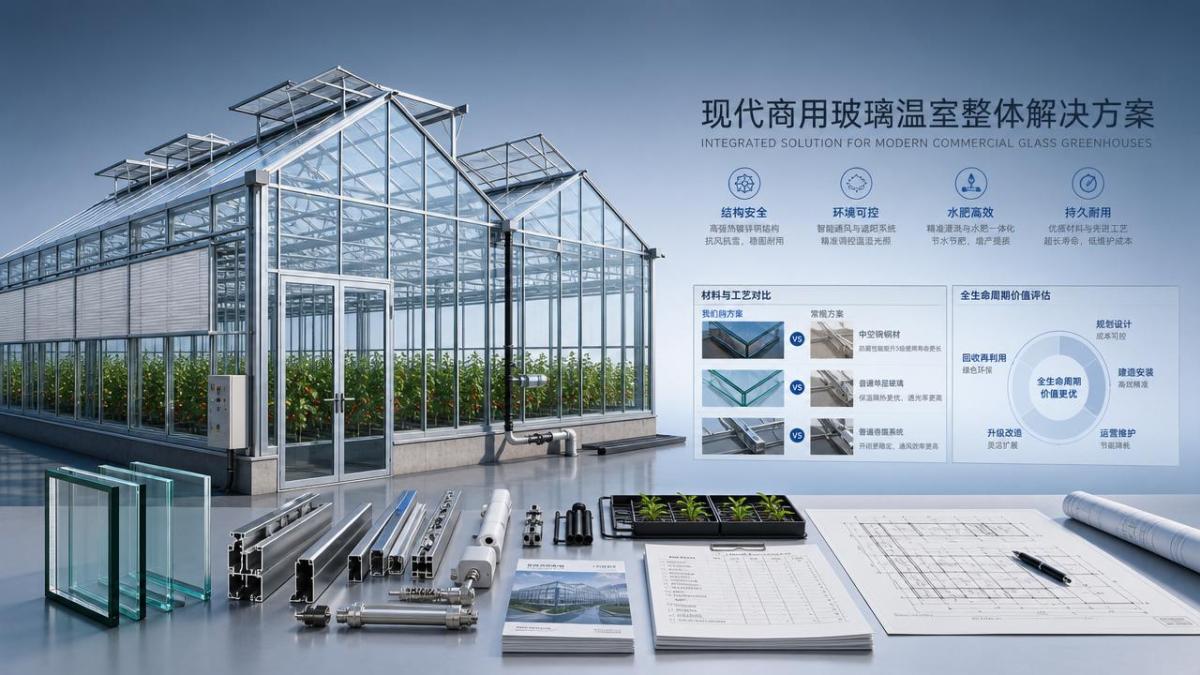
Core evaluation criteria for any glass greenhouse manufacturer
1. Engineering quality and design adaptability
A reliable glass greenhouse manufacturer should not sell a one-size-fits-all design. Instead, it should adapt span width, bay spacing, gutter height, roof pitch, ventilation layout, and load assumptions to the project location and crop strategy. Evaluators should request drawings, design notes, and examples from similar climates. If the supplier cannot explain why a design suits your wind, snow, temperature, and light conditions, the proposal may be standardized for convenience rather than performance.
2. Manufacturing consistency and quality control
The difference between suppliers often lies in process control. Review fabrication tolerances, welding procedures, galvanizing quality, glass packing methods, and pre-shipment inspection routines. Ask whether the manufacturer operates documented quality systems and whether inspection records are available per batch or project. Strong quality control lowers installation friction and reduces rework on site.
3. Performance beyond the frame itself
Commercial outcomes depend on more than steel and glass. The best glass greenhouse manufacturer understands airflow, heat retention, solar gain, drainage, shading interaction, and maintenance access. A lower-cost frame can become a higher-cost asset if it drives poor climate control, condensation problems, or increased energy use. Ask for projected performance assumptions and references where similar systems are operating successfully.
4. Delivery capability and project governance
Business evaluators should test whether the supplier can manage procurement, production scheduling, packaging, export compliance, logistics coordination, and installation sequencing. A technically acceptable manufacturer may still fail commercially if communication is slow or responsibilities are unclear. Review project timelines, milestone reporting, document control, and escalation paths.
Use this comparison framework when scoring suppliers
A practical way to compare a glass greenhouse manufacturer is to use weighted scoring rather than informal discussion. The table below shows a useful starting structure for procurement review.
Adjust your checklist by project type and operating environment
Not every buyer should evaluate a glass greenhouse manufacturer in the same way. The priority checks change depending on the intended use and operating conditions.
For high-output commercial cultivation
- Prioritize climate uniformity, automation integration, and long-term maintenance access.
- Request evidence of energy performance and ventilation effectiveness in similar facilities.
- Check whether replacement parts can be stocked regionally to reduce downtime.
For research, seed, or specialty crop environments
- Focus on environmental precision, compartmentalization options, and system controllability.
- Review contamination control, access zoning, and compatibility with monitoring instruments.
- Assess whether the manufacturer can support future modifications without compromising the structure.
For harsh climates or coastal regions
- Examine corrosion resistance, seal durability, drainage design, and storm resilience in detail.
- Ask for project references in comparable environmental conditions rather than generic international case studies.
Common issues buyers overlook when selecting a glass greenhouse manufacturer
Several risks are frequently missed during competitive sourcing. These overlooked items can distort comparison results and create expensive surprises later.
- Incomplete scope definitions: One quotation may exclude anchors, gutters, vents, controls interfaces, or commissioning support, making price comparisons misleading.
- Vague warranty language: Warranty duration alone is not enough. Check what failures are covered, who bears labor costs, and how claims are processed internationally.
- Weak documentation packages: Missing manuals, assembly drawings, and spare-parts lists increase dependence on the supplier and slow repairs.
- Overstated reference projects: Verify whether referenced projects were actually manufactured by the supplier, and whether the supplied scope matches your own project complexity.
- Unclear local compliance support: Even an experienced exporter may not understand local permitting, site approval, or environmental requirements in your market.
Practical due diligence steps before final supplier selection
Once two or three suppliers remain, move from brochure-level review to evidence-based verification. This is where a capable glass greenhouse manufacturer separates itself from a capable sales team.
- Request a detailed bill of materials and cross-check it against drawings and commercial scope.
- Conduct a factory audit, virtual inspection, or third-party verification of production capability.
- Speak with recent clients about installation accuracy, issue resolution, and post-handover support.
- Review sample contractual terms for delay liability, defect responsibility, and spare-parts availability.
- Ask the supplier to identify project risks proactively. Strong manufacturers usually surface concerns early instead of avoiding them.
Questions procurement teams should ask in the final negotiation stage
Before award, evaluators should confirm whether the chosen glass greenhouse manufacturer can support both delivery and long-term asset performance. Useful final-stage questions include:
- What design assumptions would change if the site conditions differ from the tender data?
- Which components have the shortest service life, and what replacement planning is recommended?
- What spare parts should be purchased with the original order?
- How quickly can technical support respond during the first operating season?
- Which performance outcomes depend on third-party systems outside the manufacturer’s direct scope?
A better decision standard: lifecycle value, not headline cost
The best glass greenhouse manufacturer is rarely the one with the cheapest proposal. It is the supplier that combines verified engineering, dependable materials, realistic delivery planning, and responsive support with a design suited to your operating goals. For business evaluators, the strongest decision framework is simple: compare risk, serviceability, and total cost of ownership before comparing discounts.
If your team is moving toward supplier shortlisting, prepare the key project inputs first: site conditions, target crops, climate-control requirements, compliance expectations, preferred delivery model, timeline, and lifecycle budget assumptions. With that information, discussions with any glass greenhouse manufacturer become more precise, comparable, and commercially useful. When those conversations cover parameters, customization options, service scope, lead times, and long-term support in detail, procurement decisions become more defensible and far more likely to deliver lasting operational value.
Related Intelligence
- Smart GreenhouseWorld's First 10,000-Car PCTC Delivered, Launches Smart Greenhouse Sea Freight RouteWorld's first 10,000-car PCTC launched with Smart Greenhouse sea freight route—certified cold-chain shipping from Guangzhou to Dubai, Rotterdam, LA. 18% cost advantage. Act now.
- Smart GreenhouseCommercial greenhouse equipment upgrades that pay back fasterCommercial greenhouse equipment upgrades that cut energy, labor, and crop loss can deliver faster ROI. Discover a finance-first checklist to choose smarter investments with confidence.
- Smart GreenhouseHydroponic growing systems commercial: the hidden labor bottlenecksHydroponic growing systems commercial operations can hide costly labor bottlenecks. Learn where margins leak, how to scale smarter, and what fixes deliver faster ROI.
The Morning Broadsheet
Daily chemical briefings, market shifts, and peer-reviewed summaries delivered to your terminal.
