

The Authority in Global Agricultural Chemistry & Bio-Resources
Mini rice harvester machine or manual harvest: where the payoff starts
For many growers and field operators, the choice between a mini rice harvester machine and manual harvesting comes down to one question: when does the investment begin to pay back? From labor savings and cutting speed to grain loss and field conditions, this comparison explores where efficiency turns into real economic value for daily operations.
In day-to-day field work, the answer is rarely based on purchase price alone. Operators must compare labor availability, daily harvest window, field size, moisture conditions, transport access, and post-harvest handling. A mini rice harvester machine can reduce pressure during narrow weather windows, but the real payoff starts only when machine capacity aligns with crop volume and operating discipline.
For B2B buyers, farm supervisors, and machine users, this decision is practical rather than theoretical. A delayed harvest by even 3 to 5 days can increase shattering, lodging risk, and grain quality loss. In contrast, a machine that is oversized for a small fragmented holding may sit idle for most of the season. The most useful comparison is therefore not machine versus hand work in general, but machine versus hand work under actual field conditions.
Where a Mini Rice Harvester Machine Changes the Cost Equation
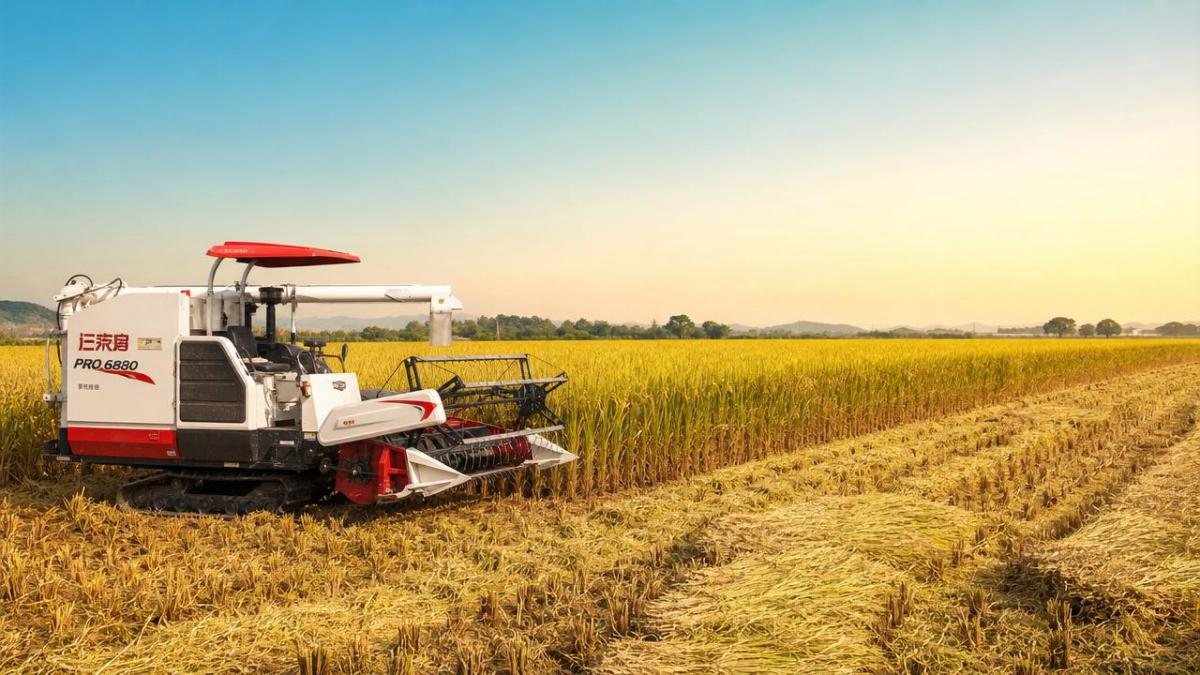
The first economic advantage of a mini rice harvester machine is time compression. Manual harvesting may still work in very small plots, but once the daily harvest target rises beyond what 4 to 8 workers can cut, collect, and stack in one shift, delays start to carry a cost. For operators dealing with ripeness peaks across multiple plots, harvesting speed directly affects recoverable yield.
Typical productivity gap in field operations
In many small and medium rice operations, manual harvesting output can range from roughly 0.04 to 0.12 hectare per worker per day, depending on lodging, water depth, and crop density. A mini rice harvester machine commonly covers about 0.2 to 0.6 hectare per hour in workable field conditions. Even after allowing for turning, unloading, and short stoppages, the gap is substantial.
That difference matters most when weather risk is rising. If operators face a 2-day harvest window before rain, the machine’s value is not simply labor replacement. It is the ability to finish cutting before grain moisture climbs, soil rutting worsens, or lodged patches become harder to recover. In many regions, the economic loss from harvest delay can exceed one maintenance cycle’s cost.
Labor dependence versus controlled throughput
Manual systems depend on worker coordination across cutting, bundling, lifting, and transport. If only 20% to 30% of the team is absent during peak harvest, total throughput can fall sharply. A mini rice harvester machine reduces this dependency by concentrating output into one operator-led process, supported by 1 to 2 helpers for bagging or movement if required.
The table below compares common field-level factors that influence when machine harvesting starts to outperform manual work in direct operating terms.
The key conclusion is that a mini rice harvester machine usually pays back first in operations where harvest timing has become more expensive than labor alone. Once speed, consistency, and reduced delay losses are counted together, the machine’s role shifts from optional equipment to workflow control tool.
When manual harvesting still makes sense
Manual methods are not obsolete in every case. They can remain viable for plots below about 0.5 hectare, for highly fragmented terraces, or for areas with extreme mud depth where lightweight entry is still difficult. They also fit farms that rely on family labor and do not face acute labor scarcity during the harvest season.
However, operators should avoid looking only at cash paid out. Family labor has an opportunity cost, and delayed cutting may reduce head rice recovery or increase field losses. If hand harvest extends from 2 days to 6 days across scattered plots, hidden costs begin to narrow the price advantage very quickly.
What Determines the Payback Point in Real Farm Use
The payback point for a mini rice harvester machine depends on five variables: annual harvested area, local labor cost, grain loss difference, maintenance routine, and machine utilization outside the main crop window. A buyer who evaluates only purchase price may miss the fact that utilization rate often matters more than the base machine cost.
1. Annual harvested area
If a machine is used on only 1 to 2 hectares per season, payback may be slow unless labor rates are very high or contract harvesting is added. But when annual use reaches 8 to 15 hectares across owned, leased, or service work, the economics often improve sharply. More operating hours spread fixed cost over more output.
2. Labor cost and availability
In regions where harvest labor has become irregular or wages rise by 15% to 25% during peak season, mechanical cutting gains an immediate advantage. Even if total labor is still available, assembling enough workers on the right 2 or 3 days may be the harder problem. Reliability has its own economic value.
3. Grain loss and cutting quality
The wrong machine setup can increase losses, but so can manual delay, rough handling, or over-dry harvest. Operators should compare actual field loss levels, not assumptions. A 1% to 3% reduction in recoverable grain loss can materially affect total return, especially in medium-yield paddies where every bag counts.
4. Fuel, wear parts, and service discipline
A mini rice harvester machine is not cost-free after purchase. Fuel use, belts, blades, filters, chains, and bearing checks all matter. Machines maintained every 50 to 100 operating hours generally hold performance better than units serviced only after failure. Poor maintenance can wipe out projected savings through downtime at the worst moment.
5. Shared use or service income
One of the fastest ways to improve payback is to use the machine beyond a single farm boundary. Custom harvesting for neighbors, cooperatives, or nearby fragmented plots can turn idle capacity into revenue. Even 10 to 20 extra operating days per season may significantly shorten the recovery period.
The next table outlines a practical framework operators can use to estimate whether the mini rice harvester machine is likely to reach a reasonable payoff period.
This framework shows that payback is not a single number. It is a combination of machine workload, harvest urgency, and operating discipline. For many users, the machine becomes financially attractive not because it is always cheaper per hour, but because it prevents the expensive consequences of delay and inconsistency.
Choosing the Right Machine for Operator-Level Results
Not every mini rice harvester machine fits every field. Operators should focus on matching machine layout to terrain, crop condition, and daily workflow. A machine that performs well in flat, drier paddies may struggle in soft ground or tight corner plots. Good buying decisions start with operating conditions, not brochure language.
Field and crop factors to check before purchase
- Plot size and shape: small rectangular fields are easier to harvest than irregular plots with many turns.
- Soil bearing condition: muddy fields require attention to machine weight, traction, and ground pressure.
- Crop height and lodging rate: lodged rice often demands better intake control and slower travel speed.
- Entry width and transport path: access lanes below about 1.2 to 1.5 meters may limit some units.
- Target output per day: define whether the machine must cover 1 hectare, 3 hectares, or more in a peak window.
Core operational checks during demonstration
During a field demonstration, the operator should observe 6 basic points: start-up stability, steering effort, cutting uniformity, grain discharge cleanliness, turning performance, and ease of clearing blockages. A 30-minute demo in crop conditions tells more than a specification sheet. If possible, test under normal moisture, not only in ideal dry patches.
Common buying mistakes that weaken payoff
One common mistake is buying solely on low upfront cost while ignoring spare parts lead time. If a belt, cutter part, or drive component takes 7 to 15 days to arrive during harvest season, downtime can erase expected savings. Another error is choosing a machine with more capacity than the operator can realistically use each season.
A third mistake is underestimating training. Even a compact mini rice harvester machine needs correct forward speed, cutting height adjustment, and regular cleaning. Without these basics, fuel use rises, grain loss may increase, and wear accelerates. In practical terms, 1 day of operator training can save many hours of seasonal stoppage.
Operating, Maintenance, and Risk Control in Daily Use
The economic benefit of a mini rice harvester machine does not end at purchase. Real return depends on whether the machine is operated consistently across the full harvest cycle. This includes pre-start inspection, in-field adjustment, safe unloading, daily cleaning, and end-of-season storage. Small neglects become costly when repeated over 50 or 100 hours.
A practical 5-step routine for operators
- Check fuel, oil, belts, chain condition, and visible fasteners before entering the field.
- Set cutting height according to stubble target and lodged crop conditions.
- Monitor engine sound, feed smoothness, and discharge cleanliness every 30 to 60 minutes.
- Remove wrapped straw, mud buildup, and blocked residues before they become drive or intake problems.
- Clean, dry, and inspect the machine after the shift, especially if working in wet paddies.
Risk points to manage early
The main operational risks are usually not catastrophic failure at first. They are gradual efficiency losses: slipping belts, dull blades, residue clogging, and poor lubrication. Each one may reduce output by 5% to 15% before the operator notices. In peak harvest, that hidden loss can mean one more day in the field and one more day of weather exposure.
Service and support questions to ask suppliers
Before procurement, users should ask suppliers clear operational questions rather than general sales questions. Useful points include spare parts availability within 48 to 72 hours, recommended service intervals, training format, and the list of consumables required per season. For B2B buyers, after-sales responsiveness can be as important as machine price.
- What are the standard maintenance intervals for high-use seasonal operation?
- Which wear parts are expected to be replaced first within one season?
- Can the supplier support remote troubleshooting by video or phone during harvest week?
- Are operator manuals and service instructions clear enough for local technicians?
Who Should Shift First, and When
The strongest candidates for a mini rice harvester machine are operators facing one or more of these conditions: rising seasonal wages, repeated labor shortages, frequent harvest delays, multiple small plots that must be cut within 2 to 4 days, or interest in earning service income from neighboring farms. In these cases, mechanization often starts paying back earlier than expected.
By contrast, farms with very low labor cost, highly irregular micro-plots, and no realistic chance of sharing or contracting out the machine should calculate carefully. Mechanization still may be worthwhile, but only if it improves timing, reduces grain loss, or lowers physical workload enough to justify the investment over several seasons.
A simple operator-level decision checklist
- Can current labor finish the crop inside the ideal harvest window?
- Is harvest delay already causing visible loss, lodging problems, or quality decline?
- Will the machine be used on enough area each season to avoid low utilization?
- Are service, parts, and training available within a practical distance or response time?
- Can the operator maintain a basic inspection routine throughout the season?
The payoff for a mini rice harvester machine starts where harvest speed, labor reliability, and grain recovery begin to matter more than the simplicity of manual cutting. For many operators, that threshold appears earlier than expected once true field losses and timing pressure are counted. If you are evaluating compact harvesting options for small or medium rice operations, now is the right time to compare field conditions, service support, and expected annual use in detail. Contact us to discuss application-specific machine selection, request a tailored harvesting solution, or learn more about practical procurement guidance for your operation.
Related Intelligence
- Heavy Agri MachineryPrecision farming systems: where farms see gains firstPrecision farming systems deliver early gains through tighter input control, better field visibility, and faster decisions. See which farm scenarios create the quickest ROI first.
- Heavy Agri MachineryHeavy duty tractors wholesale: which warranty terms deserve a closer lookHeavy duty tractors wholesale buyers should review warranty terms closely. Compare powertrain coverage, exclusions, response times, and cross-border support to reduce risk and protect uptime.
- Heavy Agri MachineryCorn picker machines bulk orders: what changes after harvest seasonCorn picker machines bulk orders change fast after harvest—compare pricing, lead times, customization, and regional demand to secure smarter deals and stronger margins.
The Morning Broadsheet
Daily chemical briefings, market shifts, and peer-reviewed summaries delivered to your terminal.
