
The Authority in Global Agricultural Chemistry & Bio-Resources
Crop spraying drones OEM: the specs that affect field results most
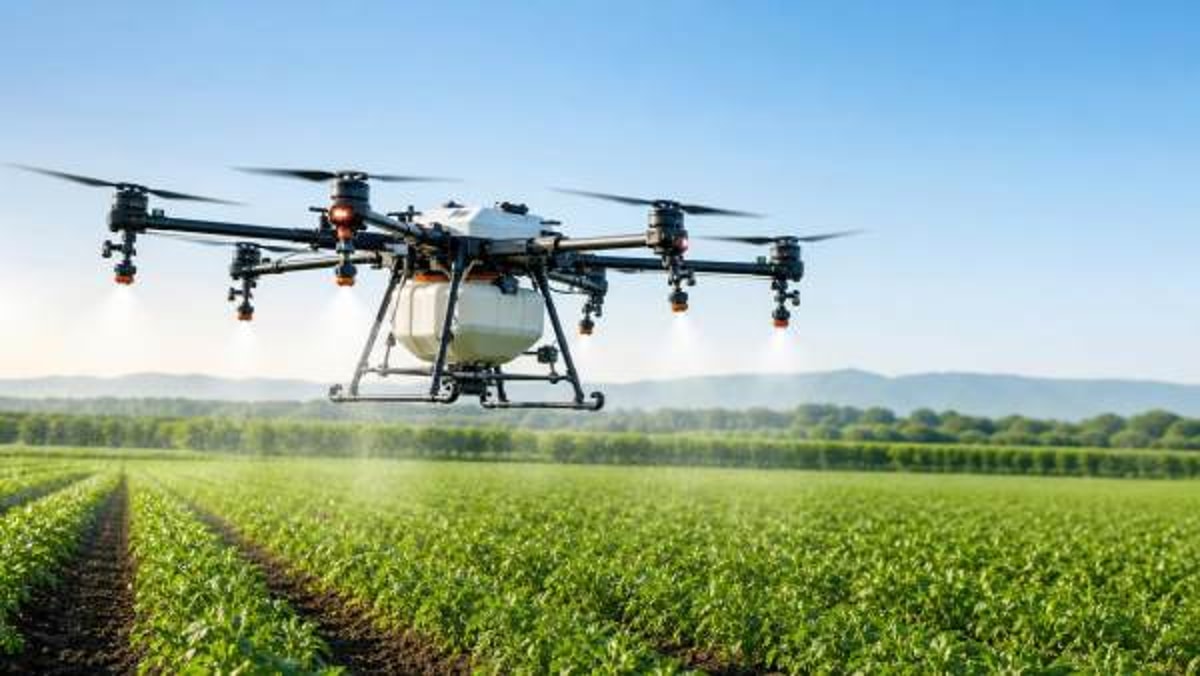
When evaluating crop spraying drones OEM partners, field performance depends less on brochure claims and more on a few measurable specifications. From tank capacity and droplet uniformity to flight stability, terrain following, and chemical compatibility, the right configuration directly shapes coverage quality, drift control, and operational efficiency. For technical assessors, understanding which specs matter most is the first step toward selecting drones that deliver consistent agronomic results at scale.
For procurement teams, agronomy engineers, and machinery evaluators, the challenge is rarely finding a supplier that offers a crop spraying drones OEM program. The real challenge is identifying which technical specifications materially affect hectare-level output, spray consistency, downtime risk, and lifecycle cost across diverse field conditions.
In commercial operations, a 20 L tank versus a 40 L tank is not simply a capacity decision. It affects refill frequency, payload-to-endurance balance, transport logistics, and the practical area covered per hour. Likewise, a nominal flow rate of 8 L/min to 16 L/min means little without understanding nozzle type, droplet size range, pump control, and flight speed interaction.
This article examines the specifications that have the strongest impact on field results when assessing crop spraying drones OEM options, with emphasis on measurable parameters, validation methods, and procurement criteria relevant to technical assessors working in regulated, performance-driven agricultural environments.
Core Performance Specifications That Influence Agronomic Results
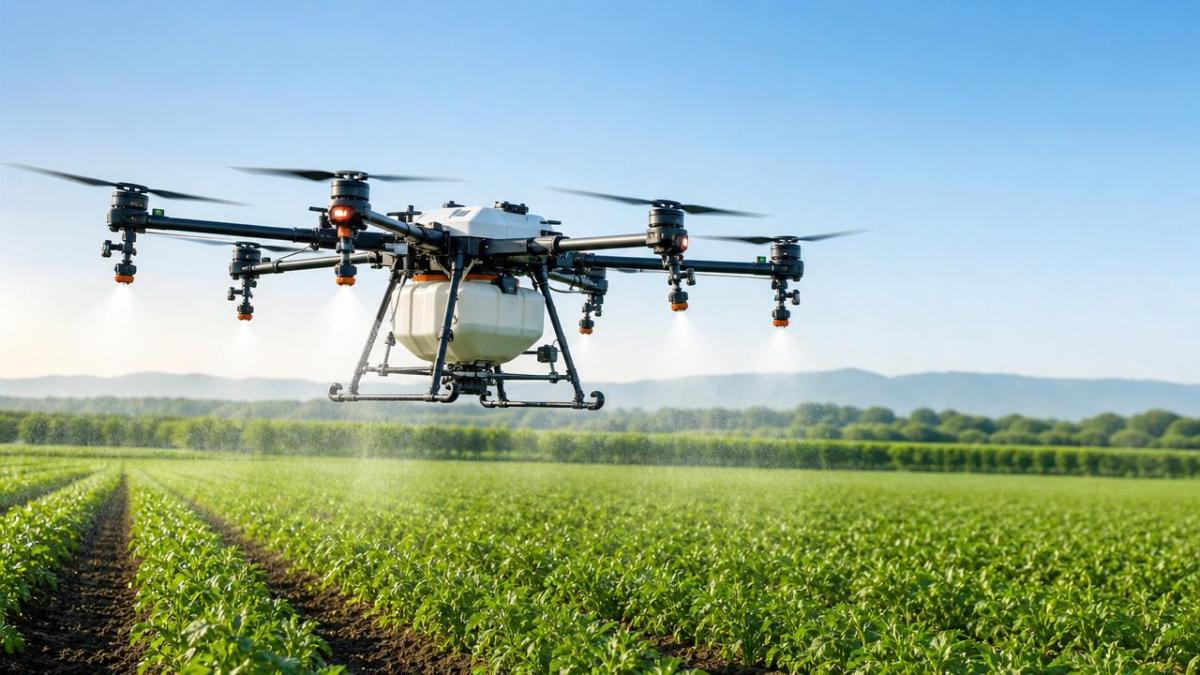
A capable crop spraying drones OEM should be assessed through field-output variables rather than isolated brochure specifications. In practical use, five specification groups consistently determine whether the aircraft can deliver repeatable spray quality: payload system, atomization quality, flight control stability, terrain adaptation, and materials compatibility.
Tank Capacity, Payload, and Effective Coverage per Hour
Tank capacity typically ranges from 10 L in compact platforms to 70 L or more in heavy-duty agricultural units. For technical assessment, the more useful metric is effective field coverage per hour under real conditions, usually influenced by refill time, battery swap cycle, payload weight, and route efficiency rather than tank size alone.
For example, a drone carrying 30 L may deliver stronger operational efficiency than a 50 L unit if the larger platform loses endurance too quickly under full load or requires stricter takeoff conditions. In many row-crop settings, practical throughput often falls within 8–20 hectares per hour, depending on application volume, swath width, and terrain complexity.
What to verify
- Rated tank capacity versus usable liquid volume
- Payload effect on flight time at 50%, 75%, and 100% load
- Refill and restart cycle, often 2–5 minutes in organized operations
- Coverage rate at standard application volumes such as 10 L/ha, 20 L/ha, and 30 L/ha
Droplet Uniformity, Flow Control, and Drift Management
Spray quality is often the most underestimated variable in crop spraying drones OEM selection. Field results depend on stable droplet spectrum and accurate flow modulation across changing speeds. If the system cannot hold droplet consistency within a usable band, deposition becomes uneven and drift risk rises sharply, especially in crosswinds above 3–5 m/s.
Technical assessors should request data on nozzle type, pressure range, droplet diameter band, and closed-loop flow compensation. In many agricultural spraying scenarios, coarse to medium droplets may be preferred for drift control, while fungicide or canopy penetration tasks may require different atomization settings. The key is not one “best” droplet size, but controllability within the target use case.
The table below outlines the specifications most directly tied to spray outcome in commercial operations and what evaluators should ask a crop spraying drones OEM to demonstrate during review.
The practical takeaway is that no single specification predicts field success on its own. Coverage quality comes from the interaction between payload, flow stability, and height control. A crop spraying drones OEM that cannot explain that interaction in application-specific terms is unlikely to support serious technical procurement.
Flight Stability and Positioning Accuracy
Flight stability matters because spray deposition is highly sensitive to altitude fluctuation, yaw correction, and speed variation. Under low-altitude operations, even a 0.5–1.0 m deviation in spray height can alter swath consistency and droplet distribution. This becomes more critical in orchards, sloped fields, and irregular field boundaries.
Evaluators should examine GNSS support, RTK compatibility, inertial stability, and low-altitude obstacle handling. In open fields, standard positioning may be adequate. In precision-sensitive deployments or difficult topography, RTK-assisted navigation and redundant sensors can materially improve route fidelity and reduce missed strips or overlap.
Terrain Following and Canopy Adaptation
Terrain following is one of the clearest separators between basic and advanced crop spraying drones OEM offerings. A platform that performs well on flat demonstration plots may struggle in terraced land, undulating cereal fields, or orchards with variable canopy height. Radar or lidar-based height sensing often provides stronger performance than simpler altitude assumptions.
The target is not theoretical sensor sophistication but stable nozzle-to-target distance throughout the route. In many spraying programs, maintaining a relatively consistent application height within a narrow operational band can improve deposition while reducing the need for conservative speed reduction.
Engineering and OEM Factors Beyond the Spray System
A crop spraying drones OEM is not only supplying an aircraft. It is supplying an integrated platform that must withstand agrochemical exposure, repeated transport, high-cycle battery usage, and rapid maintenance schedules. For technical assessors, structural design and service architecture are often as important as nominal field performance.
Chemical Compatibility and Wet-End Durability
Many failures in agricultural drone fleets do not begin with motors or avionics. They begin with pumps, hoses, seals, filters, and tanks exposed to corrosive or abrasive formulations. Suspensions, micronutrients, emulsifiable concentrates, and certain adjuvant mixes can degrade incompatible materials over a season if the wet-end design is weak.
Technical reviews should ask about chemical-contact materials, cleanout procedure, residue retention points, and replacement intervals for wear parts. If an OEM cannot specify maintenance frequency for filters, pumps, and tubing under standard seasonal usage, lifecycle risk is difficult to estimate accurately.
Common checkpoints for chemical-system evaluation
- Confirm tank, seal, and line compatibility with common agrochemical classes.
- Review flush-out time after product changeover, ideally within a practical 5–15 minute service window.
- Inspect filter access and pump replacement complexity in field conditions.
- Check whether residue-prone zones exist in manifolds or elbows.
Power System, Battery Turnaround, and Operational Continuity
Battery strategy directly affects daily productivity. A drone may appear efficient on a single-flight basis but underperform across a 6–8 hour workday if charging time, battery cooling requirements, or swap procedures are poorly designed. Technical assessors should examine full-cycle logistics rather than aircraft endurance in isolation.
Useful evaluation points include battery cycle life, charging duration, field generator or mobile charging compatibility, and the number of battery sets required for continuous operation. In many commercial spraying workflows, 3–6 battery packs per aircraft may be needed to sustain uninterrupted operations, depending on local charging infrastructure and ambient temperature.
The following table helps compare OEM-level engineering factors that affect uptime, maintenance burden, and procurement confidence over a full operating season.
These factors often decide whether a technically promising platform remains productive during high-pressure spray periods. For larger operators, uptime losses from slow parts replacement or weak battery logistics can outweigh modest differences in headline spray capacity.
Serviceability, Diagnostics, and Fleet Support
An OEM relationship should be evaluated as a support system, not only a hardware purchase. Technical assessors should understand whether the supplier can provide commissioning support, operator training, software updates, maintenance documentation, and structured fault diagnosis. A 24–72 hour delay in troubleshooting during a pest outbreak can have real agronomic consequences.
For organizations managing multiple aircraft, software integration and maintenance traceability become increasingly important. Logs for spray missions, battery health, component replacement, and fault events support stronger compliance, better root-cause analysis, and clearer total-cost forecasting.
How Technical Assessors Should Compare Crop Spraying Drones OEM Options
The best evaluation process is structured, scenario-based, and measurable. Rather than comparing generic marketing sheets, technical assessors should build a decision matrix around actual agronomic use cases: broadacre cereals, orchards, rice paddies, seed production fields, or mixed-terrain contract services. Each environment changes the weight of key specifications.
Build a Four-Part Evaluation Framework
A practical framework can be organized into four categories: spray performance, aircraft stability, maintainability, and supply support. This allows teams to compare crop spraying drones OEM candidates using weighted criteria rather than headline capacity alone.
- Spray performance: flow stability, droplet control, uniformity, and drift resistance
- Aircraft stability: route accuracy, terrain following, wind tolerance, and payload behavior
- Maintainability: cleaning time, service intervals, battery workflow, and replaceable wear parts
- Supply support: spare parts lead time, training, documentation, and remote diagnostics
Use Field Demonstration Protocols, Not Only Bench Data
Bench specifications are useful, but field verification is where meaningful differences appear. A robust trial should include at least 3 operating conditions: flat field, variable terrain, and moderate wind. It should also compare application consistency at different fill levels, such as full tank, half tank, and near-empty conditions.
If possible, the test protocol should measure overlap quality, route adherence, refill turnaround, and operator intervention frequency over a 1–2 day period. For larger fleet purchases, even a short structured pilot can reveal whether the crop spraying drones OEM has engineered for real farm use or only for showroom metrics.
Common procurement mistakes to avoid
- Choosing by tank size without validating endurance under load
- Assuming all atomization systems perform equally across product types
- Ignoring cleaning complexity when multiple formulations are used
- Overlooking parts lead times during seasonal demand peaks
- Failing to test terrain following in the target crop environment
Questions Worth Asking Any OEM Before Approval
Before shortlisting a supplier, technical teams should request detailed answers on several points: Which specifications are guaranteed versus nominal? What are the recommended operating limits for wind, slope, and canopy density? How quickly can critical service parts be supplied? Which components are field-replaceable in under 30 minutes?
The strongest crop spraying drones OEM partners will provide transparent test conditions, application notes by crop type, and realistic service expectations. That level of documentation helps buyers avoid underestimating maintenance burden or overestimating seasonal output.
What Matters Most for B2B Procurement Decisions
For technical assessors supporting institutional buyers, farm operators, and agricultural service providers, the most valuable OEM partner is not necessarily the one with the most aggressive headline specification. It is the one that can align aircraft design, spray quality, field logistics, and after-sales support with the intended operational model.
In most commercial comparisons, the highest-impact variables are repeatable spray quality, dependable terrain following, manageable battery logistics, and durable chemical-contact components. If these four areas are properly validated, the buyer is far more likely to achieve stable hectare output, better deposition control, and lower disruption during critical spray windows.
For organizations seeking a crop spraying drones OEM partner, technical diligence at the specification stage reduces downstream risk in procurement, deployment, and fleet management. To discuss platform requirements, compare configuration options, or review an application-specific evaluation framework, contact us to get a tailored solution and deeper product details.
Related Intelligence
- AgrochemicalsThailand & Vietnam Mandate e-Phyto for Agrochemical Imports from Jul 2026e-Phyto mandate for Thailand & Vietnam agrochemical imports starts July 2026 — ensure ASEAN Single Window integration and registration linkage now!
- AgrochemicalsAgricultural drones wholesale: why battery logistics affect total costAgricultural drones wholesale buyers must look beyond unit price. Learn how battery logistics, compliance, charging, and replacement costs shape ROI, uptime, and long-term margins.
- AgrochemicalsCrop spraying drones OEM: the specs that affect field results mostCrop spraying drones OEM selection starts with the specs that truly drive field results—tank capacity, droplet control, terrain following, and uptime. Learn what to verify before you buy.
The Morning Broadsheet
Daily chemical briefings, market shifts, and peer-reviewed summaries delivered to your terminal.
