

The Authority in Global Agricultural Chemistry & Bio-Resources
Thailand & Vietnam Mandate e-Phyto for Agrochemical Imports from Jul 2026
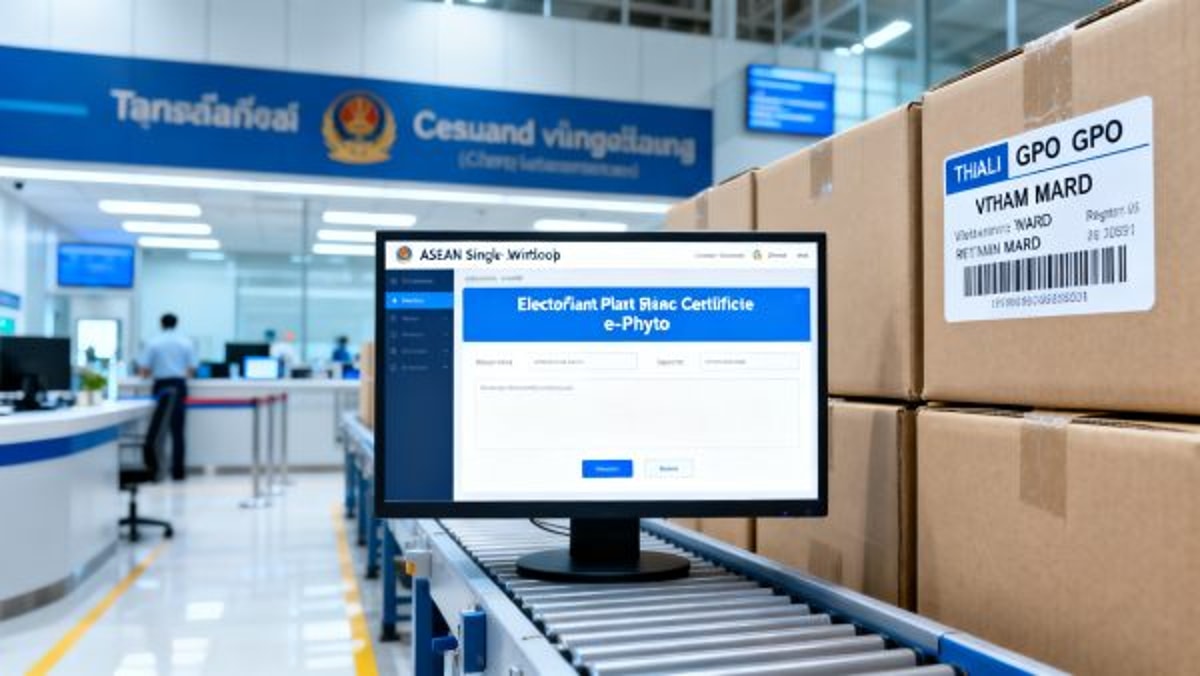
Starting 1 July 2026, Thailand and Vietnam will require all imported agrochemicals — including technical-grade active ingredients and formulated products — to be accompanied by an electronic phytosanitary certificate (e-Phyto) submitted via the ASEAN Single Window, with mandatory linkage to national pesticide registration numbers (e.g., Thailand’s GPO No., Vietnam’s MARD Reg. No.). This shift eliminates acceptance of paper-based phyto certificates. Exporters, especially those in China supplying these markets, must align their documentation and IT systems with both countries’ electronic platforms well ahead of the deadline — making it a critical operational consideration for agrochemical trade, regulatory compliance, and supply chain planning.
Event Overview
On 1 July 2026, the Department of Agriculture of Thailand and the Plant Protection Department of Vietnam’s Ministry of Agriculture and Rural Development jointly enforce a new requirement: all agrochemical imports into either country must be supported by an e-Phyto certificate issued through the ASEAN Single Window. The e-Phyto must be electronically linked to the importer’s valid national pesticide registration number. Paper phyto certificates will no longer be accepted for customs clearance or market entry. This policy applies uniformly to raw active ingredients and finished formulations.
Which Subsectors Are Affected
Direct Exporters (e.g., Chinese agrochemical manufacturers & trading companies)
These entities are directly responsible for generating and submitting compliant e-Phyto documentation. Failure to integrate with the ASEAN Single Window system — or to ensure accurate linkage between e-Phyto data and local registration numbers — will result in shipment rejection at port or delayed clearance. Impact manifests in increased pre-shipment administrative burden, potential lead-time extension, and heightened risk of non-compliance penalties.
Formulators & Blenders Sourcing Imported Actives
Companies importing technical-grade active ingredients for domestic formulation in Thailand or Vietnam must now ensure their overseas suppliers provide e-Phyto-compliant shipments. Any delay or mismatch in e-Phyto–registration binding disrupts raw material intake, potentially halting production lines or triggering inventory shortages — especially for products with narrow registration windows or seasonal demand peaks.
Regulatory Affairs & Registration Service Providers
Service providers supporting foreign registrants in Thailand or Vietnam must update client onboarding workflows to include e-Phyto coordination as a core step. Since e-Phyto issuance requires verified registration status, any lapse or discrepancy in registration data (e.g., expired or misaligned MARD Reg. No./GPO No.) will block e-Phyto generation — making real-time registration health monitoring essential.
Logistics & Customs Brokerage Firms
Freight forwarders and customs brokers handling agrochemical consignments into Thailand or Vietnam will need to verify e-Phyto submission status and registration linkage prior to filing import declarations. Systems must support automated validation or flag mismatches — otherwise, manual reconciliation will increase processing time and error rates, particularly during peak import periods.
What Relevant Enterprises or Practitioners Should Focus On Now
Monitor official implementation timelines and technical specifications
While the enforcement date is confirmed (1 July 2026), technical guidelines — such as API integration protocols, data field requirements, and testing windows for ASEAN Single Window connectivity — remain pending publication by Thai and Vietnamese authorities. Stakeholders should subscribe to official notifications from Thailand’s Department of Agriculture and Vietnam’s Plant Protection Department.
Verify and reconcile existing registration numbers against upcoming e-Phyto linkage rules
Analysis shows that e-Phyto validity depends on active, correctly formatted registration numbers. Companies should audit current GPO No. (Thailand) and MARD Reg. No. (Vietnam) records for accuracy, expiry dates, and product scope alignment — as outdated or incomplete registrations will prevent successful e-Phyto issuance.
Distinguish between policy announcement and operational readiness
Observably, the mandate is a regulatory decision, not yet a live system requirement. Current e-Phyto submission capability varies across ASEAN member states. Exporters should avoid assuming full interoperability by mid-2025; instead, treat Q4 2025 as the realistic window for end-to-end dry-run testing with both destination countries’ systems.
Initiate cross-functional alignment between regulatory, logistics, and IT teams
Preparing for e-Phyto requires coordinated action: regulatory teams to validate registration data, logistics teams to adapt documentation workflows, and IT teams to assess or develop integration with ASEAN Single Window interfaces. Starting this alignment in H1 2025 allows sufficient time for vendor evaluation, internal testing, and staff training before the 2026 deadline.
Editorial Perspective / Industry Observation
This requirement is better understood as a structural signal than an isolated compliance update. From an industry perspective, it reflects ASEAN’s broader push toward digital trade facilitation and traceability — particularly for regulated agricultural inputs. It does not introduce new safety or efficacy standards, but significantly raises the bar for procedural rigor in cross-border agrochemical movement. Observably, its primary function is to tighten control over market access through verifiable, system-enforced linkages between phytosanitary assurance and regulatory authorization. That makes sustained attention necessary — not just for 2026 readiness, but as a precedent for similar digital mandates likely to follow in other ASEAN markets or product categories (e.g., fertilizers, veterinary medicines).
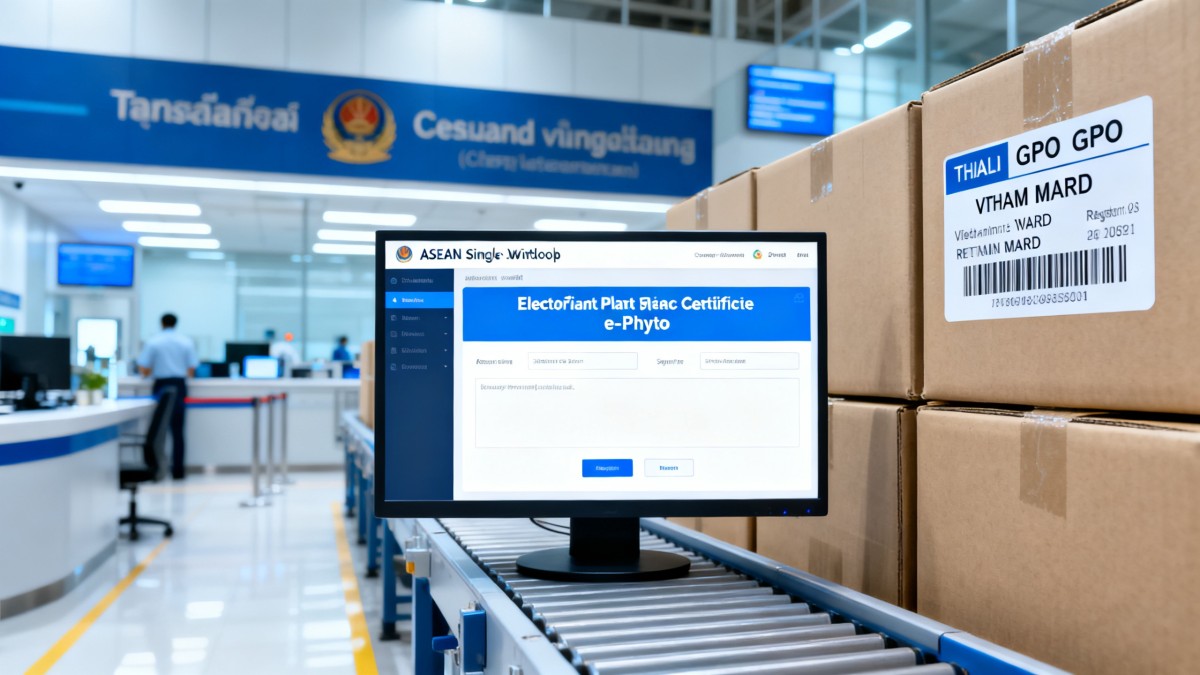
Conclusion: This policy change underscores a measurable shift toward digitally enforced regulatory gatekeeping in Southeast Asian agrochemical markets. It is neither a temporary adjustment nor a minor procedural tweak — rather, it institutionalizes system-level interdependence between phytosanitary certification and national registration. For stakeholders, the most rational interpretation is that readiness must be treated as infrastructure investment, not a one-off compliance task. The timeline remains fixed, but execution hinges on early verification, cross-departmental coordination, and calibrated engagement with official guidance as it emerges.
Source: Official joint announcement by Thailand’s Department of Agriculture and Vietnam’s Plant Protection Department (published 2026-07-01); ASEAN Single Window technical framework documents (publicly available version v3.2, updated Q1 2026). Note: Specific API documentation, test environment access, and national system rollout schedules remain under development and subject to official updates.
Related Intelligence
- AgrochemicalsThailand & Vietnam Mandate e-Phyto for Agrochemical Imports from Jul 2026e-Phyto mandate for Thailand & Vietnam agrochemical imports starts July 2026 — ensure ASEAN Single Window integration and registration linkage now!
- AgrochemicalsAgricultural drones wholesale: why battery logistics affect total costAgricultural drones wholesale buyers must look beyond unit price. Learn how battery logistics, compliance, charging, and replacement costs shape ROI, uptime, and long-term margins.
- AgrochemicalsCrop spraying drones OEM: the specs that affect field results mostCrop spraying drones OEM selection starts with the specs that truly drive field results—tank capacity, droplet control, terrain following, and uptime. Learn what to verify before you buy.
The Morning Broadsheet
Daily chemical briefings, market shifts, and peer-reviewed summaries delivered to your terminal.
