

The Authority in Global Agricultural Chemistry & Bio-Resources
Agricultural drones wholesale: why battery logistics affect total cost
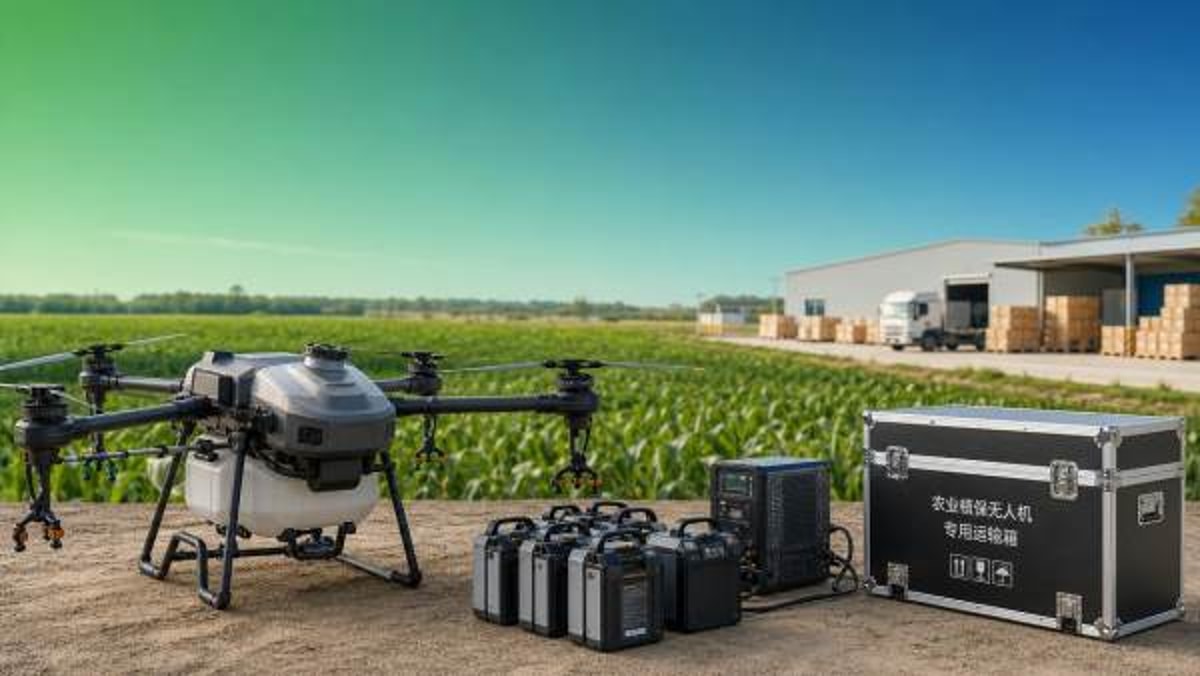
In agricultural drones wholesale, battery logistics can quietly become one of the largest cost drivers for buyers and finance approvers. From hazardous goods shipping and storage compliance to replacement cycles, charging infrastructure, and downtime risk, battery-related decisions shape total landed cost far beyond the unit price. Understanding these variables is essential for making procurement choices that protect margins, operational continuity, and long-term return on investment.
Why battery logistics have moved to the center of procurement decisions
A notable shift is taking place in agricultural drones wholesale. Buyers once focused primarily on airframe price, payload, spraying precision, and software features. Today, battery movement, storage, charging, replacement, and compliance are increasingly influencing the final business case. For finance approvers, this matters because battery costs are rarely confined to a single line item. They appear across freight invoices, insurance premiums, warehouse procedures, labor allocation, fleet uptime, and spare inventory planning.
This change is being driven by three converging signals. First, agricultural drone fleets are scaling from trial deployments to operational assets used over multiple fields, sites, or service regions. Second, lithium battery transport and storage requirements remain tightly controlled in many markets, adding friction to cross-border and domestic distribution. Third, seasonal operations leave little room for downtime. When a battery shipment is delayed or a replacement cycle is underestimated, the cost is not just logistical inconvenience; it can become missed spray windows, lower utilization, and compressed revenue.
For organizations evaluating agricultural drones wholesale opportunities, the practical question is no longer “What is the cheapest drone package?” but “What battery ecosystem produces the lowest total cost under real operating conditions?” That is a much broader and more strategic financial calculation.
The market signals finance teams should not ignore
Several market signals suggest battery logistics will remain a defining issue in agricultural drones wholesale rather than a temporary complication. More buyers are comparing suppliers not just by aircraft specification, but by local battery stock availability, certified transport handling, charging turnaround, and lifecycle support. In parallel, operators are seeking shorter field-to-field deployment times, which raises the value of battery standardization and rapid swap systems.
Another signal is the growing gap between nominal battery performance and usable field productivity. A battery may look adequate on paper, yet high ambient temperatures, frequent transport, rough charging conditions, or intensive spray schedules can reduce effective lifespan. This affects depreciation assumptions and replacement planning. For a finance approver, the risk lies in budgeting from ideal lab conditions rather than from real agricultural usage.
There is also rising interest in regional service models. Buyers increasingly favor agricultural drones wholesale suppliers that can support domestic spare battery pools or approved service partners. This is not only a convenience issue. It is a hedge against customs delays, hazardous goods bottlenecks, and emergency procurement at inflated prices during peak season.
In short, the economics of agricultural drones wholesale are moving from product-centric to system-centric evaluation. Batteries sit at the core of that system.
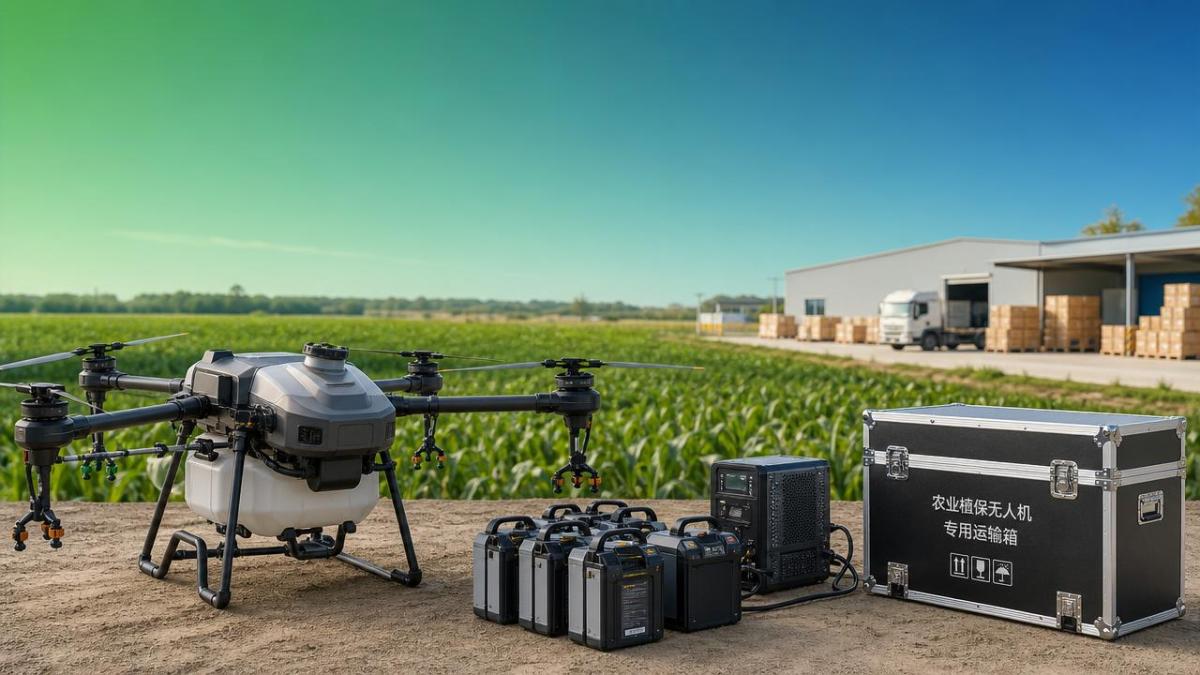
What is driving the shift in battery-related total cost
The first driver is compliance intensity. Lithium batteries are subject to transport, handling, and storage requirements that can affect packaging methods, carrier eligibility, routing options, warehouse rules, and training obligations. Even when the drone itself is competitively priced, battery compliance can narrow the pool of logistics providers and increase per-shipment cost. This is especially relevant in agricultural drones wholesale transactions involving international procurement or remote operating regions.
The second driver is fleet utilization pressure. As drone programs mature, operators want more hectares covered per day with less idle time. That means batteries are no longer passive accessories; they are throughput enablers. If the charging cycle is slow, if too few batteries are budgeted, or if charging equipment is poorly distributed across sites, a capable drone fleet can still underperform. Finance teams should therefore view battery planning as a capacity planning issue, not a consumables issue.
The third driver is lifecycle variability. Battery replacement timing is sensitive to charging discipline, ambient temperature, transport vibration, and usage intensity. Two buyers may purchase the same fleet through agricultural drones wholesale channels yet see very different battery replacement curves. This weakens simplistic ROI models based only on purchase price and expected mission count.
A fourth driver is decentralization. Agricultural operations often span multiple farms, contractors, or service zones. Moving batteries safely between them adds hidden labor, packaging, audit, and coordination costs. In a single-site pilot this may look minor. In a multi-site commercial rollout, it becomes a recurring operational burden.
How the impact differs across the buying organization
Battery logistics do not affect every stakeholder in the same way. That is why agricultural drones wholesale deals often stall when procurement, operations, and finance use different assumptions. The procurement team may benchmark unit prices, operations may focus on daily flight continuity, and finance may evaluate depreciation and payback. Without a common battery cost framework, the organization may approve a fleet that looks efficient on paper but proves expensive in use.
For finance-focused readers, this cross-functional impact is the main insight: battery logistics influence both direct expense and operational risk, which means they belong in capital approval discussions early, not after equipment selection.
Where buyers in agricultural drones wholesale often underestimate cost
The most common underestimation is treating batteries as interchangeable add-ons rather than managed assets. In practice, fleet performance depends on the number of batteries per aircraft, charging turnaround, field transport procedures, and local replacement availability. A low-priced package may require more spare batteries, more chargers, or more manual coordination than expected.
A second blind spot is inventory timing. Because agricultural activity is seasonal, replacement demand often clusters around critical application periods. If a buyer relies on long replenishment routes or overseas dispatch for battery support, delays can magnify quickly. In agricultural drones wholesale, the true premium may not be the battery price itself but the price of not having one when demand peaks.
A third blind spot is infrastructure mismatch. Charging solutions that work in demonstrations may not scale in remote agricultural settings with variable power quality, mobile crews, or multiple launch points. This can trigger secondary spending on generators, power conditioning, transport cases, or added labor. These costs are usually absent from initial product comparisons but heavily influence ownership economics.
Finally, buyers may overlook residual compliance burden. Warehousing batteries, documenting movement, and training personnel all consume management time. For larger buyers or distributors involved in agricultural drones wholesale, this administrative load can become material even if direct shipping charges seem manageable.
How to evaluate suppliers as battery ecosystems, not just drone vendors
The stronger suppliers in agricultural drones wholesale are increasingly differentiated by ecosystem readiness. That includes battery availability, shipment experience, approved packaging methods, charger compatibility, diagnostic tools, lifecycle data visibility, and local service support. Finance approvers should encourage teams to compare these elements systematically rather than accepting battery support as a generic promise.
Useful evaluation questions include: Can the supplier specify expected cycle performance under real agricultural usage? Is there local or regional battery stock? What are the replacement lead times during peak season? Are chargers included and suitable for field conditions? What training is offered for storage and transport? How are warranty claims handled when performance drops under heavy seasonal use?
These questions are commercially important because they convert vague technical assurance into measurable financial confidence. In many agricultural drones wholesale decisions, the difference between a scalable program and an expensive one lies in these operational details.
A practical decision framework for finance approvers
For decision-makers reviewing agricultural drones wholesale proposals, a disciplined framework is more useful than headline pricing. Start by separating purchase cost from operating cost. Then test the proposal against realistic seasonal intensity, site distribution, and compliance obligations. The objective is not to forecast every variable perfectly, but to avoid approving a battery model that is structurally misaligned with the operating environment.
A practical review should include five lenses. First, landed cost: battery freight, documentation, insurance, and local handling. Second, working capacity: batteries per aircraft, daily rotation requirements, and charging throughput. Third, lifecycle exposure: expected replacement frequency under actual use conditions. Fourth, continuity risk: local stock and emergency replacement options. Fifth, governance: storage SOPs, accountability, and compliance readiness.
This type of review helps finance teams challenge the common assumption that all battery-supported fleets are economically similar. In agricultural drones wholesale, they are not. A system with slightly higher upfront cost may offer materially lower total ownership cost if battery support is stronger and downtime risk is lower.
What to watch next as the market evolves
Looking ahead, buyers should monitor several signals. One is whether suppliers are building more regional battery support networks, which would reduce delay risk and improve cost predictability. Another is the degree of standardization across fleets, since standardized battery systems can simplify inventory and training. Buyers should also watch for improvements in battery diagnostics and lifecycle monitoring, because better visibility can reduce premature replacement and support more accurate budgeting.
The broader direction is clear: agricultural drones wholesale is becoming more operationally sophisticated. As fleets move from pilot projects to embedded agricultural infrastructure, battery logistics will continue to shape profitability, not just convenience. Organizations that still evaluate drone procurement through a narrow equipment lens may face avoidable cost variance, while those that treat batteries as a strategic operating asset will be better positioned to control margins and scale reliably.
Final judgment and next-step questions
For buyers and finance approvers, the key judgment is straightforward: in agricultural drones wholesale, battery logistics are no longer a secondary technical detail. They are a primary determinant of total landed cost, seasonal resilience, and investment quality. The smartest procurement decisions now come from testing whether the battery model matches the operating model.
If your organization wants to assess how this trend affects its own procurement plans, focus on a few decisive questions: Are battery shipping and storage assumptions built into the business case? Is replacement timing modeled for actual field intensity rather than ideal conditions? Can the supplier support local continuity during peak periods? And does the proposed charging and inventory setup protect utilization across multiple sites?
Those questions will do more to protect long-term ROI than negotiating a marginal reduction in unit price. In the current agricultural drones wholesale environment, cost discipline starts with battery logistics visibility.
Related Intelligence
- AgrochemicalsThailand & Vietnam Mandate e-Phyto for Agrochemical Imports from Jul 2026e-Phyto mandate for Thailand & Vietnam agrochemical imports starts July 2026 — ensure ASEAN Single Window integration and registration linkage now!
- AgrochemicalsAgricultural drones wholesale: why battery logistics affect total costAgricultural drones wholesale buyers must look beyond unit price. Learn how battery logistics, compliance, charging, and replacement costs shape ROI, uptime, and long-term margins.
- AgrochemicalsCrop spraying drones OEM: the specs that affect field results mostCrop spraying drones OEM selection starts with the specs that truly drive field results—tank capacity, droplet control, terrain following, and uptime. Learn what to verify before you buy.
The Morning Broadsheet
Daily chemical briefings, market shifts, and peer-reviewed summaries delivered to your terminal.
