

The Authority in Global Agricultural Chemistry & Bio-Resources
Agri & Forestry machinery specifications that are often misread
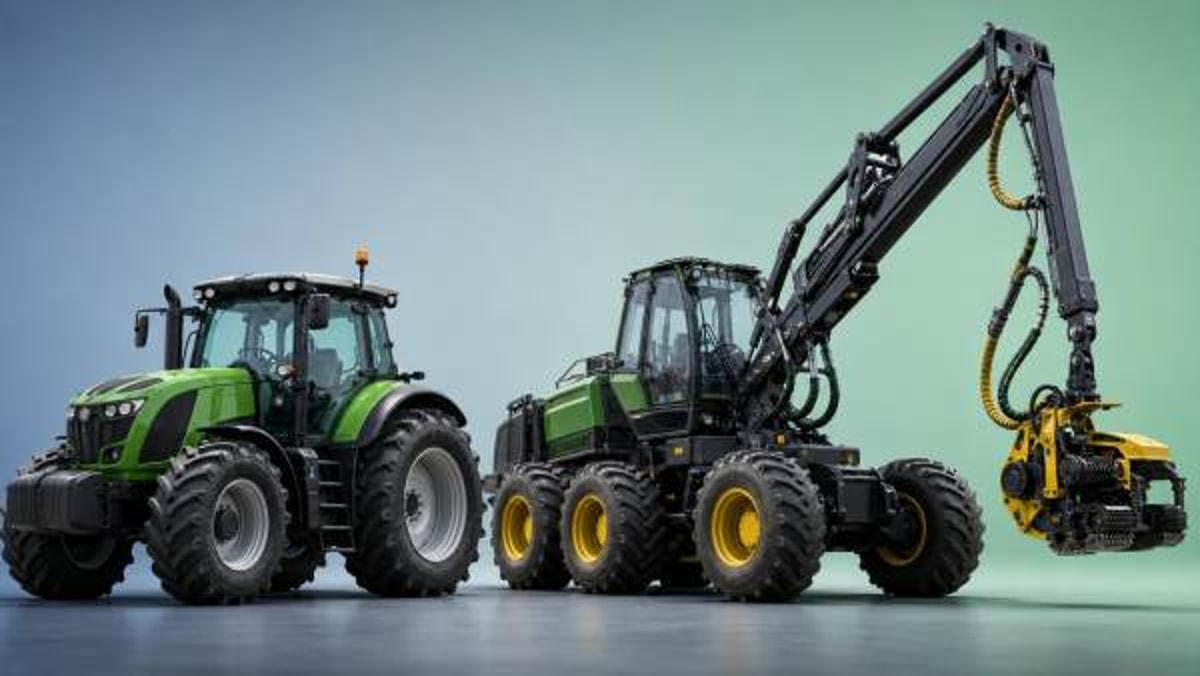
Agri & Forestry machinery specifications can look straightforward on paper, yet they are often misunderstood in ways that affect procurement, compliance, and field performance. For information researchers comparing equipment across brands and regions, knowing how to read these technical details correctly is essential. This article highlights the most commonly misread specifications and explains what they really mean for operational efficiency, safety, and long-term investment decisions.
When buyers, analysts, and technical evaluators review Agri & Forestry machinery specifications, the biggest mistake is assuming that a published number directly reflects real-world capability. In practice, many figures are presented under ideal test conditions, measured with different standards, or detached from the working setup that matters in the field. A machine that appears stronger, faster, or more efficient on paper may not deliver better results in actual agricultural or forestry operations.
For information researchers, the core task is not simply collecting specification sheets. It is identifying which specifications are comparable, which are conditional, and which are often used more as marketing shortcuts than as reliable decision tools. This matters whether the goal is benchmarking tractors, harvesters, skidders, sprayers, mulchers, forwarders, or specialized processing units.
The most valuable way to read these documents is to ask a practical question behind every figure: under what operating conditions was this number achieved, what standard was used, and what happens when the machine is loaded, attached, regulated, or deployed in real terrain? That approach quickly separates useful technical data from misleading headline claims.
Why so many machinery specifications are misread in the first place
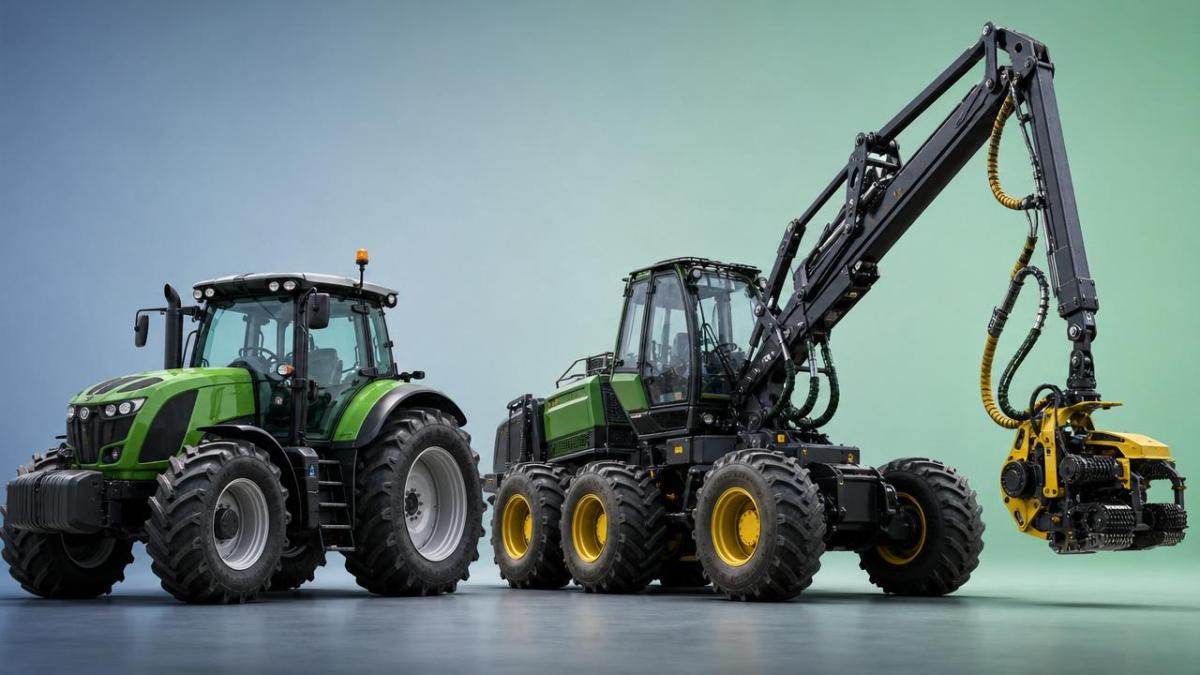
Most misunderstandings happen because specification sheets compress complex machine behavior into short labels such as engine power, operating weight, hydraulic flow, fuel consumption, lifting capacity, or productivity per hour. These labels look universal, but they often hide differences in measurement methods, optional configurations, environmental assumptions, and legal reporting frameworks.
In agriculture and forestry, this issue is amplified by regional variation. A machine sold into Europe may list power, emissions stage, noise level, and transport dimensions according to one regulatory structure, while a comparable machine sold in North America or Asia may follow a different testing convention. Researchers comparing across markets can easily assume equivalence where none exists.
Another reason is that manufacturers understandably publish their strongest or most saleable figures first. That does not necessarily mean the data is wrong. It means the most visible specification may not be the most decision-relevant one. For example, maximum lifting capacity or peak horsepower may matter less than sustained hydraulic performance, implement compatibility, service access, or axle load under working conditions.
For readers involved in equipment sourcing, compliance review, or early-stage procurement research, the key is to interpret specifications as part of a technical system rather than as isolated numbers. A machine is only as useful as the combination of its powertrain, hydraulic circuit, structural limits, attachments, safety systems, and support infrastructure.
Engine power is one of the most misread Agri & Forestry machinery specifications
Engine power is often the first figure buyers notice, and one of the easiest to misinterpret. The problem starts with the fact that not all horsepower or kilowatt ratings mean the same thing. You may see gross engine power, net engine power, rated power, maximum power, PTO power, or peak power, each describing a different point in machine performance.
Gross engine power usually refers to the engine output measured without all parasitic losses from accessories or installation effects. Net engine power is generally lower and closer to what the machine can actually deliver after supporting systems are accounted for. PTO power is different again, because it measures usable output at the power take-off, which matters directly for many agricultural implements.
In forestry equipment, engine power can be especially misleading if readers assume it predicts traction, crane performance, or processing ability on its own. A powerful engine does not automatically mean better productivity if the hydraulic system, transmission tuning, cooling package, and machine balance are limiting factors. In steep terrain or dense stand conditions, torque delivery and power management under load can matter more than headline horsepower.
Researchers should also check the standard under which the rating was measured. References such as ISO, SAE, ECE, or OECD-related documentation may indicate different reporting contexts. A useful comparison requires matching power figures measured in the same way and understanding whether emissions after-treatment, fan load, or auxiliary systems were included.
Operating weight is not the same as working weight
Another commonly misread item in Agri & Forestry machinery specifications is machine weight. Published operating weight often sounds definitive, but it may only represent a standard configuration with a defined fuel level, a basic attachment, or no optional ballast. Working weight can differ substantially once the machine is equipped for the intended task.
For agricultural machinery, actual field weight may change with front loaders, rear implements, tanks, mounted sprayers, seed hoppers, wheel weights, tracks, or dual tires. These additions affect compaction, turning, transport legality, braking behavior, and soil damage risk. A nominal machine weight therefore says little unless the use case is known.
In forestry operations, attachments such as harvester heads, grapples, winches, booms, protective structures, chains, and wider tires can dramatically change mass distribution. That affects stability on slopes, road transport classification, and permissible ground pressure. A base machine may look suitable on paper yet become operationally problematic after the required configuration is installed.
Weight should be interpreted together with axle loads, payload, center of gravity, and transport dimensions. For many buyers, the more relevant question is not “What is the machine’s operating weight?” but “What will the machine weigh in the exact configuration we intend to purchase, and what does that mean for field access, road compliance, and ground interaction?”
Hydraulic flow and pressure do not automatically indicate better performance
Hydraulic specifications are frequently reduced to two headline figures: flow and pressure. Buyers often read a higher number as proof of superior capability, but hydraulic performance depends on system design, pump type, control logic, thermal stability, and simultaneous function behavior. A machine with impressive listed flow may still feel slower or less controllable in practice.
Flow tells you how much hydraulic fluid can move through the system over time, while pressure reflects force potential. But usable attachment performance depends on how those variables are delivered under continuous load, not just under brief or ideal test conditions. If the system cannot sustain output when multiple functions operate together, field productivity suffers.
This is especially important in forestry machinery where boom movement, grapple control, feed rollers, saw units, and traction systems may all interact. In agricultural machinery, the same logic applies to loaders, seeders, mowers, balers, and sprayers. A machine may advertise auxiliary hydraulic flow that is only available at a certain engine speed or only when no other hydraulic demand is present.
Researchers should look for details such as closed-center versus open-center systems, load-sensing capability, number of remote valves, continuous flow support, oil cooling, and compatibility with the target attachment. Those details often provide more decision value than a single maximum flow number.
Lifting capacity figures often hide geometry and stability limits
Lifting capacity is another specification that many readers overtrust. In reality, a lifting number only becomes meaningful when tied to lift point, lift height, reach, attachment type, and stability criteria. A front loader, telehandler, crane, or forestry boom can show very different capacities depending on where the load is positioned and how the measurement was defined.
For tractors with loaders, the published lift capacity may be measured at pivot pins rather than at the actual bucket center or implement face. That distinction matters because the farther the load sits from the pivot, the lower the effective lifting ability becomes. If buyers ignore this, they may overestimate how the machine will handle pallets, bales, logs, or bulk material.
Forestry cranes and knuckle booms introduce even more complexity. Maximum lift close to the machine is not the same as lift at full outreach. In wooded environments, the working envelope, not the peak lift figure, determines productivity. Stability with a rotating upper structure or on uneven terrain can also reduce safe practical capacity well below the advertised maximum.
The best reading method is to request lift charts, not just a single capacity value. Charts reveal how performance changes throughout the operating range. They also help researchers see whether the machine is limited by hydraulic force, tipping load, structural design, or safety settings.
Productivity per hour is highly conditional
Manufacturers and distributors often publish output claims such as hectares per hour, cubic meters per hour, tons per hour, bales per hour, or trees processed per shift. These figures attract attention because they convert technical features into business value. However, they are among the most conditional of all Agri & Forestry machinery specifications.
Productivity depends heavily on crop density, moisture, terrain, operator skill, turning frequency, material variability, stand layout, loading distance, maintenance interruptions, and weather. Two machines with similar output claims may perform very differently when moved from one region or work system to another.
Forestry is a clear example. A harvester’s theoretical stem processing rate means little without context such as average tree diameter, species, slope, extraction planning, and cut-to-length workflow. In agriculture, a sprayer’s area coverage may ignore refill time, headland losses, drift-related speed limits, or terrain constraints.
For information researchers, productivity claims are still useful, but only when treated as scenario-specific benchmarks. A strong evaluation compares published productivity with the assumptions behind it and translates that figure into the reader’s likely operating environment.
Fuel consumption and efficiency numbers can be compared only with context
Fuel efficiency is increasingly important because it shapes operating cost, emissions strategy, and total cost of ownership. Yet readers often compare fuel consumption figures as if they were measured under a common workload. In reality, liters per hour, liters per hectare, liters per ton, or grams per kilowatt-hour describe very different things.
A low liters-per-hour figure may simply reflect lower output or lighter work. By contrast, a machine consuming more fuel per hour may still be more efficient per unit of completed work. This is why workload-normalized metrics usually matter more than raw hourly consumption when evaluating equipment economically.
In forestry, idle time, travel cycles, and hydraulic demand can distort direct comparisons. In agriculture, field pattern, soil resistance, implement size, and transport distance influence actual usage. Emissions after-treatment systems also affect fuel and fluid consumption, particularly where diesel exhaust fluid use must be included in the cost model.
Researchers should ask whether the efficiency data comes from lab testing, standard cycles, field trials, or customer-reported use. Each source has value, but they should not be treated as interchangeable.
Dimensions, clearance, and transport specs are often underestimated
Many procurement teams focus on power and output first, then discover later that physical dimensions create the real operating constraint. Width, height, turning radius, wheelbase, ground clearance, and transport length are critical specifications that are often read too casually.
For agricultural machines, width determines row compatibility, road movement, gate access, and transport permitting. Height affects storage, shed access, orchard use, and bridge clearance. Turning radius influences field efficiency, especially in smaller plots or mixed-farm settings where maneuverability carries real value.
In forestry, dimensions affect trail access, stand disturbance, and the ability to operate in thinning programs or dense woodland. Ground clearance is often misunderstood as a simple off-road benefit, but it also interacts with machine stability and center of gravity. More clearance is not automatically better if it compromises balance under difficult terrain.
Good specification reading means matching dimensions to the entire operating chain, including shipping, local road rules, on-site movement, and storage conditions. A machine that is technically excellent but logistically impractical may become a poor investment.
Compliance and safety specifications should never be treated as routine formalities
Some readers skim over compliance data because it appears administrative rather than operational. That is a costly mistake. Emissions stage, braking certification, rollover protection, guarding, lighting, noise exposure, and operator protection standards all influence where and how a machine can be legally and safely used.
In cross-border sourcing, compliance mismatches can delay deployment, increase retrofit costs, or invalidate expected savings. An imported forestry unit may require local modifications to meet operator safety or road transport rules. Agricultural machines may face similar issues around PTO shielding, chemical application control, and lighting regulations.
For information researchers, the important point is that a specification sheet should be read not only as a performance document but also as a compliance document. If a figure or certification label is unclear, it deserves immediate clarification before any shortlist is considered credible.
How to evaluate Agri & Forestry machinery specifications more accurately
The most effective evaluation method is to build a comparison framework around the intended use case rather than around the manufacturer’s document structure. Start by defining the job: crop type, terrain, attachment, throughput target, transport route, labor profile, and local compliance needs. Then map each specification to that scenario.
Next, separate headline specifications from decision specifications. Headline specifications attract attention, such as engine power or maximum reach. Decision specifications determine suitability, such as PTO power under load, hydraulic behavior with the intended implement, real configured weight, or lift capacity at working geometry.
It is also wise to request missing context directly. Useful follow-up questions include: Which standard was used for this rating? Is this figure based on base configuration or optional setup? At what engine speed is hydraulic flow available? Is lift measured at pivot pins or load center? What attachments were installed during performance testing? What is the machine’s weight with the specified options?
Finally, wherever possible, compare specification sheets with field trial data, operator reports, service records, and independent testing. No specification document should be treated as self-sufficient evidence. It is a starting point for structured verification.
What informed readers should take away
The main lesson is simple: numbers in Agri & Forestry machinery specifications are useful only when their context is understood. Misreading usually happens when buyers assume that one published figure equals real-world superiority. In most cases, the opposite is true. The more prominent the claim, the more carefully it should be interpreted.
For information researchers comparing machinery across suppliers, regions, or application categories, the smartest approach is to read specifications relationally. Ask how engine power connects to hydraulic demand, how weight affects ground pressure, how lift depends on geometry, how dimensions shape access, and how compliance affects deployment risk.
That approach produces better procurement intelligence, more realistic benchmarking, and stronger investment decisions. It also helps organizations avoid a common and expensive outcome: buying a machine that looks excellent on paper but proves inefficient, restricted, or mismatched in the field.
In short, the most commonly misread Agri & Forestry machinery specifications are not minor technical details. They are often the difference between nominal capability and operational value. Readers who learn to interpret them correctly gain a practical advantage in equipment research, supplier evaluation, and long-term asset planning.
Related Intelligence
- Forestry EquipmentIndia Mandates BIS Certification for Forestry Equipment, Including Drone Software ModulesIndia mandates BIS certification for forestry equipment—including drone software modules—under IS 17722:2026. Exporters, integrators & vendors must act now to meet the 1 August 2026 deadline.
- Forestry EquipmentHow to shortlist Agri & Forestry machinery manufacturers with less riskAgri & Forestry machinery manufacturers: learn a lower-risk shortlist process to verify capability, compliance, and service support before sourcing decisions.
- Forestry EquipmentAgri & Forestry machinery specifications that are often misreadAgri & Forestry machinery specifications are often misread. Learn how to compare power, weight, hydraulics, lift, and compliance correctly to avoid costly buying mistakes.
The Morning Broadsheet
Daily chemical briefings, market shifts, and peer-reviewed summaries delivered to your terminal.
