

The Authority in Global Agricultural Chemistry & Bio-Resources
How to shortlist Agri & Forestry machinery manufacturers with less risk
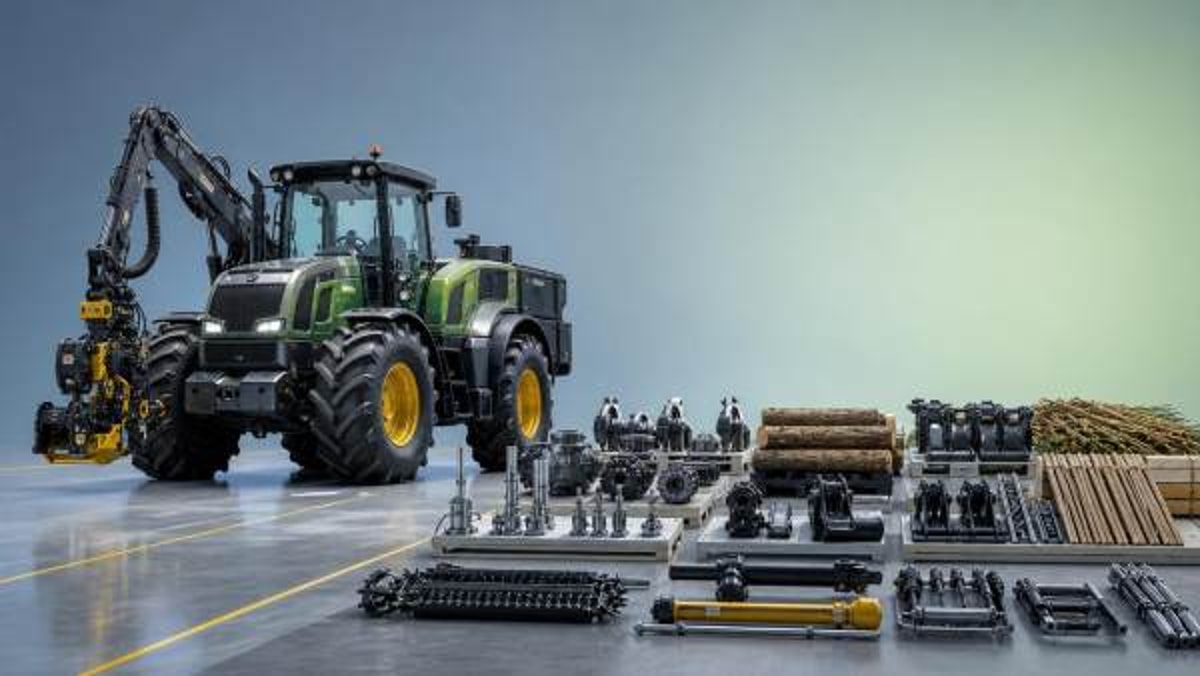
Shortlisting Agri & Forestry machinery manufacturers can expose buyers to technical, financial, and compliance risks if due diligence is incomplete. For enterprise decision-makers, a structured evaluation process is essential to identify capable suppliers, verify production standards, and reduce procurement uncertainty. This guide outlines how to compare manufacturers with greater confidence and less risk in complex global sourcing environments.
Why is shortlisting Agri & Forestry machinery manufacturers so risky?
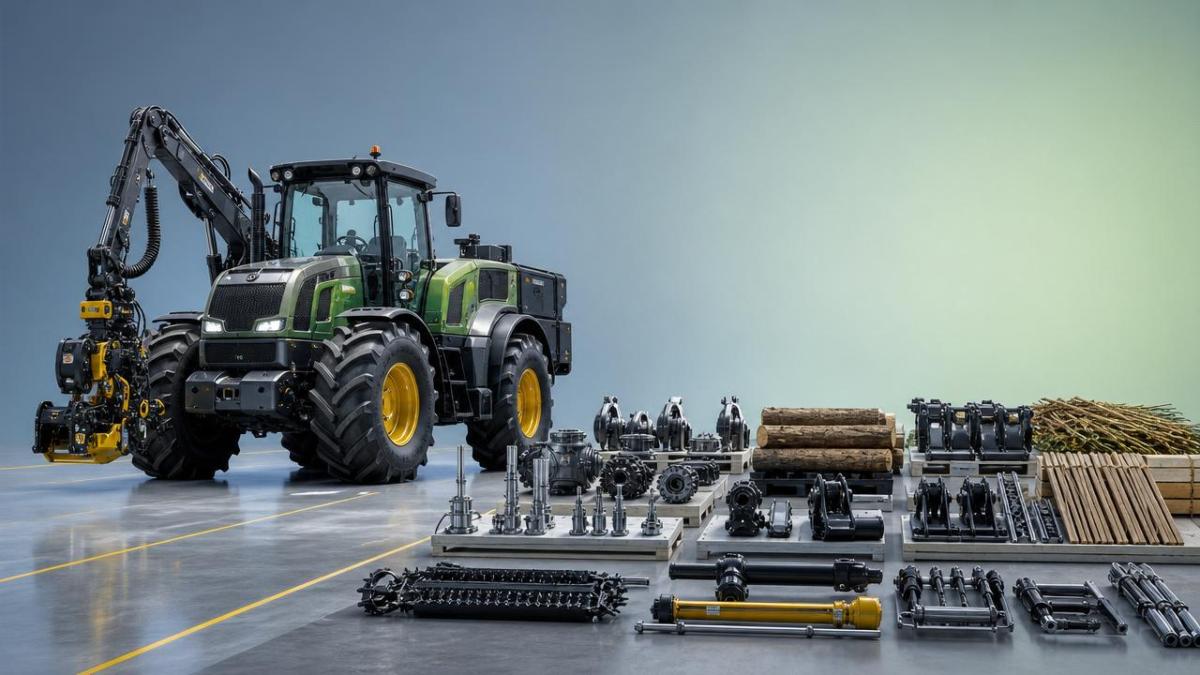
For large buyers, the shortlist is not a simple vendor list. It is the filter that determines whether future contracts will deliver uptime, operator safety, parts continuity, and regulatory confidence. In the market for Agri & Forestry machinery manufacturers, risk often hides behind polished brochures, incomplete factory data, and overstated export experience.
The difficulty increases when sourcing crosses borders. A supplier may quote competitively yet lack stable steel sourcing, quality traceability, emissions documentation, or field service capacity. In primary industries, that gap can quickly turn into delayed harvests, idle crews, or compliance disputes. This is why decision-makers need more than price comparison. They need evidence, process discipline, and technical context.
AgriChem Chronicle supports this process by connecting procurement teams with validated market intelligence across agricultural and forestry equipment, fine chemicals, feed processing, and other tightly regulated industrial segments. That cross-sector perspective matters because machinery procurement today is shaped by the same forces affecting APIs, aquaculture systems, and processed raw materials: supply chain opacity, rising audit requirements, and stricter buyer scrutiny.
- Technical mismatch: the machine may be built for lighter-duty cycles than your actual field or forestry conditions require.
- Production risk: the manufacturer may assemble units well but depend on unstable outsourced fabrication for key components.
- Compliance risk: manuals, guarding, emissions records, or electrical systems may not align with destination market expectations.
- Service risk: spare parts lead times, training quality, and remote troubleshooting support may be weak after delivery.
What should enterprise buyers evaluate before adding manufacturers to the shortlist?
The fastest way to reduce risk is to standardize the evaluation framework before contacting suppliers. Many teams waste weeks collecting inconsistent information from different Agri & Forestry machinery manufacturers, making comparison difficult. A practical shortlist should reflect operational fit, not marketing visibility.
Core pre-qualification criteria
Before issuing RFQs, build a mandatory screening checklist. This protects engineering, procurement, finance, and compliance functions from being drawn into weak opportunities too early.
- Define the duty profile: crop type, terrain, climate exposure, annual operating hours, fuel type, load conditions, and operator skill level.
- Confirm manufacturing scope: determine whether the supplier produces frames, driveline assemblies, hydraulic systems, or only final assembly.
- Review export readiness: check documentation quality, packaging standards, parts coding, and experience with customs and destination compliance.
- Assess after-sales capability: ask for spare parts policy, service response times, training methods, and digital troubleshooting support.
- Verify business resilience: evaluate financial stability indicators, delivery history, subcontracting exposure, and concentration risk in upstream sourcing.
The table below gives enterprise buyers a practical pre-screening structure for comparing Agri & Forestry machinery manufacturers before moving to technical and commercial negotiation.
A supplier that scores well only on quoted price should not pass this stage. For enterprise buyers, the shortlist should narrow toward suppliers with balanced performance across capability, compliance, and support.
How to compare Agri & Forestry machinery manufacturers beyond price
Price is visible. Total procurement risk is not. That is why sophisticated buyers compare suppliers across commercial structure, engineering transparency, and service readiness. A lower upfront quote can be offset by poor commissioning support, slow spare parts replenishment, or incompatible attachments that require redesign after delivery.
A useful comparison model for decision-makers
When evaluating Agri & Forestry machinery manufacturers, assign weightings according to the operational criticality of the equipment. Forestry handling systems, harvest support units, and high-duty field machinery should be judged more heavily on durability, safety, and support than on headline pricing alone.
This style of comparison helps senior management make better trade-offs. It also creates an audit trail for procurement decisions, which is increasingly important in regulated and multi-stakeholder sourcing environments.
Which technical and operational indicators matter most?
Not every machine category uses the same performance indicators, but buyers can still build a reliable technical review template. For Agri & Forestry machinery manufacturers, strong evaluation depends on how clearly the supplier links design choices to real operating conditions.
Key indicators to request
- Powertrain suitability for terrain, load patterns, and fuel availability in the destination market.
- Hydraulic system performance, especially for attachments, repetitive duty cycles, and hot-climate use.
- Frame durability, corrosion protection, and wear component design for abrasive, wet, or high-residue environments.
- Operator safety features, guarding, visibility, access points, and emergency stop arrangements where applicable.
- Maintenance accessibility, service intervals, spare parts commonality, and fault diagnosis procedures.
Decision-makers should also ask for evidence of production consistency. A prototype or demonstration unit may perform well, while serial production quality varies. Useful signals include inspection records, weld procedure control, incoming material verification, and end-of-line test routines. These are often stronger indicators of risk than brochure-level specifications.
How should buyers verify standards, certification, and compliance claims?
Compliance review should be treated as a workstream, not a final checklist. In machinery procurement, standards may involve safety, emissions, environmental handling, labeling, operator documentation, and import requirements. The exact obligations depend on market, equipment type, and use case, but the verification discipline should always be rigorous.
What to ask for during compliance review
For Agri & Forestry machinery manufacturers, request relevant declarations, technical files, serial traceability methods, operating manuals, maintenance instructions, and any market-specific conformity materials where applicable. If a supplier cites quality management or safety procedures, ask how those procedures affect actual production control, incoming inspection, and nonconformance handling.
This is an area where AgriChem Chronicle adds value for enterprise readers. Because ACC tracks regulated supply chains across agriculture, chemicals, aquaculture, and processing sectors, it understands that compliance is not only about paper. It is about whether the supplier can sustain documented controls under delivery pressure, changing regulations, and export complexity.
- Check whether documents are model-specific or generic.
- Confirm whether key components come from traceable sources.
- Review whether manuals match the delivered configuration.
- Ask how engineering changes are recorded and communicated after order confirmation.
What procurement process reduces risk the most?
The best shortlist is created through staged verification. This prevents procurement teams from overcommitting too early and allows engineering, legal, finance, and operations to intervene at the right moment. The process below is especially useful when screening international Agri & Forestry machinery manufacturers.
A practical low-risk workflow
- Create a long list based on application fit, not search visibility alone.
- Issue a standardized information request covering capability, compliance, references by segment, and service model.
- Shortlist only suppliers that return complete and internally consistent responses.
- Run technical clarification sessions with operations and maintenance stakeholders present.
- Conduct remote or on-site factory review when contract value, operational criticality, or compliance exposure is high.
- Negotiate commercial terms only after minimum technical and support thresholds are satisfied.
This workflow is slower than price-first sourcing, but it reduces hidden cost. It is particularly effective for buyers managing multiple plants, contractor fleets, or seasonal production windows where downtime has cascading business impact.
Common mistakes when reviewing Agri & Forestry machinery manufacturers
Many failed purchases can be traced to a small number of recurring errors. Most are not caused by bad intent from the supplier. They happen because buyers evaluate visible features and overlook operating reality.
- Treating all manufacturers as equivalent if the machine category appears similar on paper.
- Assuming a low unit price means a lower project cost, without modeling downtime, training, and parts consumption.
- Accepting generic compliance statements without checking destination-market relevance.
- Ignoring maintenance access and field service logistics during technical review.
- Failing to involve operations teams until after commercial negotiation has advanced too far.
In enterprise procurement, the cost of correction is high once tooling, attachments, transport plans, and internal budgets are aligned. A disciplined shortlist prevents expensive reversal later.
FAQ: what do buyers ask most when shortlisting suppliers?
How many Agri & Forestry machinery manufacturers should be on a final shortlist?
For most enterprise purchases, three to five suppliers is practical. Fewer than three can reduce negotiation leverage and limit benchmarking. More than five often creates review fatigue unless the project is highly strategic or involves multiple machine classes.
Should buyers prioritize OEM capability or local distributor strength?
The answer depends on project risk. If equipment complexity is high or customization is required, OEM engineering depth matters more. If uptime and rapid field response are critical, distributor or regional service strength becomes equally important. The best Agri & Forestry machinery manufacturers usually offer both a credible factory base and a workable support path.
What is the biggest red flag during supplier review?
Inconsistent answers across sales, engineering, and documentation teams are a major warning sign. If a supplier cannot clearly explain production scope, lead time assumptions, or parts support, the risk of misalignment after purchase is high.
How early should compliance teams be involved?
They should be involved during pre-qualification, not after final quote selection. Early review helps eliminate suppliers that cannot support required documentation, destination-market expectations, or internal governance requirements.
Why work with AgriChem Chronicle when evaluating manufacturers?
Enterprise sourcing teams do not just need more supplier names. They need better judgment. AgriChem Chronicle was built for precisely that requirement. Its editorial focus across agricultural machinery, forestry systems, fine chemicals, bio-extracts, aquaculture technology, and feed processing allows procurement leaders to assess suppliers in the wider reality of regulated global supply chains.
ACC’s advantage lies in the quality of interpretation. Its reporting is shaped by biochemical engineers, agricultural scientists, and trade compliance specialists who understand how technical claims, manufacturing evidence, and market risk intersect. For buyers screening Agri & Forestry machinery manufacturers, that means more useful context on supplier credibility, standards expectations, sourcing pressure points, and decision-critical comparisons.
If your team is preparing a shortlist, refining specifications, or pressure-testing supplier claims, ACC can support the evaluation process with focused market intelligence and publication-grade technical positioning.
Contact us for decision support that is specific and usable
Speak with AgriChem Chronicle if you need help reviewing Agri & Forestry machinery manufacturers for parameter confirmation, supplier comparison, product selection logic, delivery timeline assessment, documentation and certification review, customization feasibility, sample or pilot discussion, or quotation benchmarking. For enterprise buyers facing high-value or high-risk procurement, targeted intelligence early in the process can reduce uncertainty and improve negotiation outcomes.
Related Intelligence
- Forestry EquipmentIndia Mandates BIS Certification for Forestry Equipment, Including Drone Software ModulesIndia mandates BIS certification for forestry equipment—including drone software modules—under IS 17722:2026. Exporters, integrators & vendors must act now to meet the 1 August 2026 deadline.
- Forestry EquipmentHow to shortlist Agri & Forestry machinery manufacturers with less riskAgri & Forestry machinery manufacturers: learn a lower-risk shortlist process to verify capability, compliance, and service support before sourcing decisions.
- Forestry EquipmentAgri & Forestry machinery specifications that are often misreadAgri & Forestry machinery specifications are often misread. Learn how to compare power, weight, hydraulics, lift, and compliance correctly to avoid costly buying mistakes.
The Morning Broadsheet
Daily chemical briefings, market shifts, and peer-reviewed summaries delivered to your terminal.
