

The Authority in Global Agricultural Chemistry & Bio-Resources
India Mandates BIS Certification for Forestry Equipment, Including Drone Software Modules
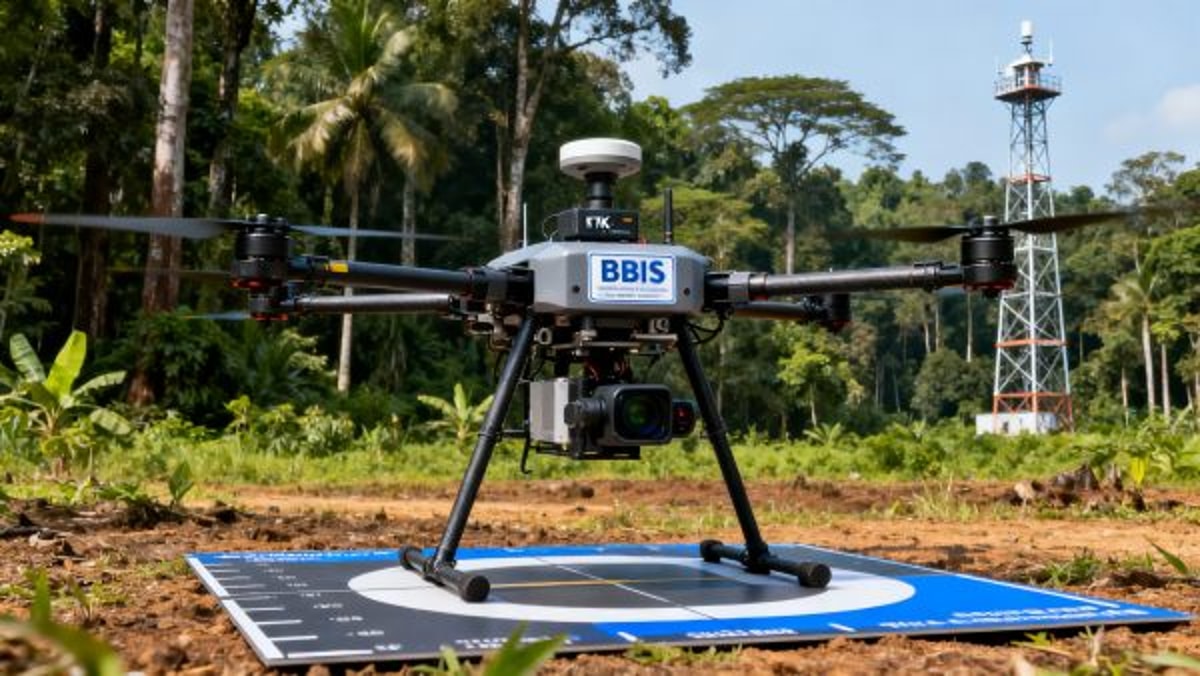
India’s Bureau of Indian Standards (BIS) has mandated compulsory certification for forestry equipment under IS 17722:2026, effective 1 August 2026 — a development directly affecting exporters, drone system integrators, software vendors, and supply chain stakeholders serving the Indian forestry technology market.
Event Overview
On 2 May 2026, the Bureau of Indian Standards (BIS) issued a public notice announcing the inclusion of forestry equipment in its Compulsory Registration Scheme (CRS). The standard IS 17722:2026 now applies to all forestry machinery imported into India. Notably, unmanned aerial systems (UAS) used for forest monitoring — including those incorporating AI-based identification, RTK positioning, and flight control systems — must obtain separate BIS type approval for both hardware and embedded software modules. The certification timeline has been extended from three to five months. Full enforcement begins on 1 August 2026.
Industries Affected
Exporters of Forestry Machinery and UAS Hardware
These companies face new regulatory entry barriers before shipment. Compliance is now required not only for physical devices but also for integrated software components governing core functionalities such as tree species recognition or georeferenced mapping — meaning firmware versioning, update protocols, and software documentation must align with BIS CRS requirements.
Drone System Integrators and Software Developers
Integrators embedding third-party AI or navigation modules into forestry drones must verify whether their software stack falls under the scope of ‘software module’ as defined in IS 17722:2026. Since BIS requires standalone type approval for such modules, developers may need to restructure licensing models, maintain version-controlled submission packages, and coordinate with hardware partners on joint certification timelines.
Importers and Distributors Handling Forestry Technology
Distributors risk customs clearance delays or rejection if consignments lack valid CRS certificates. Unlike general electronics, this mandate applies irrespective of end-user type (e.g., government forest departments, private plantations, or research institutions), making pre-shipment verification essential across all sales channels.
Supply Chain and Certification Support Providers
Third-party testing labs, BIS-recognized certifying bodies, and local representatives must now accommodate expanded technical assessments — particularly for software validation and AI model traceability. Demand for CRS-ready documentation support and localized test coordination is expected to rise ahead of the August deadline.
What Stakeholders Should Monitor and Do Now
Track official BIS clarifications on software module scope
While the notice references ‘software modules’ in AI/RTK/flight control systems, BIS has not yet published detailed guidance on acceptable formats, version control expectations, or permissible over-the-air update policies. Stakeholders should monitor BIS circulars and CRS scheme updates through the official portal (www.manakonline.in).
Identify and prioritize products falling under mandatory coverage
Not all drones or forestry tools are covered — only those explicitly intended for forest inventory, health assessment, or patrol applications, and incorporating the specified technologies. Companies should cross-check product use cases against IS 17722:2026’s applicability clause (Clause 1) rather than assuming broad coverage.
Distinguish between policy announcement and operational readiness
The 5-month certification cycle reflects current processing capacity — not guaranteed lead time. Given anticipated application volume ahead of August 2026, early engagement with BIS-recognized labs and submission of preliminary technical files is advisable to avoid bottlenecks.
Review and document software-hardware interdependencies
Since hardware and software modules require separate approvals, firms must ensure traceability between firmware versions, hardware revisions, and certified configurations. Maintaining a controlled configuration management record will be critical for audit readiness and post-certification updates.
Editorial Observation / Industry Perspective
Observably, this regulation signals India’s broader move toward harmonizing digital and physical compliance for environment-critical technologies — not merely tightening import controls. Analysis shows that targeting AI and RTK capabilities separately suggests BIS is treating algorithmic functionality as an integral safety and performance parameter, akin to mechanical tolerances. From an industry perspective, this is less a one-off compliance hurdle and more an early indicator of how emerging tech-enabled equipment categories may be regulated in priority infrastructure sectors. Current enforcement remains limited to import clearance; domestic manufacturing and after-sales software updates fall outside the announced scope — but remain subject to future expansion.
This is not yet a fully matured framework: BIS has not released implementation guidelines for software validation methods, nor clarified whether cloud-based AI inference components (as opposed to onboard modules) fall within scope. These gaps mean the rule functions currently as a strong regulatory signal — not a closed operational standard.
Conclusion
The BIS mandate for forestry equipment represents a targeted regulatory step with concrete implications for trade and product development workflows. It does not broadly ban non-compliant imports, but introduces verifiable technical accountability at the point of entry — especially for intelligent, location-aware systems deployed in ecologically sensitive contexts. For stakeholders, it is best understood not as a sudden disruption, but as the formalization of an evolving expectation: that digital functionality in environmental monitoring tools must meet nationally defined assurance benchmarks before market access.
Source Attribution
Main source: Bureau of Indian Standards (BIS) Public Notice dated 2 May 2026, referencing IS 17722:2026 and the Compulsory Registration Scheme (CRS).
Areas requiring ongoing observation: BIS guidance documents on software module evaluation criteria, interpretation of ‘forestry use case’, and potential extension to domestically manufactured or updated software components.
Related Intelligence
- Forestry EquipmentIndia Mandates BIS Certification for Forestry Equipment, Including Drone Software ModulesIndia mandates BIS certification for forestry equipment—including drone software modules—under IS 17722:2026. Exporters, integrators & vendors must act now to meet the 1 August 2026 deadline.
- Forestry EquipmentHow to shortlist Agri & Forestry machinery manufacturers with less riskAgri & Forestry machinery manufacturers: learn a lower-risk shortlist process to verify capability, compliance, and service support before sourcing decisions.
- Forestry EquipmentAgri & Forestry machinery specifications that are often misreadAgri & Forestry machinery specifications are often misread. Learn how to compare power, weight, hydraulics, lift, and compliance correctly to avoid costly buying mistakes.
The Morning Broadsheet
Daily chemical briefings, market shifts, and peer-reviewed summaries delivered to your terminal.
