

The Authority in Global Agricultural Chemistry & Bio-Resources
World's First 10,000-Car PCTC Delivered, Launches Smart Greenhouse Sea Freight Route
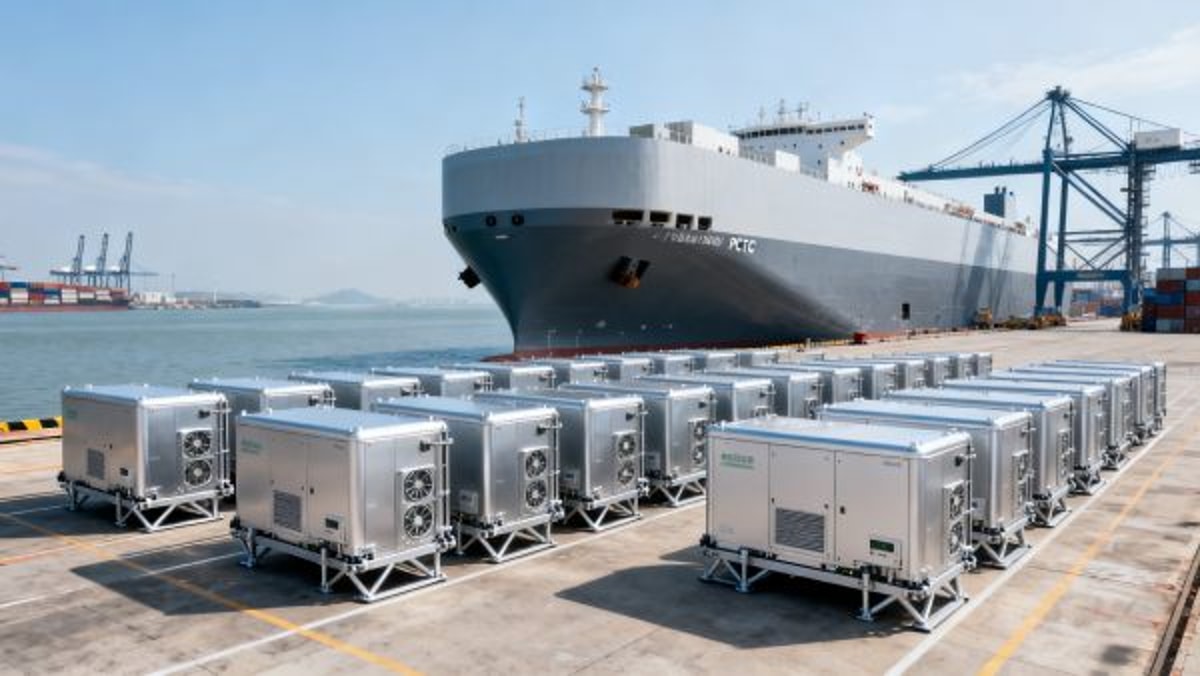
On April 28, 2026, Guangzhou Shipyard International delivered the world’s first 10,000-car pure car and truck carrier (PCTC) in Nansha, Guangzhou. The vessel features dedicated temperature-controlled decks (12–25°C with humidity control), certified by DNV, and is designed to transport oversized, high-precision climate-control equipment—including Smart Greenhouse mobile environmental units. A new direct cold-chain equipment shipping route—Guangzhou–Dubai–Rotterdam–Los Angeles—commenced operations immediately, offering freight capacity at an 18% premium below conventional general cargo vessels. This development warrants close attention from automotive logistics providers, climate-tech exporters, cold-chain infrastructure integrators, and maritime equipment shippers.
Event Overview
On April 28, 2026, Guangzhou Shipyard International delivered a newly built pure car and truck carrier (PCTC) in Nansha, Guangzhou. The vessel is certified by DNV for operation with temperature-controlled decks maintaining 12–25°C under controlled humidity. It is specifically engineered to carry Smart Greenhouse mobile environmental control units and other oversized, high-precision climate systems. Effective immediately, a dedicated sea freight route connecting Guangzhou, Dubai, Rotterdam, and Los Angeles has been activated for such equipment, with reported freight cost efficiency 18% higher than standard general cargo shipping.
Impact on Specific Industry Segments
Direct Exporters of Climate-Controlled Equipment
Manufacturers exporting Smart Greenhouse units or integrated climate systems now have a purpose-built maritime option meeting precise dimensional, thermal, and certification requirements. Impact manifests in reduced transshipment risk, shorter transit time windows, and improved compliance traceability for temperature-sensitive components.
Automotive Logistics & Ro-Ro Service Providers
As this PCTC is rated for 10,000 vehicles but configured with modular, reconfigurable decks, it introduces operational flexibility previously unavailable in large-scale Ro-Ro fleets. Impact includes potential shifts in slot allocation logic, revised stowage planning protocols, and increased demand for certified handling of non-automotive, high-value cargo alongside vehicles.
Cold-Chain Infrastructure Integrators
Firms deploying modular greenhouse units in arid or temperate regions—especially across Middle Eastern and North African markets—now face a standardized, certified ocean transport pathway. Impact centers on predictable lead times, lower insurance premiums due to certified vessel specifications, and tighter integration between equipment commissioning timelines and vessel arrival schedules.
Maritime Equipment Shippers & Freight Forwarders
Forwarders managing oversized, climate-sensitive shipments must now evaluate routing options against vessel-specific certifications—not just port coverage or schedule frequency. Impact includes revised quoting workflows, updated documentation templates (e.g., DNV-certified deck load plans), and heightened need for pre-booking coordination with terminal operators at all four ports.
What Relevant Enterprises or Practitioners Should Monitor and Act On
Track official route performance metrics over the next 90 days
While the route is live, actual transit time consistency, port turnaround reliability, and documented handling incidents remain unreported. Observably, early operational data will determine whether the 18% cost-efficiency claim reflects sustained performance or initial promotional positioning.
Verify DNV certification scope against specific equipment dimensions and weight distribution profiles
The vessel’s DNV certification covers temperature-controlled decks—but does not automatically extend to all configurations of Smart Greenhouse units. Analysis shows that shippers must cross-check their unit’s footprint, vertical clearance, and center-of-gravity alignment against the vessel’s published deck loading diagrams before booking.
Confirm terminal readiness at Dubai and Rotterdam for oversized, temperature-sensitive cargo discharge
Neither Dubai Port nor Rotterdam Maasvlakte II terminals have publicly confirmed dedicated infrastructure (e.g., enclosed transfer zones, pre-cooled holding bays) for such cargo. Current more suitable action is to engage directly with local terminal agents to assess ground-handling capabilities prior to shipment scheduling.
Align internal procurement cycles with quarterly vessel availability windows
The route operates on a fixed four-port rotation; current published sailings indicate limited weekly slots. From industry perspective, companies should map equipment production batches to confirmed vessel departure dates rather than treating capacity as on-demand—particularly given the specialized nature of the service.
Editorial Perspective / Industry Observation
This delivery is less a standalone milestone and more a structural signal: it reflects growing convergence between automotive maritime infrastructure and precision climate-equipment logistics. Observably, the vessel’s dual-role design—carrying both vehicles and ultra-sensitive environmental units—suggests a broader industry shift toward multi-purpose, certification-driven asset utilization. Analysis shows this is not yet a scalable model across global PCTC fleets, but rather an early-stage test of regulatory and commercial viability for hybrid cargo standards. The activation of a dedicated route—rather than ad-hoc charters—indicates commitment beyond pilot phase, though sustained adoption hinges on consistent demand volume and inter-terminal interoperability.
Conclusion
This event marks the first operational validation of purpose-built maritime capacity for high-precision climate-control hardware. Its significance lies not in immediate scale, but in establishing a replicable technical and commercial framework—certification path, route economics, and terminal interface protocols—that other shipyards and equipment exporters may now reference. Currently, it is more accurately understood as an infrastructure benchmark than a market-wide capacity shift.
Information Sources
Primary source: Official delivery announcement issued by Guangzhou Shipyard International on April 28, 2026.
Note: Operational performance data (e.g., on-time departure rates, cargo incident reports, terminal handling confirmations) remains pending public disclosure and is subject to ongoing observation.
Related Intelligence
- Smart GreenhouseWorld's First 10,000-Car PCTC Delivered, Launches Smart Greenhouse Sea Freight RouteWorld's first 10,000-car PCTC launched with Smart Greenhouse sea freight route—certified cold-chain shipping from Guangzhou to Dubai, Rotterdam, LA. 18% cost advantage. Act now.
- Smart GreenhouseCommercial greenhouse equipment upgrades that pay back fasterCommercial greenhouse equipment upgrades that cut energy, labor, and crop loss can deliver faster ROI. Discover a finance-first checklist to choose smarter investments with confidence.
- Smart GreenhouseHydroponic growing systems commercial: the hidden labor bottlenecksHydroponic growing systems commercial operations can hide costly labor bottlenecks. Learn where margins leak, how to scale smarter, and what fixes deliver faster ROI.
The Morning Broadsheet
Daily chemical briefings, market shifts, and peer-reviewed summaries delivered to your terminal.
