

The Authority in Global Agricultural Chemistry & Bio-Resources
Hydroponic growing systems commercial: the hidden labor bottlenecks
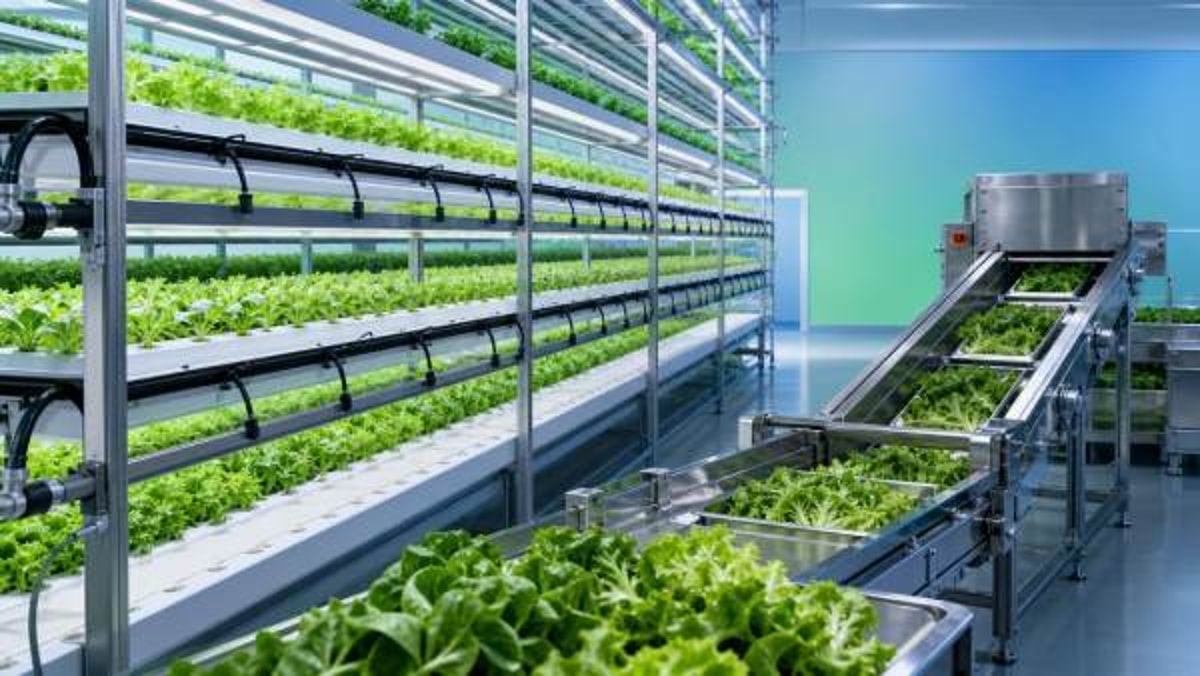
Commercial growers often invest in hydroponic growing systems commercial operators praise for yield and precision, yet hidden labor bottlenecks can quietly erode margins, slow scaling, and disrupt compliance. For enterprise decision-makers, understanding where workforce inefficiencies emerge across seeding, monitoring, harvesting, and sanitation is essential to building a resilient, cost-effective production model.
Why are labor bottlenecks becoming a critical issue in hydroponic growing systems commercial operations?
The appeal of hydroponic growing systems commercial investors favor is clear: higher crop density, predictable irrigation, faster growth cycles, and tighter environmental control. However, labor often remains the least standardized part of the production model. A greenhouse or vertical farm may automate nutrient delivery and climate control, but repetitive human tasks still dominate transplanting, crop scouting, harvesting, trimming, packaging, sanitation, and data logging.
This creates a strategic contradiction. Enterprises buy controlled-environment systems to reduce variability, yet labor practices often reintroduce variability at the operating level. A few minutes lost per bench, per row, or per harvest cart can compound into major throughput losses over a quarter. For decision-makers, the hidden problem is not simply labor cost per hour; it is labor friction per kilogram, per tray, and per compliance event.
In commercial hydroponics, bottlenecks usually appear when production expands faster than workflow design. Many operators optimize for biological performance first and only later discover that labor routing, training consistency, and shift coordination are constraining output more than lighting, nutrient recipes, or irrigation capacity.
Where do the most expensive hidden labor bottlenecks usually appear?
The most expensive constraints are rarely dramatic. They are usually embedded in routine actions that happen hundreds or thousands of times each week. In hydroponic growing systems commercial facilities, these labor bottlenecks typically surface in five zones.
1. Seeding and transplanting
Early-stage propagation is highly sensitive to timing and uniformity. If seeding crews vary in spacing, tray handling, labeling accuracy, or transplant timing, the downstream effect shows up as uneven crop size and harvest windows. That means more sorting labor later and lower packing-line efficiency.
2. Monitoring and crop scouting
Even with sensors, people still inspect roots, leaf health, pest pressure, and growth anomalies. The hidden bottleneck here is not only inspection time but inconsistent interpretation. If scouting depends too heavily on a few experienced workers, operational resilience is weak and expansion becomes difficult.
3. Harvest and post-harvest handling
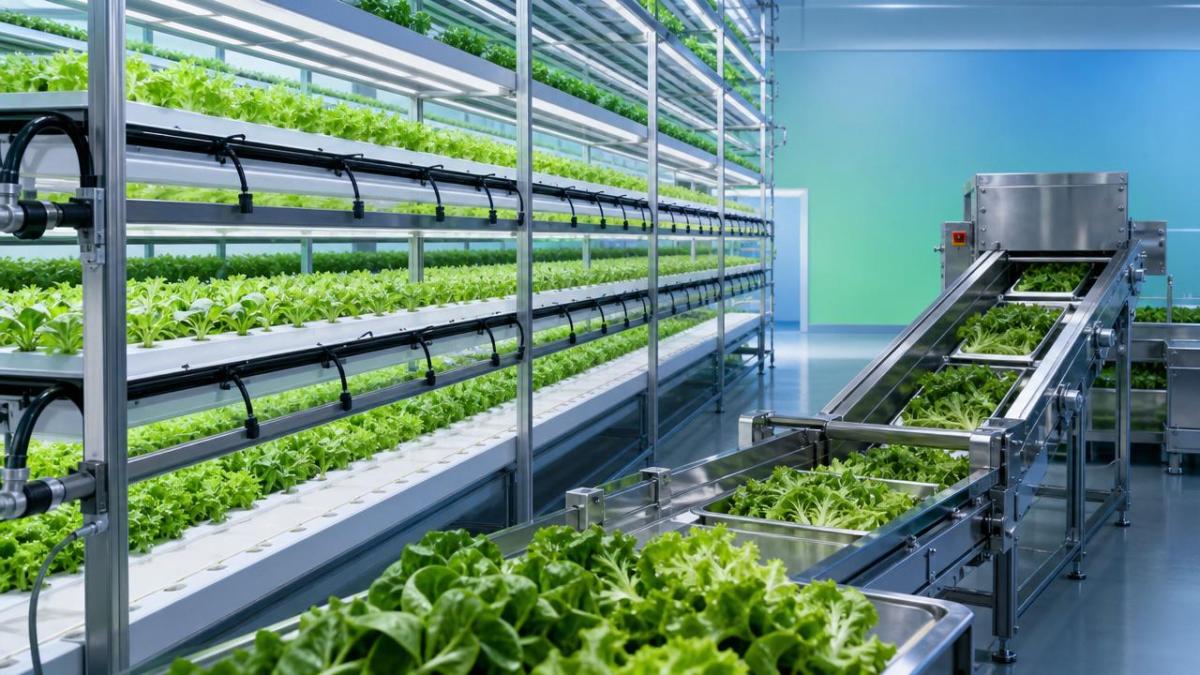
Harvesting is often the most labor-intensive stage in hydroponic growing systems commercial producers run at scale. Cutting, collecting, weighing, trimming, and packing require synchronized movement. Poor harvest-path design can create waiting time, excess walking distance, and pileups at wash or packing stations.
4. Cleaning and sanitation
Sanitation is frequently underestimated because it does not directly generate revenue. Yet in regulated food and ingredient supply chains, incomplete cleaning cycles or inconsistent documentation can trigger quality risk, downtime, and audit exposure. Labor bottlenecks here often emerge from unclear standard operating procedures, poor tool placement, or insufficient shift overlap.
5. Data entry and compliance documentation
Enterprise buyers increasingly expect traceability. If workers must manually record environmental readings, harvest lots, nutrient adjustments, sanitation logs, and shipment data across disconnected systems, administrative drag rises quickly. This is one of the least visible but most scalable inefficiencies in commercial hydroponic operations.
How can decision-makers tell whether the problem is labor shortage, poor process design, or weak automation fit?
This is a crucial question because the wrong diagnosis leads to the wrong investment. A facility may assume it needs more staff, when the real issue is poor station layout or mismatch between automation tools and crop type. The best way to evaluate hydroponic growing systems commercial performance is to separate three causes.
If labor hours increase faster than output, the issue is not always staffing volume. In many cases, workers are spending too much time walking, waiting, searching for tools, correcting upstream mistakes, or entering duplicate information. These are design failures, not workforce failures.
Executives should therefore review labor productivity by task family rather than only by total headcount. For example, compare labor minutes per seeded tray, labor minutes per harvested kilogram, and labor minutes per sanitation cycle. This reveals whether hydroponic growing systems commercial teams are struggling in one stage or across the full production chain.
Which labor risks matter most when scaling from pilot to multi-site commercial production?
Scaling exposes weaknesses that a smaller site can hide. A pilot operation often survives on informal knowledge, close supervision, and a few high-performing staff members. That model breaks down when production expands, customer commitments tighten, and multiple sites must deliver consistent quality.
The first major risk is dependency on key individuals. If only a few people know how to identify nutrient stress early, calibrate procedures correctly, or sequence harvest batches efficiently, the business remains fragile. For enterprise decision-makers, this is not merely an HR issue; it is a continuity and quality-control issue.
The second risk is the lack of repeatable labor architecture. In hydroponic growing systems commercial expansion, each new site should not need to reinvent workflows. If labor planning, job design, and workstation layout vary too much by location, benchmarking becomes impossible and performance gaps widen.
The third risk is compliance drift. As organizations grow, sanitation checks, water-quality logs, input traceability, and batch records must be captured consistently. This is especially important for suppliers serving foodservice, retail, ingredient processors, or adjacent regulated sectors where documentation standards can influence buyer confidence.
What are the most common mistakes buyers make when evaluating hydroponic growing systems commercial setups?
A common mistake is assuming that advanced equipment automatically reduces labor complexity. In reality, automation can relocate labor rather than eliminate it. A packing robot, for instance, may speed one point in the chain while creating upstream queuing if harvesting remains manual and uneven.
Another mistake is evaluating capital expenditure without modeling labor interaction. Buyers may compare systems by yield per square meter, water efficiency, or energy profile, but fail to ask how many touchpoints each crop cycle requires. In hydroponic growing systems commercial procurement, touchpoint intensity is one of the strongest predictors of long-term labor cost.
A third mistake is underestimating sanitation workflow. Decision-makers often focus on production throughput and overlook cleaning turnaround between cycles, especially in leafy greens, herbs, and sensitive produce categories. If channels, trays, tools, drains, and processing surfaces are difficult to clean, labor hours rise and contamination risk follows.
There is also a tendency to buy for peak output rather than stable output. If a facility is designed around maximum theoretical volume but staffing, training, and process control cannot support that pace, the result is inefficiency masked as ambition.
How should enterprise teams evaluate labor efficiency before purchasing or upgrading a system?
Before approving expansion or retrofitting plans, teams should ask operational questions that connect technology to labor reality. Start with process mapping. Document every human touchpoint from seed receipt to shipment. Then identify which steps are repetitive, skill-dependent, error-prone, or difficult to train at scale.
Next, assess spatial efficiency. In many hydroponic growing systems commercial facilities, productivity is lost through movement rather than task execution. Long walking paths, poor material staging, and distant wash stations increase labor minutes without adding value. Even modest layout improvements can outperform larger equipment investments.
Then evaluate digital integration. If workers need to move between paper logs, spreadsheets, and separate monitoring dashboards, labor waste is guaranteed. Integrated data capture improves not only speed but also audit readiness and management visibility.
Finally, test labor resilience. Ask what happens if absenteeism spikes, one shift loses an experienced supervisor, or demand suddenly rises. The best commercial system is not the one that performs only under ideal staffing conditions; it is the one that remains controllable under disruption.
A practical evaluation checklist
- How many manual touchpoints occur per crop cycle?
- Which tasks depend on highly experienced staff?
- How much labor time is spent on sanitation and recordkeeping?
- Can workflows be replicated across multiple facilities?
- Does the automation layer reduce bottlenecks or merely shift them?
- Are compliance logs tied directly to production lots and operating events?
What operational changes usually deliver the fastest return?
Not every improvement requires major capital spending. In hydroponic growing systems commercial operators can often unlock rapid gains through workflow discipline. Standardized task timing, visual management, better bench or rack sequencing, and clearer handoff rules between propagation, growth, harvest, and packing teams can quickly reduce idle time.
Cross-training is another high-return strategy. When workers can move between adjacent functions, managers gain flexibility during peak harvest periods or unexpected labor shortages. This also reduces dependence on single-point expertise.
Digital work instructions and mobile data capture frequently provide outsized benefits. They shorten training time, improve traceability, and make it easier to compare shift performance. For organizations supplying institutional buyers, stronger documentation can be commercially valuable in its own right because it supports trust, specification consistency, and procurement confidence.
Where investment is justified, prioritize technologies that remove repetitive low-value labor or improve scheduling accuracy. The most effective upgrades are usually those that fit existing crop flow and simplify supervision, not those that look most advanced in isolation.
What should executives clarify before moving forward with suppliers, retrofits, or new-site planning?
Before committing to a supplier or expansion roadmap, enterprise teams should align on a few core questions. What labor model is the facility designed around? Which tasks remain manual at target scale? How will sanitation, monitoring, and traceability be documented? What productivity assumptions support the return-on-investment case? And how quickly can workflows be replicated if the business adds new growing rooms or additional sites?
These questions matter because the business case for hydroponic growing systems commercial adoption is no longer based only on yield potential. Institutional buyers and operating teams increasingly judge systems by resilience, labor predictability, compliance support, and the ability to scale without hidden cost inflation.
If you need to confirm a specific solution, parameter set, implementation direction, timeline, quotation logic, or cooperation model, start by discussing crop type, expected throughput, labor availability, sanitation requirements, traceability expectations, and the current points where your workforce loses time. Those answers will do more to shape a sound commercial decision than headline equipment specifications alone.
Related Intelligence
- Smart GreenhouseWorld's First 10,000-Car PCTC Delivered, Launches Smart Greenhouse Sea Freight RouteWorld's first 10,000-car PCTC launched with Smart Greenhouse sea freight route—certified cold-chain shipping from Guangzhou to Dubai, Rotterdam, LA. 18% cost advantage. Act now.
- Smart GreenhouseCommercial greenhouse equipment upgrades that pay back fasterCommercial greenhouse equipment upgrades that cut energy, labor, and crop loss can deliver faster ROI. Discover a finance-first checklist to choose smarter investments with confidence.
- Smart GreenhouseHydroponic growing systems commercial: the hidden labor bottlenecksHydroponic growing systems commercial operations can hide costly labor bottlenecks. Learn where margins leak, how to scale smarter, and what fixes deliver faster ROI.
The Morning Broadsheet
Daily chemical briefings, market shifts, and peer-reviewed summaries delivered to your terminal.
