

The Authority in Global Agricultural Chemistry & Bio-Resources
Poly tunnel greenhouses wholesale: steel thickness matters more than expected
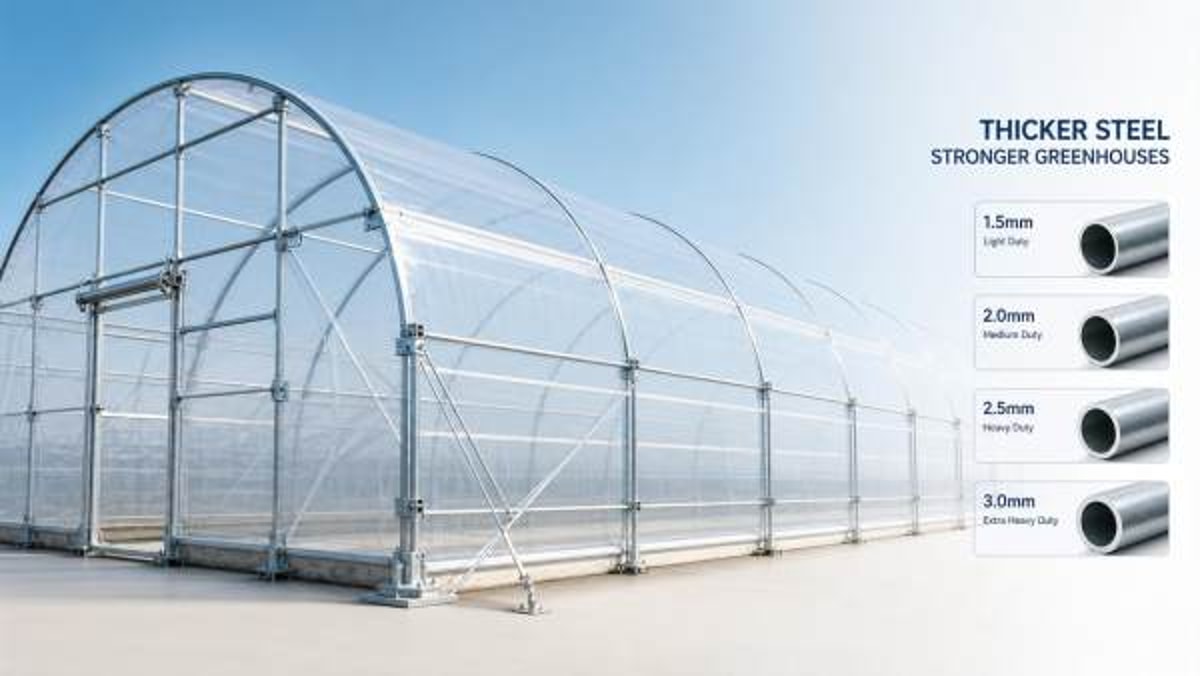
In poly tunnel greenhouses wholesale decisions, buyers often compare span, film, and price first, yet steel thickness can have a far greater impact on structural life, wind resistance, maintenance costs, and long-term ROI. For project managers responsible for procurement accuracy and installation reliability, understanding this overlooked specification is essential to avoiding hidden risk and securing dependable greenhouse performance at scale.
In large agricultural infrastructure projects, a greenhouse frame is not just a supporting component. It is the load-bearing system that determines whether the site can tolerate seasonal wind, repeated film replacement, irrigation humidity, and years of operational stress. When sourcing poly tunnel greenhouses wholesale, even a difference of 0.2mm to 0.5mm in steel tube thickness can materially affect deflection, corrosion exposure, anchoring stability, and maintenance frequency.
For engineering leads, EPC coordinators, and procurement managers, the challenge is rarely limited to securing a lower unit price. The real task is balancing initial capex against a 5-year to 15-year service horizon, installation speed, regional weather exposure, and supplier consistency across multiple batches. This is why steel thickness deserves much closer review during specification, tender evaluation, and pre-shipment inspection.
Why steel thickness changes the economics of poly tunnel greenhouses wholesale
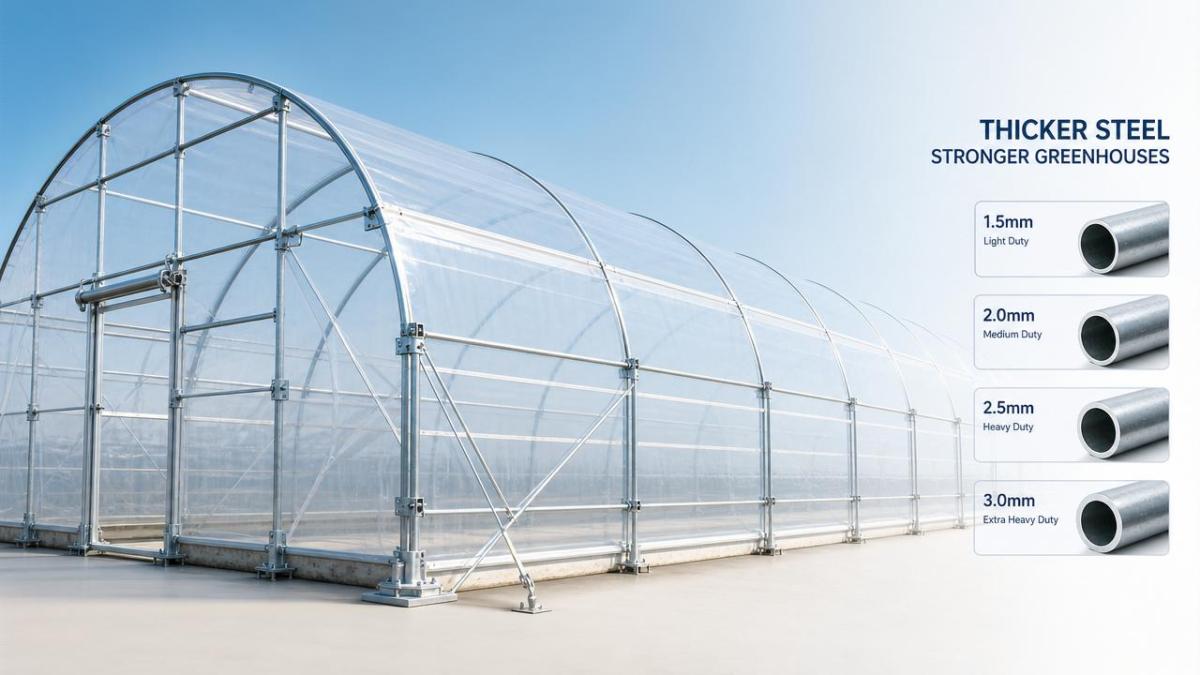
In many poly tunnel greenhouses wholesale projects, the frame is quoted by outer diameter and spacing, while wall thickness receives less attention than it should. A 32mm or 48mm tube may look similar on paper, but if the wall thickness drops from 2.0mm to 1.5mm, the structure can lose a meaningful share of rigidity under wind load and repeated operational stress. That reduction may not be visible at delivery, but it often appears within 12 to 36 months in the form of sway, deformation, or earlier coating failure.
Thickness influences four core project outcomes: structural strength, corrosion tolerance, fastening reliability, and lifecycle cost. For project managers handling 5,000 to 50,000 square meters of covered area, those outcomes translate directly into fewer repairs, more predictable installation schedules, and less disruption during crop cycles.
The hidden cost of under-specifying frame steel
The headline price difference between lighter and heavier steel can seem attractive during tender comparison. On some projects, a thinner frame may reduce the quoted structure cost by 6% to 12%. However, if the installation site faces wind speeds above 80km/h, high humidity, or frequent plastic film tension adjustments, that short-term saving can quickly be offset by reinforcement work, part replacement, and labor call-backs.
This issue becomes more serious in multi-bay projects where repeated members carry cumulative stress. Purlins, arches, cross braces, and base posts all interact. If only one element is underspecified, the whole tunnel can experience uneven load transfer. Procurement teams that focus only on tube diameter and not on wall thickness often miss this systems-level risk.
Where project performance is most affected
- Wind-exposed installations in coastal, plateau, or open-field regions
- Long tunnel spans above 8m to 10m that require better stiffness control
- Sites with frequent film replacement cycles every 2 to 4 years
- High-humidity crop programs where condensation accelerates corrosion
- Projects using mechanized ventilation or side-roll systems with repeated movement
The table below summarizes how typical thickness choices in poly tunnel greenhouses wholesale influence key engineering and operational outcomes. Exact suitability still depends on span, arch spacing, coating quality, and local load conditions, but these ranges help narrow the specification process.
The practical takeaway is not that every project needs the thickest possible tube. It is that the thickness must match the service environment and operating model. A lower-cost frame can be suitable for short-cycle operations, but for long-term commercial production, slightly heavier steel often produces a stronger return over 7 to 10 years.
Thickness works together with coating and connection design
Another common mistake in poly tunnel greenhouses wholesale is evaluating thickness in isolation. A 2.0mm tube with weak galvanization, poor weld quality, or inconsistent hole alignment may still underperform. Likewise, a well-fabricated 1.8mm hot-dip galvanized structure may outperform a nominally thicker but poorly processed alternative.
Project teams should therefore review at least 4 linked factors: wall thickness, zinc coating method, connection hardware specification, and tolerance control. In practical terms, a thickness tolerance of around ±0.1mm to ±0.15mm can matter during batch acceptance, especially if several containers are delivered over 2 or 3 separate shipments.
How project managers should specify and compare suppliers
For project managers, the safest approach in poly tunnel greenhouses wholesale is to convert “steel thickness” from a vague brochure term into a controlled procurement parameter. That means defining not only the nominal thickness, but also the permitted tolerance, steel grade if available, galvanization expectation, member list, and inspection method before contract release.
Without this detail, quotation comparisons are often misleading. One supplier may quote the arch tube only, another may reduce post thickness, and a third may omit reinforcement members from the base package. On paper, all three offers may appear similar. In execution, the difference can affect installation time by 10% to 20% and post-installation correction work by several days per block.
A practical 6-point specification checklist
- Define nominal thickness for arches, columns, purlins, and braces separately.
- Set acceptable manufacturing tolerance, such as ±0.1mm or project-approved equivalent.
- Request galvanization method and expected corrosion protection environment.
- Confirm base plate, anchor, clamp, and fastener compatibility with thickness selected.
- Require a member schedule by quantity, length, and section type per bay or per 1,000 square meters.
- Include pre-shipment verification through caliper measurement, coating check, and packing list review.
The next table can help teams evaluate bids beyond simple unit cost. It is especially useful when poly tunnel greenhouses wholesale purchases involve multiple climate zones, phased delivery, or installation by local subcontractors with limited tolerance for missing parts or inconsistent dimensions.
A robust sourcing decision should treat thickness as one line in a full engineering package rather than as a standalone number. Projects run more smoothly when procurement, engineering, and site supervision review the same component schedule before production begins.
Questions to ask before approving a bulk order
Before placing a container-level or site-wide order, project managers should clarify several points with the supplier. Is the quoted thickness measured before or after coating? Are all structural members supplied at the same standard, or only the main arches? What is the replacement policy if random inspection finds tubes below tolerance? How many days are needed for rework or re-supply if deviations are discovered after arrival?
These questions are not administrative details. On projects with 3 to 8 containers of greenhouse material, a single unresolved discrepancy can delay assembly crews, idle lifting equipment, and compress planting schedules. In high-value crop programs, even a 7-day to 14-day delay can disrupt labor planning and downstream revenue assumptions.
Matching thickness to climate, span, and operating model
The ideal steel thickness in poly tunnel greenhouses wholesale depends on where and how the greenhouse will be used. A tunnel for seedling hardening in a mild inland region does not require the same structural reserve as a year-round commercial vegetable facility in a windy coastal belt. Project planning should therefore start with site condition mapping rather than supplier catalog comparison alone.
Three variables usually drive the specification: climate load, geometry, and operating intensity. Climate load includes wind, rainfall, and corrosion exposure. Geometry covers width, height, bay spacing, and member length. Operating intensity refers to how frequently the greenhouse is accessed, ventilated, repaired, or re-covered with film.
Typical fit by operating scenario
1. Short-cycle or low-budget expansion
Where greenhouse life expectancy is closer to 3 to 5 years and weather risk is moderate, buyers may accept lighter thickness ranges to preserve budget. This can be workable if span remains limited, anchor design is appropriate, and the project tolerates more frequent maintenance. The key is to document those trade-offs instead of assuming all frames perform equally.
2. Standard commercial production
For many mainstream growing operations, a mid-range thickness specification offers the best balance. This is often suitable for projects targeting 7 to 10 years of service with normal ventilation hardware, routine crop turnover, and planned film replacement intervals. In this bracket, consistency across all members matters as much as the nominal thickness itself.
3. High-exposure or long-life infrastructure
If the greenhouse must withstand stronger wind events, heavier mechanical use, or a longer depreciation period, thicker steel is usually justified. The incremental frame cost may be recovered through fewer structural interventions, longer interval between major repairs, and lower risk of operational downtime during peak production months.
In practical procurement terms, a decision matrix helps avoid overbuying in low-risk zones and underbuying in exposed regions. Even within one country, two sites located 200 to 300 kilometers apart may require different structural assumptions due to topography and weather patterns.
Common specification mistakes in poly tunnel greenhouses wholesale
- Approving a quotation based only on arch tube thickness while ignoring posts and braces
- Using one standard frame for all project sites despite different wind conditions
- Assuming pre-galvanized and hot-dip galvanized steel perform the same over 8 to 10 years
- Skipping incoming inspection because dimensions “look correct” visually
- Comparing suppliers by total price without normalizing component scope
Each of these errors can turn a straightforward greenhouse installation into a claims-management problem. For project managers, prevention is cheaper than correction. A 2-hour technical review before approval can save weeks of dispute handling after shipment arrival.
Implementation, inspection, and long-term control
Execution discipline matters as much as specification quality. Even a well-selected poly tunnel greenhouses wholesale package can underperform if inspection and installation controls are weak. The best practice is to divide control into 3 phases: pre-production confirmation, pre-shipment inspection, and on-site acceptance.
A 3-phase control model
- Pre-production: confirm drawings, member schedule, thickness list, and hardware count.
- Pre-shipment: sample-measure tubes, inspect coating condition, verify labeling and packing sequence.
- On-site acceptance: cross-check quantities, dimensions, and damage before full installation starts.
This phased approach reduces the chance that a thickness issue is discovered only after several bays have been erected. It also creates a cleaner record for contract management if replacement parts are needed. For projects with tight seasonal deadlines, that documentation can be decisive.
What long-term operators should monitor
After commissioning, facility operators should monitor frame movement, clamp slippage, corrosion points, and deformation around doors, vents, and end walls. A structured review every 6 to 12 months is often enough for standard sites, while coastal or high-use installations may require quarterly checks. These inspections help validate whether the original thickness specification was appropriate for actual operating stress.
For organizations expanding multiple sites over time, post-installation feedback is valuable procurement intelligence. It allows future poly tunnel greenhouses wholesale orders to be refined by actual field performance, not just by supplier claims or price pressure.
Steel thickness is rarely the most visible item in a greenhouse quotation, but it is often one of the most decisive. For project managers overseeing commercial greenhouse rollout, the right thickness selection supports stronger wind performance, lower maintenance exposure, and more reliable installation outcomes across the project lifecycle. If you are evaluating poly tunnel greenhouses wholesale for an upcoming build, now is the right time to review frame specifications in detail, compare suppliers on a normalized basis, and request a configuration aligned with your climate, span, and operational goals. Contact us to discuss project requirements, obtain a tailored sourcing checklist, or explore more greenhouse procurement solutions for large-scale agricultural deployment.
Related Intelligence
- Smart GreenhouseWorld's First 10,000-Car PCTC Delivered, Launches Smart Greenhouse Sea Freight RouteWorld's first 10,000-car PCTC launched with Smart Greenhouse sea freight route—certified cold-chain shipping from Guangzhou to Dubai, Rotterdam, LA. 18% cost advantage. Act now.
- Smart GreenhouseCommercial greenhouse equipment upgrades that pay back fasterCommercial greenhouse equipment upgrades that cut energy, labor, and crop loss can deliver faster ROI. Discover a finance-first checklist to choose smarter investments with confidence.
- Smart GreenhouseHydroponic growing systems commercial: the hidden labor bottlenecksHydroponic growing systems commercial operations can hide costly labor bottlenecks. Learn where margins leak, how to scale smarter, and what fixes deliver faster ROI.
The Morning Broadsheet
Daily chemical briefings, market shifts, and peer-reviewed summaries delivered to your terminal.
