

The Authority in Global Agricultural Chemistry & Bio-Resources
Wholesale glacial acetic acid: packaging choices and freight tradeoffs
For procurement teams sourcing wholesale glacial acetic acid, packaging format and freight strategy directly affect landed cost, compliance, and supply continuity. From drums and IBCs to ISO tanks, each option changes handling efficiency, contamination risk, and shipping economics. This article outlines the practical tradeoffs buyers should evaluate to secure safer, more cost-effective bulk procurement decisions.
In industrial purchasing, glacial acetic acid is not a simple commodity once volume increases beyond trial lots. Buyers in fine chemicals, intermediates, APIs, food ingredients, feed processing, and related primary industries must compare packaging by more than unit price. A low quoted ex-works rate can quickly become a higher delivered cost if unloading constraints, return logistics, hazardous goods handling, or storage losses are underestimated.
That is why wholesale glacial acetic acid procurement should be evaluated across at least 4 dimensions: package integrity, freight efficiency, receiving infrastructure, and regulatory documentation. For many procurement teams, the right decision sits at the intersection of order size, route length, discharge capability, and product specification discipline rather than at the cheapest tonnage price alone.
Why packaging format changes total procurement performance
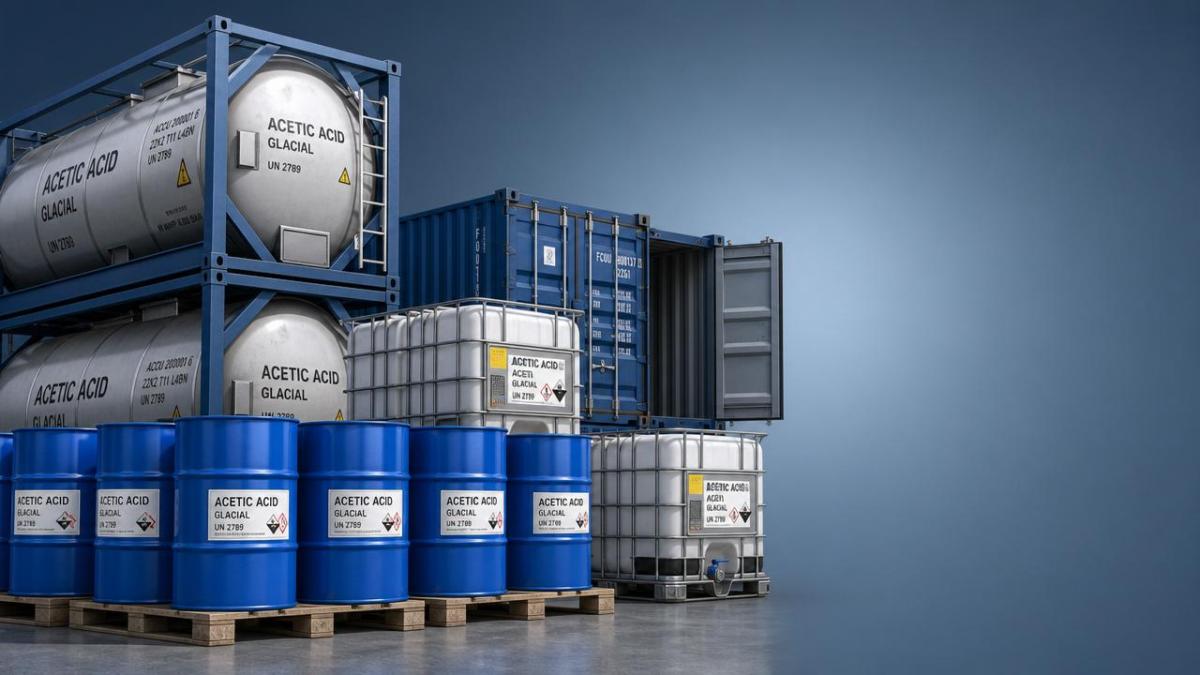
When sourcing wholesale glacial acetic acid, packaging directly affects handling speed, product purity protection, warehouse utilization, and freight utilization. Common commercial formats include 30 kg small packs for controlled distribution, 200–220 L drums, 1,000 L IBCs, flexitanks in selected trade lanes, and 20-foot ISO tanks for larger bulk programs. Each serves a different operating model.
Glacial acetic acid typically requires close attention to concentration, water ingress prevention, compatibility of seals and linings, and temperature behavior during transit. For procurement personnel, the practical question is not only “What package is available?” but “What package best fits our annual consumption, discharge system, and inbound logistics cycle?”
Core packaging options used in bulk chemical trade
The table below compares common packaging formats for wholesale glacial acetic acid from a buyer’s perspective. The most efficient format usually depends on monthly volume, number of receiving points, and whether the buyer operates pump-off loading or manual handling at site.
A common pattern is that drums favor flexibility, IBCs balance convenience and control, and ISO tanks favor scale. Buyers consuming less than 20 metric tons per month often prioritize manageable receiving and storage. Buyers above 80–100 metric tons per month usually gain more from dedicated bulk planning, provided the site can discharge safely within the agreed free time.
Handling, contamination risk, and loss control
Every additional transfer point increases exposure. Drums may involve 80–110 individual units in a larger shipment, while the same tonnage in IBCs may reduce handling units to roughly 18–20, and an ISO tank reduces the package count to a single bulk vessel. Fewer openings generally mean fewer opportunities for moisture ingress, mislabeling, valve damage, or batch mixing errors.
Procurement teams should also ask how residue and heel loss are managed. In some operations, a 0.3% to 1.0% residual loss difference between formats becomes material over 12 months. For plants with strict mass balance accounting, especially in API or fine chemical production, that difference can outweigh small freight savings on paper.
Questions buyers should raise with suppliers
- What container material and gasket compatibility are used for acetic acid concentration levels purchased?
- Is the packaging single-use, returnable, or subject to deposit and cleaning charges?
- What is the typical filling tolerance per unit and how is net weight verified?
- Can the supplier provide batch-specific COA, SDS, and transport labels before shipment release?
- What is the expected shelf and storage condition range, such as dry, ventilated, and protected from incompatible materials?
Freight tradeoffs: when cheaper transport becomes more expensive
Freight decisions in wholesale glacial acetic acid sourcing should be evaluated as landed-cost scenarios rather than transport line items. Ocean freight, inland drayage, dangerous goods surcharges, demurrage, detention, storage, and discharge labor can materially change the economics. A nominally lower freight mode may become more expensive if receiving delays extend beyond 3–5 free days or if local handling is labor intensive.
Procurement managers should model at least 3 scenarios: low-volume spot buying, stable monthly replenishment, and annual contracted demand. This helps compare not only freight per metric ton, but also risk-adjusted cost under congestion, weather delays, holiday closures, and compliance inspections.
Comparing logistics economics by shipment model
The following decision matrix highlights how the freight profile changes by package type. Values are descriptive rather than fixed market tariffs, because route, region, and season can move costs significantly over a 2–8 week booking window.
In practice, ISO tanks often deliver the strongest freight efficiency when the buyer has one receiving site, predictable discharge scheduling, and repeat monthly or quarterly demand. By contrast, drums and IBCs can outperform in regions where warehouse redistribution, toll manufacturing, or fragmented internal consumption requires smaller break-bulk lots.
The hidden cost categories often missed in RFQs
A competitive quote for wholesale glacial acetic acid should be analyzed beyond FOB, CFR, CIF, or DDP headline terms. Procurement teams should request a cost breakdown covering at least 6 items: product value, package charge, dangerous goods handling, inland transport, destination handling, and return or disposal cost. Without this, package comparisons can be distorted.
Another frequent gap is discharge time. If a tank must be unloaded within 24–48 hours of arrival but the plant can only receive during one 8-hour day shift, weekend arrivals can create avoidable detention. Likewise, if drums require manual decanting into a day tank, labor time and exposure controls may add recurring operational cost that never appears in the supplier’s offer.
How procurement teams should match packaging to site conditions
The best buying decision starts at the receiving site, not at the supplier quotation sheet. Procurement should verify tank farm space, forklift capacity, hose compatibility, unloading pump specifications, spill control arrangements, and permitted storage volumes. A packaging option that looks efficient on paper may fail if the site cannot process arrivals within the carrier’s allowed window.
For wholesale glacial acetic acid, buyers should align package choice with actual consumption rhythm. A plant consuming 5–8 metric tons per week may benefit from IBCs if usage is steady and internal transfer is simple. A facility consuming 25 metric tons in 2 days for campaign manufacturing may achieve lower total handling cost from an ISO tank, assuming appropriate unloading and storage controls are available.
A practical site-readiness checklist
Before confirming a supply contract, procurement, EHS, warehouse, and production should validate the same checklist. This reduces the chance of selecting the cheapest shipping mode only to encounter receiving delays or safety deviations after the first container arrives.
- Confirm monthly and peak consumption volume in metric tons.
- Check whether the site can unload within 2–6 hours for bulk tanks or manage multiple drum/IBC movements safely.
- Verify available storage temperature and segregation from incompatible materials.
- Review pump, hose, valve, and seal compatibility with acetic acid service.
- Define who owns empty return, disposal, and cleaning obligations.
When drums make sense
Drums remain useful where order sizes are below one full bulk tank, where multiple plants share inventory, or where buyers need easier lot separation. They can also support conservative qualification programs in regulated sectors, because smaller units simplify quarantine and staged release. However, procurement should factor in pallet count, warehouse footprint, and manual transfer controls.
When IBCs are the stronger middle ground
IBCs often work well for buyers needing better handling efficiency without full bulk infrastructure. They reduce unit count versus drums and can support cleaner internal movement. For sites consuming 10–40 metric tons monthly across one or two production lines, IBC-based procurement can be operationally balanced if return, reuse, or disposal terms are contractually clear.
When ISO tanks usually outperform
ISO tanks tend to suit established industrial users with predictable replenishment cycles, dedicated receiving points, and higher annual volume. They are particularly attractive when the buyer wants to reduce package waste, streamline unloading, and improve cost per delivered ton across repeated shipments. The tradeoff is that even a strong freight rate can be undermined by poor unloading discipline or destination bottlenecks.
Risk control, documentation, and contract terms that protect supply continuity
In wholesale glacial acetic acid trade, packaging and freight decisions also affect compliance performance. Procurement teams should not separate commercial review from documentation review. COA consistency, SDS version control, dangerous goods markings, packaging declarations, and batch traceability all influence whether inbound cargo can move smoothly through customs, terminal release, warehouse intake, and internal quality approval.
A strong purchasing process usually defines 3 control layers: pre-shipment document verification, arrival inspection, and post-discharge reconciliation. This is especially important when the material is used in regulated downstream production, export manufacturing, or formulations requiring strict lot segregation.
Contract clauses buyers should not leave vague
The table below highlights contract points that frequently influence real-world outcomes more than minor unit-price differences. These are particularly relevant for procurement teams managing annual bids, dual-source programs, or international supply routes.
These clauses help procurement teams convert a purchase into an executable supply program. A slightly higher offer with clear packaging accountability, 7–14 day booking visibility, and well-defined return terms may produce lower annual cost than a cheaper quote that leaves logistics risk unresolved.
Common buying mistakes in wholesale glacial acetic acid
- Selecting bulk tanks without confirming destination unloading capability and free-time exposure.
- Comparing packaged and bulk offers only on product price per ton, ignoring packaging disposal and labor cost.
- Overlooking the impact of fragmented delivery schedules across 2 or more receiving locations.
- Failing to specify document requirements before shipment, causing customs or warehouse intake delays.
- Assuming that one packaging format is optimal year-round despite seasonal freight disruptions or demand shifts.
A workable sourcing approach for industrial buyers
A disciplined procurement strategy often starts with one pilot cycle, then moves into a 3–6 month optimization phase. During this period, buyers can compare actual unloading time, shortage variance, warehouse utilization, packaging waste generation, and final cost per usable metric ton. This creates evidence for whether wholesale glacial acetic acid should remain in drums, migrate to IBCs, or shift into tank-based bulk supply.
For organizations with cross-border sourcing exposure, it is also prudent to qualify at least 2 packaging pathways. If tank availability tightens or a port imposes operational restrictions, the ability to temporarily shift part of volume into drums or IBCs can help maintain continuity without fully interrupting production planning.
The most effective wholesale glacial acetic acid procurement programs treat packaging and freight as strategic variables, not afterthoughts. Drums offer flexibility, IBCs improve handling balance, and ISO tanks can deliver stronger scale economics when site readiness is proven. The right choice depends on demand profile, receiving capability, documentation discipline, and contract clarity across the full supply chain.
For procurement teams in fine chemicals, agriculture-linked processing, biochemical manufacturing, and other industrial sectors, a structured review of package format, freight exposure, and operating constraints can lower avoidable cost while improving continuity. If you are evaluating supply options or need a more tailored sourcing framework, contact us to discuss your application, request a customized procurement plan, or learn more about practical bulk chemical supply solutions.
Related Intelligence
- APIs & IntermediatesFirst National SME Service Platforms for APIs & Intermediates AnnouncedFirst National SME Service Platforms for APIs & Intermediates launched—offering ICH Q5/Q7, REACH, green solvent & tax rebate support. Discover verified Chinese suppliers now.
- APIs & IntermediatesBulk formic acid handling mistakes that create avoidable downtimeBulk formic acid handling mistakes can trigger corrosion, leaks, and costly downtime. Learn the most common risks and practical fixes to improve reliability and prevent shutdowns.
- APIs & IntermediatesWholesale glacial acetic acid: packaging choices and freight tradeoffsWholesale glacial acetic acid buying starts with the right packaging and freight plan. Compare drums, IBCs, and ISO tanks to cut landed cost, reduce risk, and secure reliable bulk supply.
The Morning Broadsheet
Daily chemical briefings, market shifts, and peer-reviewed summaries delivered to your terminal.
