

The Authority in Global Agricultural Chemistry & Bio-Resources
GPS tractor steering systems: retrofit limits farms overlook
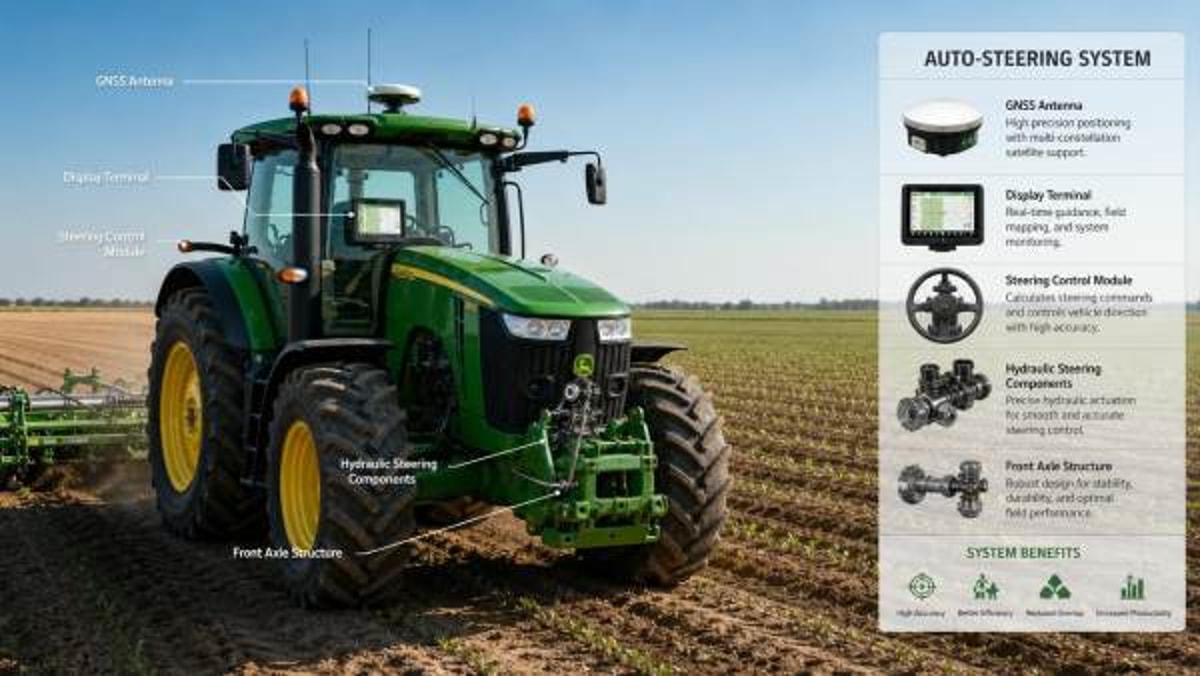
Many farms adopt gps tractor steering systems expecting plug-and-play accuracy, yet retrofit projects often reveal overlooked limits in hydraulics, steering response, signal stability, and legacy equipment compatibility. For aftermarket maintenance teams, understanding these hidden constraints is essential to reduce installation failures, avoid repeat service calls, and ensure operators gain measurable field efficiency rather than costly precision farming disappointments.
In practice, retrofit success is rarely determined by the guidance display alone. It depends on how well the steering controller, hydraulic circuit, axle geometry, electrical supply, antenna placement, and correction signal all work together under field load. For aftersales maintenance personnel, the job is not only to install gps tractor steering systems, but to diagnose where an older machine will resist precision control and where expectations must be reset before the first pass.
This matters across mixed fleets common in large-scale farming operations, contractor businesses, and diversified primary industries. A 15-year-old row-crop tractor, an articulated unit used for broadacre tillage, and a sprayer tractor running long seasonal hours may all accept retrofit kits differently. Maintenance teams that apply a structured pre-installation assessment can often cut troubleshooting time by 20% to 40% compared with reactive service methods.
Why retrofit limits appear even when the kit is technically compatible
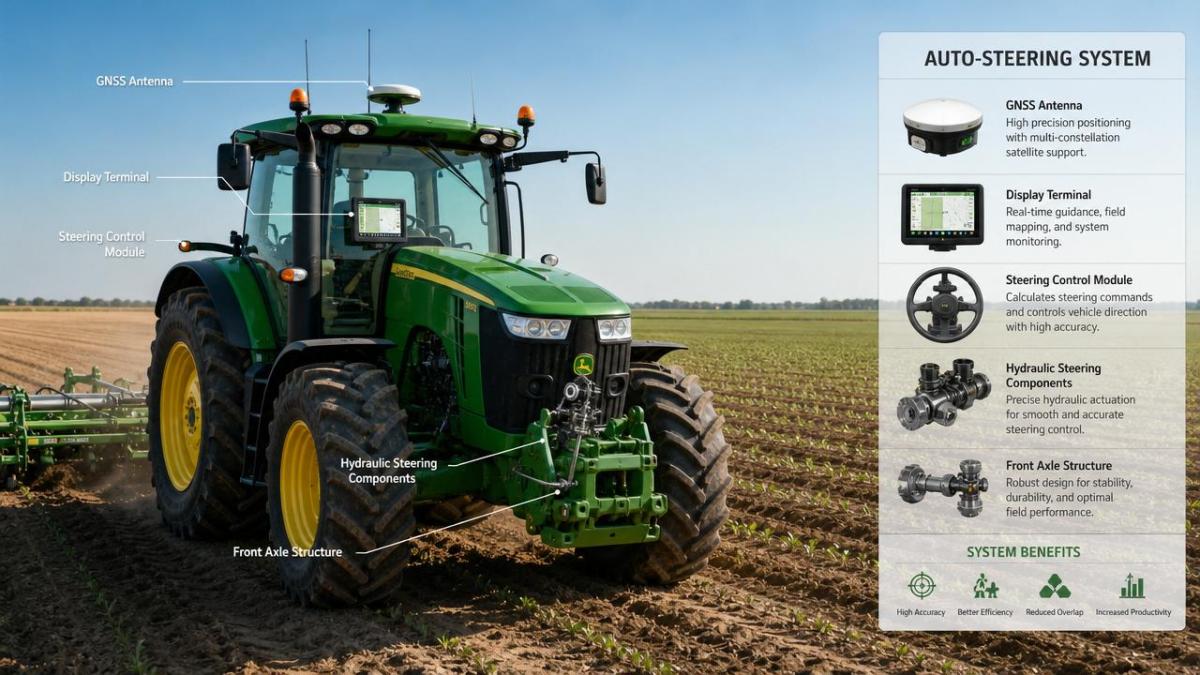
A supplier may list a vehicle as compatible, but compatibility in catalog terms usually means the core hardware can be mounted and powered. It does not guarantee stable line acquisition at 8 to 14 km/h, smooth correction on slopes, or acceptable pass-to-pass repeatability during long shifts. For aftermarket teams, that distinction is where most repeat callouts begin.
Hydraulic response is often the first hidden constraint
Many gps tractor steering systems rely on electro-hydraulic control or motor-assisted steering inputs. On older tractors, steering valves may have internal leakage, delayed spool response, or inconsistent pressure recovery. A lag of even 0.3 to 0.8 seconds can produce visible weaving, especially during AB line acquisition or when operating wide implements over 18 to 36 meters.
The problem becomes more pronounced when oil temperature changes across the day. Cold-start performance at 10°C may appear acceptable, then degrade after 3 to 5 hours of operation as viscosity falls and steering behavior shifts. If maintenance teams calibrate only in a yard test, they may miss the exact field conditions that trigger oscillation or overcorrection.
Common hydraulic warning signs before installation
- Steering wheel free play greater than normal operator tolerance
- Noticeable pull delay when changing direction at low engine rpm
- Hydraulic pump noise under steering load during idle or headland turns
- Inconsistent wheel angle response between left and right lock
- Recurring seepage around orbitrol, hoses, or steering cylinders
Steering geometry and axle wear affect accuracy more than many farms expect
Retrofit guidance can only command what the front axle and linkages can physically deliver. Worn tie-rod ends, kingpin play, uneven tire inflation, and poor toe settings all translate into tracking error. In row-crop work, a mechanical tolerance issue of 3 to 5 mm at a linkage point can become a meaningful lateral drift over a 300 to 500 meter pass.
This is especially important on tractors that split time between tillage, spraying, transport, and loader work. Mixed-duty machines often accumulate steering wear irregularly. A maintenance team that skips axle inspection may spend hours adjusting aggressiveness, deadband, and sensitivity settings when the true cause is mechanical looseness outside software correction limits.
The following matrix helps aftermarket teams distinguish between nominal compatibility and field-ready retrofit suitability before they commit labor, calibration time, and operator expectations.
The key takeaway is that gps tractor steering systems fail in the field less often because of a single bad component and more often because 4 or 5 small tolerances stack together. A machine that is “almost good enough” in hydraulics, steering linkage, power supply, and antenna mounting may still deliver unacceptable accuracy when working a 24-meter boom or a high-value planting operation.
Signal stability and correction source selection are not one-size-fits-all
Not every farm requires the same correction level. Sub-meter guidance may be acceptable for broadacre spreading or basic tillage, while repeatable operations such as strip-till, controlled traffic, or vegetable bed work may demand decimeter or centimeter-level repeatability. Aftermarket teams should define the target accuracy before installation, not after the operator complains.
Terrain and cellular coverage also change the outcome. RTK or network-based correction can perform well in open country, but hilly terrain, tree lines, metal sheds, and patchy mobile data may create dropouts. A guidance system that holds line perfectly for 90 minutes but loses correction 3 times per day can still become an operational liability during peak season.
A field-ready retrofit workflow for aftermarket maintenance teams
The most reliable way to install gps tractor steering systems on mixed-age fleets is to treat each project as a 3-stage technical process: pre-inspection, configuration, and field validation. This prevents the common mistake of mounting components first and diagnosing machine condition later. In high-demand seasons, that order can be the difference between a 1-day installation and a 3-visit service chain.
Stage 1: Pre-installation inspection should be formal, not informal
A proper intake checklist should cover at least 6 inspection points: steering free play, hydraulic behavior at low and working rpm, battery and alternator performance, connector condition, front axle wear, and roof mounting suitability. If any one area fails baseline condition, the retrofit should pause until the defect is corrected. That protects both technician time and customer confidence.
- Confirm tractor application: spraying, planting, tillage, spreading, or mixed use.
- Record desired speed band, such as 6–9 km/h for planting or 12–18 km/h for broadacre work.
- Inspect mechanical steering components under static and moving conditions.
- Test electrical voltage stability with lights, fan, and steering load applied.
- Measure cab roof or chassis mounting positions for antenna and controller routing.
- Verify correction signal availability across the actual operating geography.
Stage 2: Calibration must match operating conditions
Many failed retrofits were technically installed correctly but calibrated too quickly. Yard calibration on flat ground is only a baseline. Field validation should include at least 2 speed bands, one loaded condition if possible, and one slope or contour scenario. On articulated or high-horsepower tractors, tuning may also need separate attention to line acquisition aggressiveness and on-line stability.
Operators often report that a machine “hunts” or “feels nervous.” For maintenance teams, that usually points to one of three causes: excessive steering aggressiveness, delayed hydraulic response, or inaccurate vehicle dimensions entered into the controller. Even a wheelbase input error of a few centimeters can affect performance, especially in tighter guidance algorithms.
The table below provides a practical service view of retrofit checkpoints, acceptable ranges, and likely service consequences when gps tractor steering systems are commissioned without full validation.
For service departments, the value of this workflow is measurable. It reduces non-warranty revisits, improves first-time acceptance, and creates a written baseline if future issues arise from wear rather than the retrofit kit itself. In B2B environments where one workshop may support 20, 50, or more machines each season, consistency is more profitable than speed alone.
Stage 3: Operator handover is part of maintenance quality
Even well-installed gps tractor steering systems underperform when operators are not trained on engagement rules, correction loss behavior, and calibration limits. A 20-minute handover is rarely enough for mixed-skill crews. A better practice is a 45- to 60-minute handover that covers start-up checks, line creation, disengagement conditions, and what symptoms should trigger a service call.
This is particularly important where farm businesses rotate operators across machines. Maintenance teams should leave a simple reference sheet in the cab with 5 to 7 key checks: GNSS signal status, correction source confirmation, steering mode status, tire pressure check, hydraulic warning review, and safe disengagement procedure. That small step can prevent misuse being reported as equipment failure.
What farms and service teams should evaluate before buying retrofit guidance
Purchase decisions around gps tractor steering systems should be based on whole-machine suitability, not screen features alone. Farms often compare display size, user interface, or subscription cost, but maintenance personnel know the long-term cost sits elsewhere: installation hours, correction reliability, hydraulic integration effort, spare parts availability, and the probability of repeat calibration across a diverse fleet.
Four buying criteria that reduce aftermarket friction
- Compatibility depth: not just model listing, but known support for steering type, valve options, and software updates.
- Diagnostic transparency: access to error logs, calibration parameters, and remote support tools.
- Parts continuity: sensor, harness, bracket, and controller availability over a 3- to 5-year horizon.
- Support structure: realistic service documentation for workshops, not only for first-sale installers.
Questions maintenance teams should ask before approval
Ask whether the machine needs additional hydraulic hardware, whether electrical noise suppression is recommended, whether the correction service depends on stable mobile data, and whether the system can transfer between tractors without full recalibration. Also confirm how software updates are delivered and whether older displays remain supported after 24 to 36 months.
These details matter because low upfront cost can become expensive if the farm loses two planting windows to repeated tuning, or if a contractor must dispatch technicians during peak spray periods. In many operations, one day of downtime on a high-use tractor costs more than the price difference between a basic retrofit and a properly supported system.
Common retrofit misconceptions that create avoidable service calls
One misconception is that precision guidance automatically corrects poor machine condition. It does not. Another is that pass-to-pass accuracy and year-to-year repeatability are the same thing; they are not. A third is that every tractor in a fleet can share one configuration. In reality, tire size, axle wear, ballast, and hydraulic response can vary enough that separate profiles are necessary.
A further misunderstanding is that retrofit guidance removes operator responsibility. Most systems still require disciplined setup, correct implement dimensions, and attention to signal status. Maintenance teams that explain these limits early are more likely to protect workshop credibility and reduce post-installation disputes about expected performance.
FAQ for aftermarket service personnel
How old is too old for a retrofit tractor?
Age alone is not decisive. A 12- to 20-year-old tractor in strong hydraulic and steering condition may retrofit well, while a newer machine with poor maintenance history may not. Condition, supportability, and intended application matter more than registration year.
When should a team reject or postpone installation?
Postpone when steering wear is obvious, hydraulic response is inconsistent, roof mounting is unstable, or electrical voltage drops under normal accessory load. If correction coverage is unreliable across the operating area, the service team should also redefine the accuracy target before proceeding.
How much testing is enough before handover?
At minimum, run a static setup, a low-speed line acquisition test, a normal working-speed tracking test, and a warm-hydraulic repeat check. For higher-value applications such as controlled traffic or vegetable production, additional validation under real implement load is advisable.
For farms, workshops, and equipment support partners, the lesson is clear: gps tractor steering systems deliver value when retrofit planning is machine-specific, condition-based, and validated in the field. For aftermarket maintenance teams, the strongest results come from disciplined inspection, realistic calibration, and operator handover that reflects actual working conditions rather than showroom assumptions.
If your operation is reviewing retrofit guidance across legacy or mixed fleets, a structured technical assessment can identify hydraulic, electrical, and compatibility limits before they become expensive service issues. Contact us to discuss a tailored retrofit evaluation, compare suitable steering solutions, or get more detail on field-proven support approaches for your machinery environment.
Related Intelligence
- Heavy Agri MachineryPrecision farming systems: where farms see gains firstPrecision farming systems deliver early gains through tighter input control, better field visibility, and faster decisions. See which farm scenarios create the quickest ROI first.
- Heavy Agri MachineryHeavy duty tractors wholesale: which warranty terms deserve a closer lookHeavy duty tractors wholesale buyers should review warranty terms closely. Compare powertrain coverage, exclusions, response times, and cross-border support to reduce risk and protect uptime.
- Heavy Agri MachineryCorn picker machines bulk orders: what changes after harvest seasonCorn picker machines bulk orders change fast after harvest—compare pricing, lead times, customization, and regional demand to secure smarter deals and stronger margins.
The Morning Broadsheet
Daily chemical briefings, market shifts, and peer-reviewed summaries delivered to your terminal.
