

The Authority in Global Agricultural Chemistry & Bio-Resources
Wholesale sodium chlorite storage risks that can raise compliance costs
For quality control and safety managers, wholesale sodium chlorite storage is more than a warehousing issue—it is a direct compliance and cost risk. Poor segregation, temperature control failures, and inadequate documentation can trigger regulatory violations, product instability, and higher operating expenses. Understanding these storage risks is essential for protecting supply continuity, meeting audit standards, and controlling long-term compliance costs.
In primary industries, water treatment operations, ingredient processing, and fine chemical distribution, wholesale sodium chlorite often moves through multi-site storage networks before it reaches end users. That makes storage discipline a strategic control point rather than a back-room task. A single deviation in labeling, ventilation, or stock rotation can escalate into rejected lots, emergency corrective action, or delayed customer delivery.
For B2B buyers and site managers, the challenge is not only to store the material safely, but to do so in a way that stands up to internal audits, customer questionnaires, and external inspections. The sections below focus on the storage risks that most often increase compliance costs and explain how better controls can reduce both operational friction and procurement uncertainty.
Why wholesale sodium chlorite storage becomes a compliance cost driver
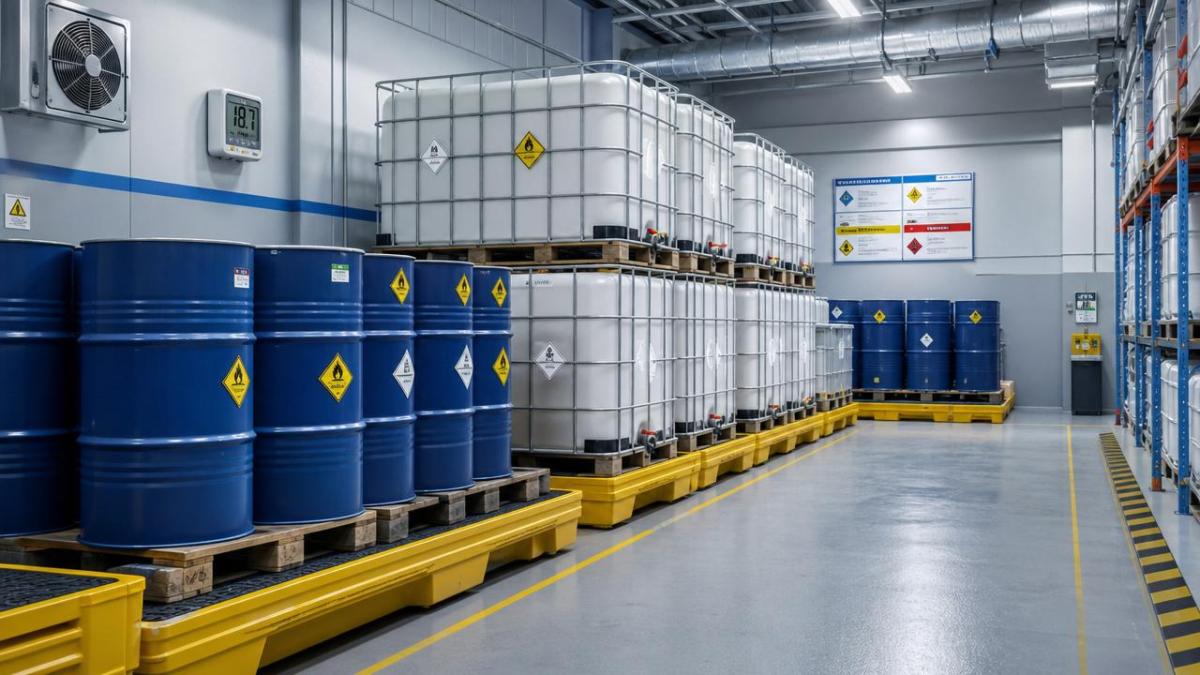
Wholesale sodium chlorite is typically handled in drums, intermediate bulk containers, or other commercial packaging formats that may remain in storage for weeks or months. In regulated supply chains, the storage period is not a neutral phase. It affects product integrity, hazard communication, traceability, and the validity of downstream quality release decisions.
Compliance costs rise when storage controls fail in 3 common areas: physical safety, documentation, and material disposition. Physical safety failures may trigger incident investigation or facility upgrades. Documentation gaps can create nonconformities during audits. Material disposition errors, such as releasing compromised stock, can lead to return handling, disposal fees, or customer claims within 7–30 days of shipment.
The hidden cost categories behind storage mistakes
Many organizations calculate only the direct warehousing expense, but the true cost profile is broader. A storage lapse can generate 4 layers of expense: immediate corrective action, compliance remediation, inventory loss, and business interruption. For example, one segregation error may not only require rehandling labor, but also updated training records, revised SOP review, and added audit sampling.
- Corrective handling: relabeling, relocation, emergency inspection, and incident documentation
- Quality impact: quarantine, additional testing, hold-release delays, and stock write-down
- Regulatory impact: CAPA workload, inspection response, and revised storage procedures
- Commercial impact: delayed shipment, reduced supplier scorecard performance, and contract risk
Where auditors and procurement teams focus first
During supplier qualification or internal compliance reviews, auditors typically assess whether wholesale sodium chlorite is stored under defined conditions, separated from incompatible materials, and supported by current records. Procurement teams increasingly ask for evidence covering 5 areas: packaging condition, labeling accuracy, storage environment, inventory traceability, and spill response readiness.
If one of these five areas is weak, the result is often more than a simple observation. Buyers may impose shorter review cycles, stricter release terms, or smaller initial order quantities until confidence is restored. That raises transaction costs across every future shipment.
Typical storage risk-to-cost relationship
The table below shows how common storage failures in wholesale sodium chlorite operations translate into avoidable compliance expenses. These are practical risk categories widely seen in regulated chemical handling rather than fixed cost figures.
The key lesson is that storage mistakes rarely stay local. They spread from warehouse operations into QA review, buyer confidence, and contract execution. For that reason, storage controls for wholesale sodium chlorite should be treated as part of the compliance system, not as a standalone logistics function.
The highest-risk storage failures quality and safety managers should monitor
Not every deviation carries the same risk. In practice, 6 storage failures account for most preventable compliance escalations in wholesale sodium chlorite programs. These failures are often linked to site expansion, mixed-use warehouses, contractor turnover, or poor handoff between procurement, EHS, and quality teams.
1. Inadequate segregation from incompatible materials
A mixed chemical storage room may look efficient on paper, but poor segregation is one of the fastest ways to trigger risk. Quality and safety managers should verify that wholesale sodium chlorite is not stored next to incompatible oxidizable or reactive substances simply because shelf space is available. Separation distances, dedicated zones, and clear hazard signage matter in daily operations, especially at sites with more than 2 receiving shifts.
2. Weak temperature and ventilation control
Storage environments should be controlled according to supplier documentation, site SOPs, and local regulatory expectations. Facilities that rely on ambient conditions without routine review may overlook seasonal peaks, enclosed heat accumulation, or insufficient airflow. Even if excursions last only 8–12 hours, the resulting investigation can consume days of QA time and delay outbound release.
3. Packaging damage and closure failure
Drum dents, seal wear, pallet instability, and closure damage often start as simple handling problems, but they become compliance issues when not documented and escalated. A damaged container may require immediate segregation, secondary containment review, and repacking approval. If 1 compromised package is discovered late in the storage cycle, all adjacent stock may need inspection.
4. Poor lot traceability and stock rotation
When wholesale sodium chlorite inventory is spread across multiple racks or rooms, traceability can break down quickly. Missing lot references, unclear receipt dates, or informal relabeling create preventable risk during recalls, customer complaints, or shelf-life reviews. A first-expiring-first-out process should be visible in the WMS or on controlled stock cards, not left to operator memory.
5. Incomplete inspection frequency
Some sites inspect hazardous chemical stock only at receipt and dispatch. That leaves a wide control gap in the middle. For higher-risk materials, a weekly or biweekly inspection cycle may be more appropriate than a monthly walk-through, particularly during hot seasons, construction periods, or warehouse reconfiguration projects.
6. Documentation that cannot survive an audit
Records should answer basic audit questions within 3–5 minutes: what arrived, where it was stored, under what conditions, who inspected it, and what happened to any deviation. If those answers depend on verbal explanations instead of records, the facility is likely to face repeat findings and a higher compliance workload.
Priority risk checks for daily and weekly control
The following checklist-style table helps site teams convert broad storage expectations into practical monitoring points for wholesale sodium chlorite handling.
This kind of structured review reduces ambiguity. It also gives procurement and compliance leaders evidence that warehouse control is not improvised, which can support smoother vendor assessments and lower follow-up workload.
How to build a lower-cost storage control program for wholesale sodium chlorite
The most effective storage programs do not rely on one control alone. They combine facility design, documented procedures, inspection discipline, and escalation rules. For wholesale sodium chlorite, a practical control framework can usually be built around 5 implementation steps without creating unnecessary complexity.
Step 1: Define site-specific storage conditions
Start with supplier SDS information, product specifications, and local EHS requirements. Then convert those inputs into a site instruction covering allowed storage area, temperature monitoring method, inspection frequency, and handling restrictions. A one-page controlled work instruction is often easier to sustain on the floor than a long procedure no operator reads.
Step 2: Separate ownership across 3 functions
Many gaps appear because responsibility is blurred between warehouse, quality, and safety teams. A stronger model assigns warehouse personnel to daily condition checks, QA to deviation assessment and release status, and EHS to segregation rules and emergency readiness. This 3-function ownership model improves response speed when exceptions occur.
Step 3: Use triggers for deviation escalation
Not every issue requires the same response. Define escalation triggers in advance: damaged seal, unclear label, temperature excursion, spill indication, or mismatch between physical and recorded stock. If operators know which 4–6 triggers require immediate hold status, fewer questionable lots will move forward by mistake.
Step 4: Audit the storage program quarterly
A quarterly audit rhythm is often sufficient for stable sites, while higher-volume or multi-building facilities may need monthly focused checks. Review should include records, physical conditions, training completion, and CAPA closure. This prevents old corrective actions from staying open for 60–90 days without real implementation.
Step 5: Align storage control with procurement decisions
Storage is also a sourcing issue. When purchasing wholesale sodium chlorite, buyers should assess packaging durability, shipment batch consistency, handling instructions, and documentation quality before expanding order volume. A supplier that offers stable documentation and suitable commercial packaging can reduce internal control burden over the full supply cycle.
Questions to ask before increasing purchase volume
Before moving from trial purchases to larger wholesale sodium chlorite orders, quality and safety managers can use the following review points to avoid hidden downstream costs.
- Is the packaging format suitable for the site’s actual storage layout and handling equipment?
- Can the supplier provide clear storage guidance, hazard documents, and lot-level traceability records?
- Does the warehouse have enough segregated capacity for the expected order cycle, such as 2 weeks, 30 days, or 60 days?
- Are routine inspections documented in a way that will satisfy customer and regulatory review?
- Is there a defined response plan for damaged stock, quarantine, and disposal?
These questions help convert storage from a reactive safety concern into a predictable part of sourcing and compliance planning. They are especially useful when facilities are adding new SKUs, increasing order frequency, or consolidating hazardous materials into shared storage zones.
Common mistakes that increase long-term compliance burden
Some storage errors persist because they seem small in isolation. Over time, however, they create repeat findings, inconsistent operator behavior, and expensive rework. In wholesale sodium chlorite operations, the most costly pattern is not a dramatic incident but a series of minor unmanaged deviations.
Treating storage as a warehouse-only issue
If quality and EHS review the area only during incidents, the control system will remain weak. Storage should be reviewed as part of supplier qualification, inbound quality, and periodic risk assessment. That integration reduces the chance of conflicting decisions between receiving, release, and dispatch teams.
Overreliance on manual memory instead of controlled records
Experienced operators are valuable, but memory is not an audit trail. When a site depends on verbal knowledge for stock age, inspection status, or relocation history, compliance risk increases sharply during shift change, leave coverage, or contractor support periods.
Using generic training for a material with specific risks
Annual general chemical safety training is rarely enough. Personnel handling wholesale sodium chlorite should receive task-based instruction covering segregation, packaging checks, emergency response, and deviation triggers. Refresher training every 12 months, plus event-based retraining after a deviation, is a practical standard for many sites.
Delaying corrective action until the next audit cycle
A small issue found today can become a formal nonconformity later if not addressed promptly. Fast closure matters. Even when a CAPA requires 2–4 weeks for full implementation, immediate containment should happen the same day whenever packaging, labeling, or location control is affected.
What a procurement-ready storage standard should include
For organizations buying or managing wholesale sodium chlorite at scale, a useful storage standard should support both operational safety and supplier review. It should be specific enough for warehouse execution and structured enough for buyer or auditor evaluation.
Core elements of a practical standard
- Defined storage location and segregation map
- Documented inspection frequency, typically daily visual plus weekly recorded review
- Lot traceability from receipt to dispatch or consumption
- Temperature and environmental monitoring method
- Deviation, quarantine, and disposal workflow
- Role-based training matrix for operators, supervisors, QA, and EHS
When these elements are in place, storage risk becomes easier to explain to institutional buyers, customer auditors, and internal leadership. More importantly, compliance costs become more predictable because the site is no longer improvising its response to routine issues.
Wholesale sodium chlorite storage should be managed as a controlled compliance process, not a passive warehousing function. The biggest cost drivers are usually preventable: poor segregation, weak environmental control, packaging damage, incomplete records, and delayed corrective action. For quality control and safety managers, tightening these controls protects product integrity, shortens audit response time, and reduces the risk of expensive rework across the supply chain.
If your organization is reviewing hazardous chemical storage practices, expanding bulk purchasing, or qualifying new suppliers for wholesale sodium chlorite, now is the right time to assess your current controls against real operating risks. Contact us to discuss storage risk priorities, request a tailored review framework, or explore more compliance-focused solutions for regulated chemical supply chains.
Related Intelligence
- APIs & IntermediatesFirst National SME Service Platforms for APIs & Intermediates AnnouncedFirst National SME Service Platforms for APIs & Intermediates launched—offering ICH Q5/Q7, REACH, green solvent & tax rebate support. Discover verified Chinese suppliers now.
- APIs & IntermediatesBulk formic acid handling mistakes that create avoidable downtimeBulk formic acid handling mistakes can trigger corrosion, leaks, and costly downtime. Learn the most common risks and practical fixes to improve reliability and prevent shutdowns.
- APIs & IntermediatesWholesale glacial acetic acid: packaging choices and freight tradeoffsWholesale glacial acetic acid buying starts with the right packaging and freight plan. Compare drums, IBCs, and ISO tanks to cut landed cost, reduce risk, and secure reliable bulk supply.
The Morning Broadsheet
Daily chemical briefings, market shifts, and peer-reviewed summaries delivered to your terminal.
