

The Authority in Global Agricultural Chemistry & Bio-Resources
Vietnam Enforces Smart Greenhouse Energy Labeling from May 2026
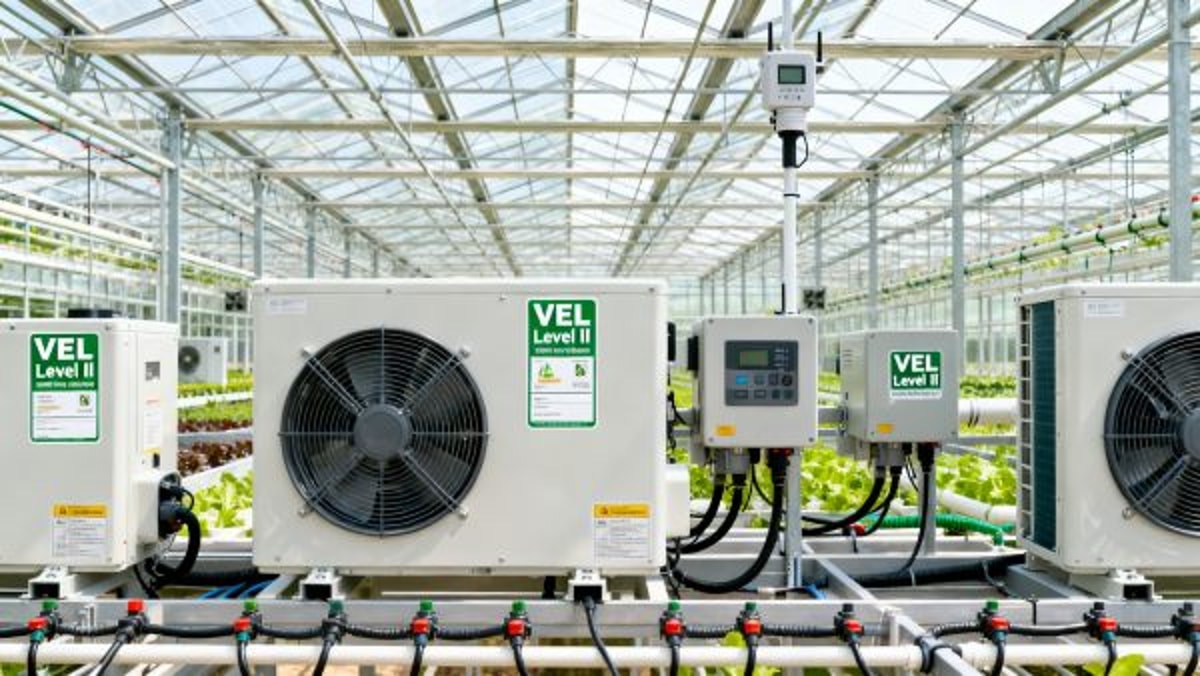
Vietnam’s Ministry of Industry and Trade (MOIT) will implement the Regulation on Energy Labeling for Smart Greenhouse Climate Control Equipment effective 1 May 2026. This policy directly affects exporters of climate control modules, variable-frequency fans, and intelligent environmental control hosts — particularly those based in China. It signals a tightening of energy efficiency compliance requirements for agricultural climate technology entering Vietnam’s growing smart farming market.
Event Overview
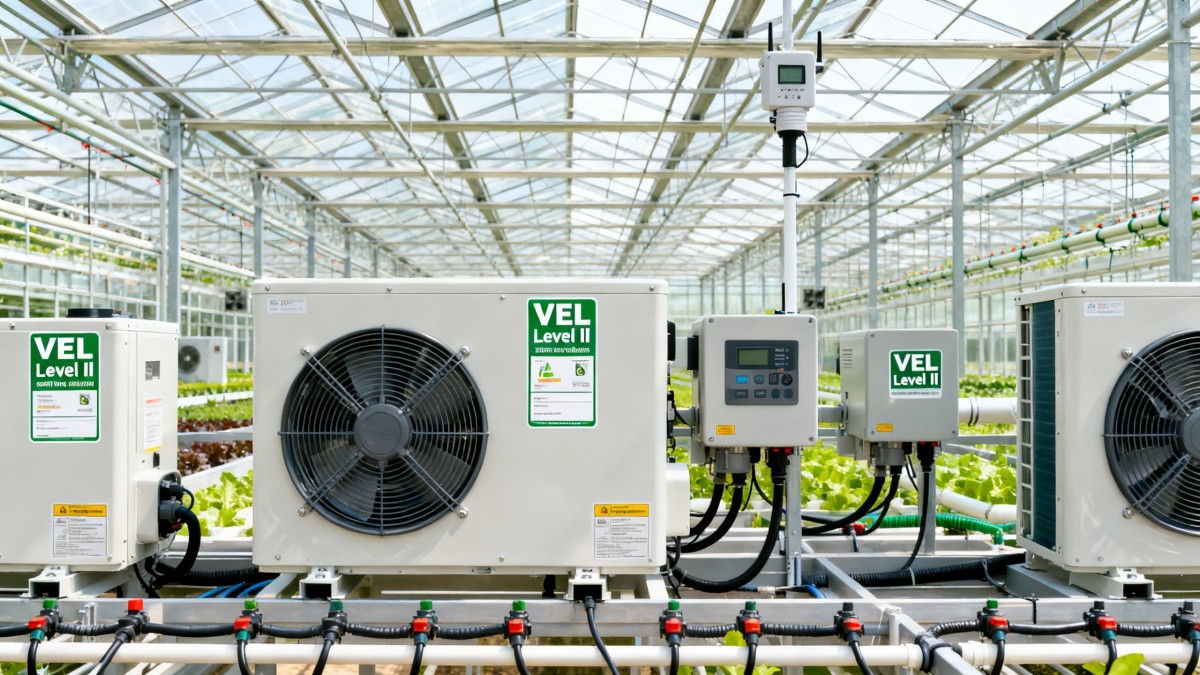
The Ministry of Industry and Trade (MOIT) of Vietnam officially enacted the Regulation on Energy Labeling for Smart Greenhouse Climate Control Equipment, effective 1 May 2026. Under this regulation, all imported equipment falling under the category of Climate Control & Ventilation — including temperature/humidity control modules, variable-frequency ventilation fans, and intelligent environmental control hosts — must bear the Vietnam Energy Label (VEL) at Level II or higher. Importers must also submit energy efficiency test reports issued by laboratories accredited by the Vietnam National Accreditation Board (VILAS). Non-compliant shipments risk detention at Hanoi Port and associated customs clearance delays.
Industries Affected
Direct Exporters (China-based)
Over 230 Chinese enterprises exporting greenhouse climate control components to Vietnam are subject to mandatory labeling and documentation requirements. Impact manifests as added pre-shipment compliance steps, potential shipment holds, and increased time-to-market due to verification delays.
Component Manufacturers (OEM/ODM Suppliers)
Manufacturers supplying finished modules or sub-assemblies to exporters face upstream pressure to integrate VEL-compliant designs and provide supporting test data. Product redesigns or component substitutions may be needed if existing configurations fail to meet Level II VEL thresholds.
Supply Chain & Logistics Service Providers
Cargo agents, customs brokers, and freight forwarders handling Vietnam-bound shipments must now verify label affixation and validate submission of VILAS-recognized test reports prior to port entry. Failure to do so increases operational risk and liability for delayed cargo release.
After-Sales & Technical Support Providers
Service networks supporting installed equipment may encounter warranty or regulatory inquiries tied to label authenticity or energy performance claims. Documentation traceability — linking field units to certified test reports — becomes operationally relevant beyond initial import.
What Enterprises Should Monitor and Do Now
Confirm VEL Level II technical thresholds for key product categories
Analysis shows that VEL Level II criteria for ventilation fans and control modules differ from existing MEPS standards in China or ASEAN. Exporters should obtain official VEL technical annexes and cross-check current product specifications against applicable wattage, airflow, and control logic benchmarks.
Identify and engage VILAS-accredited testing labs early
Observably, lead times for VILAS-recognized testing can extend beyond eight weeks. Companies should map domestic and regional labs with MOIT-accepted scope for climate control equipment — not just general electrical appliances — and initiate sample submissions ahead of the May 2026 deadline.
Review labeling application process and documentation workflows
From industry perspective, VEL label placement, size, and bilingual (Vietnamese–English) content must follow MOIT’s graphic guidelines. Internal quality assurance and packaging teams need updated SOPs; ERP or labeling software may require configuration updates to generate compliant labels.
Assess inventory positioning and shipment scheduling
Current more suitable understanding is that goods shipped before 1 May 2026 but arriving after that date remain subject to the new rule. Exporters should evaluate sea freight timelines and consider accelerating high-volume shipments or allocating buffer stock to avoid port hold scenarios.
Editorial Observation / Industry Perspective
This regulation is best understood not as an isolated labeling requirement, but as an early indicator of Vietnam’s broader shift toward performance-based regulation in controlled-environment agriculture (CEA). Analysis shows MOIT has aligned VEL classification frameworks with ASEAN Energy Efficiency Standards — suggesting future harmonization efforts across regional trade corridors. Observably, the focus on smart greenhouse systems implies preference for digitally integrated, adaptive devices over basic mechanical units. From industry angle, this signals increasing emphasis on verifiable energy intelligence — not just hardware compliance — in agri-tech imports.
It is currently more accurate to interpret this measure as a regulatory signal than a fully matured enforcement regime: MOIT has not yet published full implementation guidance on label verification procedures, penalty structures, or transitional arrangements. That said, port-level enforcement readiness appears high, given recent pilot inspections at Cat Lai and Haiphong ports involving similar equipment categories.
Industry stakeholders should treat May 2026 not as a distant deadline, but as the start of an ongoing compliance cycle — one where energy labeling becomes embedded in product development, certification planning, and logistics coordination.
Conclusion
The introduction of Vietnam’s Smart Greenhouse Energy Labeling Regulation marks a structural step toward formalized energy performance accountability in its agricultural technology import regime. It does not represent a temporary administrative hurdle, but rather reflects a longer-term policy direction prioritizing resource-efficient, data-enabled horticultural infrastructure. For affected enterprises, proactive alignment with VEL requirements — grounded in verified test data and documented labeling processes — is now a baseline operational necessity, not a discretionary compliance activity.
Information Sources
Main source: Vietnam Ministry of Industry and Trade (MOIT), Regulation on Energy Labeling for Smart Greenhouse Climate Control Equipment, effective 1 May 2026. Status of accompanying technical annexes and enforcement protocols remains under observation as of Q4 2025.
Related Intelligence
- Climate Control & VentilationVietnam Enforces Smart Greenhouse Energy Labeling from May 2026Vietnam's new Smart Greenhouse Energy Labeling rule (effective May 2026) mandates VEL Level II+ for climate control equipment — act now to avoid port delays and secure market access.
- Climate Control & VentilationVietnam Enforces Smart Greenhouse Energy Labeling for Chinese Climate Control ExportsVietnam Enforces Smart Greenhouse Energy Labeling for Chinese Climate Control Exports — comply with VIEE labels & TCVN 9876:2025 now to avoid port rejections.
- Climate Control & VentilationVietnam’s Smart Greenhouse Energy Labeling Rule Takes Effect May 1, 2026Vietnam’s Smart Greenhouse Energy Labeling Rule launches May 1, 2026—mandating TCVN certification & Vietnamese A–D labels for thermostats, ECUs, and smart ventilation gear. Act now to avoid customs rejection.
The Morning Broadsheet
Daily chemical briefings, market shifts, and peer-reviewed summaries delivered to your terminal.
