

The Authority in Global Agricultural Chemistry & Bio-Resources
Vietnam’s Smart Greenhouse Energy Labeling Rule Takes Effect May 1, 2026
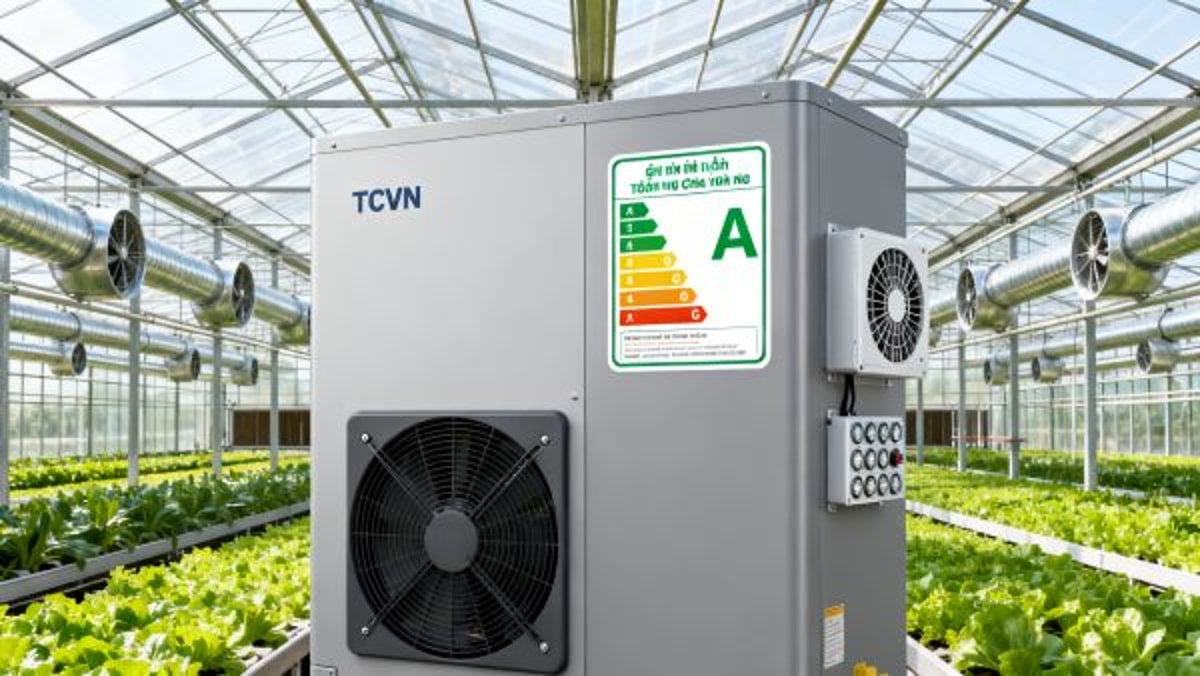
Starting May 1, 2026, Vietnam will enforce its new Regulation on Energy Efficiency and Labeling for Smart Greenhouse Equipment, requiring all imported climate control and ventilation devices—including thermostats, environmental control units, and smart ventilation modules—to obtain certification from the Vietnamese Standardization Agency (TCVN) and display Vietnamese-language energy efficiency labels (A–D rating) on both product units and outer packaging. This development directly affects Chinese manufacturers and exporters supplying temperature and ventilation systems to Vietnam’s smart greenhouse sector, with non-compliant shipments subject to rejection or return by Hanoi Customs.
Event Overview
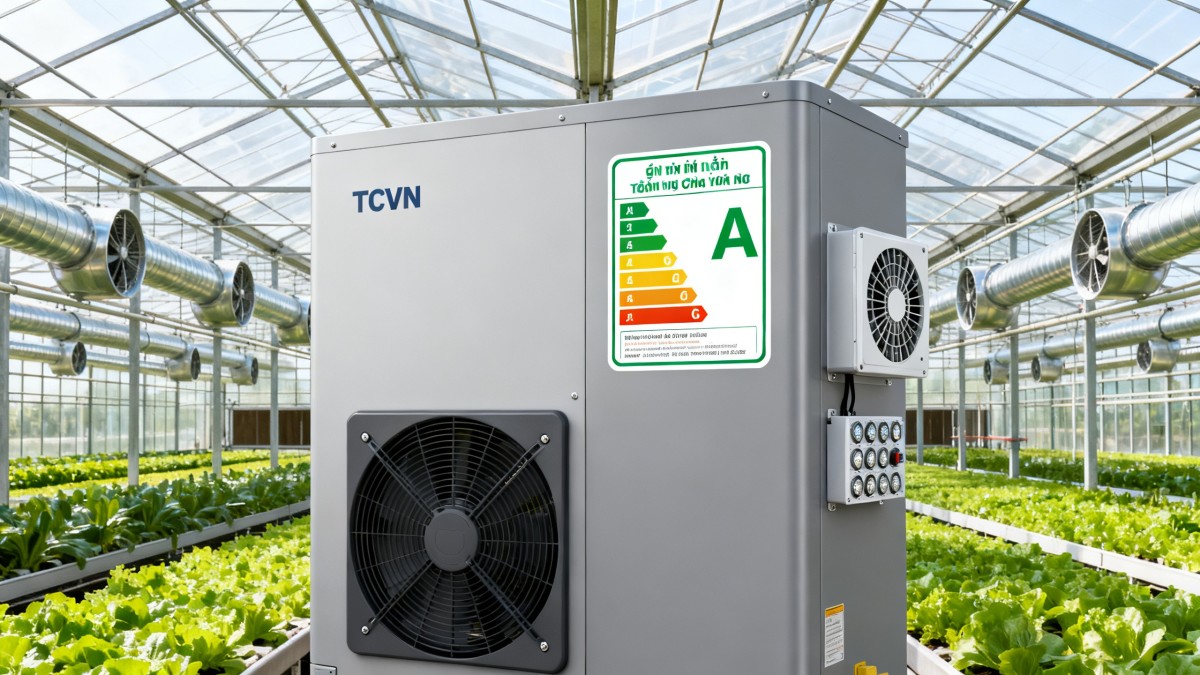
Effective May 1, 2026, Vietnam implements the Regulation on Energy Efficiency and Labeling for Smart Greenhouse Equipment. Under this rule, all imported equipment classified under Climate Control & Ventilation—such as thermostats, environmental control hosts, and smart ventilation modules—must be certified by the Vietnamese Standardization Agency (TCVN) and bear Vietnamese-language energy efficiency labels (graded A to D) on both the product body and its retail packaging. The regulation applies to all imports cleared through Vietnamese customs after the effective date. Non-compliant products may be refused entry or ordered for re-export by Hanoi Customs.
Industries Affected by Segment
Direct Exporters (China-based)
Chinese companies exporting climate control and ventilation equipment to Vietnam face immediate compliance requirements. Certification and labeling must be completed prior to shipment; failure to meet these conditions results in customs detention or return at the importer’s cost. This adds lead time, documentation overhead, and potential rework of packaging and labeling assets.
Manufacturers of Integrated Smart Greenhouse Systems
Firms assembling full-system solutions—including bundled controllers, sensors, and ventilation hardware—must verify that each regulated sub-component meets TCVN certification and labeling rules. System-level conformity cannot override component-level non-compliance, meaning even a single uncertified thermostat or ventilation module may render the entire shipment non-eligible for clearance.
OEM/ODM Suppliers to Export Brands
Contract manufacturers producing temperature or ventilation components for branded exporters must now align production and labeling with Vietnamese language and grading requirements—not just technical specifications. This includes updating printed materials, firmware UIs (if label-relevant), and quality control checklists to confirm label placement, legibility, and grade accuracy per TCVN test reports.
Distribution & Import Agents in Vietnam
Local importers and distributors handling Chinese-sourced greenhouse equipment must verify TCVN certification status and physical label presence before accepting goods into inventory or initiating customs declarations. Absence of valid certification or incorrect labeling may trigger liability for storage, demurrage, or re-export logistics, increasing operational risk for downstream channel partners.
What Enterprises and Practitioners Should Focus On Now
Monitor official TCVN implementation guidance and sample label templates
While the regulation takes effect May 1, 2026, TCVN has not yet published detailed technical annexes, testing protocols, or approved label design specifications. Exporters should track updates from TCVN and Vietnam’s Ministry of Science and Technology for definitive formatting, font size, color contrast, and bilingual (Vietnamese-only) requirements—especially where labels must appear on small or embedded devices.
Prioritize certification for high-volume, high-risk SKUs
Analysis shows that thermostats and standalone environmental control hosts are most frequently flagged in pre-clearance reviews due to their central role in system energy management. Firms should initiate TCVN certification applications first for these categories, rather than delaying until full portfolio coverage is feasible.
Distinguish between regulatory signal and operational readiness
Observably, this rule signals Vietnam’s broader shift toward mandatory energy labeling for agricultural technology—not just industrial equipment. However, enforcement capacity, inspection frequency, and transitional allowances (e.g., grace periods for existing stock) remain unconfirmed. Companies should treat initial compliance as a baseline requirement but avoid assuming uniform enforcement across all ports or product lines.
Update packaging, labeling, and supplier coordination workflows now
Current more suitable preparation includes revising internal SOPs for export documentation, confirming Vietnamese-language label printing vendors, and adding TCVN certificate verification to supplier audit checklists. For OEM suppliers, this also means formalizing label placement instructions and approval sign-offs in engineering change orders (ECOs) ahead of production runs scheduled for Q1 2026 onward.
Editorial Perspective / Industry Observation
This regulation is better understood as an early-stage policy signal rather than a fully matured enforcement regime. From an industry perspective, it reflects Vietnam’s intent to align agricultural infrastructure standards with ASEAN energy efficiency frameworks—and positions greenhouse automation as a priority segment for regulatory attention. Analysis shows similar labeling proposals are under discussion in Thailand and Indonesia, suggesting this may presage a regional trend. However, actual impact remains contingent on TCVN’s certification capacity, third-party lab accreditation status, and clarity around conformity assessment pathways for foreign manufacturers. Continuous monitoring—not immediate over-investment—is the more pragmatic stance at this stage.
Conclusion
The introduction of Vietnam’s smart greenhouse energy labeling rule marks a concrete step toward formalized market access requirements for climate control hardware. It does not represent a broad trade barrier, but rather a targeted compliance checkpoint affecting specific device categories and supply chain roles. For affected enterprises, the current significance lies less in immediate disruption and more in its function as an indicator of tightening regulatory expectations across Southeast Asia’s agri-tech import markets. It is more appropriately understood as a procedural milestone—one requiring focused, incremental adaptation rather than systemic overhaul.
Source Attribution
Main source: Official announcement issued by Vietnam’s Ministry of Science and Technology (MoST), dated March 2026, referencing Decree No. 45/2026/ND-CP and Circular 12/2026/TT-BKHCN.
Points requiring ongoing observation: TCVN’s publication of technical implementation guidelines, accredited testing laboratory list, and any announced transitional provisions for shipments arriving between May 1–30, 2026.
Related Intelligence
- Climate Control & VentilationVietnam’s Smart Greenhouse Energy Labeling Rule Takes Effect May 1, 2026Vietnam’s Smart Greenhouse Energy Labeling Rule launches May 1, 2026—mandating TCVN certification & Vietnamese A–D labels for thermostats, ECUs, and smart ventilation gear. Act now to avoid customs rejection.
- Climate Control & VentilationSASO Opens CNAS Direct Path for Climate Control CertificationSASO opens CNAS direct path for Climate Control certification—7-day SASO approval for HVAC, smart ventilation & CO₂ controllers. Fast-track GCC market access!
- Climate Control & VentilationSASO Opens CNAS Direct Path for Climate Control Certifications in Saudi ArabiaSASO opens CNAS direct path for Climate Control certifications in Saudi Arabia—cutting approval time to just 7 working days. Fast-track HVAC exports now!
The Morning Broadsheet
Daily chemical briefings, market shifts, and peer-reviewed summaries delivered to your terminal.
