
SASO Opens CNAS Direct Path for Climate Control Certification

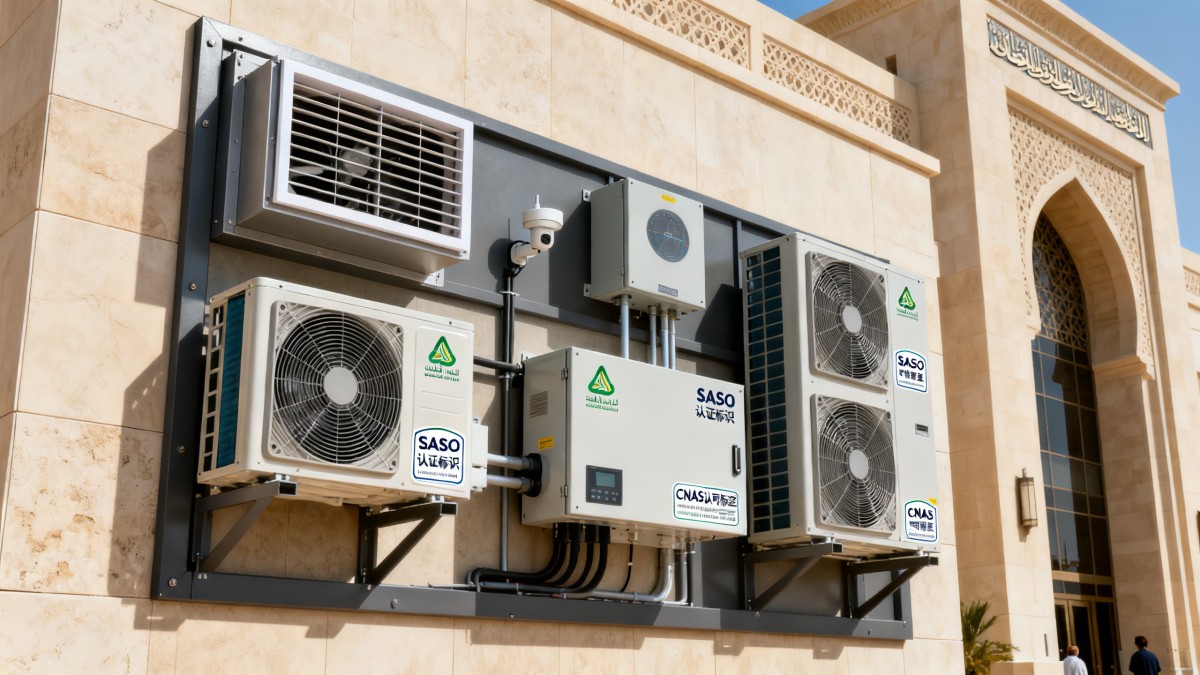
Saudi Standards, Metrology and Quality Organization (SASO) launched a direct certification pathway for Climate Control & Ventilation products tested by CNAS-accredited laboratories on April 28, 2026. The move compresses full-category certification turnaround to seven working days — a development particularly relevant for HVAC equipment exporters, smart environmental control system manufacturers, and ventilation technology suppliers targeting the Middle East market.
Event Overview
On April 28, 2026, SASO officially announced the opening of a direct certification channel for Climate Control & Ventilation products based on test reports issued by laboratories accredited by the China National Accreditation Service for Conformity Assessment (CNAS). Under this arrangement, eligible product categories now qualify for SASO certification within seven working days. No additional testing or re-evaluation by SASO-designated labs is required, provided the CNAS report covers all applicable SASO technical requirements.
Impact on Specific Industry Segments
Direct Exporters of HVAC Equipment
These enterprises face reduced time-to-market for shipments to Saudi Arabia and other Gulf Cooperation Council (GCC) markets adopting SASO-aligned conformity assessment. The shortened cycle directly affects order fulfillment timelines, inventory planning, and responsiveness to tender-based procurement cycles — especially for projects with tight commissioning deadlines.
Manufacturers of Smart Environmental Control Systems
Producers of intelligent climate control units, negative-pressure ventilation systems, and CO₂ concentration-linked controllers benefit from faster validation of integrated functionality. Since these products often combine mechanical, electrical, and software elements, rapid alignment between CNAS test scope and SASO’s technical regulations becomes critical to avoid delays in functional verification.
Supply Chain & Certification Support Providers
Third-party certification consultants, lab coordination services, and documentation agencies must adapt their service offerings to verify CNAS report coverage against SASO’s latest Climate Control & Ventilation technical specifications. Their role shifts toward pre-submission gap analysis rather than post-test remediation.
What Relevant Enterprises or Practitioners Should Focus On Now
Monitor Official SASO Technical Annex Updates
Analysis shows that the 7-day timeline applies only when CNAS test reports fully align with SASO’s current technical annexes for Climate Control & Ventilation. Enterprises should track any revisions to SASO.SASO IEC 60335-2-40, SASO IEC 60335-2-80, or related standards — as misalignment may trigger manual review and reset the clock.
Verify CNAS Lab Scope Against SASO Product Categories
Observably, not all CNAS-accredited labs hold authorization for every subcategory under SASO’s Climate Control & Ventilation framework. Exporters must confirm that their chosen lab’s CNAS accreditation scope explicitly includes the exact product type (e.g., ‘CO₂ concentration联动 controller’ as defined in SASO TR 2197:2025) — not just generic ‘HVAC controls’.
Distinguish Between Policy Launch and Operational Readiness
From industry perspective, the April 28 announcement marks a formal policy shift, but actual processing speed depends on SASO’s internal system integration with CNAS data exchange protocols. Early adopters should prepare parallel submission packages and allow buffer time for first-time validations until workflow stability is confirmed.
Align Internal Documentation With SASO’s Required Format
Current more practical step: ensure technical files — including user manuals, circuit diagrams, and firmware version records — comply with SASO’s bilingual (Arabic/English) labeling and documentation requirements *before* submitting CNAS reports. Non-compliant formatting remains a common cause of administrative rejection, even with valid test data.
Editorial Perspective / Industry Observation
This initiative is better understood as an operational signal — not yet a fully matured outcome. Analysis shows it reflects SASO’s broader effort to streamline non-tariff barriers for trusted international accreditation bodies, but its scalability hinges on consistent interpretation across SASO regional offices and sustained interoperability with CNAS’s digital reporting infrastructure. Observably, it does not replace product-specific type approval requirements nor waive local representative obligations. The real test will be whether the 7-day benchmark holds across high-volume submissions during peak certification periods.
Conclusion: This change meaningfully lowers procedural friction for qualified exporters but does not eliminate technical compliance responsibilities. It is more accurately interpreted as a process acceleration mechanism — contingent on precise alignment between CNAS testing scope, SASO technical annexes, and documentation rigor — rather than a de facto reduction in regulatory stringency.
Information Source: Official SASO public notice dated April 28, 2026. Note: Ongoing observation is recommended regarding SASO’s published list of accepted CNAS labs and any updates to TR 2197:2025 implementation guidance.
Related Intelligence
- Climate Control & VentilationSASO Opens CNAS Direct Path for Climate Control CertificationSASO opens CNAS direct path for Climate Control certification—7-day SASO approval for HVAC, smart ventilation & CO₂ controllers. Fast-track GCC market access!
- Climate Control & VentilationSASO Opens CNAS Direct Path for Climate Control Certifications in Saudi ArabiaSASO opens CNAS direct path for Climate Control certifications in Saudi Arabia—cutting approval time to just 7 working days. Fast-track HVAC exports now!
- Climate Control & VentilationSASO Launches CNAS Direct Channel for Climate Control & Ventilation CertificationsSASO CNAS Direct Channel now slashes Climate Control & Ventilation certification to just 7 days—unlock faster Saudi market access for Chinese exporters.
The Morning Broadsheet
Daily chemical briefings, market shifts, and peer-reviewed summaries delivered to your terminal.
