
FAO Adds 6 Chinese Grain Silo Makers to Global White List
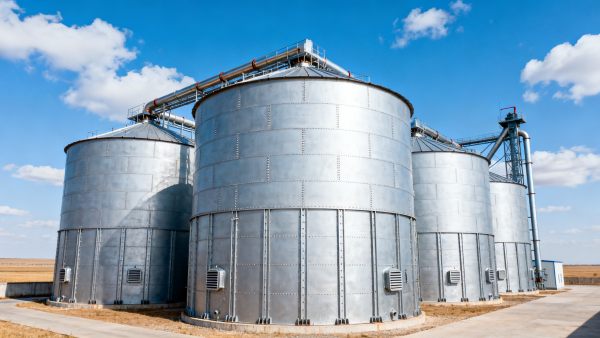
On 28 April 2026, the Food and Agriculture Organization of the United Nations (FAO) updated its Global Approved Suppliers List for Grain Storage Infrastructure, adding six Chinese manufacturers of steel-structure grain silos, airtight storage units, and intelligent ventilation systems. This update directly affects stakeholders in grain infrastructure trade, public procurement, and international development projects — particularly those engaged in food security initiatives across Africa, Latin America, and Southeast Asia.
Event Overview
On 28 April 2026, the FAO published the latest version of its Global Approved Suppliers List for Grain Storage Infrastructure. Six Chinese companies specializing in grain silos and storage systems successfully passed FAO’s third-party technical and compliance review and were formally included in the list. The listing takes immediate effect and serves as a mandatory eligibility requirement for participation in United Nations procurement, World Food Programme (WFP) tenders, and national agricultural ministry bidding processes in multiple countries.
Industries Affected by This Update
Grain Infrastructure Exporters & Trading Firms
These firms face revised entry conditions for UN- and WFP-linked tenders in developing markets. Inclusion on the FAO white list is now a prerequisite — not merely advantageous — for bid eligibility in many public-sector grain storage projects. As a result, non-listed exporters may encounter automatic disqualification regardless of technical or price competitiveness.
Domestic Grain Equipment Manufacturers (Non-Listed)
Manufacturers not yet on the list may experience intensified competitive pressure in international tenders where FAO prequalification is enforced. Their ability to partner with listed entities — e.g., as subcontractors or component suppliers — may become more critical, especially in markets where local content or joint venture requirements apply.
International Development Contractors & EPC Firms
Firms delivering turnkey grain storage infrastructure under donor-funded programs (e.g., African Union or regional food security initiatives) must now verify supplier eligibility against the FAO list at tender submission stage. Procurement documentation and bill-of-quantities specifications may increasingly reference FAO-approved models or certified vendors — affecting design flexibility and supply chain planning.
Logistics & Certification Support Providers
Third-party certification bodies, logistics coordinators handling FAO-compliant documentation, and customs advisory services may see rising demand for verification support related to FAO white list compliance — including audit readiness preparation, technical file translation, and conformity evidence packaging for cross-border tenders.
What Relevant Enterprises or Practitioners Should Monitor and Do Now
Track official FAO communications and national procurement updates
Monitor FAO’s official portal and WFP procurement notices for implementation guidance — especially regarding grandfathering provisions, transition timelines for existing contracts, and whether national governments will adopt the list as a de facto standard beyond UN-mandated tenders.
Review current product certifications and tender eligibility gaps
Export-oriented manufacturers should assess whether their core products (e.g., welded steel silos, hermetic storage units, automated aeration controllers) align with FAO’s technical annexes referenced in the approval criteria. Identify any pending conformity assessments needed to pursue future listing.
Distinguish between policy signal and operational mandate
While inclusion on the FAO list is mandatory for UN/WFP tenders, it does not automatically confer eligibility in bilateral or nationally funded projects unless explicitly adopted by the procuring entity. Verify each tender’s eligibility clause rather than assuming universal applicability.
Prepare documentation packages for potential partner engagement
Non-listed but technically capable manufacturers should compile modular, FAO-aligned technical dossiers (e.g., structural calculations, corrosion resistance test reports, ventilation performance data) to facilitate faster integration into bids led by white-listed partners.
Editorial Perspective / Industry Observation
Observably, this update signals a formalization of technical gatekeeping in global public grain storage procurement — shifting from project-specific evaluation toward standardized, pre-vetted supplier recognition. Analysis shows the FAO list is functioning less as an advisory tool and more as an operational filter, particularly where multilateral funding co-finances national infrastructure. From an industry perspective, it reflects growing emphasis on verifiable durability, scalability, and climate-resilient performance in post-harvest systems — criteria that favor integrated system providers over component-only suppliers. Current adoption remains concentrated in FAO/WFP channels, but regional agricultural ministries’ voluntary alignment could broaden its influence over time.
It is more accurate to interpret this as a procedural tightening within existing procurement frameworks — not a new market-opening event. Its significance lies in enforcement consistency, not expansion of scope.
Conclusion
This FAO white list update reinforces the role of internationally recognized technical validation in shaping access to public-sector grain infrastructure markets. It does not create new demand, but reshapes how eligibility is verified and enforced — particularly in aid-dependent regions. For industry participants, it is best understood not as a milestone achievement, but as a baseline requirement now entering operational phase across key procurement ecosystems.
Information Sources
Primary source: Food and Agriculture Organization of the United Nations (FAO), Global Approved Suppliers List for Grain Storage Infrastructure, published 28 April 2026. Note: Specific company names, technical assessment criteria, and national-level adoption status beyond FAO/WFP are not disclosed in the publicly released version and remain subject to ongoing observation.
Related Intelligence
- Grain Silos & StorageFAO Adds 6 Chinese Grain Silo Makers to Global White ListFAO white list update: 6 Chinese grain silo makers now approved for global grain storage projects — essential for UN, WFP & food security tenders.
- Grain Silos & StorageFAO Adds 6 Chinese Grain Silo Makers to Global Pre-Qualified ListFAO pre-qualifies 6 Chinese grain silo makers for global projects—boosting export opportunities in Africa, Latin America & SEA. Learn implications now.
- Grain Silos & StorageFAO Adds 6 Chinese Grain Silo Makers to Global White ListFAO adds 6 Chinese grain silo makers to its Global White List — boosting credibility for steel silos & smart ventilation systems in Africa, LATAM & SEA.
The Morning Broadsheet
Daily chemical briefings, market shifts, and peer-reviewed summaries delivered to your terminal.
