
EU REACH Adds 3 RAS Biofilm Inhibitors to SVHC List

On 28 April 2026, the European Chemicals Agency (ECHA) added three novel biofilm inhibitors — including a didecyldimethylammonium chloride derivative, modified polyhexamethylene biguanide salt, and quaternary phosphonium-based complexes — to the Candidate List of Substances of Very High Concern (SVHC) under REACH. This update directly affects manufacturers and exporters of Recirculating Aquaculture Systems (RAS) in China and other third countries supplying the EU market, particularly those producing water treatment components and disinfection modules.
Event Overview
On 28 April 2026, ECHA officially listed three biofilm inhibitors used in Recirculating Aquaculture Systems (RAS) as Substances of Very High Concern (SVHC) under Regulation (EC) No 1907/2006 (REACH). The substances are: (i) a didecyldimethylammonium chloride derivative; (ii) a modified polyhexamethylene biguanide salt; and (iii) quaternary phosphonium-based complexes. The listing applies specifically to their use in water quality control components and disinfection modules within RAS equipment. As of 28 October 2026, articles containing any of these substances above the 0.1% w/w threshold must be notified to the SCIP database, and suppliers must provide downstream importers with safety use instructions.
Which Subsectors Are Affected
Direct Exporters of RAS Equipment to the EU
These companies supply finished RAS systems or integrated modules (e.g., biofilters, UV disinfection units, dosing pumps) to EU-based importers or end users. They are affected because the SVHC listing triggers SCIP notification obligations and imposes new communication duties toward EU recipients. Non-compliance may result in customs delays or rejection of shipments after October 2026.
Component and Consumables Manufacturers
Suppliers of RAS-related consumables — such as biocidal filter media, coated sensor housings, or disinfectant cartridges — face formulation review requirements. If their products incorporate any of the three listed substances for biofilm suppression, they must verify concentration thresholds, update technical documentation, and prepare SCIP submissions for each article type.
Raw Material and Additive Suppliers
Chemical suppliers providing antimicrobial agents, polymer modifiers, or functional coatings to RAS equipment makers are indirectly impacted. Their customers may request updated declarations of conformity or revised Safety Data Sheets (SDS) reflecting the SVHC status. Supply chain transparency becomes critical where these substances are embedded in proprietary blends or surface treatments.
Supply Chain Compliance Service Providers
Firms offering SCIP submission support, REACH training, or regulatory intelligence services will see increased demand for targeted guidance on RAS-specific applications. However, service scope must now explicitly cover biofilm-inhibiting chemistries used in aquatic life-support systems — a niche not previously emphasized in standard REACH compliance packages.
What Relevant Companies or Practitioners Should Focus On Now
Verify substance presence and concentration in current product lines
Manufacturers should conduct immediate material composition screening — especially for water-contact parts, antimicrobial coatings, and disinfection system internals — using available SDS data, supplier declarations, or targeted lab testing. Threshold confirmation (≥0.1% w/w) determines whether SCIP notification applies.
Initiate substitution feasibility assessment for high-risk items
Where SVHC-containing formulations are confirmed, initiate parallel evaluation of technically viable alternatives — e.g., non-quaternary biocides, physical biofilm disruption methods, or certified non-SVHC antimicrobial polymers — with attention to performance validation under RAS operating conditions (e.g., low organic load, continuous flow, temperature stability).
Update technical documentation and internal compliance workflows
Revise product specifications, SDS sections 3 and 15, and internal substance tracking systems to reflect SVHC status. Assign responsibility for SCIP dossier preparation, assign deadlines aligned with the 28 October 2026 deadline, and train relevant staff on data submission requirements via the ECHA IUCLID-SCIP interface.
Engage proactively with EU importers and distributors
Communicate anticipated timelines for SCIP completion and confirm delivery of safety use instructions. Where contractual terms lack REACH compliance clauses, consider updating commercial agreements to clarify responsibilities for SVHC-related communication and documentation handover.
Editorial Perspective / Industry Observation
Observably, this SVHC listing signals a tightening regulatory focus on functional additives in environmental technology equipment — not just bulk chemicals or standalone biocides. It reflects ECHA’s increasing scrutiny of ‘intentionally released’ substances in closed-loop industrial systems, even when exposure is indirect. Analysis shows that the inclusion was driven by persistence and potential for bioaccumulation in aquatic environments, rather than acute human toxicity — suggesting future SVHC proposals may prioritize environmental fate over occupational hazard profiles. From an industry standpoint, this update is best understood not as an isolated compliance event, but as part of a broader trend toward lifecycle-based chemical accountability in aquaculture infrastructure. Continuous monitoring of ECHA’s SVHC updates remains essential, particularly for substances used in water treatment contexts where regulatory convergence between biocidal products regulation (BPR) and REACH is still evolving.
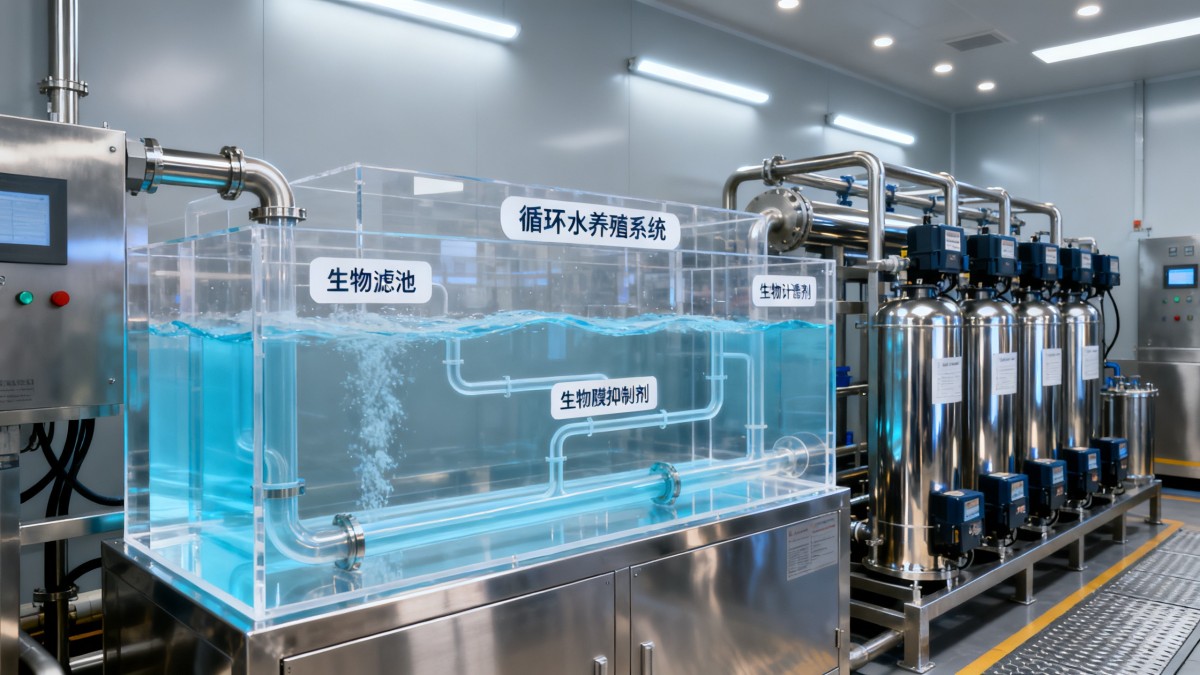
In summary, the addition of these three biofilm inhibitors to the SVHC list marks a concrete regulatory milestone for RAS system manufacturers exporting to the EU. It introduces enforceable obligations starting in late 2026, with clear implications for product design, supply chain communication, and technical documentation. Rather than representing a distant policy signal, it constitutes an operational requirement demanding near-term verification and planning. Current practice suggests treating this as a defined compliance trigger — not a speculative risk — while remaining attentive to how ECHA and EU Member State authorities interpret application scope in enforcement practice.
Source: European Chemicals Agency (ECHA), Candidate List of Substances of Very High Concern for Authorisation, updated 28 April 2026. Note: Implementation timelines, interpretation of ‘article’ definition in modular RAS equipment, and acceptability of alternative biofilm control methods remain subject to ongoing guidance from ECHA and national helpdesks — these aspects require continued observation.
Related Intelligence
- RAS SystemsEU REACH Adds 3 RAS Biofilm Inhibitors to SVHC ListEU REACH adds 3 RAS biofilm inhibitors to SVHC list—urgent compliance action needed for exporters, component makers & chemical suppliers targeting the EU market.
- RAS SystemsEU REACH Adds 3 Biofilm Inhibitors to SVHC List for RAS SystemsEU REACH adds 3 biofilm inhibitors to SVHC list for RAS systems—urgent SCIP & SDS compliance needed by Oct 2026. Act now!
- RAS SystemsEU REACH Adds 3 Silane Coupling Agents for RAS Systems to SVHC ListEU REACH adds 3 silane coupling agents for RAS systems to SVHC list—urgent compliance actions for exporters, integrators & suppliers. Act before 1 Oct 2026.
The Morning Broadsheet
Daily chemical briefings, market shifts, and peer-reviewed summaries delivered to your terminal.
