

The Authority in Global Agricultural Chemistry & Bio-Resources
Feed and grain expansion plans often ignore storage pinch points

Many Feed & Grain expansion plans focus on throughput gains but overlook the storage pinch points that quietly limit performance, delay commissioning, and inflate capital costs. For project managers and engineering leads, understanding how storage capacity, material flow, and handling integration affect the entire plant is essential to avoiding bottlenecks and protecting return on investment.
Why do Feed & Grain expansion projects miss storage constraints?
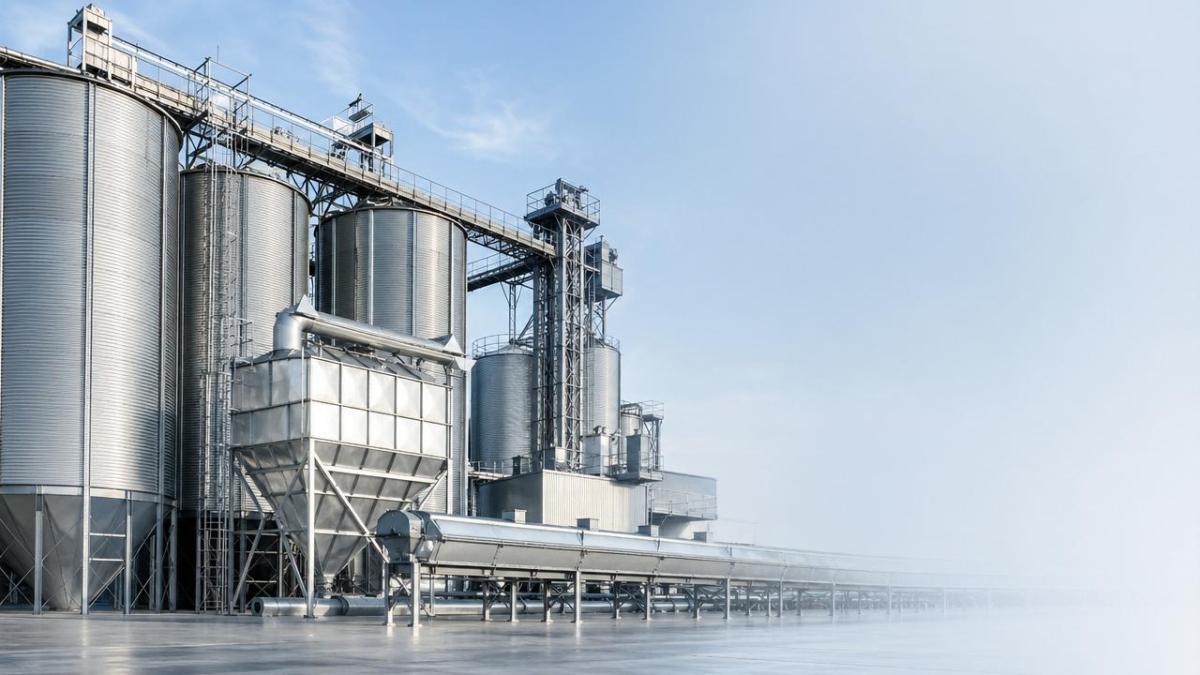
In Feed & Grain processing, expansion decisions often begin with a visible target: more tons per hour through receiving, drying, grinding, pelleting, or loadout. Storage is treated as a supporting utility rather than as a controlling production asset. That assumption creates trouble when raw grain variability, seasonal intake peaks, product segregation requirements, or truck and rail scheduling demand more buffering than the original concept allowed.
For project managers, the risk is not theoretical. A plant can install larger mills or additional process lines and still fail to deliver planned output because bins, silos, reclaim systems, transfer conveyors, and surge hoppers were not resized or re-sequenced. The result is familiar across primary industries: process equipment waits for material, operators create manual workarounds, quality control tightens, and commissioning teams spend expensive weeks solving problems that should have been addressed during front-end design.
AgriChem Chronicle tracks these issues across interconnected sectors where material handling, compliance, and supply chain transparency matter. In Feed & Grain projects, that cross-sector perspective is useful because the same planning discipline seen in fine chemicals, APIs, and regulated primary processing also applies to solids storage: define the flow path, map the hold points, validate contamination controls, and make storage perform as a strategic function rather than a leftover space calculation.
- Expansion teams often model nameplate throughput but not hourly variability in inbound grain quality, moisture, or truck arrival patterns.
- Engineering packages may size process equipment correctly while underestimating required working storage for clean grain, conditioned material, mash, pellets, and finished product.
- Operations may need more segregation by species, formulation, moisture band, or customer contract than the capital plan originally assumed.
- Material handling interfaces, not major machines, often become the true limiting points during startup.
Where do storage pinch points usually appear in a Feed & Grain plant?
Storage pinch points rarely sit in only one location. They emerge where capacity, residence time, and transfer logic no longer match plant rhythm. For a project leader, the practical question is not whether storage exists, but whether each storage step has enough usable capacity and enough handling flexibility to absorb disruption without starving or flooding the next operation.
Typical bottleneck zones
- Receiving pits and pre-clean storage during harvest surges, especially when unloading speed exceeds downstream cleaning or drying rates.
- Wet grain buffering ahead of dryers, where inadequate surge volume forces stop-start operation and raises energy intensity.
- Ingredient bins above grinding and batching, where limited compartment count reduces formulation flexibility.
- Mash and pellet surge points, where insufficient retention time causes unstable flow and inconsistent line utilization.
- Finished feed storage, where loadout windows, product segregation, and customer-specific dispatch timing drive much larger real demand than average production rates suggest.
A useful rule in Feed & Grain project planning is to distinguish total installed storage from usable operating storage. Cone angle, flowability, cleanout constraints, minimum inventory thresholds, and segregation rules may reduce practical capacity well below the mechanical volume shown on drawings. That gap is one of the most common reasons an expansion underperforms despite appearing well equipped on paper.
What should project managers evaluate before approving storage-related scope?
Before finalizing scope, project teams need a decision framework that links production goals to storage behavior. In Feed & Grain, the most expensive mistake is buying visible throughput assets first and assuming storage can be patched later. The table below outlines practical evaluation dimensions that help engineering leads test whether storage will support, constrain, or distort the business case.
The lesson is straightforward: storage scope must be approved as part of a flow system, not as isolated equipment. When ACC reviews technical submissions and market intelligence in Feed & Grain processing, the strongest projects are those that document capacity assumptions at every interface rather than relying on a single plant-wide throughput number.
How storage planning changes by application scenario
Not every Feed & Grain operation faces the same storage challenge. A grain handling terminal, a feed mill, and a multi-product processing facility may all expand for higher throughput, yet each requires a different storage logic. Project managers should align scope with the business model, seasonal exposure, and service promise to customers.
The following scenario comparison helps teams identify where pinch points are most likely to appear and what kind of storage response is usually required.
This comparison matters because many Feed & Grain expansions borrow layouts from another facility type without adapting to operating reality. A feed mill needs formulation and dispatch flexibility; a terminal needs surge and reclaim speed; a drying complex needs moisture-sensitive buffering. Copying storage scope from the wrong reference project can create years of avoidable inefficiency.
Which technical indicators reveal a hidden storage bottleneck?
Project teams should not wait for startup to discover a storage mismatch. Several measurable indicators can signal that a Feed & Grain expansion is under-buffered or poorly integrated before procurement packages are released.
Early-warning indicators
- Average process throughput looks acceptable, but shift-level simulations show frequent starvation or overflow during normal scheduling disruptions.
- More than one department assumes the same bin or silo is available for emergency use.
- Material routing depends on too many manual interventions, temporary bypasses, or operator judgment calls.
- The capital budget prioritizes vessel count but excludes upgrades to conveyors, diverters, controls, dust handling, or structural access.
- Sanitation and traceability teams cannot confirm practical cleanout times between product families.
In regulated or quality-sensitive environments, storage is also tied to compliance. While Feed & Grain facilities do not mirror API manufacturing, they still operate within inspection, sanitation, traceability, and environmental expectations. Dust control, product identity preservation, pest management, and documented routing logic all become harder when storage is undersized and material is constantly being rehandled.
How should procurement teams compare storage expansion options?
Procurement in Feed & Grain should compare options by total operational effect, not by steel tonnage or vessel cost alone. For project managers under budget pressure, the right question is whether a lower initial storage package will shift cost into commissioning delays, higher labor, product losses, or future retrofits. A disciplined comparison can prevent false savings.
Common option paths
- Add bulk storage only when seasonal intake volume is the main constraint and transfer infrastructure already has sufficient margin.
- Add compartmentalized day bins when formulation flexibility, recipe sequencing, or ingredient segregation is the main issue.
- Upgrade reclaim and conveying when installed storage exists but cannot turn fast enough to support target output.
- Add intermediate surge points when process continuity suffers from line synchronization problems rather than pure storage shortage.
A practical procurement checklist should include mechanical design suitability, flow characteristics, maintenance access, automation compatibility, dust and explosion protection measures where applicable, and the ability to support future product mix changes. ACC’s value to industrial readers lies in connecting these technical variables with market context, supplier transparency, and regulatory awareness so decision makers can compare proposals on more than headline capacity.
What are the most common planning mistakes in Feed & Grain storage projects?
Even well-funded projects repeat the same errors. These are not usually dramatic engineering failures. They are misalignments between process intent and storage reality that accumulate until the plant cannot run at design conditions.
Frequent mistakes to avoid
- Using average daily production to size storage without testing shift peaks, weekend dispatch gaps, or harvest surges.
- Ignoring non-process occupancy, such as quality holds, off-spec segregation, sanitation downtime, and customer-specific reservation of bins.
- Assuming all materials behave similarly, even though meals, pellets, screenings, and different grain varieties may discharge very differently.
- Treating automation as a late add-on rather than a core part of routing, inventory visibility, and interlock protection.
- Deferring storage upgrades to a future phase without confirming whether the first phase can operate reliably on its own.
For engineering leads, these mistakes are especially costly because they often surface after civil work, structural installation, and equipment placement are already advanced. Fixing them then means change orders, rework, and schedule pressure. Addressing them during concept and FEED stages is far less expensive.
FAQ: what do project leaders ask most about Feed & Grain storage planning?
How much storage buffer is enough in a Feed & Grain expansion?
There is no universal number because the answer depends on intake variability, product mix, dispatch rhythm, and downtime tolerance. The better approach is to define critical hold points and size them against peak operational scenarios, not just average hours of coverage. In many projects, buffer time is more valuable at interfaces than in one large central silo.
Is more storage always better?
No. Excess storage without proper routing, reclaim capacity, or sanitation planning can lock up capital and increase handling complexity. Effective Feed & Grain design focuses on usable, accessible, and well-integrated storage rather than the highest theoretical volume.
What should procurement prioritize when comparing vendors or concepts?
Prioritize fit for material behavior, lifecycle maintainability, control system integration, and demonstrated understanding of your operating scenario. A lower-priced component can become more expensive if it creates bridging, cleanout delays, or routing limitations that reduce plant availability.
When should storage modeling happen in the project schedule?
It should begin during concept selection and be refined during front-end engineering. If storage review starts after major equipment selection, the project may already be locked into process assumptions that are expensive to correct.
Why decision makers turn to AgriChem Chronicle for project insight
Feed & Grain expansion planning now sits inside a broader industrial reality shaped by supply volatility, compliance expectations, technical specialization, and cross-border procurement scrutiny. AgriChem Chronicle supports project managers and engineering leaders by interpreting these pressures through a technically rigorous lens. Our editorial framework connects process engineering, material handling logic, market intelligence, and supply chain transparency across primary industries and fine chemicals.
That perspective is valuable when a storage decision appears simple but affects commissioning risk, operating flexibility, traceability, and long-term cost. ACC helps institutional buyers and project teams ask sharper questions before they commit capital: Is the proposed storage truly usable? Does the handling path support peak demand? Will the plant remain flexible as product mix, regulation, and sourcing patterns change?
Contact us for targeted project support
If you are assessing a Feed & Grain expansion, contact AgriChem Chronicle to discuss the issues that most affect project outcomes: storage capacity assumptions, material flow mapping, equipment selection logic, likely commissioning pinch points, supplier comparison criteria, compliance-sensitive routing, and realistic delivery sequencing.
You can consult with us on parameter confirmation, storage and handling option review, project documentation positioning, delivery-cycle questions, technical content development for industrial procurement audiences, and tailored editorial collaboration that turns validated operational expertise into decision-ready market visibility.
Related Intelligence
- Grain Silos & StorageFAO Adds 6 Chinese Grain Silo Makers to Global White ListFAO Adds 6 Chinese Grain Silo Makers to Global White List — Boost your international tenders with FAO-recognized, climate-tested grain storage solutions.
- Grain Silos & StorageFeed and grain expansion plans often ignore storage pinch pointsFeed & Grain expansion plans often miss storage pinch points that cut throughput and raise costs. Learn how smarter storage planning protects ROI, speeds startup, and avoids hidden bottlenecks.
- Grain Silos & StorageFAO Updates Global Grain Silos White List: 6 Chinese Firms AddedFAO updates Global Grain Silos White List: 6 Chinese firms added — discover key implications for procurement, EPC contractors & grain traders in Africa and SEA.
The Morning Broadsheet
Daily chemical briefings, market shifts, and peer-reviewed summaries delivered to your terminal.
