
FAO Updates Global Grain Silos White List: 6 Chinese Firms Added
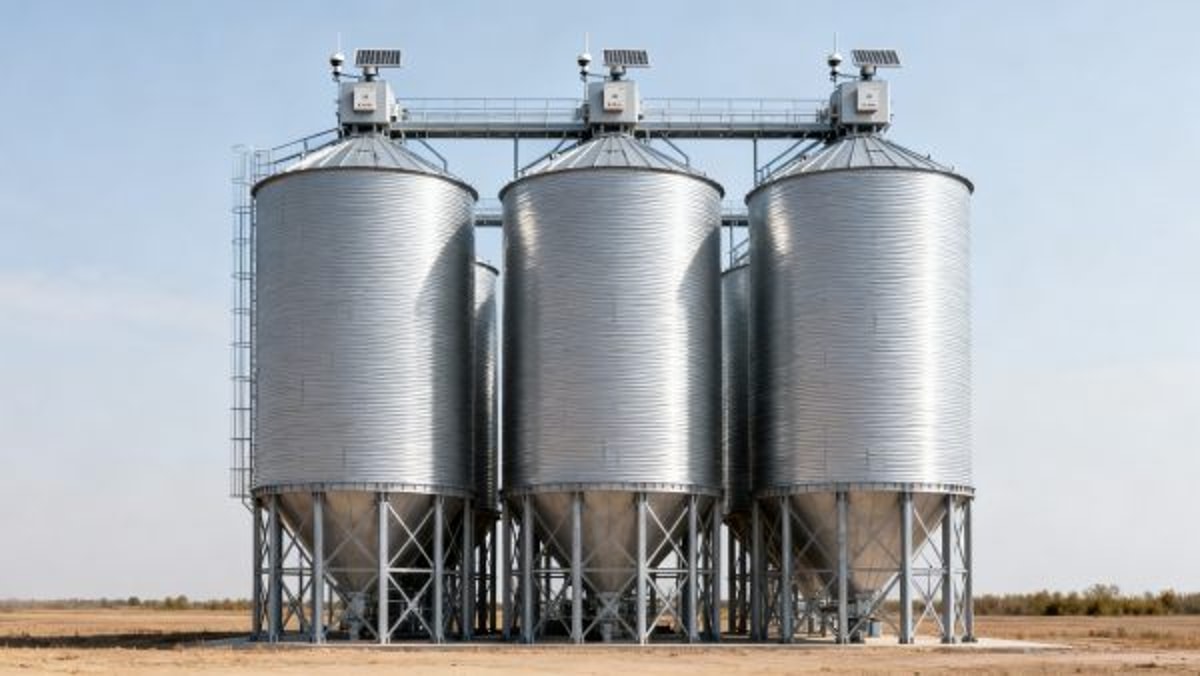
On 28 April 2026, the Food and Agriculture Organization of the United Nations (FAO) updated its Global Technical White List for Grain Silos & Storage, adding six Chinese manufacturers specializing in steel-structure grain storage systems and intelligent ventilation solutions. This update is directly relevant to stakeholders in international agricultural infrastructure procurement, public-sector grain reserve projects, and global supply chain service providers — particularly those engaged with multilateral development banks or operating across Africa and Southeast Asia.
Event Overview
On 28 April 2026, the FAO officially published an updated version of its Global Technical White List for Grain Silos & Storage. The revision includes six newly listed Chinese companies active in the design, fabrication, and integration of steel-structure grain silos and smart ventilation systems. According to official FAO documentation, this White List serves as a mandatory reference for tendering processes under financing from the World Bank, the African Development Bank, and national grain reserve programs in Southeast Asian countries. Eligible suppliers on the list are confirmed to meet both ISO 22000 (food safety management) and ISO 55001 (asset management) requirements.
Which Subsectors Are Affected
International Public Procurement Agencies & Multilateral Development Banks
These entities rely on the FAO White List to pre-qualify bidders for grain infrastructure projects. With six additional Chinese suppliers now included, procurement timelines may shorten for tenders requiring certified storage systems — especially in regions where local manufacturing capacity remains limited. The update reduces technical due diligence burden during bid evaluation, as compliance with two key ISO standards is already verified by FAO.
Global Grain Traders & Commodity Merchants
Traders involved in structured finance, warehouse receipt financing, or origin-based quality assurance may use the White List to assess the credibility of third-party storage facilities in emerging markets. The inclusion of new Chinese vendors expands the pool of internationally recognized providers for turnkey silo deployment — potentially influencing decisions on logistics hubs, collateral eligibility, and post-harvest loss mitigation strategies.
Engineering, Procurement & Construction (EPC) Contractors
EPC firms bidding on grain infrastructure projects in Africa or Southeast Asia must now verify whether their proposed equipment suppliers appear on the updated White List. Absence from the list may trigger additional compliance documentation requests or disqualification in early-stage evaluations — particularly where FAO-aligned funding conditions apply.
Chinese Equipment Exporters & Aftermarket Service Providers
For Chinese manufacturers not yet listed, the update signals a formalized benchmark for international market access. It also highlights that FAO’s validation extends beyond structural integrity to integrated food safety and asset lifecycle management — raising the bar for technical documentation, certification maintenance, and cross-border service capability.
What Relevant Enterprises or Practitioners Should Focus On — And How to Respond
Monitor official FAO communications for list maintenance cycles and eligibility criteria updates
The FAO does not publish fixed review intervals for the White List. Stakeholders should track FAO’s official notifications and technical guidance documents — especially any revisions to the assessment methodology for ISO 22000/ISO 55001 alignment, which could affect future applications or revalidations.
Verify supplier status before initiating procurement or tender submissions in FAO-linked projects
Before finalizing vendor selection for grain storage components in World Bank– or AfDB-funded projects, procurement teams should cross-check the current FAO White List version (dated 28 April 2026) against supplier claims. Relying on outdated versions or unverified certifications may lead to bid rejection or contract delays.
Distinguish between policy recognition and operational readiness
Inclusion on the White List confirms technical compliance but does not guarantee local regulatory approval, import licensing, or after-sales support capacity in target markets. Buyers should separately validate installation experience, spare parts availability, and bilingual technical documentation — particularly for deployments in non-Chinese-speaking jurisdictions.
Prepare for increased scrutiny of integrated system documentation
New entrants on the list were assessed against dual ISO standards. Prospective applicants — and existing suppliers preparing for renewal — should ensure traceability between ventilation control logic, temperature/humidity monitoring logs, and preventive maintenance records. These elements are increasingly central to FAO’s verification process.
Editorial Observation / Industry Perspective
Observably, this update functions less as a one-time milestone and more as a calibration point in the institutionalization of global post-harvest infrastructure standards. Analysis shows the FAO is reinforcing a convergence between food safety governance and physical asset performance — moving beyond silo construction alone toward holistic storage system accountability. From an industry perspective, the inclusion of six Chinese firms reflects growing technical alignment with international benchmarks, but it does not imply automatic market access; rather, it lowers one formal barrier while elevating expectations around verifiable, auditable operations. Current attention should focus on how regional implementing agencies interpret and enforce the list — particularly whether national grain boards adopt it as a de facto requirement outside multilateral funding contexts.
This update is not a signal of immediate commercial acceleration, nor is it merely procedural. It represents a formal step toward standardizing technical due diligence in global grain infrastructure investment — making supplier validation more predictable, but also more rigorous.
Conclusion
The FAO’s 28 April 2026 White List update introduces a measurable shift in how international grain storage systems are vetted for public-sector projects. Its significance lies not in expanding market access per se, but in consolidating a shared technical reference point across financing institutions and procurement bodies. For industry participants, it is best understood as an institutional anchor — clarifying minimum compliance expectations while shifting competitive differentiation toward implementation reliability, cross-border service depth, and integrated data management capability.
Source Attribution
Main source: Food and Agriculture Organization of the United Nations (FAO), Global Technical White List for Grain Silos & Storage, updated 28 April 2026.
Areas requiring ongoing observation: FAO’s future guidance on list revision frequency, eligibility scope expansion (e.g., to include digital monitoring platforms), and adoption patterns by national grain reserve authorities outside multilateral project frameworks.
Related Intelligence
- Grain Silos & StorageFAO Updates Global Grain Silos White List: 6 Chinese Firms AddedFAO updates Global Grain Silos White List: 6 Chinese firms added — discover key implications for procurement, EPC contractors & grain traders in Africa and SEA.
- Grain Silos & StorageFAO Adds 6 Chinese Grain Silo Makers to Global White ListFAO white list update: 6 Chinese grain silo makers now approved for global grain storage projects — essential for UN, WFP & food security tenders.
- Grain Silos & StorageFAO Adds 6 Chinese Grain Silo Makers to Global Pre-Qualified ListFAO pre-qualifies 6 Chinese grain silo makers for global projects—boosting export opportunities in Africa, Latin America & SEA. Learn implications now.
The Morning Broadsheet
Daily chemical briefings, market shifts, and peer-reviewed summaries delivered to your terminal.
