
China's State Grid $40B UHV Plan to Boost Heavy Agri Machinery Exports
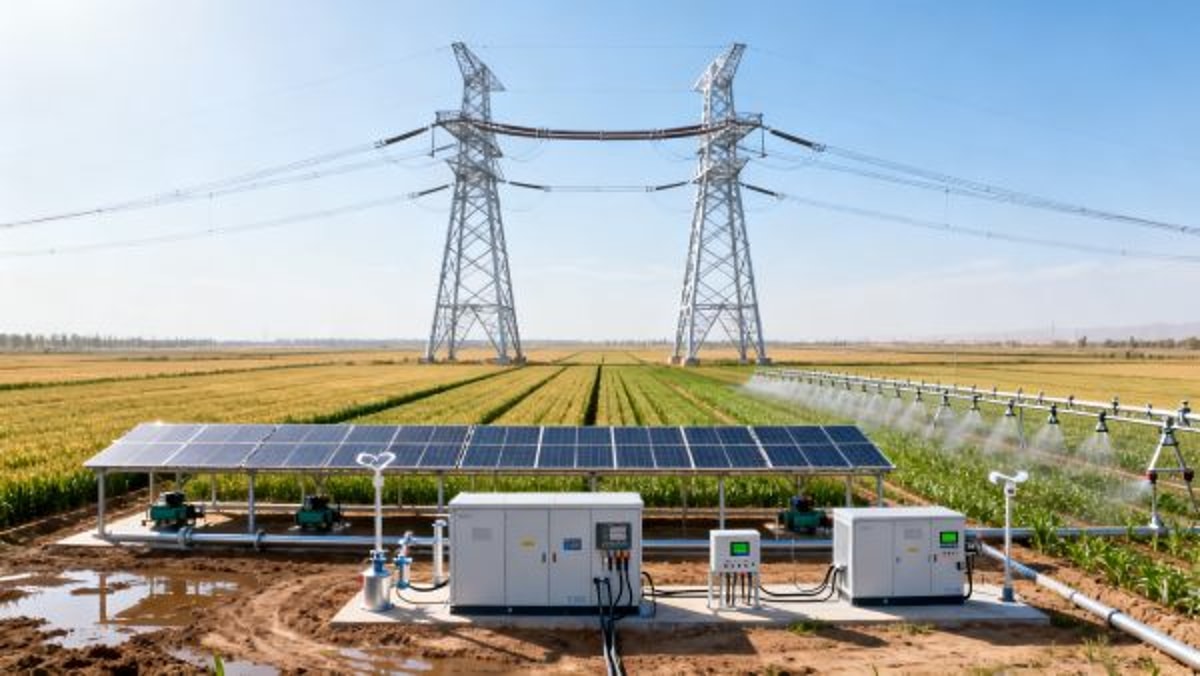
On April 24, 2026, China’s National Energy Administration confirmed a $40 billion ultra-high-voltage (UHV) power transmission investment plan for the 15th Five-Year Plan period (2026–2030), with priority corridors linking Northwest China to North China’s major agricultural zones. This infrastructure acceleration is expected to directly influence manufacturers and exporters of heavy agricultural machinery—particularly those supplying smart irrigation systems, photovoltaic-powered pumping stations, and distributed-energy-integrated farm equipment—and signals new export pathway opportunities for globally certified Chinese suppliers.
Event Overview
On April 24, 2026, China’s National Energy Administration officially confirmed that ultra-high-voltage (UHV) grid investment during the 15th Five-Year Plan (2026–2030) will exceed RMB 280 billion (approx. USD 40 billion). The initiative prioritizes transmission corridors connecting Northwest China’s renewable energy bases to North China’s key grain-producing regions. No further technical specifications, tender timelines, or regional allocation breakdowns have been publicly released as of this confirmation.
Industries Affected
Heavy Agricultural Machinery Exporters
Why affected: The UHV rollout enables reliable, high-capacity green electricity supply to large-scale farmland—creating domestic demand for grid-interactive, solar-compatible, and storage-enabled farm equipment. Exporters with pre-certified products under State Grid’s ‘Green Electricity Compatibility Certification’ gain preferential access to procurement channels in electricity-constrained agricultural markets.
Impact areas: Increased domestic OEM integration orders; accelerated adoption of modular, pre-commissioned export configurations; stronger buyer preference for vendors with verified grid interoperability credentials.
Domestic Agricultural Equipment Manufacturers (OEM/ODM)
Why affected: UHV-powered rural electrification expands the addressable market for intelligent, energy-resilient farm machinery—especially in historically under-electrified agro-zones targeted by the Northwest–North corridor.
Impact areas: Higher volume requirements for PV-integrated pumps, battery-buffered tillage units, and IoT-enabled irrigation controllers; growing need for modular design and standardized certification packages aligned with State Grid’s interoperability framework.
Export Certification & Compliance Service Providers
Why affected: The explicit reference to State Grid’s ‘Green Electricity Compatibility Certification’ elevates its de facto role in shaping technical gateways for overseas sales—particularly in Middle Eastern and Latin American markets where buyers are directed to prioritize certified vendors.
Impact areas: Rising demand for localized testing, documentation support, and pre-audit services tied specifically to this certification; potential expansion of scope beyond domestic compliance into export-readiness validation.
What Enterprises and Practitioners Should Focus On Now
Monitor official implementation roadmaps—not just policy announcements
The April 24 confirmation is a strategic commitment, not an execution schedule. Enterprises should track subsequent releases from provincial energy bureaus and State Grid subsidiaries regarding tender calendars, regional pilot phases, and technical specification drafts—especially those referencing compatibility standards for distributed energy loads on UHV-fed grids.
Prioritize product categories with proven UHV-grid interaction capability
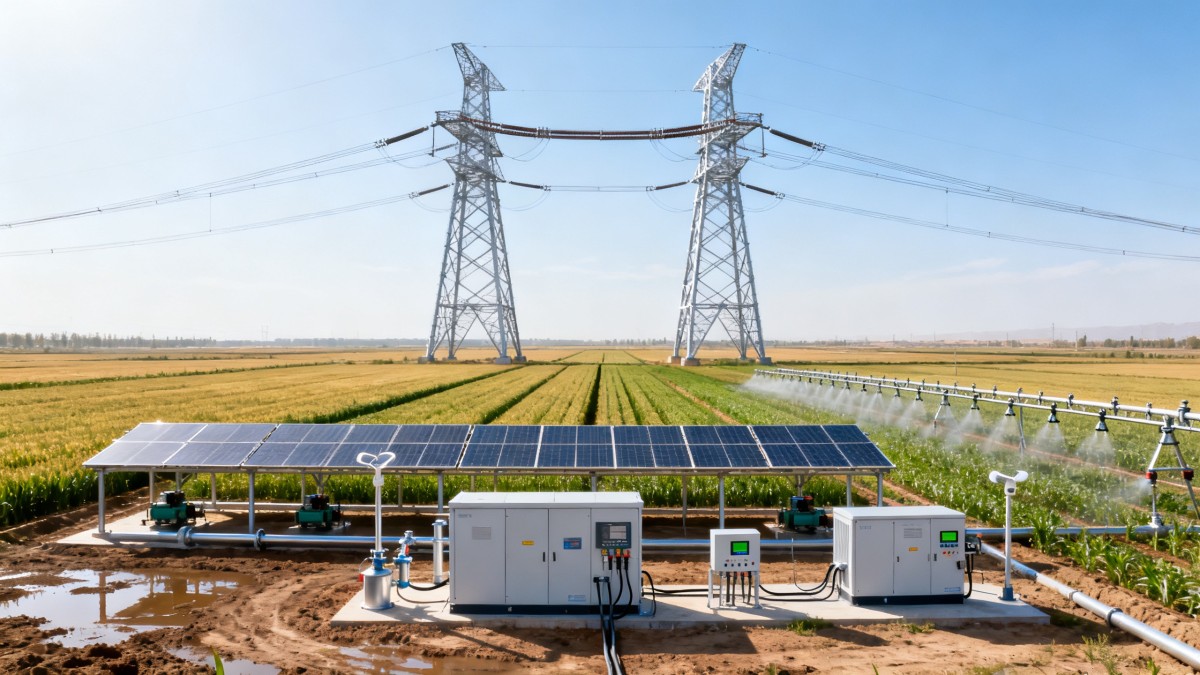
Analysis shows early traction will concentrate on three equipment types: (1) solar-direct-drive irrigation pumps rated for variable voltage input; (2) modular farm microgrids with DC-coupled battery storage; and (3) telemetry-equipped machinery with real-time load-response protocols. Firms should verify whether their current models meet or can be adapted to State Grid’s published ‘green load interface guidelines’.
Distinguish between domestic deployment readiness and export eligibility
Observably, State Grid’s certification does not automatically equate to international regulatory acceptance (e.g., IEC, UL, or regional grid codes). Exporters must map overlaps and gaps between the domestic certification and target-market requirements—especially in MENA and LATAM jurisdictions where national utilities are actively seeking pre-qualified vendors.
Prepare modular certification dossiers—not just single-product files
From industry perspective, the emphasis on ‘modular, pre-certified export solutions’ suggests buyers will increasingly request system-level documentation (e.g., pump + inverter + battery + SCADA integration reports) rather than component-level approvals. Suppliers should begin assembling reusable, version-controlled certification modules applicable across multiple configurations.
Editorial Insight / Industry Observation
This announcement is best understood not as an immediate procurement trigger, but as a structural signal: it confirms the formal alignment of national grid infrastructure planning with agricultural modernization goals—and explicitly positions energy-resilient farm machinery as a qualified beneficiary. Analysis shows the $40 billion figure reflects cumulative capital expenditure, not annual spend; actual order flow will unfold gradually across 2026–2030, with earliest traction likely in 2027 Q2–Q3 following provincial tendering cycles. From industry perspective, the most consequential element is not the total investment amount, but the institutionalization of a certification standard that serves both domestic procurement and export facilitation functions—making it a dual-purpose benchmark worth proactive engagement.
Consequently, this development is more accurately interpreted as a coordination milestone than a near-term revenue catalyst. Its value lies in clarifying long-term demand architecture—not in delivering immediate contracts. Sustained attention is warranted because follow-up documents (e.g., technical annexes, certification renewal protocols, or bilateral utility MOUs) will determine how widely and rapidly the ‘green electricity compatibility’ framework scales beyond initial pilots.
Conclusion
This UHV investment plan marks a deliberate linkage between national power infrastructure strategy and agricultural equipment industrial policy. It does not guarantee automatic export growth—but it does establish a formalized, state-endorsed pathway for heavy agri machinery suppliers who align product design, certification strategy, and market positioning with grid-interoperability requirements. Current understanding should emphasize preparedness over prediction: the opportunity is real, but its realization depends on responsive adaptation—not passive expectation.
Information Sources
Primary source: National Energy Administration of China, official statement issued April 24, 2026.
Note: Implementation timelines, regional allocation details, and technical certification criteria remain pending official publication and are subject to ongoing observation.
Related Intelligence
- Heavy Agri MachineryChina's State Grid $40B UHV Plan to Boost Heavy Agri Machinery ExportsChina's $40B UHV grid plan unlocks export opportunities for heavy agricultural machinery—especially smart irrigation, solar pumps & grid-integrated farm equipment.
- Heavy Agri MachineryIndia Launches Anti-Dumping Review on Chinese TractorsIndia's anti-dumping review on Chinese tractors may raise duties from 22.3% to 28.5% — critical for exporters, distributors & supply chain teams. Act now.
- Heavy Agri MachineryIndia Launches AD Review on Chinese Tractors, Tariff May Rise to 28.5%India's AD review on Chinese tractors may raise tariffs to 28.5% — critical insights for exporters, importers & agri-machinery stakeholders.
The Morning Broadsheet
Daily chemical briefings, market shifts, and peer-reviewed summaries delivered to your terminal.
